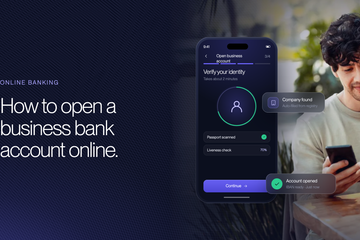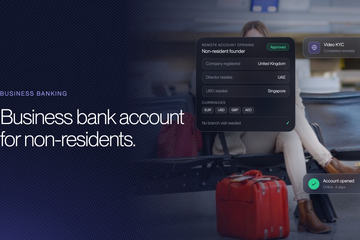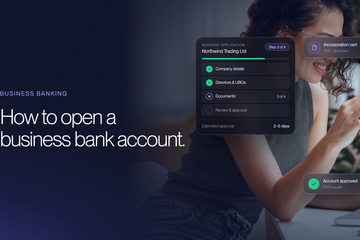
You can open a business bank account remotely, from your own country, without ever setting foot in the country where the company is registered. Two to five business days is normal with an electronic money institution, and a few weeks with a bank that accepts remote onboarding.
Remote is not the same thing as online. Online is about the channel, whether the application runs through a portal or a branch. Remote is about distance: you are in one country, the company is in another, and every document, signature and identity check has to cross a border to get where it is going.
That distance is what creates the real work. Certification by someone the provider recognises, apostilles, translations, a courier, directors in three time zones, and sometimes a power of attorney so a local agent can act for you. This guide covers all of it.
If your question is really about the digital flow rather than the distance, how to open a business bank account online covers the five-step portal process and the identity check behind it.

Equals Money
Business Bank Account
Time to onboard
2 Days
Account opening fee
Free
Monthly fee
€30

Trumia
Business account
Monthly fees
€50
Onboarding fees
€500
Time to onboard
1 week
Accepts
Gambling, Betting, Casino, Crypto, and more
Open a Business Bank Account Remotely
The whole account opening handled from where you are, with providers that never ask anyone to travel.
- Business banking: the account opened as part of the setup, not left to you afterwards.
- Built for non-residents: no visa, no residence, no flights, no local partner.
- Onboarding from 2 days: with providers that publish a turnaround and hold to it.
- A file providers accept: certified, translated and complete before it is sent.
- Flat fee quoted upfront: nothing taken before the scope is agreed.
Can You Open a Business Bank Account Remotely?
Yes, in most of the jurisdictions Binderr works in, and routinely so with an electronic money institution. A small number of countries and a larger number of individual banks still require a director to appear in person, and that is a policy choice rather than a legal rule.
Remote Is Not the Same as Online
An application can be fully online and still require you to be in the country. A bank in Portugal may take the whole application through its website and then ask the director to collect the card and sign the mandate at a branch. Equally, an application can be paper-heavy and still be remote, because the papers travel by courier rather than in your hand.
The two questions are separate and both worth asking before you apply. Is the process digital, and will anyone need to be physically present. Providers answer the first one loudly on their websites and the second one only if you ask.
The Three Ways to Open a Business Bank Account Remotely
- A fully digital electronic money institution: no travel, no certification, no courier. The fastest route and the one most non-resident founders end up using.
- A bank that accepts remote onboarding: documents certified in your country and posted, identity verified by video call, the mandate signed and returned. Weeks rather than days.
- A local agent acting under a power of attorney: someone in the jurisdiction opens the account on the company's behalf. The route of last resort, and the only one that works where presence is genuinely required.
| Digital EMI | Bank, remote onboarding | Local agent under POA |
|---|---|---|---|
Time to open | 2 days to 2 weeks | 3 to 8 weeks | About a month, then the bank's review |
Travel | None | None | None, the agent attends |
Certified documents | Rarely | Almost always | Always, plus the POA itself |
Apostille | Rarely | Often | Always for the POA |
Courier | No | Usually | Yes |
Extra cost | None | Notary and apostille fees | Notary, apostille and agent fees |
Works where presence is required | No | No | Sometimes |
Most companies need only the first, and a business bank account opened that way is the same product as one opened at a counter. The second and third exist for the cases where a specific bank, a specific currency or a specific licence forces the issue.
Where Remote Business Bank Account Opening Is Refused
Retail banking arms in much of continental Europe, most United States banks for a foreign-owned entity, and a good number of banks anywhere once the ownership runs through a second company. Refusal is rarely absolute. It usually means this particular institution will not, and the next one along will.
Non-residency itself is a bigger factor here than distance. Business bank accounts for non-residents covers what an underwriter actually reads when nobody in the structure lives locally.
How to Open a Business Bank Account Remotely: The Process
A remote business bank account application has five steps, and each one has a version that works across a border and a version that quietly assumes you are standing in the country. Getting the right version at each step is the whole job.
Step 1: Confirm the Provider Opens Without a Visit
Ask directly, in writing, before you send anything: can this account be opened and activated without any director attending in person, and will you accept documents certified in my country of residence. Two sentences that save weeks.
A provider that hedges here is telling you the answer. Move on rather than testing it with a full application, because a refusal at week three costs more than a slow reply at day one.
Step 2: Get the Documents Certified Where You Are
Company documents almost always have to be certified copies rather than plain scans once a bank is involved. That certification has to be done by someone the provider recognises in the country you are actually in, which is the step people get wrong most often.
Get the provider's list of acceptable certifiers before you book anything. A notary is accepted nearly everywhere. A lawyer, an accountant or an embassy official is accepted in some places and not others.
Step 3: Verify Identity From Your Own Country
With an electronic money institution this is a document scan and a liveness check on your phone, and your location is irrelevant. With a bank it is usually a scheduled video call, which is where the time zones start to bite, or a certified copy of your passport plus proof of address.
Give the provider a passport rather than a national identity card or a driving licence wherever you have the choice. A passport is recognised everywhere, and the other two often are not once you are outside the issuing country.
Step 4: Sign and Return the Account Agreement
An electronic signature is legally effective across the EU and the UK, and most providers use one as standard. Where wet ink is required, it is normally the board resolution rather than the account agreement, and that is the document that travels by courier.
Sign every page where the provider asks for initials, scan the whole set before you send the originals, and use a tracked courier. A resolution lost in the post restarts the corporate authority step from the beginning.
Step 5: Fund the Account From Abroad
Approval is not activation. Most providers activate on a first incoming transfer, and most require it to come from an account in the company's name or a named shareholder's name. A cross-border first transfer also has to clear correspondent checks, so allow days rather than hours.
Do not fund from a third party, however convenient. It puts a freshly approved account into a source of funds review before it has processed a single real payment. How to open a business bank account sets out the underwriting file that review reads.
Get Your Remote Application Documents Ready
Most remote applications stall on a certification done by the wrong person or an apostille nobody thought to get.
- A file providers accept: certified, apostilled and translated before it is sent.
- Built for non-residents: the certification route confirmed for the country you are in.
- Business banking: arranged alongside the company rather than left with you.
- Two applications in parallel: one slow answer does not cost you another month.
- Expert advice: holding structures and multi-country groups handled in house.
Certified, Apostilled and Couriered Documents
This is the part of remote account opening that has no online equivalent, and it is where most of the elapsed time goes. Three separate requirements sit behind the phrase certified documents, and providers rarely explain which ones apply to you.
Who Can Certify a Document in Your Country
Certification means a recognised person compares a copy against the original and signs to say they match, adding their name, capacity, date and contact details. The signature must be legible and the wording must state that the certifier has seen the original.
- A notary public: accepted everywhere, and the safe default if you are travelling or unsure.
- A practising lawyer: accepted by most providers, sometimes only if regulated in an approved country.
- A qualified accountant: commonly accepted, usually only if a member of a recognised professional body.
- An embassy or consular official: useful where local notaries are not recognised by the provider.
- A bank officer at your existing bank: accepted by some, and free, so worth asking about first.
A certification more than three months old is treated as stale by most providers, the same way a registry extract is. Get everything certified in one sitting, close to the date you intend to apply.
When an Apostille Is Needed and When It Is Not
An apostille is a certificate issued by a government authority confirming that a signature or seal on a public document is genuine. It is what makes a document issued in one country acceptable in another under the Hague Apostille Convention, which covers roughly 130 countries.
Electronic money institutions generally do not ask for one. Banks frequently do, particularly for the certificate of incorporation and the constitution, and particularly where the company was formed outside the provider's own country. If the country you are dealing with is not a Hague member, the document needs full consular legalisation instead, which takes longer and costs more.
The full document set, its validity windows and what needs certifying is covered in the documents needed to open a business bank account.
Translation Into the Provider's Language
A provider in a non-English jurisdiction will usually accept English, and will usually not accept a third language. Where translation is required it has to be a certified or sworn translation, done by a translator the provider or the local court recognises, and it is attached to the original rather than replacing it.
Budget a week for this and get it done once. A translation redone because it was not sworn is a common second delay on top of the first.
The Courier Step, and How to Avoid It
Where originals have to travel, use a tracked international courier rather than a postal service, send everything in one shipment, and keep a full scanned copy. Customs paperwork on a document shipment is minimal but a wrongly declared package can sit for days.
The way to avoid the courier entirely is to choose a provider that accepts certified electronic copies, which most electronic money institutions do. That single choice removes a week to ten days from the timeline and removes the risk of loss with it.
Opening a Business Bank Account Through a Power of Attorney
Where a jurisdiction or a specific bank genuinely requires someone to be present, a power of attorney lets a local agent do it for you. It is slower and more expensive than the digital route and it is the only thing that works in a handful of cases.
What a Banking Power of Attorney Actually Covers
A limited power of attorney for account opening authorises a named person to submit the application, present documents, sign the account mandate and complete formalities on the company's behalf. It should be drafted narrowly, naming the bank, the company and the specific acts, with an expiry date.
It should not give operating authority over the account. Opening the account and running it are separate powers, and there is no reason for the agent who opened it to be able to move money through it afterwards.
Executing a Power of Attorney From Abroad
You sign in front of a notary in your own country, the notary certifies the signature, and the notarised document is then apostilled by the appropriate authority in that country. Where either country is outside the Hague Convention, consular legalisation replaces the apostille.
Allow two to four weeks for the round trip, and check the wording with the bank before you notarise anything. A power of attorney rejected on wording has to be executed again from the start, notary and apostille included.
Where the Power of Attorney Route Still Fails
- Banks that require the beneficial owner personally: no agent can substitute, whatever the document says.
- Identity verification of the owner: the agent's identity does not satisfy a check on yours.
- A source of funds explanation: the agent cannot answer questions about money they did not earn.
- Wording the bank has not pre-approved: the most common single reason a valid power of attorney is refused.
Which is why this is the third route rather than the first. If a fully digital provider will take the company, take that instead and keep the notary for something that needs one.
Open Your Company and Bank Account Remotely Together
The company documents a remote bank application needs are the ones the incorporation produces. Doing both together removes the gap between them.
- Business banking: the account opened as part of the setup, not left to you afterwards.
- Built for non-residents: the whole process handled remotely, wherever the owners live.
- Jurisdiction selection: the country picked around where you can actually bank.
- Onboarding from 2 days: with providers that never ask anyone to travel.
- Flat fee from EUR 350: quoted in full upfront, nothing taken before the scope is agreed.
Best Providers for Opening a Business Bank Account Remotely
All four open accounts for companies whose owners are somewhere else entirely, with no travel and no certified paper. They differ on speed, cost and how much help there is when the structure needs explaining across a time zone.
Equals Money, the Fastest Remote Route
Equals Money runs a business account with no monthly fee, no account opening fee and onboarding published at two days. Identity is verified on a phone wherever you are, and nothing is couriered. For a single-owner company with documents ready it is the shortest route on this page.
Check the conversion spread against your own volumes before settling, because a zero-fee product earns elsewhere.
Equals Money
Business Bank Account
Time to onboard
2 Days
Account opening fee
Free
Monthly fee
€30
Trumia, a Named Contact Across Time Zones
Trumia Limited is an authorised payment services provider and electronic money institution licensed by the Malta Financial Services Authority. Onboarding is one week and the account costs EUR 50 a month.
Remote applications go wrong in the gaps between questions and answers, and a named contact closes those gaps. Worth the fee where owners sit in several countries, or where a corporate shareholder abroad has to be explained to somebody.
Trumia
Business account
Monthly fees
€50
Onboarding fees
€500
Time to onboard
1 week
Accepts
Gambling, Betting, Casino, Crypto, and more
3S Money, Remote Onboarding at Volume
3S Money is a cross-border payments account with free opening, four-day onboarding and pricing from EUR 100 a month. Built for companies moving significant volume between countries, which is usually the same profile as a company whose owners are not in any of them.
Below roughly EUR 50,000 a month in cross-border flow the fee is hard to justify. Above it, the fee is small against the spread and the failed payments it prevents.

3S Money
Cross-border payments
Time to onboard
4 Days
Account opening fee
Free
Monthly fee
Starting from € 100
Moneybase, Several Currencies Opened Remotely
Moneybase offers a multi-currency business account with free opening, four-day onboarding and pricing from EUR 9.99 a month. Remote onboarding, several currencies in one account, and no volume you have to reach first.
Across the four, the remote choice sorts quickly. Speed with no recurring cost points at Equals, owners spread across countries point at Trumia, several currencies at moderate volume point at Moneybase, and heavy cross-border flow points at 3S Money. Three of the four charge no account opening fee, and Trumia does not publish one either way.

Moneybase
Multi Currency Business Account
Time to onboard
4 Days
Account opening fee
Free
Monthly fee
Starting from € 9.99
Choose a Provider That Opens Without a Visit
The provider that never asks anyone to travel is chosen before the application, not discovered at week three.
- Business banking: matched to providers that complete the whole process remotely.
- Onboarding from 2 days: with the ones that publish a turnaround and hold to it.
- Two applications in parallel: so a slow answer does not cost you another month.
- Built for non-residents: foreign ownership is their normal case, not an exception.
- Expert advice: structures that will not fit a questionnaire handled in house.
The Practical Friction in a Remote Business Bank Account Application
The regulatory side of remote account opening is solved. What is left is coordination, and coordination is what actually costs the weeks.
Coordinating Directors Across Time Zones
Providers rarely proceed on a partial set, so one director who has not completed their step holds the whole application. With owners in three time zones a single round of questions can take four days purely in waiting.
Send every identity link on the same day, tell each person the check takes three minutes, and name one person who chases. The difference between an application that moves and one that sits is almost always someone owning the chase.
Video Calls Scheduled in the Provider's Hours
Where a bank requires a call, it will be offered in its own business hours, which may be the middle of your night. Ask for the earliest and latest slots available rather than accepting the first offered, and confirm who has to attend, because some banks want every director on the same call.
Test the connection and the lighting beforehand. A call rescheduled for a technical problem often goes to the back of a queue that is a week long.
A Local Address Is Usually Not a Requirement
Providers ask for a registered office and a trading address, and neither has to be somewhere you live. A registered office provided by your formation agent is normal and expected. What providers will not accept is a plain mail forwarding box presented as a trading address, because it tells them nothing about where the business operates.
Give the real answer instead: the company is registered at its agent's address and operates from where the directors are. That is a normal structure, and stating it plainly is better than dressing it up.
Common Mistakes When Opening a Business Bank Account Remotely
Four mistakes account for most of the delay, and every one of them is decided before the application is submitted.
Assuming Online Means No Travel
The most expensive assumption on this page. A bank can run a fully digital application and still require a director at a branch to activate the account. Ask the presence question explicitly, in writing, before you commit to a provider.
Certifying Documents With the Wrong Person
A certification by someone the provider does not recognise is a certification you have to do again, usually after a two-week wait to be told. Get the list of acceptable certifiers first, then book the appointment.
Leaving the Apostille Until the Provider Asks
Apostilles take days to weeks depending on the country, and they arrive at the end of a queue you joined late. If the provider is a bank and the company is foreign to it, assume the apostille will be required and start it early. An unused apostille costs a small fee. A missing one costs a month.
Funding the Account From a Foreign Personal Account
The first transfer is checked, and a cross-border payment from an account in a name that is not on the file is checked harder. Fund from the company or from a named shareholder, after the account is confirmed open, and expect the transfer itself to take a few days to clear.
Reading how KYB onboarding runs from the compliance side shows which of these steps a machine handles and which reach a person, and what each is checking.
Which Remote Route Fits Your Company?
Three things decide it: where the owners actually are, whether the jurisdiction insists on presence, and whether the business needs anything only a bank provides.
Owners in One Country, Company in Another
A fully digital electronic money institution, opened alongside the incorporation. Two to five business days, no certification, no courier, no travel. This is the ordinary case and it needs none of the machinery further up this page.
Owners Spread Across Several Countries
Also digital, but choose a provider with a named contact, and appoint one person to coordinate. The structure is not the problem here, the calendar is. Expect the identity step to set the pace and plan around it rather than around the provider's published turnaround.
A Jurisdiction or Bank That Requires Presence
Ask first whether you need that specific bank at all. If you do, because of a licence, a currency or a customer requirement, then a power of attorney with a local agent is the route, and it needs a notary, an apostille and roughly a month. Confirm the bank's preferred wording before executing anything.
Opening a US Business Account Remotely With Brex
For founders incorporating a US company from abroad, the remote coordination problem looks the same as the one this guide describes, just pointed at a different jurisdiction. Brex opens a business account for US-domiciled companies without a branch visit, without a personal guarantee, and without tying the account to a founder's US Social Security Number. Two-thirds of the YC Winter 2024 batch set up on Brex this way.
The account sits inside one platform with corporate cards, bill pay, expense management, and global payments across 120+ countries. Checking is provided by Column N.A., Member FDIC, with up to $6M in FDIC coverage through program banks. Virtual cards issue instantly, so a distributed founding team can start spending on the same day the entity is live, inside pre-set limits the finance owner controls from a phone.
Remote setup is where most of the friction shows up later, in the handoff between opening the account and actually running money through it. Brex is a financial technology company, not a bank, and combining the account with cards and controls in one system removes the second coordination round that non-resident teams usually discover after the first transfer clears.
Where to Go Next
With the route chosen, the business bank account requirements set out what the provider is testing you against, and what a business bank account actually is covers the licence difference that decides how your balance is protected.
Local practice varies more than any general guide can capture, so the country pages are worth a look before you apply: Cyprus, Malta and the UK for non-resident owners.
Open a Business Bank Account Remotely This Month
The right provider and a properly certified file is the difference between an account open in days and a courier still in transit.
- Business banking: the account opened as part of the setup, not left to you afterwards.
- Built for non-residents: no visa, no residence, no flights, no local partner.
- A file providers accept: certified and complete before anything is sent.
- Onboarding from 2 days: with providers that complete the whole process remotely.
- Expert advice: powers of attorney, holding structures and multi-country groups handled in house.