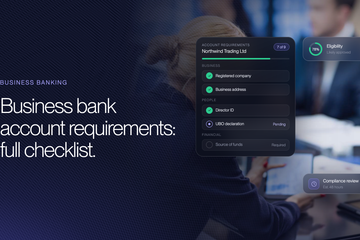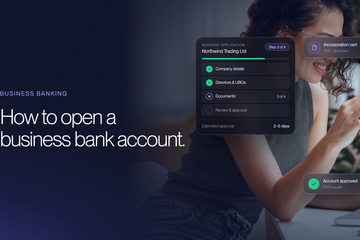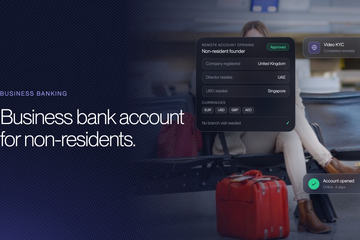
The documents needed to open a business bank account fall into four groups: the company, the people behind it, the money, and the business itself. Sixteen items in total for a straightforward company, and every one of them has a validity window.
The list is not the hard part. What catches founders out is the fine print around each document: how recent it has to be, who is allowed to certify a copy, whether an apostille is needed, and whether a translation counts. A file that is complete but wrongly certified comes back unread, and gathering everything twice is where the real delay lives.
This guide goes document by document. What each one is, what it proves, how old it can be, when a copy needs certifying or apostilling, and which of them change depending on where the company is registered.
If you want the rules behind the list rather than the list itself, the business bank account requirements set out what the law obliges a provider to establish.

Equals Money
Business Bank Account
Time to onboard
2 Days
Account opening fee
Free
Monthly fee
€30

Trumia
Business account
Monthly fees
€50
Onboarding fees
€500
Time to onboard
1 week
Accepts
Gambling, Betting, Casino, Crypto, and more
Get Your Business Bank Account Documents Ready
Certification, translation and the ownership chart are prepared before anything is submitted, so the file goes in complete rather than in instalments.
- A file providers accept: every document current, certified and in the right language.
- Business banking: the account opened as part of the setup, not left to you afterwards.
- Built for non-residents: documents issued abroad handled as the normal case.
- Onboarding from 2 days: with providers that publish a turnaround and hold to it.
- Flat fee quoted upfront: nothing taken before the scope is agreed.
Documents Needed to Open a Business Bank Account
A straightforward company needs sixteen documents to open a business bank account, across four groups. Six about the company, four or more per person, three or four evidencing the money, and two describing the business. Anything else a provider asks for is a follow-up to one of these rather than a new category.
What documents do I need to open a business bank account is the question, and the honest answer is a list rather than a number, because two of the four groups scale with how many people own the company. What is needed to open a business bank account also shifts once a second entity appears in the ownership chain.
What Is Needed to Open a Business Bank Account, in One List
- Certificate of incorporation or registration.
- Memorandum and articles of association, or the equivalent constitution.
- Registry extract dated within three months.
- Proof of the trading address where it differs from the registered office.
- Tax identification number, and the VAT number where the company has one.
- Board resolution authorising the account and naming the signatories.
- Passport for every director and every beneficial owner.
- Proof of address under three months old for each of them.
- Share register or shareholder certificates showing percentages.
- Ownership chart where the structure runs through more than one entity.
- Registry extract and constitution for each intermediate holding company.
- Trust deed and details of settlor, trustees, protector and beneficiaries, where a trust is involved.
- Source of funds evidence for the money going into the account.
- Source of wealth evidence for each beneficial owner.
- A written business description with customers, countries and expected volumes.
- Any licence the activity requires, current and in the company's name.
Twelve of those sixteen apply to a single-owner company. The other four appear only where there is a corporate shareholder, a trust or a regulated activity, which is why the same checklist can feel light or overwhelming depending on the structure.
What Each Document Actually Proves
Providers do not collect documents for their own sake. Each one answers a specific question, and knowing which question helps when a provider asks for something the list did not mention: it is looking for another way to answer the same point.
Document | What it proves | Typical validity |
|---|---|---|
Certificate of incorporation | The company exists and when it was formed | No expiry |
Articles or constitution | How the company is governed and who can bind it | Current version only |
Registry extract | The company is still active and who is currently in post | 3 months |
Proof of trading address | The company operates from a real place | 3 months |
Board resolution | The account opening is authorised and by whom | Dated within the application |
Passport | Each person is who they say they are | Must not be expired |
Proof of address | Where each person actually lives | 3 months |
Share register | Who owns what, and in what proportion | Current |
Ownership chart | The chain runs to named individuals | Current |
Source of funds evidence | The money has a lawful and traceable origin | Usually 12 months of history |
Business description | The activity can be categorised and risk-rated | Written for this application |
The validity column is where most files fail. A certificate never expires, but a registry extract three months and one day old is treated as stale by most providers, and so is a utility bill from the previous quarter.
Company Documents for a Business Bank Account
Six documents cover the company itself. Five of them are issued by the registry or held in the company's own records, and the sixth is something you draft.
Certificate of Incorporation
The one-page document the registry issues when the company is created, carrying the name, the registration number and the date. It never expires, so the original scan you were sent on day one is still valid years later. Providers accept a clear colour scan almost everywhere, and ask for a certified copy mainly where the company is registered abroad.
Articles of Association or the Constitution
The governing document, called articles in the UK and much of the Commonwealth, statutes or a deed of incorporation in parts of Europe, and an operating agreement for an LLC. The provider reads it to establish who can bind the company and what restrictions apply to share transfers.
Supply the current version, not the one filed at incorporation, if it has ever been amended. An outdated constitution that does not match the registry record is a contradiction the underwriter has to resolve before anything else moves.
The Registry Extract, and Why Three Months Matters
Also called a certificate of good standing, a company search, an extract from the trade register or a Certificado de Registro depending on where you are. It lists the current directors, shareholders and registered office, and it is the document providers rely on most, because it is the only one that proves the company is still active today.
Three months is the standard window and it is rarely negotiable. Order it late in the preparation rather than early, because a file assembled over six weeks can easily have an extract that expires before the application is submitted.
Proof of Trading Address
Needed where the trading address differs from the registered office, which is most of the time for a company using a formation agent's address. A lease, a utility bill in the company's name or a signed service agreement for the office, all dated within three months.
A mail-forwarding address with nothing behind it is the weakest possible answer here, and it generates questions on almost every application. If the company genuinely operates remotely, say so in the business description rather than leaving the provider to infer it.
Tax and VAT Numbers
The tax identification number wherever the company has one, and the VAT registration number where it is registered. A US LLC supplies the EIN confirmation letter, the CP 575 or an official verification letter, because the number alone is not evidence.
Board Resolution
The one document you draft rather than obtain. It records that the directors resolved to open an account with this provider, and names the people authorised to operate it. Most providers supply a template, and using theirs saves a round trip over wording.
Date it inside the application window and have it signed by the directors named on the registry extract. A resolution signed by someone who is not a current director is a mismatch that stops the review.
Prepare the Ownership and Source of Funds Documents
These two groups take the longest to gather and are the ones providers question most. They are assembled before the application, not during it.
- A file providers accept: ownership traced to individuals and funding evidenced on paper.
- Built for non-residents: certification, apostille and translation handled for you.
- Expert advice: holding structures and trusts documented the way underwriters read them.
- Two applications in parallel: one slow answer does not cost you another month.
- Business banking: arranged alongside the company rather than left with you.
Business Bank Account Documents for Directors and Owners
Every director and every beneficial owner at or above the threshold needs identity, address and, in most cases, source of wealth. This is the group that multiplies, and the group where a single missing person holds the whole application.
Passport or National Identity Document
A passport is the safest choice everywhere. A national identity card is accepted in most of the EU, and a driving licence rarely is. It must be in date, and the scan has to show the full machine-readable zone at the bottom, which is the part an automated check reads.
Where a certified copy is required, the certifier writes that they have seen the original, signs, dates and adds their capacity and registration number. Accepted certifiers are usually a notary, a lawyer, an accountant, a serving police officer or an embassy official, and the provider will name its own list.
Proof of Address, the Quiet Failure Point
A utility bill, a bank statement, a council or municipal tax notice, or a government letter, in the person's own name, at the address given, dated within three months. Mobile phone bills are rejected almost everywhere. So are documents in a spouse's name, however obvious the household connection.
For a non-resident this is the item most likely to bounce, because a document in a language the provider does not read needs a certified translation, and the round trip costs days in each direction.
Share Register and Ownership Chart
The share register or shareholder certificates show who owns what. Where the structure runs through another entity, add a chart showing the chain and the percentage at each step, plus a registry extract and constitution for every entity in it.
Draw the chart before anyone asks. Our guide to how indirect ownership is calculated explains why two entities each holding 30 percent can produce very different answers depending on the method a provider uses, which is worth understanding before you present the numbers yourself.
Trust and Nominee Documents
Where a trust sits in the structure, the deed itself plus identity and source of wealth for the settlor, the trustees, the protector where one exists, and the beneficiaries or the defined class. A foundation supplies its charter and by-laws instead.
Nominee shareholders must be disclosed with the declaration of trust behind them. An undisclosed nominee discovered later is treated as concealment rather than administration, and it is one of the few document problems that ends an application outright.
Source of Funds and Source of Wealth Documents
Two different questions, both documentary. Source of funds is where the specific money entering this account came from. Source of wealth is how the beneficial owner accumulated their money overall. A provider asks both, and answering one does not answer the other.
What Counts as Evidence
- Audited or management accounts: for money coming out of an existing business.
- A signed sale agreement: where a previous company, property or asset was sold.
- Payslips or an employment contract: for salaried savings, usually twelve months.
- A loan agreement: naming the lender, with the terms and the transfer visible.
- Investment or brokerage statements: for money coming out of a portfolio.
- A grant or award letter: for public funding or an accelerator.
- A deed of gift plus the giver's own evidence: where the money came from family.
What Does Not Count
A written explanation, however detailed and however true. Source of funds is a verification obligation rather than a disclosure one, so a paragraph describing ten years of saving does not satisfy it. Nor does a bank statement showing a balance with no history of how it arrived, or a screenshot without the institution's name and the account holder visible.
This is the single most common reason a file sits unresolved for weeks. The provider is not doubting you, it is unable to close the item without a document.
How Much History to Supply
Twelve months is the usual expectation for statements or payslips, and the full document for an agreement. Where the money arrived as one large transfer, supply the evidence for that transfer specifically rather than a general statement of position, because the provider will ask about the transfer in any case.
Redact nothing. A statement with the account number or counterparties blacked out is worth less than no statement at all, since it looks like selective disclosure.
Certification, Apostille and Translation
Three separate things that get confused with each other. Certification confirms a copy matches the original. An apostille confirms the signature or seal on a public document is genuine. A certified translation confirms the translation is accurate. A document can need all three, or none.
Who Can Certify a Copy
A notary public is accepted everywhere and is the safe default. Most providers also accept a practising lawyer, a qualified accountant, a serving police officer, an embassy or consular official, and sometimes a regulated bank employee. The certifier writes that they have seen the original, signs, dates, and states their capacity and registration number.
Check the provider's own list before paying for anything. Certification by someone outside it is money spent twice, and it is a surprisingly common way to lose a week.
When an Apostille Is Needed
An apostille applies to public documents, meaning ones issued by a state body: the certificate of incorporation, the registry extract, and a notarised document once the notary's signature needs authenticating. It is issued by a designated authority in the country the document came from, and under the Hague Apostille Convention it is then accepted directly in every other contracting state.
Around 130 countries are now party to the Convention, and mainland China joined in 2023, which removed the embassy step for a large volume of corporate paperwork. Where both countries are members, the apostille is the whole process.
Where the Apostille Route Is Closed
For a country outside the Convention, the older legalisation chain applies instead: notarisation, then authentication by the issuing country's foreign ministry, then attestation by the destination country's embassy. Three steps, three fees, and typically two to six weeks rather than a few days.
Find out which route applies before you plan the timeline, because discovering it mid application is what turns a two-week onboarding into a two-month one.
Certified Translation
Any document not in a language the provider works in needs a translation, and the translation itself has to be certified by the translator or a sworn translator depending on the jurisdiction. Translate the whole document rather than the parts that seem relevant, including stamps and marginal notes, because a partial translation reads as an edited one.
Document | Certified copy | Apostille | Translation |
|---|---|---|---|
Certificate of incorporation | Often, when issued abroad | Often, when issued abroad | If not in the provider's language |
Articles or constitution | Sometimes | Rarely | If not in the provider's language |
Registry extract | Often | Often, when issued abroad | If not in the provider's language |
Passport | Yes, where no video check is used | No | No |
Proof of address | Sometimes | No | If not in the provider's language |
Board resolution | No, signed original or scan | No | Provider's template avoids this |
Trust deed | Yes | Sometimes | If not in the provider's language |
Source of funds evidence | Rarely | No | If not in the provider's language |
The pattern: state-issued documents attract apostilles, private documents attract certification, and anything in another language attracts a translation. An electronic money institution running a digital onboarding flow usually needs far less of all three than a traditional bank, which is one of the practical reasons its timeline is shorter.
Handle Certification and Apostille Once
Which documents need certifying, apostilling or translating depends on where each one was issued and which provider is reading it. That is worked out before you pay for anything.
- Built for non-residents: documents issued abroad handled as the normal case.
- A file providers accept: certified, apostilled and translated to the provider's own standard.
- Business banking: the account matched to a provider whose document rules you can meet.
- Onboarding from 2 days: with the ones that accept digital copies rather than originals.
- Expert advice: trusts, holding structures and multi-country groups handled in house.
What Each Business Bank Account Provider Asks For
All four below work from the same four document groups. What differs is how much has to be certified, how the identity check is run, and how much help you get assembling it.
Equals Money, a Digital Document Set
Equals Money runs a business account with no monthly fee, no account opening fee and onboarding published at two days. That timeline only holds with a digital document flow, so expect clear scans and an electronic identity check rather than notarised paper.
For a single-owner company with everything already to hand, this is the shortest path from documents to a working IBAN on the page.
Equals Money
Business Bank Account
Time to onboard
2 Days
Account opening fee
Free
Monthly fee
€30
Trumia, Help With a Complicated File
Trumia Limited is an authorised payment services provider and electronic money institution licensed by the Malta Financial Services Authority. Onboarding is one week and the account costs EUR 50 a month.
Where the document set is the problem rather than the company, a named contact is worth the fee. A trust deed, a two-layer ownership chain or source of wealth spread across three countries is much faster to resolve with someone who can look at what you have and say which specific document is still missing.
Trumia
Business account
Monthly fees
€50
Onboarding fees
€500
Time to onboard
1 week
Accepts
Gambling, Betting, Casino, Crypto, and more
3S Money, Built for Multi-Country Paperwork
3S Money is a cross-border payments account with free opening, four-day onboarding and pricing from EUR 100 a month. The document set is the same, and the service model is built around companies whose paperwork spans several jurisdictions.
It earns the fee above roughly EUR 50,000 a month in cross-border flow. Below that, the document experience is not different enough to justify the cost.

3S Money
Cross-border payments
Time to onboard
4 Days
Account opening fee
Free
Monthly fee
Starting from € 100
Moneybase, Standard Documents, Small Fee
Moneybase offers a multi-currency business account with free opening, four-day onboarding and pricing from EUR 9.99 a month. A conventional digital document set, several currencies in one account, and no volume requirement to reach first.
Read the four together and the document experience sorts by structure rather than by price. A clean single-owner file suits Equals, a complicated one suits Trumia, multi-country paperwork at volume suits 3S Money, and a standard file with several currencies suits Moneybase. Three of the four charge no account opening fee, and Trumia does not publish one either way.

Moneybase
Multi Currency Business Account
Time to onboard
4 Days
Account opening fee
Free
Monthly fee
Starting from € 9.99
Common Business Bank Account Document Mistakes
Four mistakes account for most of the delay, and all four are about the condition of a document rather than its absence.
An Expired Registry Extract
The most frequent single rejection. Three months is the window, files take weeks to assemble, and the extract ordered at the start is stale by submission. Order it last, after everything else is ready, and check the date on it rather than the date you downloaded it.
Proof of Address in the Wrong Name
A utility bill in a spouse's name, a bank statement at a previous address, or a mobile phone bill, which almost no provider accepts. Each one returns the file. If the person genuinely has nothing in their own name, a government-issued residence certificate or a municipal tax notice usually works where a bill does not.
Certifying With the Wrong Person
Paying a notary is never wasted, but paying anyone else without checking the provider's list often is. Certification standards differ between providers and between jurisdictions, and a certificate from a category the provider does not accept has to be redone from the original.
Sending a Partial Translation
Translating the body of a document and leaving the stamps, seals and marginal notes untranslated. The provider cannot tell what was omitted or why, so a partial translation reads as an edited document and generates more questions than no translation at all.
Reading how KYB onboarding runs from the compliance side shows which documents get checked first and why the condition of each one matters as much as its presence.
Which Business Bank Account Documents Do You Need?
Which documents needed to open a business bank account apply to you comes down to three things. Structure decides the list. Where everyone lives decides the certification. The activity decides whether a licence joins the set.
A Single-Owner Company, Owner Resident Locally
Twelve documents, most of them scans. Certificate, articles, registry extract, proof of trading address, tax number, board resolution, passport, proof of address, share register, source of funds, source of wealth and the business description. Little or no certification, no apostille, no translation.
A Single-Owner Company, Owner Abroad
The same twelve, plus certified copies of the identity documents where no video check is used, an apostille on the state-issued documents where they were issued in another country, and certified translations of anything not in the provider's language. Budget one to three extra weeks for those steps alone.
A Company With a Corporate Shareholder or a Trust
Add a full company set for every entity in the chain, an ownership chart, and for a trust the deed plus identity and source of wealth for settlor, trustees, protector and beneficiaries. This is where the document count roughly doubles per layer.
Where to Take It Next
With the documents assembled, how to open a business bank account sets out the order to submit them in, and what a business bank account actually is covers the bank against EMI choice that decides how much certification you will need.
For an owner living outside the country of registration, business bank accounts for non-residents goes deeper on the certification and evidence standard. The country guides show local practice: Cyprus, Malta and the UK for non-resident owners.
Open Your Company and Bank Account Together
Half of these documents are produced during the incorporation. Doing both together means the file is complete on the day the company exists.
- Business banking: the account opened as part of the setup, not left to you afterwards.
- A file providers accept: every document current, certified and complete before you apply.
- Built for non-residents: no visa, no residence, no flights, no local partner.
- Flat fee from EUR 350: quoted in full upfront, nothing taken before the scope is agreed.
- Expert advice: licensing, holding structures and multi-country groups handled in house.