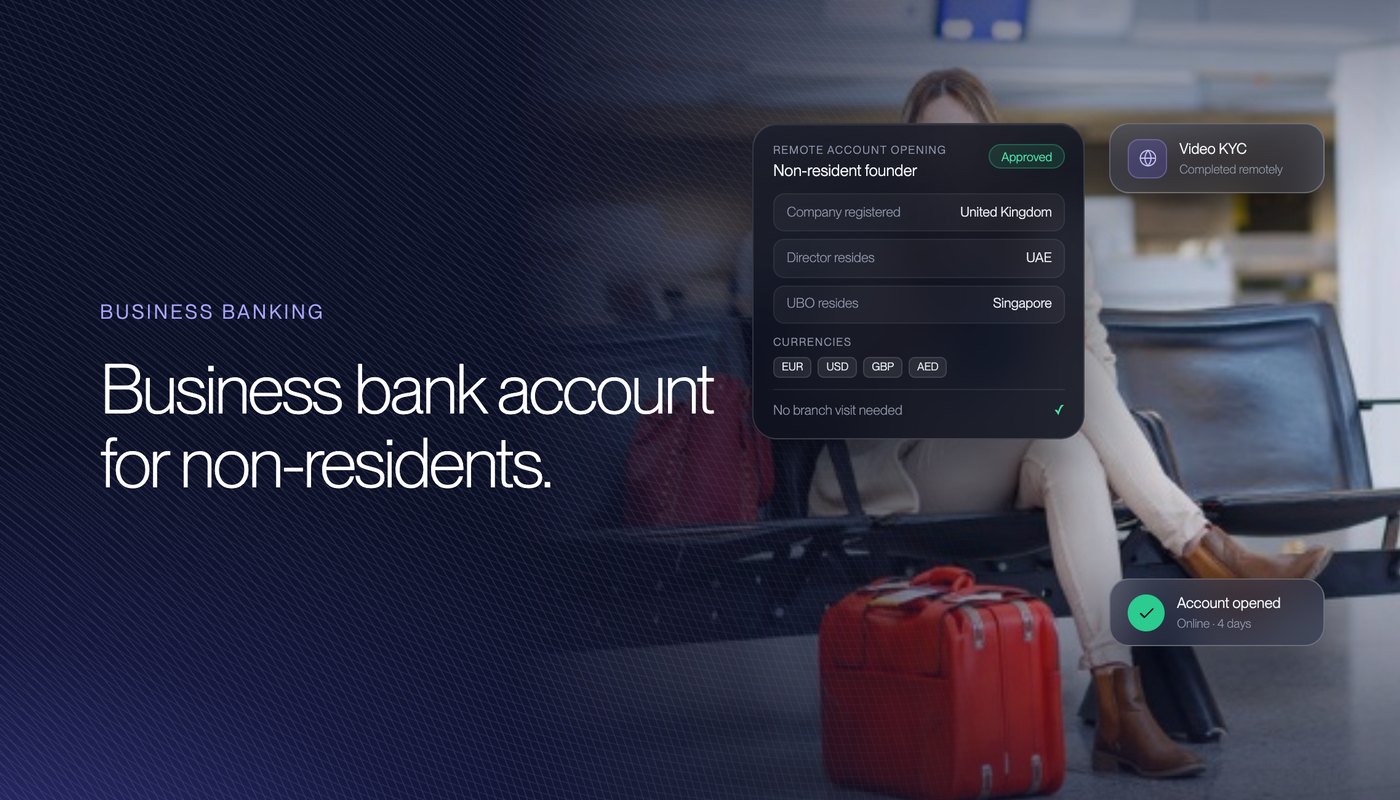
A business bank account for non residents is refused far more often for where the owner lives than for anything the company has done, and the fix is choosing a route built for foreign ownership rather than arguing with one that is not.
Non-residency is not a legal barrier anywhere on this page. No EU member state, and not the United States, bars a foreign owner from holding a company account. What happens instead is quieter. A provider prices the extra work of verifying people it cannot meet, documents it cannot pull from a local registry and money that arrives from a country it does not supervise, decides the file is not worth the margin, and declines without saying why.
So the useful question is not whether a non-resident can open a business bank account. It is which providers underwrite foreign ownership as their normal case, what they need to see, and which jurisdictions make it easy rather than theoretical. This guide covers what non-resident actually means to an underwriter, the file that gets approved, the US route and its tax filing trap, the EU and UK routes, and where applications fail.
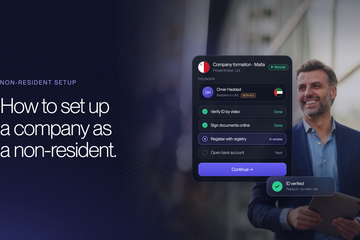
If the company does not exist yet, setting up a company as a non-resident covers the registration side, and this guide picks up where that leaves off.

Equals Money
Business Bank Account
Time to onboard
2 Days
Account opening fee
Free
Monthly fee
€30

Trumia
Business account
Monthly fees
€50
Onboarding fees
€500
Time to onboard
1 week
Accepts
Gambling, Betting, Casino, Crypto, and more
Open a Business Bank Account as a Non-Resident
Foreign ownership is the normal case here, not the exception that needs explaining. The company and the account are arranged together, remotely.
- Built for non-residents: no visa, no residence, no flights, no local partner.
- Business banking: the account opened alongside the company, not left to you afterwards.
- Jurisdiction selection: the country picked around where a provider will actually bank you.
- Onboarding from 2 days: with providers that publish a turnaround and hold to it.
- Flat fee quoted upfront: nothing taken before the scope is agreed.
What Non-Resident Means on a Business Bank Account Application
On a business bank account application, non-resident is not a legal status, it is a set of gaps in the file. The owner cannot be met in person, their address cannot be checked against a local utility database, their source of funds sits in a foreign banking system, and their tax residence creates reporting obligations. Every extra step costs the provider money, which is why the answer varies so much by provider rather than by law.
Three Different Things Called Non-Resident
The word covers three situations that carry very different risk, and applications get declined partly because founders describe the wrong one.
- A resident owner of a foreign company: you live in Germany and own an Estonian company. Easy, because the provider can verify you locally.
- A foreign owner of a local company: you live in Nigeria and own a UK limited company. This is the common case and the one this guide is about.
- A foreign owner and a foreign company: you live in Brazil, the company is in the BVI, and you want an account in a third country. Hardest, because nothing anchors the relationship to the provider's own jurisdiction.
The second case is workable almost everywhere with the right provider. The third needs a genuine reason for the account to exist where you are asking for it, and "better banking" is not one an underwriter accepts.
Why Non-Residency Is a Risk Factor and Not a Rule
Anti-money laundering law does not tell a bank to refuse foreign owners. It tells the bank to identify the customer, verify the people who own and control it, understand the purpose of the relationship and apply enhanced measures where risk is higher. A non-resident beneficial owner raises the effort required on each of those, and where the owner is in a high-risk third country, enhanced due diligence becomes mandatory rather than optional.
The consequence is commercial, not legal. A traditional bank with a domestic retail model makes little margin on a small foreign-owned company and a lot of extra work, so it quietly stops taking them. A provider whose entire book is cross-border companies has built the process once and runs it at scale. Same rules, opposite answers.
The Checks That Do Not Change
Whatever your residence, the provider still has to identify the company, verify it independently, trace ownership to named individuals and understand what the business does. Being abroad does not remove a single requirement. It only changes how you evidence each one, usually with certified or apostilled copies instead of originals handed across a counter.
Our guide to what an ultimate beneficial owner is works through how indirect holdings are calculated, which is the part most foreign-owned structures get wrong before they even apply.
Business Bank Account for Non Residents: What You Actually Need
Four groups of evidence, the same everywhere: the company, the people, the money and the activity. What changes for a non-resident is the certification standard. Documents issued abroad usually need to be certified copies, and in some jurisdictions apostilled, which adds days you should book in advance rather than discover mid-application.
Company Documents, Certified and Current
Certificate of incorporation, the constitution or articles, and a registry extract dated within three months showing directors, shareholders and the registered office. A tax identification number where one has been issued, and a board resolution authorising the account and naming the signatories.
The extract is where non-resident applications stall most often. Providers want it recent because they are checking that the company still exists and that the people named are still in post. An extract from incorporation day, six months later, gets rejected as a matter of routine.
Identity and Address for Every Owner and Director
A passport for each, plus proof of address in the country where each person actually lives. Certified copies where the original cannot be presented, and increasingly a live video check that matches the face to the document.
Proof of address is the quiet failure point. A bank statement in a language the provider does not read, a utility bill in a spouse's name, or a document older than three months all come back for replacement, and each round trip costs several days when the parties are in different time zones.
Source of Funds and Source of Wealth, Evidenced From Abroad
Where the company's founding money came from, and how the owner accumulated their money overall. These are separate questions and providers ask both. Acceptable evidence is documentary: audited accounts, a signed sale agreement for a previous business, payslips or an employment contract, a loan agreement with the lender named, or investment statements.
For a non-resident the bar is higher in practice because the provider cannot informally check anything. A translated, certified document beats a longer explanation every time, and a statement that the founder has savings, with nothing behind it, is the single most common reason a file sits unresolved.
A Business Description That Survives a Foreign Address
Write what the company sells, to whom, in which countries, through which channels, at what expected monthly volume and average transaction size, and who the main suppliers are. Then answer the question the underwriter is actually asking a foreign-owned company: why is the company registered here rather than where you live?
There are good answers. Customers are here. The market is here. The regulatory regime covers what we do. A currency or a payment rail we need. Answering it upfront removes the assumption that the structure exists to obscure something, which is the assumption a silent file attracts.
What the provider checks | What satisfies it for a non-resident | Where it goes wrong |
|---|---|---|
The company exists | Certificate plus registry extract under three months old | Extract from incorporation day |
Who controls it | Registry filing plus certified passport for each director | A director unreachable for the video check |
Who ultimately owns it | Share register and the chain through every holding entity | An intermediate company nobody documented |
Where each person lives | Proof of address under three months, translated if needed | A bill in a spouse's name |
Where the money came from | Sale agreement, accounts, payslips or a loan agreement | Asserting savings with no paper trail |
Why the company is here | A written reason tied to customers, market or regulation | No answer, so the provider supplies its own |
What the business does | A specific description with countries, volumes and suppliers | A description too generic to categorise |
Nothing in the right-hand column is hard to fix. It is hard to fix quickly, once the application is open and the clock is running, which is why the file is built before anything is submitted rather than assembled question by question.
Get Your Application Documents Ready
Non-resident applications rarely fail on the company. They fail on evidence that arrives late, in the wrong language, or not at all.
- A file providers accept: ownership traced to individuals, funding evidenced, activity described clearly.
- Built for non-residents: certification and translation handled as part of the work.
- Two applications in parallel: one slow answer does not cost you another month.
- Business banking: arranged alongside the company rather than left with you.
- Expert advice: advisors who place foreign-owned companies weekly and know who is saying yes.
US Business Bank Account for Non Residents
A US business bank account for non residents is available without a Social Security Number, without a green card and in most cases without a visit, provided the company is a US entity with an EIN. The constraint is which providers accept a remote application, not whether the law allows one.
A business bank account for non-US residents is the same product a US founder gets, on the same rails and with the same protections. Nothing about the account is restricted. What changes is the evidence you have to supply to open it, and the shorter list of providers willing to underwrite an owner they cannot meet.
You Do Not Need an SSN, You Need an EIN
This is the single most common misunderstanding among foreign founders. An Employer Identification Number is issued to the company, not to you, and a responsible party without a Social Security Number can obtain one by filing Form SS-4 by fax or post rather than through the online system, which is restricted to applicants who already hold a US tax ID.
Budget for the timing. The online route returns a number immediately and is closed to you. Fax typically returns the letter in a few weeks and post takes longer, so the EIN should be started the moment the LLC is registered, not when the bank asks for it. The provider will want the CP 575 confirmation letter or an official verification letter, not a number typed into a form.
What a US Provider Asks a Foreign Owner For
- Formation documents: articles or certificate of organization from the state of registration.
- The EIN letter: CP 575 or an IRS verification letter, not just the number.
- The operating agreement: showing who owns and manages the company.
- A passport: for every owner and every authorised signatory.
- A business address: and this is the one that trips people, since a virtual address gets mixed results and some platforms now insist on a physical one.
Traditional US banks generally still want a director to attend a branch, and several will arrange a document review by email beforehand so the visit is a formality. The remote route runs through fintech providers instead, and the landscape there has tightened: several platforms that were the standard recommendation two years ago now decline non-resident applications, or approve and then close the account when the pattern of activity looks foreign. Verify current policy at the point of applying rather than trusting a list.
Form 5472: The USD 25,000 Filing Nobody Mentions
A foreign-owned single-member LLC is disregarded for income tax and still has to file. It files Form 5472 attached to a pro forma Form 1120, and the penalty for missing it is USD 25,000. If the IRS issues a notice and it goes unanswered for 90 days, the penalty increases by a further USD 25,000 every 30 days, with no cap. For 2026 the deadline is 15 April, extendable to 15 October by filing Form 7004 on time.
What makes this dangerous is how little activity triggers it. A reportable transaction includes any capital contribution, distribution, loan or service payment between the owner and the LLC, so a single USD 100 transfer from the owner to keep the account alive creates the filing obligation. Dormant foreign-owned LLCs get caught by this every year, and the first they hear of it is the notice.
FinCEN Beneficial Ownership: US Companies Are Now Exempt
The Corporate Transparency Act picture reversed. Under the final rule effective 14 August 2026, US domestic companies are exempt from beneficial ownership information reporting and no longer file BOI reports, and US persons no longer supply their information as beneficial owners or company applicants.
Only foreign companies, meaning entities formed under non-US law that have registered to do business in a US state or tribal jurisdiction, still report, within 30 days of their registration becoming effective. Read that carefully against your own structure: a Delaware LLC owned by a foreign person is a domestic company and is exempt. A company incorporated abroad and registered to trade in a US state is not.
The entity choice sits upstream of all this. forming a Delaware LLC as a non-US resident and forming a Wyoming LLC as a non-US resident cover the registration differences that decide which providers will look at you.
Open a US Company and Bank Account as a Foreign Owner
The EIN, the entity and the account are sequenced so nothing waits on the step before it, and the filing obligations are flagged before they become penalties.
- Built for non-residents: no SSN, no visa, no US address of your own required.
- Business banking: matched to providers that underwrite foreign ownership as routine.
- Expert advice: the 5472 filing and the state choice explained before you commit.
- Jurisdiction selection: a US entity only where it actually serves your customers.
- Flat fee quoted upfront: the whole scope priced before anything is taken.
EU and UK Business Bank Accounts for Non-Resident Owners
Europe is the easier half of this question. The UK opens fastest and asks least, Ireland and Cyprus are workable with the right provider, and Malta is slower but deep in electronic money institutions. In all four the practical route for a foreign owner is an EMI rather than a high street bank.
The UK, Fastest to Open and Now With an Identity Check
A UK limited company can be registered in about 24 hours for GBP 100 online, with no residence requirement, no local director and no minimum share capital. That combination is why so many foreign founders start there, and why the UK provider market for foreign-owned companies is the deepest in Europe.
One thing changed. Identity verification became mandatory at Companies House on 18 November 2025 under the Economic Crime and Corporate Transparency Act, so every director and person with significant control now verifies their identity. It is a one-off step that catches non-residents who assumed the UK asked for nothing, and it makes the registry data a provider pulls afterwards noticeably better.
Two guides go deeper on the account itself: UK business bank accounts for non-residents and opening a UK business bank account as a foreigner, which covers what the branch route still requires.
Cyprus, Malta and Ireland for EU Access
Cyprus registers a company in five to ten working days for EUR 195 in government fees, with no minimum capital required in practice, and moved to a 15 percent corporate tax rate on 1 January 2026. Banking there runs four to eight weeks with a bank and far less with an EMI, and a local director is advised rather than required.
Malta takes two to three working days at the registry, needs EUR 1,165 of share capital with 20 percent paid up, and is the densest EMI jurisdiction in the EU, which is why several of the providers below are licensed there. Bank onboarding is the slowest of the three at six to twelve weeks, so the EMI route is the realistic one for a foreign owner.
Ireland registers in three to five working days for EUR 50 online, and carries the requirement that catches foreign founders: an EEA-resident director, or a Section 137 bond costing roughly EUR 1,500 to EUR 2,000 for two years in place of one. Budget for it rather than discovering it at filing.
Country guides for each: a business bank account in Cyprus, one in Malta, and one in Ireland, all written for an owner who does not live there.
Where a Local Director Is Effectively Required
Some jurisdictions do not require local management in law but every provider in them behaves as though they do. That is a distinction without a difference when you are the one applying, and it is the reason a founder can register a company easily and then find nothing will bank it.
The practical test before you register anywhere: ask what a provider in that country needs from a company with no resident director, and take the answer seriously. If it comes back as a local director, a local address and a meeting, the jurisdiction is closed to you however easy the registry is.
| UK | Cyprus | Malta | Ireland |
|---|---|---|---|---|
Registry time | About 24 hours | 5 to 10 working days | 2 to 3 working days | 3 to 5 working days |
Government registration | GBP 100 digital | EUR 195 incl. name approval | From EUR 100, by share capital | EUR 50 online |
Fixed-price formation | EUR 350 | EUR 1,200 | EUR 1,299 | Custom (book a call) |
Minimum share capital | None required | None required, EUR 1,000 nominal typical | EUR 1,165, 20% paid up | EUR 1 in practice |
Corporate tax | 19% / 25% | 15% from 1 Jan 2026 | 35% headline, about 5% after refund | 12.5% trading, 25% passive |
Resident director | Not required | Advised, not required | Advised, not required | EEA director or a Section 137 bond |
Bank timeline | 2 to 6 weeks | 4 to 8 weeks | 6 to 12 weeks | In between |
EU member | No | Yes | Yes | Yes |
Read the last two rows together. The UK is the fastest and cheapest route on the table and it is not in the EU, so it buys you no single market access, no EU VAT One Stop Shop and no passportable licence. If your customers are EU businesses and none of that matters, the UK is hard to beat. If any of it matters, Cyprus is the cheapest of the three EU options and Ireland the most credible to an institutional counterparty.
If the jurisdiction is still open, the easiest country to set up a company in Europe scores each one on founder friction rather than on headline fees.
Best Providers for a Non-Resident Business Bank Account
All four below are electronic money institutions that treat foreign ownership as routine rather than as an exception, which is the single quality that matters here. They differ on cost model and on how much human attention comes with the account.
Equals Money, No Recurring Cost While You Get Going
Equals Money runs a business account with no monthly fee, no account opening fee and onboarding published at two days. For a foreign founder who has just registered and does not yet know what the volumes will be, a zero-cost business bank account that opens in days removes the worst part of the timeline without committing to anything.
Check the conversion spread against your own numbers before you settle. A zero-fee product earns elsewhere, and if you convert heavily the ranking changes by the second month.
Equals Money
Business Bank Account
Time to onboard
2 Days
Account opening fee
Free
Monthly fee
€30
Trumia, for Structures That Need Explaining
Trumia Limited is an authorised payment services provider and electronic money institution licensed by the Malta Financial Services Authority. Onboarding is one week and the account costs EUR 50 a month.
That fee buys a named contact, which is worth most in exactly the situation this guide describes: an ownership chain through two countries, several shareholders in different time zones, or an activity that needs a paragraph rather than a checkbox. Someone who can take the explanation once and carry it internally saves more time than the fee costs.
Trumia
Business account
Monthly fees
€50
Onboarding fees
€500
Time to onboard
1 week
Accepts
Gambling, Betting, Casino, Crypto, and more
3S Money, for Heavy Cross-Border Volume
3S Money is a cross-border payments account with free opening, four-day onboarding and pricing from EUR 100 a month. It is the most expensive option here and it is built for a company moving real volume between countries, where payment limits and the service model matter more than the monthly cost.
Below roughly EUR 50,000 a month in cross-border flow the fee is hard to justify. Above it, the fee disappears against the spread and the failed payments it prevents.

3S Money
Cross-border payments
Time to onboard
4 Days
Account opening fee
Free
Monthly fee
Starting from € 100
Moneybase, Several Currencies Without a Large Fee
Moneybase offers a multi-currency business account with free opening, four-day onboarding and pricing from EUR 9.99 a month. It sits between the other two: real multi-currency support, a small predictable cost, and no requirement to be moving large volume before it makes sense.
Read the four together and the choice is clear enough. No recurring cost points at Equals, a structure that needs a human explaining it points at Trumia, several currencies at moderate volume point at Moneybase, and heavy cross-border flow points at 3S Money. Three of the four charge no account opening fee, and Trumia does not publish one either way. None of them require you to live where the company is registered.

Moneybase
Multi Currency Business Account
Time to onboard
4 Days
Account opening fee
Free
Monthly fee
Starting from € 9.99
Apply to Two Providers at Once
The reliable way through this is not picking the perfect provider. It is applying to two that both accept foreign ownership, so a slow answer costs you nothing.
- Business banking: applications prepared and submitted on your behalf, in parallel.
- Built for non-residents: providers chosen because foreign ownership is their normal case.
- Onboarding from 2 days: with the ones that publish a turnaround and hold to it.
- A file providers accept: certified, translated and complete before anything is sent.
- Expert advice: holding structures and multi-country groups handled in house.
Why Non-Resident Business Bank Account Applications Get Declined
A business bank account for non residents is declined for four recurring reasons, and only one of them is about the owner's country. The rest are fixable before you apply.
No Stated Reason for the Company Being Where It Is
A foreign-owned company registered in a country the owner has no visible connection to invites the underwriter to guess at the reason, and the guess is rarely generous. Say it plainly instead: our customers are here, the market is here, this regime licenses what we do, we need this currency. One sentence in the business description closes the question that would otherwise sit open through the whole review.
An Ownership Chain That Stops Short of a Person
Every layer between the company and a named individual has to be documented, with a registry extract and share register for each. Foreign-owned structures are more likely to have a holding company in a third country, and the application that supplies only the operating company's papers reads as incomplete rather than complex. Produce the ownership chart before anyone asks for it.
Source of Funds With No Paper Behind It
Providers cannot informally verify anything about a person they cannot meet, so the documentary standard is higher and the tolerance for narrative is lower. A translated, certified sale agreement or set of accounts settles the question. A paragraph explaining that the money came from years of consulting work does not, however true it is.
A High-Risk Country in the Chain, Undisclosed
Where an owner is resident in a high-risk third country, enhanced due diligence is mandatory rather than discretionary, and the provider has no choice about applying it. Disclosing it upfront with the supporting evidence turns it into a longer review. Leaving it to be discovered turns it into a decline, because the file has now also failed a transparency test.
Reading how KYB onboarding runs from the compliance side is the fastest way to anticipate all four, because it shows the same file being assessed from the other side of the desk.
Which Route Should a Non-Resident Take?
Three questions settle which business bank account for non residents fits you. Where are your customers, do you need EU market access, and how complicated is the ownership above the operating company?
Customers in the EU, Simple Ownership
Register in Cyprus and open with an EMI alongside it. Cheapest of the EU three at EUR 1,200 fixed, no local director required, a 15 percent corporate rate from January 2026, and a provider market that handles foreign owners routinely. Ireland is the alternative where a counterparty cares about the address, priced on application because the director requirement changes the scope.
Customers Outside the EU, Speed Matters Most
The UK. About 24 hours at the registry, EUR 350 fixed for the formation, no residence or capital requirement, and the deepest set of EMI providers that accept foreign-owned companies. Do the Companies House identity verification early, because it is now unavoidable and it is the step that surprises people.
Customers in the US, or You Sell Through US Platforms
A US LLC with an EIN, and a provider that accepts remote non-resident applications. Start the EIN immediately, budget several weeks for it on the fax route, and put the Form 5472 deadline in the calendar the day the company is formed rather than the following April.
A Holding Company, a Trust or Several Jurisdictions
This is the case where a provider with a human on the account is worth the monthly fee, and where the file needs building properly before anything is submitted. Ownership chart, registry extracts for every intermediate entity, and where a trust sits in the structure, the deed plus the details of settlor, trustees, protector and beneficiaries.
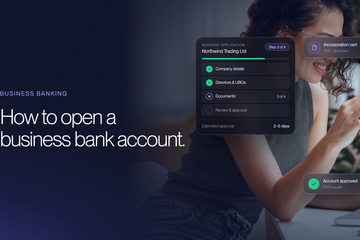
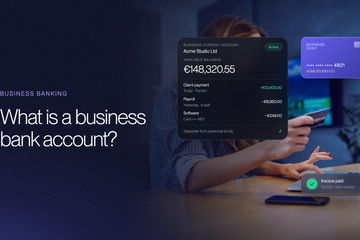
Whichever route you take, the mechanics are the same once the provider is chosen. How to open a business bank account walks the five steps and the underwriting file, and what a business bank account actually is covers the difference between a bank and an EMI, which is the choice underneath every recommendation on this page.
Open Your Company and Bank Account Together
The whole point of choosing a jurisdiction well is that a provider will bank you when you get there. Both halves are arranged together.
- Built for non-residents: no visa, no residence, no flights, no local partner.
- Jurisdiction selection: the country picked around your customers and where you can bank.
- Business banking: the account opened as part of the setup, not left to you afterwards.
- Flat fee from EUR 350: quoted in full upfront, nothing taken before the scope is agreed.
- Expert advice: licensing, holding structures and multi-country groups handled in house.