Opening an offshore bank account in Dubai gives your company AED, US dollars and other major currencies at a bank licensed by the Central Bank of the UAE. There are no exchange controls, profits move abroad freely, and the UAE left the FATF grey list in February 2024, so auditors and counterparties accept the account.
Local banks make it slow. An offshore company holds no UAE trade licence and often has no director living in the country, so most Dubai banks want a UAE-resident signatory, a branch meeting and AED 10,000 to AED 100,000 on deposit. Reviews take weeks, refusals are common, and a refusal stays on your record.
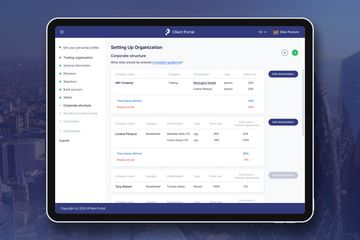
This is the part we take off your hands. Binderr works with regulated payment partners that open multi-currency accounts for offshore companies in days, online, with no minimum balance and no resident signatory. We build the KYC file, prepare the documents and handle the introduction. One team, no email chains, and the account gets opened.
Our top-rated, licensed banking providers open multi-currency accounts for offshore companies registered in Dubai and across the UAE, fully online and without a branch visit.

Equals Money
Business Bank Account
Time to onboard
2 Days
Account opening fee
Free
Monthly fee
€30

3S Money
Cross-border payments
Time to onboard
4 Days
Account opening fee
Free
Monthly fee
Starting from € 100
Why an Offshore Bank Account in Dubai Is Hard to Open
An offshore bank account in Dubai is hard to open because Dubai banks are built for companies that trade in the UAE, and an offshore company is not allowed to. With no trade licence, often no resident director and no local customers, it is a file that needs extra checks at every bank. Refusals are common. These are the reasons to know before opening an offshore bank account in Dubai.
An Offshore Company Has No Dubai Trade Licence
A UAE offshore company can hold shares, hold assets and own property in designated freehold areas. It cannot trade inside the UAE, and that is why no trade licence is issued to it. Dubai banks build their business account checks around the trade licence, because it tells them what the company does, where it operates and which authority supervises it. Without one, the bank has to judge the company from its registry documents and its owners alone, and many branches do not take that on. For an offshore bank account, Dubai banks look first at the company's link to the UAE, and an offshore company has to show that link in another way.
Most Dubai Offshore Companies Are Registered Elsewhere
JAFZA Offshore is the only offshore registry inside the Emirate of Dubai. RAK ICC is in Ras Al Khaimah and Ajman Offshore is in Ajman, yet many companies sold as Dubai offshore companies are RAK ICC companies. The bank reads the certificate, not the sales page. A JAFZA company must appoint a company secretary under Article 44 of the Jebel Ali Free Zone Offshore Companies Regulations 2018 and produce audited accounts under Article 60.4, which gives compliance teams something real to review. RAK ICC needs neither and costs less, at AED 3,250 to incorporate on its 2026 fee schedule, while Ajman Offshore is the registry banks decline most often. Our guide to offshore company setup in the UAE explains all three registries.
Open an Offshore Bank Account in Dubai
Opening an offshore bank account in Dubai becomes simple when the file is complete and the partner fits. Here is what we handle for you.
- Partners built for offshore: They take non-resident holding companies as everyday work.
- No resident signatory needed: Owners and directors can live anywhere in the world.
- Multi-currency from day one: US dollars, euro, sterling and more in one account.
- Fast opening: An account in days, fully online, with no branch visit.
- No minimum balance: Your capital stays free for the business.
- Avoid a rejection: We document your UAE link before anything is submitted.
- One team, no email chains: A single contact runs the file from start to finish.
Banks Want a Signatory at the Branch
Most Dubai banks want to meet at least one signatory in person, and many want that person to live in the UAE. Emirates NBD states in its account opening FAQ that at least one signatory must be a UAE resident, and ADCB's SmartStart account is only for UAE nationals and residents with a valid visa. First Abu Dhabi Bank is the exception on paper: the key facts statement for its Business Call Account says it is available to residents and non-residents. Many owners abroad only learn this after they apply for an offshore bank account. Dubai branches usually want the meeting before they approve anything. Our guide to opening a business bank account in Dubai for non-residents covers this in more detail.
No Economic Link to the UAE
This is the most common reason a Dubai bank declines an offshore company. The bank asks why the money should sit in Dubai rather than where the business operates, and a tax answer alone leads to a refusal. A Dubai customer or supplier, property in a designated freehold area, regular trade with other Gulf countries or a director who lives in the UAE all give a real answer. Write it down and support it with contracts or title documents before you apply.
Long Ownership Chains
Two layers of companies between the account and a real person are normal. Four layers across four countries usually end the application. Each company in the chain needs its own documents and proof of good standing, and every beneficial owner at the end is checked. If you can remove a layer before you apply, do it. Our guide to the ultimate beneficial owner shows how control is traced through each layer.
Source of Funds Without Evidence
Saying the money came from selling a business is not evidence. The share purchase agreement, the completion statement and the bank statement that received the money are. Honest applicants fail here most often, because the money is clean but the papers were never collected. UAE banks apply the Central Bank's due diligence rules and Federal Decree-Law No. 10 of 2025 on anti-money laundering, in force since 14 October 2025, so a vague answer stops the file.
High-Risk Sectors Most Banks Decline
Crypto and virtual assets, gaming, money services, forex, precious metals, adult content, cannabis and defence are declined by most UAE retail banks, whatever the structure. If the activity wording in the offshore company's documents touches one of these areas, the file often stops before anyone reads it. For a crypto business, the right starting point is often a crypto licence in Dubai rather than an offshore company.
A Refusal Stays on Your File
Dubai banks rarely explain a decline, and the next bank will usually ask whether you have been refused before. Do not send the same file to another bank the following week. Find the rule you missed first, whether it is the signatory, the UAE link, the ownership chain, the sector or the source of funds. Then open an account with our partners so the company can operate, and return to a Dubai bank later with a record of real transactions.
Read more: why banks reject business account applications.
Dubai Banks for Offshore Companies
Six or seven banks in Dubai will look at an offshore company's file. Emirates NBD, RAKBANK, First Abu Dhabi Bank, ADCB, Commercial Bank of Dubai and HSBC UAE publish their business tariffs, while Mashreq and Standard Chartered price offshore relationships case by case. All are onshore banks licensed by the Central Bank of the UAE, because the UAE has no separate offshore banking sector. The table uses each bank's own schedule of charges or key facts statement, and is worth reading before opening an offshore bank account in Dubai.
Bank | Who it takes | Who it turns away | Monthly fee or minimum |
|---|---|---|---|
Emirates NBD | Offshore companies with at least one UAE-resident signatory | Files with no signatory living in the UAE | Connect: no minimum, AED 261.45 a month after 30 days; Proprietor and Prime: AED 50,000 |
RAKBANK | Companies on its Business Current Account; strongest with RAK ICC | RAKstarter applicants without a UAE trade licence, so offshore companies | Business Current: AED 25,000 minimum, AED 103.95 a month |
First Abu Dhabi Bank | UAE residents and non-residents on its Business Call Account | Non-residents who want a debit card, which is for residents only | Business Basic and Business Call: AED 10,000, AED 250 a month below it |
ADCB | UAE nationals and residents with a valid visa on SmartStart | Owners and signatories without UAE residence | SmartStart: no minimum, AED 125 plus VAT a month |
Commercial Bank of Dubai | Selected offshore files with a large relationship | Smaller balances | Essential: AED 100,000, AED 367.50 a month below it |
HSBC UAE | Owners who already bank with HSBC abroad | Rarely a first account for a new company | AED 20,000 minimum, plus AED 920 a month per entity |
Mashreq and Standard Chartered | Case by case, often through an existing relationship | Files without a clear UAE link | Relationship based |
Read the second and third columns together. The accounts with no minimum balance need a UAE-resident signatory or a trade licence, so an offshore company struggles to get them, and the accounts that do take offshore files hold AED 10,000 to AED 100,000 of your capital. The fast digital business accounts in the UAE also need a UAE trade licence and an Emirates ID holder, so an offshore company or an owner abroad cannot use them. When founders ask for the best bank for an offshore account in Dubai, the honest answer starts with where the signatories live, because the offshore bank account Dubai banks approve most easily belongs to a company with a resident signatory, a clear UAE link and documented funds. Our guide to the best offshore business bank accounts in the UAE looks at each bank in more depth.
Minimum Balances That Lock Up Capital
The published minimum is the entry price, not the full cost. Emirates NBD's Proprietor and Prime packages both require a monthly average balance of AED 50,000, with fees of AED 262.50 and AED 157.50 a month below it, and Commercial Bank of Dubai's Essential package asks for AED 100,000. A holding company that receives dividends a few times a year often drops below the line between payments, so the fall-below fee becomes a regular charge. Offshore and non-resident files are also often offered a higher minimum after review. Our guide to minimum deposit requirements for business accounts explains how banks set these.
Charges on Every International Payment
Offshore companies mostly pay and receive abroad, and that is where Dubai banks charge the most. Emirates NBD's Business Banking schedule of charges, version 06/2025, sets up to AED 52.50 for a foreign currency transfer sent online, depending on the package, and AED 78.80 at a branch, before any correspondent bank takes its fee. Sending dirhams abroad with all charges paid by you adds AED 105. Recalling a payment costs AED 73.50 to AED 78.80, and an investigation AED 52.50 to AED 105.
Currency Margins You Do Not See
Most tariffs show the transfer fee but not the exchange margin. Emirates NBD lists a standard exchange rate on every package except Platinum, which gets premium rates, and the margin sits inside that rate. The dirham is pegged to the US dollar at 3.6725, so dollar and dirham conversions cost little. Euro, sterling and other currencies carry a wider margin, and 1.0% to 3.0% over the interbank rate is a common range for business transfers in those currencies.
Slow Onboarding and Paper-Heavy Files
Central Bank Circular C 2/2026, the SME Customer Protection Regulation, came into force on 13 September 2026. Its Article 4 requires a bank to open an SME account within three business days when the applicant is low risk and the documents are complete. A newly formed offshore company with owners abroad is rarely rated low risk on day one, and reaching a complete file takes weeks: attested foreign documents, records for every company in the chain and answers to follow-up questions. Plan in weeks, not days, when you apply for an offshore bank account. The Dubai branch process is built around paper, not speed.
Read more: business bank account requirements.
Equals Money
Business Bank Account
Time to onboard
2 Days
Account opening fee
Free
Monthly fee
€30
A Faster and Cheaper Way to Open a Dubai Business Account
There is a better route than waiting at a Dubai branch. You can open a Dubai business account for your offshore company with a regulated payment partner that works with non-resident companies every day. Our partners open multi-currency accounts in days, fully online, with no minimum balance, and they charge far less than a local bank for international payments and currency exchange. The whole process runs remotely for this kind of offshore bank account. Dubai residence is not required, and nobody has to visit a branch.
Here is how the two routes compare for an offshore company.
Feature | Dubai banks | Our partners |
|---|---|---|
Time to open | 6 to 14 weeks for an offshore file from a standing start | Usually 2 to 4 days from a complete file |
How you apply | A branch meeting with at least one signatory | Fully online, with no branch visit |
Owners and directors abroad | A UAE-resident signatory at many banks | Owners and directors can live anywhere |
Minimum balance | AED 10,000 to AED 100,000 at most banks that take offshore files | None |
Monthly cost | AED 103.95 to AED 261.45 a month, or no fee once a minimum balance is held | About €30 to €100 a month on a published plan |
Multi-currency | A separate account for each currency | Several currencies in one account |
International payments | Up to AED 78.80 per transfer at Emirates NBD, plus correspondent fees | About €5 to €25 to send, €5 or less to receive |
Foreign exchange | A margin built into the bank's standard rate | About 0.25% to 1.0% over the interbank rate |
Local dirham payments | A UAE IBAN for collecting and paying dirhams | Accounts in other currencies, with no UAE IBAN |
The table is fair to both sides. A Dubai bank gives you a UAE IBAN and, on some packages, no monthly fee once the minimum is held. For almost everything else an offshore company needs, the partner route is faster and cheaper: it opens in days, nobody flies to Dubai, no capital is locked up and every cross-border payment costs less. Our guide to a business bank account vs an EMI account explains the difference in more depth.
How to Open an Offshore Bank Account in Dubai
The process with our partners has four parts, and you never visit a branch. We check the company, its owners and its activity against the partner's criteria, so nothing goes to a partner that will not accept it. We build the KYC file together from the registry documents you already hold. The partner reviews the file and checks each person's identity online. Once approved, you fund the account from the source you declared and start using it, usually 2 to 4 days after a complete file goes in. This is how to open an offshore bank account in Dubai without flying in for a meeting. Our guide on how to open a business bank account remotely shows how each check works from a distance.
How Client Money Is Protected
A regulated payment partner does not lend out client money. It safeguards it: customer funds are kept apart from the firm's own money, usually in designated accounts at banks, so they are protected from the firm's own creditors. Many offshore companies run daily payments and working capital through the partner and add a bank account later for longer-term reserves. Read what an EMI account is for how safeguarding works in practice.
When a Dubai Bank Account Still Makes Sense
A Dubai bank account is worth adding when the company needs a UAE IBAN, for example when it holds property in Dubai and pays and receives dirhams locally. The simplest order is to open with our partners first, run real transactions for 6 to 12 months, and then approach a Dubai bank with statements instead of projections. A trading record answers most of the questions a Dubai credit committee asks.
Equals Money
Business Bank Account
Time to onboard
2 Days
Account opening fee
Free
Monthly fee
€30
3S Money
Cross-border payments
Time to onboard
4 Days
Account opening fee
Free
Monthly fee
Starting from € 100
Documents Needed for an Offshore Company Bank Account in Dubai
An offshore company bank account in Dubai needs three sets of papers: the company's own records, identity and address evidence for every person behind it, and proof of where the money comes from and why it belongs in Dubai. The list is much the same at every bank that handles an offshore bank account. The Dubai branches and our partners both start with the company's records, and the third set decides most applications.
For the Offshore Company
Prepare the certificate of incorporation, the memorandum and articles of association with every amendment, and the registers of members and directors. Add a certificate of incumbency or good standing dated within three months, a board resolution that approves the account and names the signatories, and an ownership chart with percentages at every layer. The bank will also want proof that the UBO register has been filed, which is due within 60 days of incorporation. A JAFZA company adds its Article 44 secretary and the auditor for its Article 60.4 audit.
For Each Shareholder, Director and Signatory
Each person gives a passport copy, with the UAE entry stamp if they have visited, and proof of home address dated within three months. Banks prefer a utility bill to a bank statement for this. Add a short CV or professional profile, a reference letter from a bank the person already uses, dated within three months, and a tax residence self-certification for the Common Reporting Standard. Emirates NBD states in its published FAQ that it must collect tax status information under FATCA and CRS rules, so expect this form at every bank.
Source of Funds and the Business Case
This is the part that decides the file. Show where the money comes from with documents: signed contracts with named counterparties, recent invoices, audited accounts of the businesses the holding company owns, or the sale papers for an earlier business. Then write a short note on expected monthly volumes, the countries money will move between and why the company needs an account in Dubai. Our guide to source of funds and source of wealth explains what reviewers accept.
Legalisation and Attestation of Foreign Documents
The UAE is not a party to the Apostille Convention. A document issued abroad, such as a passport copy certified in London or a parent company's register from Cyprus, needs notarisation in the country of issue, legalisation at the UAE embassy there and attestation by the UAE Ministry of Foreign Affairs. The chain takes 2 to 4 weeks, so start it while the company is being formed.
Read more: documents required to open a business bank account in the UAE and documents needed to open a business bank account.
Documents to Open an Offshore Bank Account in Dubai
Offshore files usually stall on paperwork, not on the company itself. We close the gaps before anything goes out.
- KYC pack prepared: Company records, IDs and the ownership chart checked against the list.
- Attestation started early: Embassy and MOFA steps begin while the company is formed.
- Source of funds evidenced: Contracts, statements and sale papers that reviewers accept.
- UBO register aligned: The ownership chart matches the registry filing.
- Your UAE link documented: A clear, written reason the account belongs in Dubai.
- Fewer question rounds: One complete file instead of three rounds of follow-up.
Dubai Offshore Bank Account Costs
A Dubai offshore bank account costs far more than its monthly fee. The real bill comes from the minimum balance you must leave untouched, the fall-below fees, the charges on every international payment and the margin on each currency conversion. The table sets published Dubai bank charges against our partners' plans, so you see the full cost before opening an offshore bank account in Dubai. For a wider view, see our guide to business bank account fees.
Charge | Typical range at a local bank | With our partners |
|---|---|---|
Account opening | Free at Emirates NBD and FAB; AED 262.50 for express opening at RAKBANK | Free or a low one-off fee |
Monthly fee | AED 103.95 to AED 261.45 a month; AED 920 per entity at HSBC UAE | €30 to €100 a month on a published plan |
Minimum balance or relationship | AED 10,000 to AED 100,000, often higher after review for offshore files | None |
Falling below the minimum | AED 52.50 to AED 787.50 a month | None, as there is no minimum |
Online banking users | AED 262.50 per security token at Emirates NBD | Included on the plan |
Additional currency accounts | A separate account for each currency | Included in one multi-currency account |
Local payments out | Free online at Emirates NBD, up to AED 52.50 at a branch | €0.20 to €4 per payment |
International payments in | AED 0 to AED 50 per payment | €5 or less per payment |
International payments out | AED 31.50 to AED 150 per payment, plus correspondent fees | €5 to €25 per payment |
Transfers between your own accounts | AED 10.50 to AED 131.25 at the counter after a free allowance | Free |
FX margin | 1.0% to 3.0% over the interbank rate on non-dollar currencies | 0.25% to 1.0% over the interbank rate |
Audit and reference letters | AED 31.50 to AED 210 per letter at Emirates NBD | Statements and account confirmations online |
Periodic compliance review | Relationship based, with fresh documents at each review | Included |
Closing the account | AED 105 or more within six months at Emirates NBD; no fee after six months under C 2/2026 | Usually none |
The local bank column comes from published schedules, including Emirates NBD's Business Banking schedule of charges version 06/2025, RAKBANK's price guide effective 18 April 2026 and HSBC UAE's corporate tariff effective 1 October 2026. The FX line is a market range, because banks do not print their margin, and the partner column comes from our partners' published plans. Treat both columns as planning ranges: the final price on either route is confirmed in writing before the account opens.
Most of the cost sits outside the monthly fee. A holding company that converts €300,000 a year into dollars at a 1% to 3% bank margin pays €3,000 to €9,000 for the exchange alone, against €750 to €3,000 at 0.25% to 1.0%. Eight foreign currency transfers a month at AED 78.80 cost AED 7,564.80 a year at a branch. AED 50,000 held for a minimum earns nothing, and each month below it costs up to AED 262.50 on Emirates NBD's AED 50,000 packages. Look at the full year when you price an offshore bank account. The Dubai tariffs spread the cost across many small lines.
To be fair to the banks, a Dubai account can be cheaper on the monthly fee alone. FAB's Business Basic and Emirates NBD's Proprietor package charge no monthly service fee once the minimum is held, so a company that keeps AED 50,000 there anyway and pays mostly in dirhams may find a bank account cheap. The partner route wins as soon as money crosses a border or capital needs to stay free.
Equals Money
Business Bank Account
Time to onboard
2 Days
Account opening fee
Free
Monthly fee
€30
3S Money
Cross-border payments
Time to onboard
4 Days
Account opening fee
Free
Monthly fee
Starting from € 100
How Long an Offshore Business Bank Account in Dubai Takes
An offshore business bank account in Dubai takes 6 to 14 weeks at a branch bank from a standing start, once you count attestation, building the file and the review. With our partners, the review usually takes 2 to 4 days once the file is complete, and 2 to 3 weeks from start to finish is common when documents still need preparing.
Stage | Dubai bank | Our partners |
|---|---|---|
Preparing the file | 2 to 6 weeks, including 2 to 4 weeks of attestation for foreign documents | A few days with our help, longer if documents need certifying |
Meeting or identity check | A branch meeting with at least one signatory in Dubai | Online identity check, no branch visit |
Review and follow-up questions | 1 to 2 weeks for each round, usually two rounds | Within the onboarding window |
Account open and ready | 6 to 14 weeks in total from a standing start | Usually 2 to 4 days from a complete file |
What Slows It Down
Most delays come from the same few places: foreign documents that still need attestation, an ownership chain with several layers, a thin source-of-funds story, a business case that does not explain the UAE link, and slow replies to the bank's questions. A slow reply costs more than it looks, because the file goes back into the queue instead of staying with the analyst who was reading it. Applying to three banks at once does not help either. Banks share screening tools, and parallel applications look like a search for the weakest compliance team.
The Order That Saves Weeks
If you are working out how to open an offshore bank account in Dubai, run the steps in this order. Form the company and file the UBO register, which is due within 60 days. Start attestation on every foreign document in the same week. Collect the source-of-funds evidence and write the business case, including the Dubai link. Send one complete file to one destination that fits the structure, and answer every follow-up question within 48 hours. If a Dubai bank is the destination, book the branch meeting early and fund the account above the minimum as soon as it is approved, so no fall-below fee starts in the first month.
3S Money
Cross-border payments
Time to onboard
4 Days
Account opening fee
Free
Monthly fee
Starting from € 100
What Happens After the Account Is Open
Opening an offshore bank account in Dubai starts an ongoing relationship with checks, reporting and renewals, both for the account and for the company.
Protections Under Circular C 2/2026
The Central Bank's new SME rules also protect you once the account is open. The bank must give you a key facts statement in Arabic and English before you sign, 60 calendar days' written notice of any change to the terms and 30 calendar days' notice before an automatic annual renewal. It cannot charge a closing fee on an account open for more than six months.
CRS and FATCA Reporting
There is no banking secrecy for an offshore bank account. Dubai banks report under the Common Reporting Standard, which the UAE has applied since 2017 with more than 100 partner jurisdictions. The bank identifies the people who control the company, records each one's country of tax residence and reports the balance and payments each year through the UAE authority to the tax office of that country. US persons are also reported under FATCA. Nobody is told when the report is sent, and there is no way to opt out.
Corporate Tax Still Applies to the Company
An offshore company is inside the UAE corporate tax system. Federal Decree-Law No. 47 of 2022 charges 0% on taxable income up to AED 375,000, the threshold set by Cabinet Decision No. 116 of 2022, and 9% above it. A holding company with foreign dividends often has little UAE taxable income, but it still registers and files. Small Business Relief applies to revenue of AED 3,000,000 or less under Ministerial Decision No. 73 of 2023, and Ministerial Decision No. 131 of 7 August 2026 extended it to tax periods ending on or before 31 December 2029.
Renewals, the UBO Register and Bank Reviews
The registry licence renews every year: AED 3,950 on the RAK ICC 2026 schedule, and AED 8,000 to AED 15,000 in agent quotes for JAFZA Offshore, where the secretary and the audit also recur. Update the UBO register within 30 days of any change of owner. Banks and partners refresh their files every few years and ask for new passports, the latest accounts and a current ownership chart. Tell them before you add an owner or start a new activity. Our guide on how to set up a holding company in Dubai covers the running of a holding structure.
Holding Dubai Property Through the Company
Many Dubai offshore companies exist to hold property. Article 14.2(f) of the JAFZA Offshore regulations allows the company to own property in designated freehold areas such as Dubai Marina, Downtown Dubai and Palm Jumeirah, and the Dubai Land Department also accepts RAK ICC companies, though you should confirm this in writing before you buy. The account pays the Land Department's 4% transfer fee, service charges and any developer no objection certificate, at AED 500 to AED 5,000. Under Ministerial Decision No. 229 of 2025, property income does not get the 0% qualifying free zone rate. Our guide to banking for real estate and property companies covers the account side.
Why the Company Comes Before the Account
No bank or partner can open an account for a company that does not exist yet, so opening an offshore bank account in Dubai always starts with the company. The file begins with the certificate of incorporation, the memorandum, the registers and the UBO filing. The registry you pick also shapes the file for an offshore company bank account in Dubai: JAFZA Offshore is the only one inside Dubai and brings audited accounts, RAK ICC is cheaper to run, and Ajman Offshore is the hardest to bank. Our guide to offshore company formation in Dubai walks through the JAFZA route in full.
We form UAE companies ourselves, from €1,899 and usually in about a week, and act as registered agent for offshore companies with the UBO filing included. Trusts, foundations and regulated structures are quoted separately. The KYC file we build for the company is the same file the account needs, so the account application can start the day the certificate is issued. If you are not yet sure an offshore company is the right vehicle, read about the types of companies in the UAE.

UAE Company Incorporation
Binderr
Corporate tax
0% up to AED 375,000
Freezone Tax
0%
Time to Incorporate
1 Week
Cost
Starting from €1,899
Who a Dubai Offshore Bank Account Is Wrong For
A Dubai offshore bank account is the wrong tool in four situations. If the aim is to hide money from a tax authority, it fails, because nothing is hidden in an offshore bank account. Dubai banks report it under CRS every year. If the business has customers in the UAE, it needs a company allowed to trade here, through company formation in a Dubai free zone or mainland company formation in Dubai, and our guide to opening a business bank account in the UAE covers the account for those companies. A sector most UAE banks decline needs a sector route, not an offshore company. And if the account must open next week, a new offshore file will not be rated low risk fast enough at a Dubai bank, so our partners are the realistic choice.
Common Mistakes When Opening an Offshore Bank Account in Dubai
Most delays and refusals when opening an offshore bank account in Dubai come from a few repeated mistakes. These are the ones we see most often.
Choosing the Registry Without the Bank in Mind
Founders often pick the cheapest registry first and only then look for an offshore bank account. Dubai banks then read a certificate that can make the file harder. Ajman Offshore is the registry banks decline most often, and a RAK ICC company sold as a Dubai company can raise questions at a bank. Decide the account and the company together.
Treating the Minimum Balance as Working Capital
The minimum is a monthly average, not a one-off deposit. Pay a large supplier invoice from the account and the average can fall below the line, which triggers fees of AED 52.50 to AED 787.50 a month depending on the bank and the package. Budget the minimum as locked capital from the first day.
Missing the UBO Filing
The UBO register is due within 60 days of incorporation and must be updated within 30 days of any change. An unfiled or outdated register stops a bank file, and the bank compares it with the ownership chart you send. Check that both match before you apply.
Paying for an Introduction and Nothing Else
Some formation agents charge AED 3,000 to AED 7,500 to introduce you to a bank, sometimes hidden inside an incorporation package. If the introduction is a forwarded email, the fee buys very little. Ask what is delivered, whether the file is prepared for you and whether the fee is refunded if the bank says no.
Plan Your Offshore Business Bank Account in Dubai
Not sure which registry or route fits your structure? We can tell you before you apply anywhere.
- Registry chosen for banking: JAFZA Offshore, RAK ICC or Ajman, weighed against the bank file.
- Layered ownership explained: Parent companies, trusts and owners in several countries.
- Property structures planned: Freehold purchase, the Land Department and the account together.
- Company formed for you: UAE formation from €1,899, with the account file built alongside.
- A written plan: Clear next steps sent to you after the call.
Bottom Line
Opening an offshore bank account in Dubai runs through two routes. Dubai banks want a resident signatory, a branch meeting and AED 10,000 to AED 100,000 on deposit, and they give you a UAE IBAN in return. For most offshore companies they are slow, costly on every cross-border payment and quick to refuse. Regulated payment partners open multi-currency accounts in days, online, with no minimum balance.
For most holding and trading structures, the better start is a partner account, opened without a trip to Dubai. We form the company, build the file and open the account with you, and a Dubai bank can be added later once the company has a real record. Whichever route you choose for an offshore bank account, Dubai compliance teams look for the same three things: evidenced source of funds, a short ownership chain and a real reason the money belongs in Dubai.