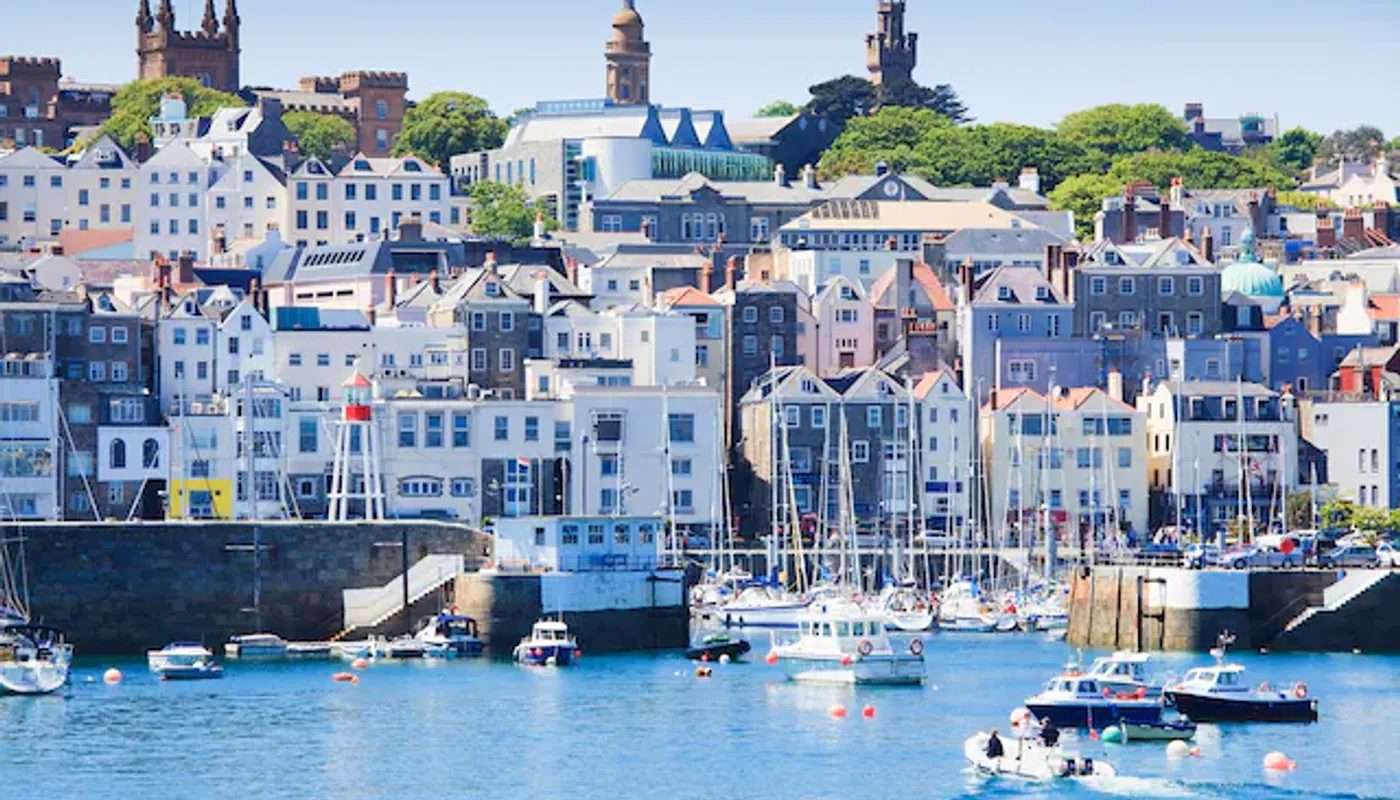
Guernsey company formation for non-residents is open to founders in any country. The island sets no residency or nationality rule, one director and one shareholder are enough, and the standard company tax rate is 0%. Nothing is withheld from a dividend paid to an owner abroad, and the ownership register is not open to public search.
Living abroad changes the route. You cannot file the company yourself, and with no director on the island the law expects a licensed provider to act as your resident agent. Your documents are certified at home, and where the board takes its decisions can decide which country taxes the profits.
Setting it up with us is simple. Binderr works with licensed resident agents in Guernsey and runs your whole setup remotely: the KYC pack, the certified documents, the Registry filing, the ownership records and the board plan. One team, one price from €1,899, and the company is ready in about a week.
Guernsey Company Incorporation
Binderr
Corporate tax
0% standard / 10% regulated activities
Capital gains and inheritance tax
0%
Time to incorporate
1 Week
Cost
Starting from €1,899
Need the general steps for any owner? Read our guide on how to incorporate a company in Guernsey.
Can a Foreigner Own and Run a Guernsey Company
Yes. Guernsey company formation for foreigners runs under the same law as for islanders, with no residency or nationality rule for directors or shareholders, so a founder living anywhere can own every share and sit alone on the board. What the law asks for instead is a local presence for the company: a registered office, a resident agent and a licensed provider to file it.
No Residency or Nationality Rule
The Guernsey Registry states that every company must have at least one director at all times, and a company may have a single member. Neither has to live in Guernsey, and the law does not list nationalities that are turned away. The checks that do apply are the provider's due diligence and sanctions screening, which every owner goes through. For Guernsey company formation for non-residents, that is the whole of the ownership rule.
How Guernsey Company Incorporation for Foreigners Differs
The law is the same for a founder in London, Dubai or New York as for one on the island. What differs is practical: a licensed provider files for you, a resident agent must be in place, each director and owner is registered with the Registry first, your papers are certified at home, and your home country may have its own view on the tax.
Guernsey Company Incorporation for Non-Residents
Guernsey company incorporation for non-residents is routine work when the agent and the file are right. This is what we take on for you.
- No residency rule: Live anywhere and still be the only director and shareholder.
- Licensed filing only: You cannot file it yourself, our licensed agents file it for you.
- Resident agent included: The island agent and registered office are in place from day one.
- 0% company tax: Most Guernsey companies pay no income tax on their profits.
- KYC pack prepared: We tell you what to certify at home and check it before filing.
- Formed in about a week: One complete file, so the agent has no rounds of questions.
- One point of contact: No email chains between you, the agent and the Registry.
What the Law Asks for Instead of Residence
Every company needs a registered office at a physical address in Guernsey. Most also need a resident agent, which is either a director who lives on the island or a licensed corporate service provider. A private individual cannot file an incorporation at all: only a corporate service provider holding a full fiduciary licence from the Guernsey Financial Services Commission can submit it.
0% Company Tax and Nothing Withheld on Dividends
The standard rate of company income tax is 0%. The 10% rate covers a closed list of regulated financial services and the 20% rate covers Guernsey property income and a few licensed local sectors, so a trading or holding company owned from abroad usually sits at 0%. There is no capital gains tax, no inheritance tax and no withholding tax on a dividend paid to a member who is not resident in Guernsey. There is no VAT or GST today; a 2026 tax package proposes a 3% GST from 2028 and was still being debated. Read more: the benefits of setting up a company in Guernsey.
Ownership Details Kept Off the Public Register
The beneficial ownership details go to the Registry, not onto a public search. The Registry, the provider and the authorities know who owns the company, and competitors do not. Our ultimate beneficial owner guide explains how ownership is traced through layers of companies and trusts.
The Resident Agent and Why It Exists
The resident agent is the person on the island the Registry can hold to account for the company. It exists because the directors and owners may all live abroad, and Guernsey still needs someone local who knows who owns the company. In Guernsey company formation for non-residents with no island director, that job goes to a licensed provider.
Who Can Act as Resident Agent
The Registry's guidance is short: only a Guernsey resident individual director of the company, or a corporate service provider, may act as resident agent. A non-resident director in Guernsey cannot take the role, so a board made up entirely of people abroad uses a licensed trust and corporate services provider. We arrange that appointment with our licensed partner, together with the registered office.
What the Resident Agent Must Do
The resident agent must take reasonable steps to find out who the beneficial owners are, keep a record of their particulars, keep it up to date, notify the Registrar of any change within 14 days and keep it confidential. The particulars are the full name including previous names, nationality, date of birth, residential address, the date the person became a beneficial owner and the grounds for it.
How the Beneficial Owner Is Identified
The Beneficial Ownership of Legal Persons (Guernsey) Law, 2017 uses three tiers, each applied only if the one before finds nobody: the individual who ultimately controls the company through ownership, then the one who controls it through other means, then the senior managing official. Where one person owns and another controls, both are recorded. A chain of foreign holding companies does not change the answer, because the agent traces it to the individuals at the top.
Exemptions and What Happens Without an Agent
The exemptions are narrow: listed companies, open ended and closed ended investment companies, supervised companies and States trading companies. None describes a standard company owned from abroad. A company that needs an agent and has none commits an offence, is liable to a civil penalty and may be struck off, and any change of agent is filed within 14 days.
Guernsey Company Incorporation
Binderr
Corporate tax
0% standard / 10% regulated activities
Capital gains and inheritance tax
0%
Time to incorporate
1 Week
Cost
Starting from €1,899
Acting as a Non-Resident Director in Guernsey
A non-resident director in Guernsey is allowed and common, and a single director living abroad can run the company alone. The consequence is not a legal one. It is a tax one: where that director really takes the decisions can decide which country treats the company as its own.
Registering Each Director With the Registry
Every director, resident agent and beneficial owner must be registered with the Guernsey Registry before they can be appointed on its system. The person uploads proof of identity and proof of address, and the Registry issues a registration number. A corporate service provider can submit it for you, and an overseas company that needs a record completes the Registry's application form instead. We run this step with the KYC pack, so it never holds up the filing.
Where a Board Abroad Takes Its Decisions
The Revenue Service's statement of practice C52 treats central management and control as a question of fact. It asks whether the directors actually exercise control and where, which may not be the place where they meet, and it warns about directors who rubber stamp decisions made elsewhere. A sole director who lives in London and decides everything there has put the company's control in London. Guernsey still treats the company as resident, so it can end up with two tax homes.
Adding a Guernsey Resident Director
Founders who want the company clearly managed in Guernsey add directors who live on the island and hold the meetings where real decisions are taken there. We quote the yearly cost with your setup, and it only works if those directors genuinely take part. Read more: how to set up a company as a non-resident.
Board Changes Within 14 Days
Any change to the directors is notified to the Registry online within 14 days. A new non-resident director in Guernsey must be registered as a person first, so send the passport and proof of address early rather than on the day of the change.
Setting Up a Guernsey Company From Abroad
Setting up a Guernsey company from abroad takes no travel at all, the same as setting up a company remotely anywhere else. The legal steps are the same for every owner. What changes in Guernsey company formation for non-residents is how you prove who you are, how your papers reach the provider and how you sign, so this section covers those parts in the order we run them.
The Legal Steps Are the Same for Everyone
A name is reserved for 3 months at £25, the memorandum and articles are prepared, and the provider files online. The Registry offers a standard service at £100 within 24 hours, a rapid one at £500 within 2 hours and a special one at £1,000 within 15 minutes. Our guide to Guernsey offshore company formation walks through those steps in full.
Agree the Board and the Tax Position First
Before any document is certified, we agree who sits on the board and where the company will be managed. That call decides whether a Guernsey resident director is needed and which documents the agent will ask for, and it is the cheapest point to change the plan.
Certify Your Documents at Home
A lawyer, notary or accountant in your own country certifies each copy as a true likeness of the original, signs it, dates it and adds their contact details. The names on the passport, the proof of address and the source of wealth papers must match exactly. A missing middle name or an old address is the most common reason a file comes back.
Apostilles for Papers Issued Abroad
An apostille is the stamp that confirms a public document from one country is genuine for use in another. Providers commonly ask for one on the registry papers of a corporate shareholder formed abroad, and we tell you which papers need one before you pay a notary.
Verify Your Identity by Video
Because nobody meets you in person, the provider may add a short video call in which you hold up your passport, or an electronic identity check with a live photo. It takes minutes. Answer the questions yourself, since the provider wants to hear the business explained by its owner.
Sign Electronically and Receive the Certificate Online
Guernsey company incorporation for foreigners ends the same way as for anyone else: forms signed electronically and a digital certificate, usually within a day of the filing on the standard service. We start the bank file from the same documents while the incorporation runs.
Set Up Your Guernsey Company From Abroad
Setting up a Guernsey company from abroad is ordinary work for us, and every step of it runs remotely.
- No travel needed: Certified copies, a video check and electronic signatures.
- Board plan agreed first: We settle who decides and where before the company exists.
- Every person registered: Directors and owners are set up at the Registry for you.
- Documents checked once: Names, dates and certifications matched before filing.
- Certificate issued online: Your certificate of incorporation arrives digitally.
- Account started in parallel: Our banking partners review the same file while we incorporate.
Documents Needed for a Guernsey Company With Foreign Owners
The Registry itself asks for little, as the Guernsey company incorporation requirements show. The provider asks for much more, because it must know every owner, director and source of money before it acts, and the bank will later ask for the same file. For Guernsey company formation for non-residents, what you send depends on who owns the shares: an individual, a foreign company or a trust.
Individual Owners and Directors
- Passport: Valid and certified, with the name matching every other document.
- Proof of address: A utility bill or bank statement, usually from the last 3 months.
- Source of wealth: How the money behind the company was earned, with supporting papers.
- Tax residence: The country where you are tax resident and your tax number there.
- Profile: A short CV or professional profile, especially for directors.
A Foreign Company as Shareholder
Where a company formed abroad will hold the shares, the provider needs its certificate of incorporation, a recent certificate of good standing, its register of directors and members, its constitution, a board resolution approving the investment and an ownership chart up to the individuals at the top. These registry papers are the ones most often asked for with an apostille. If an overseas company needs its own record at the Registry, for example to act as a director, it completes the Registry's application form for overseas bodies.
A Trust Above the Company
Where a Guernsey trust or a foreign trust owns the company, the Registry's definition reaches into it. The record can include the beneficiaries of a fixed trust, the trustees, and anyone with power to appoint or remove trustees, direct distributions or investments, or amend or revoke the trust. Expect to send the trust deed or a certified extract and the identity papers of each of those people.
Translations and Timing
Anything not in English needs a certified translation, and a proof of address older than about 3 months is usually refused, so certify close to the date you send. The provider's checks follow the island's anti money laundering rules, set out in our guide to KYB compliance in Guernsey.
Guernsey Company Incorporation
Binderr
Corporate tax
0% standard / 10% regulated activities
Capital gains and inheritance tax
0%
Time to incorporate
1 Week
Cost
Starting from €1,899
Where a Guernsey Company Is Tax Resident When the Directors Live Abroad
By default, in Guernsey. A company incorporated on the island is resident there under section 4 of the Income Tax (Guernsey) Law, 1975, wherever its directors live. The catch is that another country can claim the same company if the real decisions are taken there.
The Three Guernsey Residence Tests
Under section 4, a company is resident in Guernsey if it is incorporated there, if it is controlled or centrally managed and controlled there, or if it is controlled by individuals resident in Guernsey. Section 122 defines control as the power to secure, through shares, loans or voting power, that the company's affairs are run as that person wishes. Any one test is enough, so a company formed on the island keeps Guernsey residence even when its board lives abroad.
How Guernsey Judges Central Management and Control
Statement of practice C52, updated on 7 February 2022, asks whether the directors actually exercise central management and control, where they actually exercise it, and, in unusual cases, who really controls the company if the directors do not. Tax authorities abroad ask the same questions, which is why the board's habits matter more than its address.
When Two Countries Claim the Same Company
Where a treaty exists, it breaks the tie. The agreement between the United Kingdom and Guernsey, signed on 2 July 2018, deals with a company resident in both in Article 4(3): the two tax authorities try to agree which territory it belongs to, and until they do it cannot claim the benefits of the agreement apart from Articles 22, 24 and 25. Where no treaty exists, both countries can tax.
Asking Guernsey to Treat the Company as Non-Resident
Some founders want the company taxed at home on purpose. Section 4(2) allows a Guernsey company to be treated as not resident if it is tax resident in another territory, its business is centrally managed and controlled there, that residence results from an approved tax treaty or the highest company tax rate there is at least 10%, and the arrangement is not motivated by avoiding, reducing or deferring tax. The company applies on Form 707 with proof of its residence elsewhere, and must tell the Revenue Service if its circumstances change.
A Certificate of Residence for Banks and Treaty Claims
Where the company stays Guernsey resident, the Revenue Service issues a certificate of residence on request for £25 each, which banks and tax advisers abroad often ask for. Read more: the UK residence risk for a Guernsey holding company.
Tax at Home for a Non-Resident Owner
Guernsey's 0% is the tax on the island, not the whole bill. Your home country decides what you pay on dividends, and many tax the company's profits before any dividend. The notes below are general, so take advice at home before the company trades.
Owners Living in the UK
A company whose central management and control sits in the UK is UK resident, whatever its place of incorporation, under the test HMRC takes from the De Beers case, and pays UK corporation tax at up to 25%. The UK controlled foreign company rules charge only UK resident companies holding an interest of at least 25%, not individuals. Such a company may escape through the low profits exemption, which covers profits of no more than £500,000 with no more than £50,000 of non-trading income, but not through the tax exemption, which needs local tax of at least 75% of the UK equivalent. Individuals face the transfer of assets abroad rules instead: sections 720, 727 and 731 of the Income Tax Act 2007 can treat the company's income as theirs, unless tax avoidance was not a purpose or the transactions were genuinely commercial. If the business will really be run from the UK, a UK company registration is often simpler.
US Citizens and Residents
The United States taxes its citizens and residents on worldwide income, so a Guernsey company rarely removes US tax. A foreign company more than 50% owned by US shareholders, each holding at least 10%, is a controlled foreign corporation, and its passive income can be taxed each year under Subpart F. The tax on global intangible low taxed income was renamed net CFC tested income for tax years beginning after 31 December 2025, and it reaches active profits too. Each US shareholder files Form 5471, and a smaller passive holding can fall under the passive foreign investment company rules instead.
Owners Living in the EU
Every member state applies controlled foreign company rules under Council Directive (EU) 2016/1164, the Anti Tax Avoidance Directive. Article 7 catches a foreign company where an EU company, alone or with associated enterprises, holds more than 50% and the foreign company's actual tax is lower than the difference between the tax it would pay in the member state and the tax it actually paid. At 0%, that test is met. The directive covers companies, and several member states apply their own rules to individuals too. Where the business and its customers are all in the EU, read our guide to European holding company formation.
Owners Living in the UAE
The UAE charges no personal income tax, so the question is where the company is managed. Under Federal Decree Law No. 47 of 2022, a company formed abroad is a UAE resident person if it is effectively managed and controlled in the UAE, and then pays 0% on the first AED 375,000 of taxable income and 9% above that. If the business really lives in Dubai, company formation in the UAE may fit better.
Owners Living Anywhere Else
Ask three questions at home: does my country tax a foreign company managed from here, does it tax me on the profits of a company I control before any dividend, and how are dividends from a 0% company taxed. Guernsey exchanges financial account information under the Common Reporting Standard, so assume your tax authority will see the structure.
Cost of Guernsey Company Formation for Non-Residents
Our price for Guernsey company incorporation for non-residents starts from €1,899, paid once, for a standard company limited by shares. It covers the structure and board advice, the KYC pack and the check of your certified documents, the Registry person registrations, the name reservation, the constitution, the Registry fee, the resident agent and registered office at formation and the first ownership filing, confirmed in writing before you pay. Trusts, foundations, cell companies and regulated structures are quoted separately and can cost more.
The price is not the whole first year. After Guernsey company formation for non-residents, the company relies on a licensed provider on the island every year.
Cost item | When it is paid | Typical amount | What it covers |
|---|---|---|---|
Guernsey company formation with Binderr | Once, before filing | From €1,899 | Advice, KYC pack, person registrations, name, constitution, the Registry fee, the agent and office at formation, the first ownership filing |
Resident agent and registered office renewal | Each year, quoted with your setup | About €2,000 to €4,500 a year, as a planning range | The licensed provider, the island address and the ownership record |
Annual validation | 1 January to the last day of February | £525 for a provider administered company | The yearly confirmation of company details |
Corporate tax return | By 30 November following the year of charge | Usually inside the provider's annual fee | The Guernsey return at 0% and the substance answers |
Accounts preparation | Each year | About €900 to €2,500 a year, as a planning range | Accounts for the members, the bank and your adviser at home |
Guernsey resident director | Each year, only where the board needs one | Quoted with your setup | A director who meets and decides on the island |
Tax advice in your home country | Before filing, then each year | Set by your own adviser | Residence, controlled company rules and dividend tax at home |
Business account with our banking partners | Monthly, once open | About €30 to €100 a month on a published plan | A multi-currency account with real IBANs |
Realistic first-year total | Year one | About €5,500 to €10,500 | Our price, the provider, the filings, accounts and banking |
The Registry figures are fixed. The rest are market prices that move with the size of the file.
First-Year Cost by Owner Profile
Who owns the company, and where it is managed, moves the total more than the formation fee.
Owner profile | Realistic first year | What drives the cost |
|---|---|---|
One owner abroad, director abroad, simple company | About €5,500 to €8,000 | The provider and the office, on the lightest file |
Company with a Guernsey resident director | About €5,500 to €8,000 plus the director's fee | The director's fee, quoted with your setup |
Owned through a foreign company or a trust | About €6,500 to €10,500 | More layers to verify, more bank questions and more filings |
Company that lends to or finances a group | About €10,000 to €20,000 | Financing substance, so people and decisions on the island |
Cell company, fund or regulated business | Quoted separately | GFSC consent, audited accounts and specialist advice |
Treat these as a budget and your written quote as the number that counts. Read more: how much a Guernsey company costs and our guide to company formation costs.
Guernsey Company Incorporation
Binderr
Corporate tax
0% standard / 10% regulated activities
Capital gains and inheritance tax
0%
Time to incorporate
1 Week
Cost
Starting from €1,899
How Long It Takes to Set Up From Abroad
Guernsey company formation for non-residents takes about a week with us, counted from the day your documents are complete. The Registry takes hours. The days go on due diligence, certification and the person registrations, which is where an owner abroad can save or lose time.
Stage | Typical time | What happens |
|---|---|---|
Board and tax call | 1 day | We agree the board, where it decides and the document list |
KYC pack with certified copies | 2 to 4 days, longer where certification or apostilles are slow | You certify at home and we check every name and date |
Video check and person registrations | Alongside the KYC pack | Identity confirmed and each person registered at the Registry |
Name reservation and constitution | 1 day | A £25 reservation for 3 months, then the memorandum and articles |
Registry filing | 24 hours standard, 2 hours rapid, 15 minutes special | The incorporation and ownership information filed together |
Account with our banking partners | Usually 2 to 4 days from a complete file | A multi-currency account opens for the company |
A slow notary, an apostille that has to be ordered, or a corporate shareholder whose registry is slow to issue a good standing certificate adds days.
How to Keep It to a Week
Order any apostille on the first day, certify everything in one notary visit and answer the video check promptly. We ask for missing items in one message.
Guernsey Company Formation for Non-Residents From €1,899
The price starts from €1,899 with us, and you see the whole first-year budget before you pay anything.
- From €1,899: Our one-off price for a standard Guernsey company.
- Registry fee included: The incorporation fee is part of our quote, not an extra.
- First year shown upfront: Plan on about €5,500 to €10,500 for a company owned from abroad.
- Agent renewal in writing: The biggest yearly cost is agreed before you commit.
- Deadlines on our calendar: The February validation and the November return tracked for you.
- Trusts and cells quoted apart: Trusts, cell companies and regulated vehicles priced on their own.
Banking for a Guernsey Company Owned From Abroad
The account needs the most patience after the incorporation. Guernsey has around 21 licensed banks holding about £71 billion in deposits at June 2026, but most serve island businesses, trust company clients and wealthy families, and a company owned from abroad often waits weeks. Our regulated partners open a multi-currency account in days. Our Guernsey offshore banking guide covers the local market.
Feature | Guernsey banks | Our partners |
|---|---|---|
Time to open | Several weeks for a company owned from abroad | Usually 2 to 4 days from a complete file |
Who they accept | Companies with an island link or a large relationship | Guernsey companies owned and run from abroad |
Minimum balance | Often a substantial relationship | None |
Monthly cost | In line with other offshore banks, relationship based | About €30 to €100 on a published plan |
Multi-currency | A separate account for each currency | Several currencies in one account, with real IBANs |
International payments and FX | £25 to £37 per SWIFT payment at Butterfield, margins of 1% to 3% | About €5 to €25 to send, 0.25% to 1.0% over interbank |
A private bank still suits a family that wants investment management alongside the account, and once a company has a year of accounts you can open a Guernsey business bank account as well. For a new company that needs to receive and send money, the partner route opens faster and costs less. Read more: Guernsey bank accounts for non-resident companies.
Why Island Banks Hesitate With Owners Abroad
NatWest International wants an owner or director who lives in the Channel Islands, the Isle of Man or Gibraltar, and private banks such as Butterfield usually want a trust company introduction and a large relationship. A founder abroad with a new company fits neither, and refusals are common even on clean files. See the best banks for Guernsey companies.
Faster Accounts Through Our Banking Partners
We work with regulated payment partners that open multi-currency business accounts for Guernsey companies owned from abroad in days, fully remotely and with no minimum balance. We build the file from the incorporation documents and make the introduction. If these accounts are new to you, read what an EMI account is.

Equals Money
Business Bank Account
Time to onboard
2 Days
Account opening fee
Free
Monthly fee
€30

3S Money
Cross-border payments
Time to onboard
4 Days
Account opening fee
Free
Monthly fee
Starting from € 100
Visiting Guernsey and When You Actually Need To
Guernsey company formation for non-residents never needs a visit. A trip becomes useful in two cases only: when you want board meetings held on the island so the company is clearly managed there, and when a local bank insists on meeting you, which our banking partners do not.
Never for the Incorporation Itself
Identity checks, certification, signatures, the Registry filing and the certificate all run remotely. Many founders own a Guernsey company for years without visiting the island.
Board Meetings on the Island
If the plan is for the company to be managed in Guernsey, the meetings where the real decisions are taken should happen there, with a quorum present and the minutes kept on the island. A director abroad can travel for those meetings or rely on resident directors who genuinely decide. Signing minutes at home that describe a meeting in Guernsey is the one habit to avoid.
Getting to the Island
Guernsey is part of the Common Travel Area with the United Kingdom, Ireland, Jersey and the Isle of Man. Check the entry rules for your nationality before you book, as you would for the UK.
Running a Non-Resident Guernsey Company Each Year
Once Guernsey company formation for non-residents is done, the yearly list is short and the dates are fixed. The provider handles most of it on the island, and you keep the board decisions and your own tax filings at home.
Obligation | Deadline | Who handles it | If it is late |
|---|---|---|---|
Annual validation | 1 January to the last day of February | The provider | Automatic penalties, up to £1,800 for a provider run company |
Beneficial ownership changes | Within 14 days | The resident agent | Civil penalties, and a stale record is a problem at the bank |
Director and resident agent changes | Within 14 days | The provider | Civil penalties, and no valid agent in the meantime |
Corporate tax return | 30 November following the year of charge | The provider or your accountant | Penalties from the Revenue Service |
Accounting records | Kept for at least 6 years | The company | A bank, a buyer or a tax authority will ask for them |
Board meetings and minutes | Through the year | The directors | The residence position weakens |
Since January 2026 the validation also asks whether the company holds high value assets over £5 million.
What the Provider Handles
The provider files the validation with the Guernsey Registrar of Companies, keeps the registered office, holds the ownership record and files changes to it, and usually prepares the Guernsey tax return.
What Stays With You
The board keeps the decisions, so the minutes must show real decisions by real directors. Your tax filings at home stay with you too, including any controlled company return your country requires.
When Your Own Details Change
A move abroad, a new name or a new passport must reach the resident agent, because the ownership record carries your address and nationality, and changes go to the Registry within 14 days. A move can also change where the company is managed, so tell us before you move.
Guernsey vs Jersey and the Isle of Man for Non-Residents
Anyone weighing Guernsey company formation for non-residents usually looks at the other two Crown Dependencies as well. All three have no residency rule, tax most companies at 0% and rely on a licensed local provider for an owner abroad. The local role, the sales tax and the yearly cost separate them.
Factor | Guernsey | Jersey | Isle of Man |
|---|---|---|---|
Residency rule for directors and owners | None | None | None |
Local role for an owner abroad | Resident agent, a Guernsey resident director or a licensed provider | A JFSC licensed provider files and administers | A licensed registered agent for a 2006 Act company |
Ownership changes reported | Within 14 days, by the resident agent | Within 21 days, through the nominated person | Within 21 days, by the nominated officer |
Standard company tax | 0% | 0% | 0% for most activities |
Sales tax | No VAT or GST today | GST at 5% | Inside the UK VAT area at 20% |
Yearly filing and fee | Annual validation, £525 for a provider administered company | Annual confirmation statement, £330 including the levy | Annual return, £380 |
Our price | From €1,899 | From €1,499 | From €1,499 |
Time to incorporate | About 1 week | About 1 week | About 1 week |
Guernsey costs more to form and run, but has no sales tax and the fastest Registry service. Jersey and the Isle of Man are cheaper each year.
Guernsey vs Jersey
Jersey has no residency rule either. An owner abroad uses a JFSC licensed provider, which applies for consent to issue shares and usually acts as the nominated person reporting ownership changes within 21 days. Jersey charges GST at 5% and its confirmation statement costs £330, against Guernsey's £525 validation. We form Jersey companies from €1,499 in about a week. Read about setting up a business in Jersey as a non-resident, or our full comparison of Guernsey vs Jersey for company incorporation.
Jersey Company Incorporation
Binderr
Corporate tax
0% standard / 10% financial services
Time to incorporate
1 Week
Cost
Starting from €1,499
Guernsey vs the Isle of Man
The Isle of Man has no residency or nationality rule, and its 2006 Act companies need a licensed registered agent, much like Guernsey's resident agent. A nominated officer, who must live on the island or be a Class 4 licensed firm, reports owners of 25% or more within 21 days. The island sits inside the UK VAT area and its annual return costs £380. We form Isle of Man companies from €1,499 in about a week. Read about Isle of Man registered agent requirements.

Isle of Man Company Incorporation
Binderr
Corporate tax
0% for most activities
Time to incorporate
1 Week
Cost
Starting from €1,499
When a Guernsey Company Is the Wrong Choice for a Non-Resident
Guernsey company formation for foreigners is a good answer for many founders, but not all. The company costs more to run than one at home, and its value depends on the tax position at home as much as on the island.
You Will Run Everything From Home
If every decision will be taken at home and you do not want Guernsey resident directors, your home country may treat the company as resident there. You then pay home tax plus a Guernsey provider, the worst of both.
Your Home Country Taxes the Profits Anyway
Where controlled company rules or a charge such as net CFC tested income will tax the profits in your hands each year, the 0% rate saves little. The structure can still make sense for other reasons, but not for tax alone.
Your Business and Customers Are All in the EU
Guernsey is not in the European Union, so a company here does not get the EU directives that remove withholding tax between member states, and an EU company, or one of the other best jurisdictions for non-resident company owners, is often the better fit.
Common Mistakes Non-Residents Make With a Guernsey Company
Most problems come from distance: decisions taken in the wrong place, papers that do not match and a bank account left too late. Each is cheap to avoid and expensive to fix.
Signing Minutes Drafted at Home
A board that signs minutes written elsewhere, for meetings that did not really happen in Guernsey, leaves the real control at home, which is exactly what your home tax authority looks for. Decide where the company is managed and make the meetings match.
Sending Papers That Do Not Match
A passport in one spelling, a bank statement in another and a certification without a date send the file back. Check every document against your passport before the notary appointment.
Leaving the Bank Account Until Last
A company that sits for months without an account looks dormant to a bank. Start the account while the incorporation runs.
Talk to Us About a Non-Resident Guernsey Company
Some setups need a conversation before anything is filed. If one of these describes yours, start with a call.
- Living in the UK: Where the board meets, and how CFC and transfer of assets rules apply.
- US shareholders: Form 5471 and the CFC charges planned before year one closes.
- Run from Dubai: Where the company is managed, so UAE corporate tax is planned.
- Owned through a trust: Who the Registry records as the owner and what they must send.
- Taxed at home by choice: Whether non-resident status on Form 707 suits your case.
- An existing company to fix: Missed filings, a thin board record or an agent change.
Bottom Line
Guernsey company formation for non-residents works well. There is no residency or nationality rule, one director and one member are enough, the standard tax rate is 0%, and nothing is withheld on dividends paid to you. In return the company needs a registered office, a licensed resident agent when no director lives on the island, every director and owner registered with the Registry, and ownership changes reported within 14 days.
What living abroad really changes is tax. The company is Guernsey resident because it was incorporated there, but your home country can claim it if you run it from home and can tax the profits in your hands. Settle the board, the place of management and the home tax position first. After that, Guernsey company incorporation for non-residents is paperwork we handle, from €1,899 and about a week to the certificate.