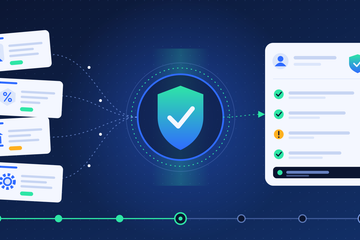
For UK electronic money institutions (EMIs) and payment firms, fast onboarding must go hand in hand with strong financial crime controls. As digital wallets, cross-border payments, and merchant services grow, manual checks can slow customer verification and increase compliance workloads. Effective KYC for EMIs UK helps businesses verify identities, assess risks, and onboard customers securely.
The risks are growing. According to the FCA, suspected money mule account offboarding by EMIs increased by 164.6% in 2025 compared with 2024. This highlights the importance of stronger identity checks and ongoing monitoring. Meeting FCA KYC payment firms expectations requires reliable customer due diligence, risk assessments, and financial crime controls.
Modern KYC software simplifies UK payments KYC through automated identity verification, AML screening, business checks, and continuous monitoring. In this guide, we'll explore the best KYC software for UK EMIs and payment firms, including essential features, regulatory requirements, pricing, and how to choose the right solution.
Binderr KYC Software for UK EMIs and Payment Firms
Managing customer verification, merchant onboarding, and AML checks across multiple systems can slow down payment operations.
Binderr brings essential compliance tools into one platform, helping UK EMIs and payment firms verify customers faster, reduce manual checks, and strengthen risk-based compliance.
How Binderr Helps:
- AI-Powered KYC Verification: Verify customers across 230+ countries with support for 11,000+ identity document types, biometric face matching, and liveness detection.
- Automated KYB Checks: Verify businesses using corporate registry information from 200+ countries and 30,000+ data sources.
- AML Screening: Screen individuals and businesses against sanctions, PEP, watchlist, and adverse media databases.
- UBO Identification: Identify beneficial owners and map complex corporate ownership structures.
- Dynamic Risk Assessment: Automatically assess customer risk using identity, business, and AML screening information.
- Ongoing Monitoring: Track changes in customer risk profiles and receive automated alerts for relevant screening updates.
What Is KYC Software for EMIs and Payment Firms?
KYC software for EMIs and payment firms automates identity verification, customer due diligence, and financial crime risk assessments. Effective KYC for EMIs UK combines identity checks, KYB verification, beneficial ownership checks, AML screening, and ongoing monitoring.
Modern platforms use biometric verification, liveness detection, and automated workflows to simplify onboarding and reduce fraud risks. To support FCA KYC payment firms expectations, these tools maintain compliance records and risk assessments. However, UK payments KYC remains part of a broader AML framework that also includes transaction monitoring and suspicious activity reporting.
Simplify Compliance for Free
Why Do UK EMIs and Payment Firms Need KYC Software?
UK EMIs and payment firms face growing challenges in customer verification, financial crime prevention, and regulatory compliance. Effective KYC software helps simplify these processes while supporting faster, more secure onboarding.
Here’s why KYC software is essential for UK EMIs and payment firms:
Meet UK AML and KYC Obligations - KYC software helps EMIs and payment firms meet applicable UK AML requirements through automated identity verification, customer due diligence (CDD), and secure recordkeeping. It supports risk-based compliance processes and helps firms maintain documented evidence of their checks for regulatory reviews.
Accelerate Customer and Merchant Onboarding - Manual document collection and repetitive verification can delay customer approvals and merchant onboarding. Automated KYC and KYB software streamlines identity checks, business verification, and data collection, helping payment firms reduce processing times, eliminate duplicate tasks, and improve onboarding efficiency.
Detect Identity Fraud and Impersonation - Payment firms face risks from forged documents, stolen identities, and impersonation attempts. Modern KYC software uses document authenticity checks, biometric face matching, and liveness detection to identify suspicious applications, flag potential fraud, and prevent unauthorised account access.
Strengthen AML and Sanctions Risk Controls - KYC software helps payment firms screen customers and relevant connected parties against sanctions lists, politically exposed person (PEP) databases, and adverse media sources. Automated alerts and risk scoring help compliance teams investigate potential matches, identify higher-risk relationships, and take appropriate action.
Support Cross-Border Payment Operations - International payments involve customers from different jurisdictions, each presenting distinct verification and financial crime risks. KYC software supports multilingual onboarding, international identity document verification, and country-specific risk assessments, helping EMIs manage cross-border compliance more efficiently.
Improve Compliance Oversight and Audit Readiness - KYC software centralises customer records, verification results, risk assessments, and compliance decisions in one system. Built-in audit trails, case management, and reporting tools help payment firms track due diligence activities, demonstrate regulatory oversight, and prepare for internal audits or FCA reviews.
Automate the Customer Verification Process with Binderr
From initial identity verification to risk assessment and ongoing monitoring, manual KYC processes can delay customer approvals. Binderr connects these steps through automated workflows, helping payment firms streamline onboarding while maintaining consistent due diligence records.
How Binderr Simplifies the Process:
- Collect Customer Information: Use customisable forms to gather identification details, supporting documents, and business information.
- Verify Identities Faster: Automate document authentication, OCR data extraction, biometric matching, and liveness checks.
- Screen Customers for Risk: Run sanctions, PEP, watchlist, and adverse media checks during onboarding.
- Assess Customer Risk: Generate dynamic risk scores using identity verification, business information, and AML screening results.
- Streamline CDD and EDD: Trigger enhanced verification workflows, request additional documents, and escalate higher-risk cases.
- Maintain Compliance Records: Centralise verification results, review decisions, and audit trails for compliance oversight.
Quick Comparison of KYC Software for UK EMIs and Payment Firms
Choosing the right KYC software for UK EMIs and payment firms means comparing identity verification, AML screening, automation capabilities, and compliance features.
Here's a quick comparison of leading KYC software solutions to help you find the best fit for your payment business:
Provider | ID Document Verification | Proof of Address (PoA) | Liveness Detection | Anti-Fraud / Deepfake Detection | OCR Data Extraction |
Binderr | ✅ | ✅ | ✅ | ✅ | ✅ |
Sumsub | ✅ | ✅ | ✅ | ❌ | ✅ |
iDenfy | ✅ | ❌ | ✅ | ❌ | ✅ |
Jumio | ✅ | ❌ | ✅ | ❌ | ✅ |
Onfido | ✅ | ❌ | ✅ | ❌ | ✅ |
Start Free. Upgrade When Ready.
Essential Features of KYC Software for EMIs and Payment Firms
Choosing the right KYC software requires evaluating features based on customer types, payment services, geographical risks, and regulatory obligations.
For UK EMIs and payment firms, effective software should combine automated verification, risk assessment, and ongoing compliance monitoring to simplify onboarding and strengthen financial crime controls.
Automated Identity Verification
Automated identity verification helps payment firms verify customers using passports, driving licences, and other government-issued documents. Advanced KYC software uses optical character recognition (OCR), document authenticity checks, and automated data extraction to detect inconsistencies, reduce manual errors, and speed up customer onboarding.
Biometric Verification and Liveness Detection
Biometric verification adds an extra layer of security by comparing a customer's facial image with their identity document. Liveness detection helps identify spoofing attempts, manipulated images, and certain deepfake threats. These capabilities strengthen KYC for EMIs UK by helping prevent identity fraud while keeping digital onboarding fast and secure.
Business Verification (KYB) and UBO Identification
KYB software helps payment firms verify corporate customers through company registry checks, business information validation, and ownership structure analysis. It also identifies ultimate beneficial owners (UBOs), directors, and shareholders, helping EMIs assess complex merchant relationships, uncover hidden ownership risks, and streamline corporate onboarding.
AML Screening and Risk Assessment
AML screening tools check customers and relevant connected parties against sanctions lists, politically exposed person (PEP) databases, and adverse media sources. Configurable risk scoring and automated alerts help compliance teams identify potential matches, investigate suspicious relationships, and apply appropriate due diligence measures. These features support FCA KYC payment firms compliance expectations through stronger risk-based controls.
Ongoing Customer Monitoring
Customer risk can change after onboarding due to new sanctions, political exposure, ownership changes, or suspicious activities. Ongoing monitoring tools enable periodic and event-driven rescreening, automated risk alerts, and updated customer assessments. This helps payment firms maintain accurate KYC records and identify emerging financial crime risks throughout the business relationship.
Customer Due Diligence and Enhanced Due Diligence
CDD and EDD tools help EMIs collect customer information, verify identities, assess risk levels, and request additional documents when necessary. For higher-risk relationships, software can support source-of-funds checks, enhanced screening, and risk-based approval workflows. These capabilities strengthen UK payments KYC processes while helping firms meet applicable AML obligations and maintain clear compliance records.
Verify Merchants and Uncover Complex Ownership with Binderr
Merchant onboarding can become complicated when businesses have multiple shareholders, overseas entities, or layered ownership structures. Binderr's KYB and UBO verification tools help UK EMIs and payment firms validate corporate customers, understand ownership relationships, and identify potential financial crime risks.
Key Features:
- Global Business Verification: Access corporate information from 200+ countries and 30,000+ data sources.
- Company Registry Checks: Retrieve business registration details, company status, directors, and shareholder information.
- UBO Identification: Identify individuals who ultimately own or control a business.
- Ownership Structure Mapping: Visualise multi-layered corporate relationships and indirect ownership chains.
- Director and Shareholder Screening: Screen relevant individuals against sanctions, PEP, and adverse media sources.
- Risk-Based Due Diligence: Combine corporate verification and AML screening results to support customer risk assessments.
Top 6 KYC Software Solutions for EMIs and Payment Firms in the UK
Here are six KYC software providers worth considering for UK EMIs and payment firms.
Binderr
Binderr is an integrated compliance platform designed to help UK EMIs and payment firms manage customer verification, business due diligence, and financial crime risks through connected workflows. It combines automated KYC, KYB verification, AML screening, beneficial ownership identification, and ongoing monitoring, reducing the need to manage multiple disconnected compliance tools.
For payment businesses onboarding both individuals and corporate merchants, Binderr supports risk-based customer due diligence, automated verification, and centralised compliance records. Its configurable workflows and monitoring capabilities help compliance teams reduce repetitive manual checks, investigate potential risks, and maintain oversight throughout the customer relationship.
Key Features:
- Automated Identity Verification: Verify customers using government-issued identity documents, OCR data extraction, biometric face matching, and liveness detection to accelerate digital onboarding and identify potential identity fraud.
- Business Verification (KYB): Verify corporate customers using company registration information, director and shareholder details, and business records to simplify merchant onboarding and corporate due diligence.
- UBO Identification and Ownership Mapping: Identify ultimate beneficial owners, analyse complex ownership structures, and establish greater transparency over corporate relationships and potential financial crime risks.
- AML Screening and Risk Assessment: Screen individuals and businesses against sanctions lists, politically exposed person (PEP) databases, and adverse media sources while applying configurable customer risk assessments.
- Ongoing AML Monitoring: Automatically rescreen customers and identify changes in sanctions exposure, political connections, or adverse media information to support continuous risk oversight.
- Automated Compliance Workflows: Manage customer due diligence, enhanced due diligence, document collection, approvals, and audit trails through customisable workflows that reduce manual compliance work.
Best For: UK EMIs, payment institutions, fintech companies, and merchant service providers seeking unified KYC, KYB, and AML capabilities. Particularly suitable for businesses looking to automate customer onboarding and manage ongoing compliance from one platform.
Sumsub
Sumsub is a digital identity verification and compliance platform helping financial institutions, fintech businesses, and payment providers onboard customers across multiple jurisdictions. Its platform combines document authentication, biometric verification, fraud detection, AML screening, and business verification to support digital onboarding at scale.
For UK EMIs and payment firms managing high customer volumes, Sumsub offers configurable verification workflows that can adapt to different customer types and risk levels. Its broader platform also includes AML transaction monitoring and case management, making it relevant to businesses seeking compliance capabilities beyond initial identity checks.
Key Features:
- Automated Identity Document Verification: Authenticate passports, driving licences, national identity cards, and other supported documents using automated data extraction and authenticity checks.
- Biometric Verification and Liveness Detection: Compare customer selfies with identity document photographs and perform liveness checks to identify impersonation attempts and fraudulent applications.
- Global Document Verification: Support international customer onboarding through extensive identity document coverage, helping payment firms verify applicants across multiple countries.
- AML Screening and Ongoing Monitoring: Screen customers against sanctions lists, PEP databases, and adverse media sources while monitoring changes in customer risk profiles.
- Business Verification and KYB: Verify company registration details, investigate ownership structures, and assess relevant business information to support corporate customer and merchant onboarding.
- Fraud Detection and Workflow Automation: Use device intelligence, risk scoring, configurable verification journeys, and automated case management to identify suspicious applications and streamline onboarding decisions.
Best For: UK EMIs, fintech platforms, digital wallets, and payment processors handling high-volume or international customer onboarding. Particularly suitable for businesses requiring scalable identity verification alongside fraud prevention and AML tools.
iDenfy
iDenfy is an identity verification and compliance platform that combines automated KYC, fraud prevention, AML screening, and business verification. It helps financial services businesses verify customer identities, detect suspicious onboarding attempts, and manage verification workflows without relying entirely on manual reviews.
For UK payment businesses, iDenfy provides flexible verification options through APIs, SDKs, and no-code tools. Its identity verification capabilities can be combined with additional AML and KYB services, helping growing fintech companies adapt their compliance processes as onboarding volumes and risk requirements change.
Key Features:
- AI-Powered Identity Verification: Verify government-issued documents using automated data extraction, document authenticity checks, and identity validation to reduce onboarding delays and manual errors.
- Biometric Face Matching and Liveness Detection: Compare customer selfies with identity documents and detect presentation attacks, helping prevent impersonation and fraudulent account creation.
- AML and Sanctions Screening: Screen individuals and businesses against sanctions lists, PEP databases, and other relevant watchlists to identify potential compliance risks.
- KYB and Business Verification: Support corporate onboarding through business information checks, company verification, and beneficial ownership investigations.
- Fraud Prevention and Risk Detection: Use document analysis, identity fraud indicators, and configurable verification rules to identify suspicious applications before account activation.
- Flexible Integration and Workflow Options: Integrate identity verification into existing payment applications using APIs, SDKs, white-label journeys, and no-code tools, with additional enterprise compliance capabilities available.
Best For: Growing UK payment institutions, fintech startups, and digital financial services businesses seeking adaptable identity verification and fraud prevention. Suitable for teams that want to begin with KYC and expand into KYB and AML monitoring as their compliance needs evolve.
Jumio
Jumio is a digital identity verification provider that uses artificial intelligence, biometric authentication, and document verification technology to help businesses establish customer identities and detect fraud. Its platform combines identity checks, liveness detection, and risk signals to support secure customer onboarding across international markets.
For UK EMIs and payment firms, Jumio helps reduce the risks associated with remote verification, forged documents, and impersonation. It also provides AML screening and monitoring capabilities, allowing businesses to incorporate identity verification and financial crime risk checks into connected onboarding processes.
Key Features:
- Automated Government ID Verification: Verify passports, driving licences, national identity cards, and other supported documents through authenticity checks and automated information extraction.
- Biometric Face Matching: Compare a customer's live selfie with their identity document photograph to confirm that the individual completing onboarding matches the presented identity.
- Advanced Liveness Detection: Detect presentation attacks involving photographs, video replays, and certain deepfake techniques to strengthen protection against identity fraud.
- AML Screening and Monitoring: Screen customers against sanctions, PEP, and adverse media information, with ongoing monitoring and alerts available to identify changing financial crime risks.
- Identity Risk Signals: Evaluate device, contact, identity, and other risk information to help compliance teams identify suspicious applications and make more informed onboarding decisions.
- API Integration and Automated Workflows: Connect identity verification and screening tools to digital onboarding systems through APIs and configurable workflows, reducing manual verification steps.
Best For: UK EMIs, payment processors, digital wallet providers, and financial institutions prioritising secure remote identity verification. Particularly suitable for firms requiring advanced biometric checks, identity fraud prevention, and international customer onboarding.
Onfido (Entrust Identity Verification)
Onfido, now part of Entrust, provides AI-powered identity verification technology that helps financial institutions and digital businesses verify customers remotely. Following Entrust's acquisition of Onfido in April 2024, its technology is offered through Entrust Identity Verification Solutions, combining document intelligence, biometric verification, fraud signals, and workflow orchestration.
For UK EMIs and payment firms, the platform supports digital customer onboarding by combining document checks, facial verification, and risk-based verification workflows. Its configurable verification journeys help businesses apply different checks based on customer risk and onboarding requirements, reducing unnecessary friction for legitimate applicants.
Key Features:
- AI-Powered Document Verification: Authenticate government-issued identity documents, extract relevant information, and assess document authenticity to help detect alterations and fraudulent submissions.
- Biometric Facial Verification: Compare customer selfies or video captures against identity document photographs to establish whether the applicant matches the claimed identity.
- Liveness Detection and Fraud Prevention: Use biometric verification and fraud detection signals to identify spoofing attempts, manipulated media, and suspicious onboarding behaviour.
- Database and Data Verification: Cross-check customer information against supported data sources and incorporate additional verification checks into digital onboarding workflows.
- Fraud Signals and Device Intelligence: Analyse device integrity, IP reputation, and other contextual risk indicators to identify unusual verification attempts and potential identity fraud.
- Customisable Verification Workflows: Use Entrust's workflow orchestration tools to combine document, biometric, database, and fraud checks according to different customer segments and risk requirements.
Best For: UK EMIs, fintech companies, payment applications, and digital financial services providers seeking flexible identity verification journeys. Particularly suitable for firms prioritising biometric authentication, fraud detection, and low-friction customer onboarding.
How Much Does KYC Software Cost for UK EMIs and Payment Firms?
KYC software pricing for UK EMIs and payment firms depends on verification volumes, customer risk levels, AML screening requirements, and integration complexity. Providers typically offer monthly subscriptions, per-verification pricing, or custom enterprise contracts.
Binderr stands out with transparent pricing starting at €99/month for Starter and €349/month for Pro, combining KYC, KYB, AML screening, and ongoing monitoring capabilities. It also offers a free account with credits, no credit card required, making it easier for payment businesses to explore compliance tools before upgrading.
KYC Software Pricing Comparison
Provider | Indicative Pricing | Pricing Model | Free Access |
Binderr | Starter: €99/month; Pro: €349/month | Subscription + usage | Free account + credits, no credit card |
Sumsub | Basic: $1.35/check, $149 monthly minimum; Compliance: $1.85/check, $299 monthly minimum | Per verification + monthly minimum | 14-day free trial |
iDenfy | From $1.35/check; $135 monthly minimum | Usage-based + enterprise | 14-day free trial |
Onfido (Entrust) | Custom quote required | Enterprise / volume-based | Contact sales |
Jumio | Custom quote required | Enterprise / volume-based | Demo available |
Why Binderr Stands Out: Unlike providers that charge per verification with monthly minimum commitments or require custom quotations, Binderr offers clear subscription entry pricing and free credits. Its integrated KYC, KYB, AML screening, and ongoing monitoring tools make it an attractive option for payment firms seeking broader compliance capabilities within one platform. Actual costs depend on usage and selected services.
What Factors Affect the Total Cost?
The total cost of KYC software depends on several factors:
- Verification Volume: The number of customers verified each month influences per-check costs, subscription usage, and volume discounts.
- KYC and KYB Requirements: Business verification, company registry checks, and UBO identification may cost more than basic individual identity verification.
- Biometric and Document Checks: Facial recognition, liveness detection, and advanced document authentication may involve additional charges.
- AML Screening: Sanctions, PEP, and adverse media checks can increase costs depending on screening coverage and frequency.
- Ongoing Monitoring: Continuous rescreening, risk alerts, and periodic customer reviews may introduce recurring usage charges.
- Integration and Support: API access, implementation assistance, custom workflows, and enterprise support can affect overall pricing.
- Enhanced Due Diligence: Additional documentation, source-of-funds checks, and manual investigations may increase compliance expenses.
Start Using Binderr for Free
How to Choose the Best KYC Software for Your Payment Business
Choosing the right KYC software requires more than comparing features and pricing. UK EMIs and payment firms must evaluate regulatory requirements, verification capabilities, integration options, and ongoing monitoring tools to find a solution that supports secure onboarding and efficient compliance.
Step 1: Define Your Regulatory and Business Requirements
Start by identifying whether your business operates as an electronic money institution (EMI), payment institution (PI), or another payment service provider. Review applicable UK Money Laundering Regulations and FCA expectations to determine the identity verification, customer due diligence, and risk assessment controls your business needs.
Next, assess your customer types, transaction volumes, operating jurisdictions, and potential financial crime risks. Understanding these factors helps you select KYC for EMIs UK solutions that match your business model and support risk-based compliance.
Step 2: Assess Identity and Business Verification Coverage
Choose software that supports a wide range of identity documents, countries, and verification methods, including biometric face matching, liveness detection, and document authentication. International coverage is particularly important for payment firms onboarding customers across multiple jurisdictions.
If your business serves merchants or corporate clients, prioritise platforms offering Know Your Business (KYB) verification, company registry checks, and ultimate beneficial owner (UBO) identification. This helps streamline both individual and business onboarding through connected verification workflows.
Step 3: Evaluate AML Screening and Ongoing Monitoring
Look for KYC software with sanctions screening, politically exposed person (PEP) checks, adverse media monitoring, and configurable customer risk scoring. These capabilities help payment firms identify higher-risk customers and support FCA KYC payment firms compliance expectations.
The platform should also support continuous monitoring, automated risk alerts, periodic customer reviews, and documented escalation procedures. Effective monitoring helps compliance teams detect changes in customer risk and maintain accurate due diligence records after onboarding.
Step 4: Review Integration and Automation Capabilities
Select KYC software with reliable APIs, SDKs, webhooks, and sandbox environments that integrate with your existing payment platforms, CRM systems, and onboarding applications. Smooth integration reduces duplicate data entry, manual verification tasks, and operational delays.
Evaluate how easily compliance teams can customise verification workflows, configure risk rules, and manage approval processes without extensive developer support. Flexible automation helps payment firms scale onboarding operations while maintaining consistent compliance controls.
Step 5: Compare Security, Data Protection, and Pricing
Evaluate security features such as encryption, access controls, secure document storage, and configurable retention policies. Ensure the provider supports applicable UK GDPR obligations, particularly when processing biometric information and sensitive customer identity data.
Compare monthly subscriptions, per-verification fees, AML screening charges, KYB costs, and ongoing monitoring expenses. For efficient UK payments KYC, prioritise transparent pricing, predictable operational costs, and features that deliver long-term value as verification volumes increase.
Step 6: Test the Platform Before Making a Decision
Request a free trial, demo, or sandbox environment to evaluate the software using realistic onboarding scenarios. Test individual identity checks, corporate verification, higher-risk customers, document failures, and potential sanctions matches to understand how the platform handles different compliance situations.
Measure verification completion rates, processing speed, false-positive alerts, manual review workloads, and customer experience. Also assess reporting capabilities and audit trails to ensure the solution supports compliance oversight before committing to a long-term contract.
Bring Your Compliance Workflows Together
Common KYC Challenges for UK EMIs and Payment Firms
UK EMIs and payment firms face several challenges when managing customer verification, financial crime risks, and regulatory compliance.
While modern KYC software streamlines onboarding and automates routine checks, effective compliance still requires human oversight, risk-based decisions, and continuous monitoring.
High Customer Onboarding Volumes
As payment businesses grow, increasing customer applications can overwhelm compliance teams, creating verification backlogs and delayed approvals. Manual identity checks and repetitive document reviews make it difficult to maintain fast onboarding without compromising compliance standards.
Solution: Automate document verification, customer data extraction, and identity checks through configurable KYC workflows. Prioritised exception handling allows compliance teams to focus on high-risk applications while processing straightforward cases faster.
Identity Fraud and Synthetic Identities
UK payment firms face growing threats from forged identity documents, stolen personal information, synthetic identities, and AI-generated deepfakes. These sophisticated fraud attempts can bypass basic verification checks, exposing businesses to financial losses and regulatory risks.
Solution: Strengthen KYC for EMIs UK with document authentication, biometric face matching, liveness detection, and fraud risk signals. Combine automated verification with targeted manual reviews to identify suspicious applications and reduce identity fraud risks.
Complex Merchant and Corporate Structures
Merchant onboarding becomes challenging when businesses operate through multiple subsidiaries, overseas entities, or layered ownership structures. Identifying ultimate beneficial owners (UBOs) and verifying corporate relationships can require extensive documentation and manual investigation.
Solution: Use automated Know Your Business (KYB) checks, company registry data, and UBO ownership mapping to uncover complex corporate structures. Documented ownership assessments help compliance teams identify relevant individuals, assess merchant risks, and complete corporate due diligence more efficiently.
False Positives in AML Screening
Sanctions, politically exposed person (PEP), and adverse media screening can generate numerous false-positive alerts, particularly when customers have common names or incomplete identity information. Excessive alerts increase investigation workloads and delay legitimate customer onboarding.
Solution: Use configurable screening rules, contextual matching, risk-based alert prioritisation, and automated case management to reduce unnecessary investigations. Human oversight remains essential for reviewing potential matches and supporting FCA KYC payment firms compliance expectations.
Cross-Border Compliance Complexity
International payment operations involve different identity documents, regulatory environments, data protection obligations, and geographical risk levels. Managing customers across multiple jurisdictions can complicate verification processes and increase exposure to sanctions and money laundering risks.
Solution: Choose KYC software with global document coverage, multilingual verification, jurisdiction-specific risk assessments, and international sanctions screening. Configurable workflows help businesses maintain consistent UK payments KYC standards while addressing relevant cross-border compliance requirements.
Fragmented Compliance Systems
Using separate platforms for identity verification, KYB, AML screening, and customer monitoring can create disconnected records, duplicate checks, and inconsistent risk assessments. Compliance teams may struggle to track customer information and investigate risks efficiently across multiple systems.
Solution: Adopt an integrated compliance platform that connects KYC, KYB, AML screening, risk assessments, and ongoing monitoring in one workflow. Centralised customer records, automated data sharing, and unified audit trails help reduce manual work, improve risk visibility, and simplify compliance management.
Binderr: Full Compliance Solution for UK EMIs and Payment Firms
Managing identity verification, business checks, AML screening, and customer monitoring separately creates unnecessary work for payment firms.
Binderr connects these essential compliance functions in one platform, helping UK EMIs streamline customer onboarding, assess financial crime risks, and maintain ongoing oversight throughout the customer relationship.
Complete Compliance Capabilities:
- KYC and Identity Verification: Automate document verification, biometric face matching, liveness checks, and identity fraud detection.
- KYB and Corporate Verification: Verify businesses, directors, shareholders, and ultimate beneficial owners using global corporate data.
- AML and Sanctions Screening: Screen customers and businesses against sanctions lists, PEP databases, watchlists, and adverse media sources.
- Dynamic Risk Assessment: Generate automated risk scores and identify customers requiring additional due diligence.
- CDD and EDD Automation: Combine verification results, collect supporting documents, and manage enhanced due diligence workflows.
- Ongoing AML Monitoring: Detect changes in customer screening information and receive alerts for emerging risks.
- Compliance Management: Maintain customer records, configurable workflows, audit trails, and reporting information in one workspace.
Bottom Line
For UK EMIs and payment firms, reliable KYC software is essential for secure onboarding, AML compliance, and financial crime prevention. Effective KYC for EMIs UK automates identity checks, strengthens customer due diligence, and reduces compliance workloads. Meeting FCA KYC payment firms expectations requires risk-based controls and ongoing monitoring, making UK payments KYC more efficient and manageable.
Binderr Services simplifies compliance with integrated KYC, KYB, AML screening, UBO identification, and ongoing monitoring. Its automated workflows help payment firms reduce manual checks, identify risks, and streamline customer verification.