
The BVI and the Cayman Islands are the two best-known offshore company centres. Both charge 0% tax, use English-based law, allow a company with one director and one shareholder from anywhere and are trusted by lawyers and investors worldwide. The BVI is cheaper and lighter to run, and Cayman is the standard home for investment funds and many listing companies.
The hard part is that the choice now turns on more than price. The BVI has been on the FATF grey list since June 2025 and the EU high-risk list since January 2026, while Cayman left both lists in 2023 and 2024. A BVI vs Cayman company decision made only on fees can cost more at the bank.
This is where we come in. Binderr works with licensed registered agents in the BVI and forms your company from €1,899: the structure, the KYC pack, the filing and the registers. We look at your investors, banking and plans first, and tell you plainly when Cayman is the better fit.
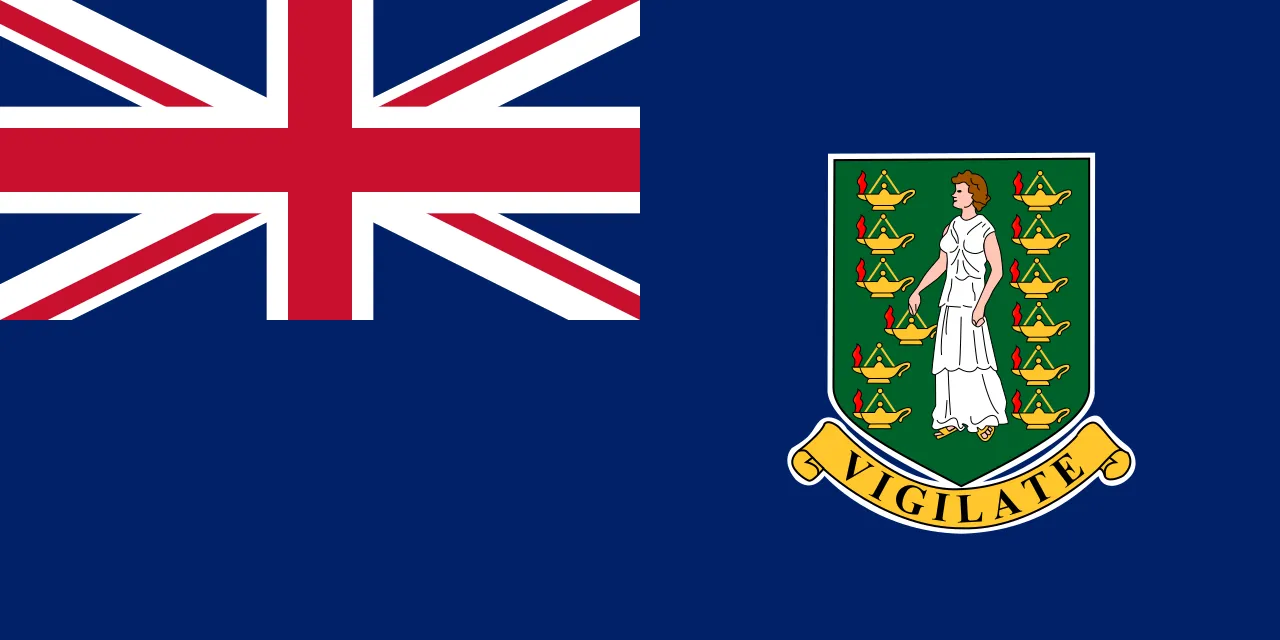
Company Incorporation in BVI (Virgin Islands)
Binderr
Corporate tax
0% for most
Capital gain tax
0%
Incorporation time
2–5 working days
Cost
Starting from €1,899
BVI vs Cayman Company at a Glance
A BVI vs Cayman company comparison starts with what is the same: tax neutrality, flexible company law and remote setup. The differences are in cost, filings, lists and who expects which.
Point | BVI business company | Cayman exempted company |
|---|---|---|
Company tax | 0%, income tax zero-rated since 2005 | 0%, with a government tax undertaking available |
Minimum directors and shareholders | One of each, anywhere | One of each, anywhere |
Registry fee to incorporate | US$550 for up to 50,000 shares | CI$700, about US$854, for the smallest capital band |
Yearly government fee | US$550 | CI$925, about US$1,128, for the smallest band since 2025 |
Yearly filings | Annual return to the agent, substance report, registers | Annual return each January, substance notification, beneficial ownership register |
Beneficial ownership threshold | 10%, filed with the Registry | 25%, kept by the corporate service provider |
FATF grey list | Listed since June 2025 | Removed in October 2023 |
EU high-risk list | Listed from January 2026 | Removed in February 2024 |
Best known for | Holding companies, joint ventures, founder vehicles | Investment funds, listing companies |
Trading locally | Allowed with a trade licence | Exempted companies cannot trade locally |
Where They Are the Same
Both are British Overseas Territories with English-based law and appeals to the Privy Council in London. Both let one person be the only director and shareholder, allow corporate directors, have no residency rule and no minimum capital, and allow mergers and moving the company to another country. Neither publishes its register of shareholders.
Where They Differ
The BVI costs less to form and run and has lighter yearly filings for an ordinary company. Cayman costs more but is the institutional standard for funds and is off the FATF and EU lists. Investors, lenders and banks often have a preference, and that preference usually decides the BVI vs Cayman company choice. Ask them early, because changing jurisdiction after a term sheet or a loan agreement is signed adds cost and delay to the deal.
Set Up a BVI Company With Us
For holding companies, joint ventures and founder vehicles, the BVI is usually the efficient choice. This is what we handle for you.
- From €1,899: Formation through a licensed registered agent.
- Structure checked: BVI or Cayman, based on your investors and banks.
- KYC pack prepared: One clean file for every owner and director.
- Registers filed: Members and beneficial owners within 30 days.
- Banking with our partners: Account opened online.
- Yearly filings tracked: Fee, annual return and substance report.
Which One Most Owners Choose
Private owners holding shares, property or investments, and partners forming a joint venture, mostly choose the BVI for cost and simplicity. Fund managers and companies preparing for a US listing mostly choose Cayman, because their investors and lawyers expect it. Many groups use both, with a Cayman company at the top and BVI companies below or above it. The decision is rarely permanent, because a company can move between the two by continuation if its needs change, though moving costs time and legal fees.
Company Law Compared
Both company laws are modern and flexible, and courts in both follow English case law closely. The differences are in the detail.
The Main Statutes
BVI companies are formed under the BVI Business Companies Act 2004, in force since 1 January 2005. Cayman companies are formed under the Cayman Islands Companies Act, and most offshore companies there are exempted companies, which do business mainly outside the islands.
Shares and Capital
A BVI company states the maximum number of shares it may issue, with or without a par value, in any currency. A Cayman exempted company usually has an authorised share capital divided into shares with a par value. In practice, both allow different classes, preference shares and no meaningful minimum capital.
Dividends
A BVI company can pay a dividend whenever it passes a solvency test, with no rule that dividends come from profits. A Cayman company pays dividends out of profits or its share premium account, and must also be able to pay its debts afterwards. Both work well for holding companies.
Moving and Merging
Both allow statutory mergers and consolidations, and both allow a company to move to another country by continuation without winding up. That keeps the BVI vs Cayman company decision reversible: a company can move from one to the other later if it needs to.
Tax Compared
Both jurisdictions charge no tax on a company's profits, gains or dividends, and no withholding tax on payments abroad.
The BVI
The BVI's income tax has been zero-rated since 1 January 2005. A company with no staff or property in the BVI pays no BVI tax at all. Payroll tax and stamp duty apply only to companies with staff or land there.
Cayman
Cayman has no income, profits or capital gains tax. An exempted company can apply for a government undertaking that no such tax will apply to it, typically for 20 years and extendable to 30. Investors sometimes ask for the undertaking certificate.
Where Tax Is Really Paid
For both, tax is paid where the owners live and where the company is managed. Controlled foreign company rules, management and control tests and the global minimum tax for groups with revenue of €750 million or more apply the same way to a BVI or a Cayman company.
Company Incorporation in BVI (Virgin Islands)
Binderr
Corporate tax
0% for most
Capital gain tax
0%
Incorporation time
2–5 working days
Cost
Starting from €1,899
Cost Compared
The BVI is cheaper at every stage. The table compares the government fees for the smallest companies, which most private owners use.
Fee | BVI | Cayman |
|---|---|---|
Incorporation | US$550, up to 50,000 shares | CI$700, about US$854, up to CI$42,000 of capital |
Yearly government fee | US$550 | CI$925, about US$1,128, since 1 January 2025 |
Larger companies | US$1,350 above 50,000 shares | CI$1,225 a year and more, by capital band |
Register filings | US$50 and US$125 at formation | Kept by the service provider |
Registered agent and office fees are also usually higher in Cayman. The gap grows for larger companies, because Cayman's fees rise with authorised capital. Over three years, a simple BVI company costs about US$6,100 to US$12,500 including a light account. Read the full breakdown of how much a BVI company costs.
Filings and Compliance Compared
Both jurisdictions have tightened their filings since 2019. An ordinary company in either needs a licensed agent or service provider and a short yearly cycle.
The BVI
A BVI company pays its annual fee by 31 May or 30 November, files an annual return with its agent within 9 months of its year end, files an economic substance report within 6 months of each period end and files any change to its registers or beneficial owners within 30 days.
Cayman
A Cayman exempted company files an annual return with its fee each January, with penalties from April for late filers. It files an economic substance notification, keeps a beneficial ownership register with its corporate service provider and updates it when owners change.
Beneficial Ownership
The BVI files beneficial owners from 10% with the Registry, with legitimate interest access since 1 April 2026 for owners at 25% or more. Cayman's Beneficial Ownership Transparency Act took effect on 31 July 2024, with a 25% threshold and a register kept by the service provider. Neither is open to the general public.
Courts and Disputes
Both jurisdictions have specialist courts for company and commercial disputes, and both send final appeals to the Privy Council in London.
The BVI
The Commercial Court of the Eastern Caribbean Supreme Court sits in Road Town and hears company, insolvency and commercial cases. Appeals go to the Eastern Caribbean Court of Appeal and then to the Privy Council. Minority shareholders can bring claims on the company's behalf with the court's permission and seek relief for unfair prejudice.
Cayman
The Financial Services Division of the Grand Court hears company, fund and insolvency cases, with appeals to the Cayman Court of Appeal and then the Privy Council. Its fund and restructuring case law is among the most developed in the offshore world. Cayman also has a restructuring officer regime, introduced in 2022, which lets a company in financial difficulty restructure its debts under court supervision.
What It Means in Practice
For a BVI vs Cayman company dispute, both courts are respected, quick by international standards and staffed by experienced judges. The choice rarely turns on the courts unless the structure is a fund or a large restructuring, where Cayman's case law is deeper. Contracts between the company and its partners can choose either law, or English law, whichever jurisdiction the company is in.
Economic Substance Compared
Both jurisdictions introduced economic substance laws in 2018, and both apply them only to companies that carry on a relevant activity such as holding, finance or headquarters business.
The BVI
Every BVI company files a substance report within 6 months of each financial period end. A pure equity holding company meets a reduced test, mainly current filings and the registered agent's services. Read about BVI economic substance requirements for holding companies.
Cayman
Every Cayman entity files an economic substance notification each year, and entities with a relevant activity file a fuller return. Pure equity holding companies also meet a reduced test there. In both places, a company that lends to its group, manages it or owns IP faces the full test.
The Practical Difference
For a holding company, the substance burden is similar. The BVI vs Cayman company decision does not usually turn on substance, but on cost, investors and banking.
Reputation, Lists and Banking
This is where the BVI vs Cayman company choice has changed the most since 2025.
The FATF and EU Lists
The FATF placed the BVI under increased monitoring on 13 June 2025, and it was still listed after the June 2026 plenary. The EU added the BVI to its high-risk third country list from 29 January 2026. Cayman was removed from the FATF grey list on 27 October 2023 and from the EU list with effect from 7 February 2024.
What It Means for Banks
EU banks must now apply enhanced due diligence to business involving the BVI, and banks elsewhere ask BVI companies more questions. A Cayman company faces fewer list-driven questions, though every offshore company is still checked closely. For a company that must bank in the EU, this can tip the choice. Expect more questions on source of funds and ownership either way.
What It Does Not Change
The listings do not change BVI company law, the 0% tax or the courts. A BVI company with a clear purpose, simple ownership and a complete file still opens accounts, especially with providers used to international structures.
Company Incorporation in BVI (Virgin Islands)
Binderr
Corporate tax
0% for most
Capital gain tax
0%
Incorporation time
2–5 working days
Cost
Starting from €1,899
Directors and Officers Compared
Both jurisdictions allow a single director, of any nationality and living anywhere, and both allow a company to act as a director.
The BVI
The register of directors is filed privately with the Registry, and any change within 30 days. A director providing services under a licence must be shown as such. There is no company secretary requirement.
Cayman
Cayman companies also keep a register of directors and file it with the Registrar, which does not make it public. Directors of regulated funds and some other covered entities must also register with the Cayman Islands Monetary Authority. An ordinary holding company's directors do not.
What It Means for You
For a private company, director rules are not a reason to prefer one over the other. For a fund, Cayman's director registration is part of the package investors expect, and it is one more point to weigh in a BVI vs Cayman company decision for a fund.
Documents You Need
The KYC file is much the same in both places. For each director, shareholder and beneficial owner:
- Passport: A certified copy.
- Proof of address: Under three months old.
- Source of funds: Where the money comes from, with proof.
- Business description: What the company will do and where.
- Corporate owners: Certificate of incorporation, registers and an ownership chart.
A BVI vs Cayman company choice does not change this list, so the documents can be prepared before the final decision is made.
Funds and Listings
Investment Funds
Cayman is the leading home for hedge funds and one of the largest for private equity and venture funds, and fund investors and administrators expect it. The BVI has its own fund regime, including private, professional, incubator and approved funds, which suits smaller and emerging managers. Read about BVI fund formation.
Listing Companies
Cayman companies are the usual choice for the top company of a group listing in the US or Hong Kong. BVI companies are also accepted in Hong Kong and appear throughout listing structures as subsidiaries and founders' holding companies. Read about a BVI holding company for Chinese tech startups.
Structures That Use Both
Many international groups use BVI and Cayman companies together, each where it fits best.
A Listing Group
Founders hold their shares through personal BVI companies. Those companies own shares in a Cayman company, which is the listing vehicle and issues shares to investors. The Cayman company owns a BVI intermediate holding company, which owns the operating subsidiaries.
A Fund Platform
A Cayman fund raises money from investors. The manager's own interests, co-investment vehicles or holding companies for individual deals may sit in BVI companies, where cost matters more than investor familiarity.
A Private Group Moving Up
A family or founder starts with a BVI holding company for cost and simplicity. When institutional investors arrive or a listing comes into view, a Cayman company is added above it, or the BVI company is moved to Cayman by continuation.
When to Choose the BVI
- A private holding company: Shares, property or investments held for a family or founder.
- A joint venture: Partners from different countries sharing one neutral company.
- A founder's personal vehicle: Holding shares in a larger group.
- An intermediate company: Inside a group, below a Cayman or other top company.
- A cost-sensitive structure: Where Cayman's higher fees bring no benefit.
When to Choose Cayman
- An investment fund: Investors and administrators expect it.
- A US listing vehicle: Underwriters and investors are used to it.
- EU banking is essential: Cayman is off the EU high-risk list.
- An institutional investor insists: Their documents are built for it.
- A structure needing the tax undertaking: Some investors ask for it.
How to Form a BVI Company
Agree the Structure
One call to agree the owners, directors, share count and company type, and to confirm the BVI is right rather than Cayman.
Build the KYC Pack
We collect passports, proofs of address and the source of funds once, check them and send one complete file to the licensed agent.
File and Incorporate
The agent files the memorandum and articles through VIRRGIN, and the certificate usually follows within 2 to 5 working days.
File the Registers and Open the Account
The registers and beneficial ownership information are filed within 30 days, and our banking partners open the account with the same file. Read our BVI company formation guide.
Full-Service BVI Company Formation
We handle every step, from the first call to the bank account. You deal with one team.
- Jurisdiction checked: BVI or Cayman, for your investors and banks.
- Name and constitution: Checked and drafted for you.
- Licensed agent filing: Through VIRRGIN, with the Registry fee included.
- Registers on time: Members and beneficial owners within 30 days.
- Bank-ready documents: Certificate, constitution and registers in one pack.
- Account opened: With our banking partners, online.
How Long Each Takes
Stage | BVI | Cayman |
|---|---|---|
Formation after KYC approval | 2 to 5 working days | 1 to 5 business days, depending on the service level |
Registers and ownership filings | Within 30 days | Register kept and updated by the service provider |
Bank account with our partners | Days, once the file is complete | Depends on the provider |
BVI Company Formation From €1,899
The lower-cost choice for holding companies and joint ventures. This is what the price includes.
- Licensed agent filing: Through VIRRGIN, with the Registry fee included.
- KYC review: One file for every owner and director.
- Constitution drafted: Memorandum and articles for your structure.
- First-year office: Registered agent and office included.
- Running costs shown: Year two quoted with the setup.
Banking a BVI or Cayman Company
Banks look at the company's purpose, owners and source of funds first, and the jurisdiction second. A clear file matters more than the choice between the two for most private companies.
A Faster Route Through Our Banking Partners
Our banking partners are licensed electronic money institutions that open multi-currency accounts for BVI companies owned from abroad, usually within days of a complete file, with no large deposit. Read about BVI offshore banking for companies.

Equals Money
Business Bank Account
Time to onboard
2 Days
Account opening fee
Free
Monthly fee
€30

3S Money
Cross-border payments
Time to onboard
4 Days
Account opening fee
Free
Monthly fee
Starting from € 100
Common Mistakes When Choosing Between the BVI and Cayman
- Choosing on fees alone: Investors and banks may prefer the other.
- Using a BVI company as a fund's top company without checking investors: Many expect Cayman.
- Ignoring the lists: EU banking is harder for BVI companies since 2026.
- Paying for Cayman when it adds nothing: A private holding company rarely needs it.
- Forgetting both can move: Continuation lets you switch later.
Talk to Us Before You Decide
Not sure whether the BVI or Cayman fits? Tell us who the investors are and where you need to bank.
- Jurisdiction compared: For your investors, lenders and banks.
- Costs set out: Three-year cost of each option.
- Banking planned: The partner that takes your activity.
- Structure set: Owners, directors and share classes.
- Clear pricing: Every fee in writing, from €1,899.
Bottom Line
The BVI vs Cayman company choice is about fit, not quality. Both offer 0% tax, flexible company law and remote setup. The BVI is cheaper and lighter, at US$550 a year in government fees, and suits holding companies, joint ventures and founders' vehicles. Cayman costs more, at CI$925 a year for the smallest companies, and is the standard for funds and many listing companies, with the advantage of being off the FATF and EU lists.
For most private owners, the BVI remains the efficient choice when the banking is planned first. We form BVI companies from €1,899 through licensed agents and tell you when Cayman fits better. Read about benefits and drawbacks of a BVI company.
What is the main difference in a BVI vs Cayman company?
Is the BVI or Cayman better for a holding company?
Which is cheaper, a BVI or a Cayman company?
Is the BVI or Cayman better for an investment fund?
Are BVI and Cayman companies taxed?
Which is more private, the BVI or Cayman?
Why does the FATF grey list matter for a BVI vs Cayman company choice?
Can a Cayman exempted company trade in Cayman?
Can I move a company from the BVI to Cayman or back?
How long does it take to form a BVI or Cayman company?
Do BVI and Cayman companies need an audit?
Which do banks prefer, a BVI or a Cayman company?
Should I use a BVI or a Cayman company for a joint venture?
Sources
- BVI Business Companies Act and Regulations compendium, Conyers, January 2026
- Harneys, Cayman Islands company fee changes from 1 January 2025
- Bell Rock, Cayman company incorporation in 2026
- Harneys, Cayman Islands removed from the FATF grey list
- Loeb Smith, Cayman Islands removal from the EU AML list effective 7 February 2024
- Ogier, guide to the Cayman Islands beneficial ownership transparency regime
- Mourant, Cayman Islands exempted companies
- FATF, jurisdictions under increased monitoring, June 2026
- European Commission, update of the list of high-risk third countries