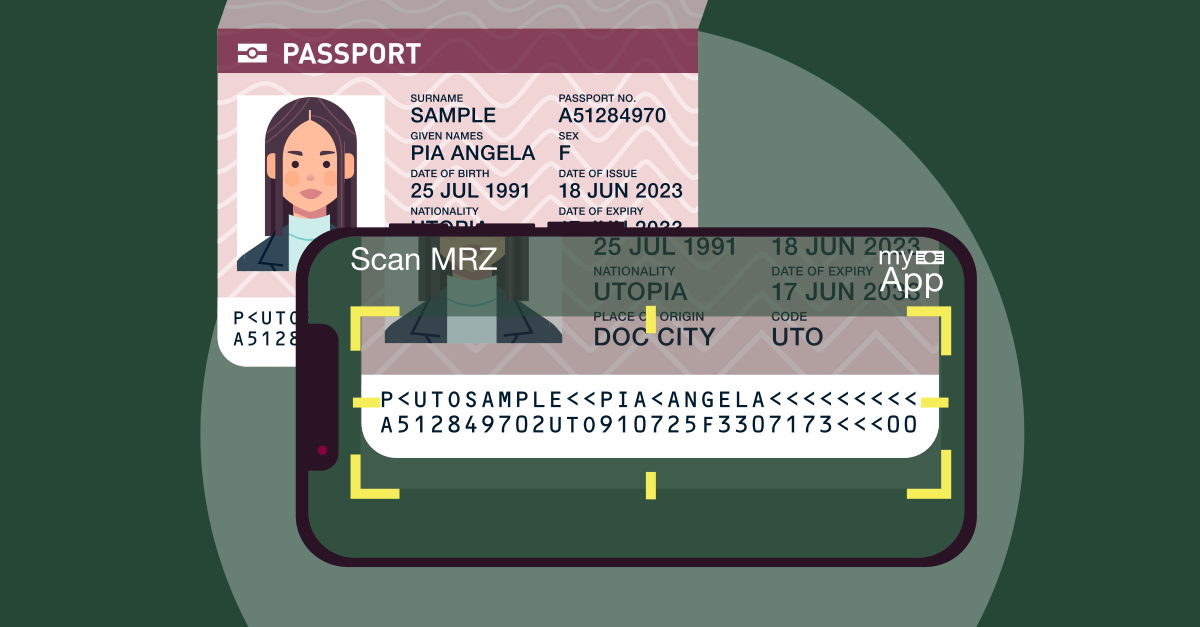
Verifying customers remotely is convenient, but how can businesses confirm that the person behind the screen is genuine? Video KYC makes remote identity verification more secure through live video checks, facial recognition, and document authentication, helping businesses streamline onboarding without requiring physical visits.
Identity fraud is becoming harder to detect. According to Sumsub's 2025 Identity Fraud Report, sophisticated identity fraud attacks increased by 180% from 2024 to 2025. This highlights the growing importance of video identification and advanced biometric checks in detecting impersonation, deepfakes, and fraudulent identities.
In 2026, video ident KYC helps businesses balance faster onboarding with stronger identity verification controls. This guide explains how video KYC works, its verification methods, benefits, challenges, regulatory requirements, and practical applications across industries.
Binderr Digital Identity Verification Software
Bring identity document verification, biometric checks, and AML screening into a connected compliance workflow.
- Verify customer identities remotely
- Check identity documents securely
- Use biometric facial verification
- Detect suspicious identity attempts
- Connect KYC with AML screening
- Maintain centralized compliance records
What Is Video KYC?
Video KYC (Know Your Customer) is a remote identity verification method that uses live video calls or automated checks to verify customers. The video KYC verification process combines document authentication, facial recognition, and liveness detection to prevent identity fraud, support customer due diligence (CDD), and simplify digital onboarding.
What Is Video Identification?
Video identification verifies a person's identity through live or recorded video, using document checks, facial matching, and liveness detection. Video ident KYC helps businesses verify customers remotely, while the broader KYC process includes AML screening, risk assessments, and ongoing monitoring.
Start KYC Verification for Free
Why Is Video KYC Important in 2026?
As digital onboarding grows, video KYC helps businesses verify customer identities remotely while addressing evolving fraud risks and compliance requirements.
Here are five reasons why it matters in 2026:
- Prevents Identity Fraud: Video identification combines facial recognition, liveness detection, and document checks to help detect impersonation, spoofing, and deepfake attacks.
- Speeds Up Customer Onboarding: Video KYC eliminates the need for physical visits, allowing customers to complete identity verification remotely with fewer delays.
- Strengthens Regulatory Compliance: Video ident KYC supports customer due diligence (CDD) by helping businesses verify identities, document decisions, and meet applicable KYC requirements.
- Improves Customer Experience: Customers can verify their identities using smartphones or computers, making onboarding more accessible, convenient, and efficient.
- Supports Scalable Verification: Automated video KYC helps businesses process more customer applications, reduce repetitive manual checks, and manage growing onboarding volumes.
Run Complete KYC Faster
How Does the Video KYC Process Work? Step-by-Step
The video KYC process verifies customer identities remotely through document checks, video interactions, biometric verification, and compliance screening. Here are the seven key steps involved in video identification.
Step 1: Customer Registration and Consent
The video KYC process begins when customers register through a secure website, mobile application, or verification link. They provide basic personal details, such as their name, date of birth, and contact information.
Before verification begins, customers receive instructions and relevant privacy disclosures. They provide any required consent for video recording and biometric data processing, depending on applicable regulations.
Step 2: Identity Document Submission
Customers upload or capture a government-issued identity document, such as a passport, national ID card, or driver's licence. The video identification system collects the information needed to verify their identity.
Optical Character Recognition (OCR) extracts document details, while automated checks assess readability, validity, and visible security features to identify potential inconsistencies.
Step 3: Video Recording or Live Verification Session
Customers either join a live video call with a verification agent or complete an automated video recording. During the video KYC verification session, they may need to display their identity documents and follow specific instructions.
Live agents can ask verification questions, while automated systems capture facial images and video evidence for identity checks. The method depends on the provider and applicable regulatory requirements.
Step 4: Facial Recognition and Liveness Detection
Facial recognition technology compares the customer's face captured during the session with the photograph on their identity document. This helps establish whether both images represent the same person.
Liveness detection checks whether the customer is physically present rather than using a photograph or prerecorded video. These video ident KYC controls help reduce impersonation and spoofing risks.
Step 5: Fraud Detection and Document Authentication
The video KYC system examines identity documents and video evidence for signs of manipulation, mismatched information, or suspicious activity. AI-powered tools may help identify deepfakes, replay attacks, and document forgery.
Additional authentication checks assess document consistency and available security features. Suspicious applications may be flagged for manual investigation before verification continues.
Step 6: Compliance Screening and Risk Assessment
After identity verification, customer information can be screened against sanctions lists, politically exposed person (PEP) databases, and adverse media sources. These checks support broader KYC and anti-money laundering (AML) requirements.
Businesses then evaluate customer risk based on screening results, identity information, and other relevant factors. Higher-risk cases may require enhanced due diligence (EDD) before onboarding approval.
Step 7: Verification Approval and Audit Trail
Once the video identification checks and required compliance reviews are complete, the business approves, rejects, or refers the application for additional investigation. Customers receive a verification outcome based on the organization's procedures.
The system maintains relevant verification records, timestamps, screening results, and review decisions according to applicable retention rules. These audit trails support regulatory reporting, internal reviews, and ongoing compliance monitoring.
Automate Your Customer Verification Workflow with Binderr
Binderr helps connect identity verification with broader customer due diligence and compliance operations.
- Automate identity verification checks
- Match faces against ID documents
- Support remote customer onboarding
- Run sanctions and PEP screening
- Apply risk-based compliance reviews
- Centralize customer verification records
Types of Video KYC and Video Identification
Video KYC uses different verification methods depending on business needs, security requirements, and regulations. The three main types of video identification are live, automated, and hybrid verification.
Live or Assisted Video KYC
Live video KYC involves a real-time video call between the customer and a trained verification agent. The agent examines identity documents, confirms facial details, and asks verification questions to detect impersonation or suspicious activity. This method provides human oversight during remote identity verification. It is particularly useful for regulated businesses that require supervised identity checks and additional verification controls.
Automated or Unassisted Video KYC
Automated video KYC uses AI-powered technology to verify identities without a live agent. Customers capture their identity documents and facial images, while the system performs facial matching, liveness detection, and fraud checks. This approach enables faster, scalable video identification with minimal manual intervention. It also allows businesses to process verification requests around the clock, reducing onboarding delays and operational costs.
Hybrid Video KYC
Hybrid video ident KYC combines automated identity verification with human review when necessary. AI systems handle routine document and biometric checks, while verification agents investigate suspicious activity, failed checks, or high-risk applications. This approach balances onboarding speed, fraud prevention, and compliance oversight. Businesses can automate straightforward verifications while escalating complex cases for additional investigation and informed decision-making.
Access KYC Tools Today
Key Technologies Used in Video KYC Verification
Video KYC verification combines biometric technology, artificial intelligence, and document authentication to verify customer identities remotely. These technologies help businesses detect fraud, improve verification accuracy, and streamline customer onboarding.
Facial Recognition and Biometric Matching
Facial recognition technology compares a customer's live facial image with the photograph on their government-issued identity document. AI-powered biometric matching analyzes facial features to identify similarities and detect mismatches. In video KYC, this technology helps confirm that the person completing verification matches the identity document presented, reducing impersonation risks and improving verification accuracy.
Active and Passive Liveness Detection
Liveness detection verifies whether a real person is physically present during video identification. Active liveness requires customers to perform actions such as turning their heads or blinking, while passive liveness analyzes facial and image signals without additional instructions. Both methods help detect photographs, prerecorded videos, and presentation attacks, strengthening video ident KYC security against identity spoofing.
AI-Powered Deepfake Detection
AI-powered deepfake detection helps identify digitally manipulated faces, synthetic videos, and suspicious visual patterns during video KYC verification. Advanced algorithms analyze facial inconsistencies, image artifacts, and other signals that may indicate fraudulent content. Combined with liveness detection and additional security checks, this technology helps businesses identify sophisticated impersonation attempts and protect remote onboarding workflows.
OCR and Identity Document Authentication
Optical Character Recognition (OCR) extracts information such as names, dates of birth, and document numbers from passports, national IDs, and driver's licences. Document authentication technology then checks data consistency, document validity, and available security features to identify potential forgery or tampering. These automated checks make video identification faster, reduce manual data entry, and improve the reliability of identity verification.
Automated Risk Scoring and AML Screening
Automated risk scoring evaluates customer information, identity verification results, and compliance risk indicators to determine potential exposure. Integrated AML screening checks customers against sanctions lists, politically exposed person (PEP) databases, and adverse media sources. By combining video KYC with risk-based assessments, businesses can identify higher-risk customers, trigger enhanced due diligence (EDD), and support ongoing compliance monitoring.
Strengthen Identity Verification with Binderr
Bring biometric verification, document checks, and customer risk assessment into one compliance workspace.
- Verify documents across global markets
- Perform biometric face matching
- Detect suspicious verification attempts
- Screen customers against watchlists
- Trigger enhanced due diligence reviews
- Maintain clear compliance audit trails
Best Practices for Secure Video KYC Implementation
Implementing video KYC requires strong security measures, reliable verification technology, and risk-based compliance controls. Here are six best practices businesses should follow to make video identification secure and efficient.
Use Layered Identity Verification - Combine document authentication, facial recognition, and liveness detection to strengthen video KYC verification. Multiple verification layers help detect forged documents, identity impersonation, and spoofing attempts that individual security checks might miss.
Apply Risk-Based Checks - Adjust video identification requirements based on customer risk levels, geographic exposure, and suspicious activity. High-risk customers may require additional document verification, manual reviews, or enhanced due diligence (EDD) before onboarding approval.
Strengthen Deepfake Detection - Use AI-powered fraud detection, liveness checks, and video authenticity controls to identify manipulated videos and synthetic identities. Regularly update video KYC security measures to address emerging deepfake techniques and sophisticated impersonation attacks.
Protect Biometric Data - Secure facial images, video recordings, and identity documents using encryption, access controls, and appropriate retention policies. Video ident KYC solutions should follow applicable data protection regulations and safeguard sensitive biometric information against unauthorized access.
Maintain Verification Evidence - Keep accurate records of identity documents, verification results, timestamps, and compliance decisions throughout the video KYC process. Well-maintained audit trails support regulatory inspections, internal investigations, and ongoing customer due diligence.
Regularly Test Verification Performance - Monitor facial matching accuracy, false rejection rates, fraud detection performance, and customer verification success rates. Regular testing helps businesses identify weaknesses, improve video identification workflows, and maintain reliable identity verification as fraud techniques evolve.
Verify Customers in Minutes
Video KYC Regulations and Compliance Requirements in 2026
Video KYC must follow applicable identity verification, anti-money laundering (AML), and data protection requirements. In 2026, international standards and regional guidelines help businesses implement secure video identification while addressing fraud, customer due diligence, and biometric privacy risks.
FATF Standards for Digital Identity Verification
The Financial Action Task Force (FATF) establishes global AML/CFT standards, including Recommendation 10, which requires financial institutions to identify and verify customers using reliable, independent sources. Its digital identity guidance supports risk-based remote verification, including video KYC where the chosen method provides appropriate identity assurance.
Under FATF's approach, businesses should assess identity verification reliability, customer risk, and potential fraud exposure. Video identification can support customer due diligence (CDD), but additional measures, such as beneficial ownership checks, ongoing monitoring, and enhanced due diligence (EDD), may still be necessary.
EU and EBA Remote Customer Onboarding Guidelines
The European Banking Authority (EBA) introduced remote customer onboarding guidelines that have applied since 2 October 2023. These guidelines establish expectations for secure digital identification, document verification, fraud prevention, and risk-based customer onboarding across relevant EU financial institutions.
The guidelines are technology-neutral, allowing institutions to assess suitable methods, including video ident KYC, against their compliance obligations. Businesses must evaluate verification reliability, identify potential security weaknesses, and maintain appropriate controls when using third-party identity verification providers.
NIST Digital Identity Guidelines
The National Institute of Standards and Technology (NIST) published SP 800-63A-4 in July 2025, outlining technical requirements for digital identity proofing and enrollment. The guidelines cover identity evidence validation, biometric verification, fraud prevention, and remote attended or unattended identity checks.
For supervised video KYC, NIST specifies adequate video quality, trained verification agents, and controls against manipulated media. These measures help businesses strengthen identity assurance, although NIST standards are not universal AML regulations and apply according to the relevant implementation framework.
GDPR and Biometric Data Protection
The General Data Protection Regulation (GDPR) protects personal information collected during video identification, including identity documents, facial images, and video recordings. Biometric data processed to uniquely identify individuals receives special-category protection under Article 9, requiring an applicable legal exception alongside a valid processing basis.
Businesses using video KYC verification must implement appropriate security measures, transparent privacy notices, restricted access, and data retention policies. Explicit consent may be one permitted condition for biometric processing, but businesses must determine the correct legal basis and safeguards for their specific verification activities.
Get Complete KYC and Compliance Solution with Binderr
Why stop at identity verification? Binderr brings KYC, KYB, AML screening, risk assessment, and ongoing monitoring into one unified compliance platform. Verify customers, assess financial crime risks, and manage compliance throughout the customer relationship.
- Automated KYC and biometric identity checks
- Global KYB and business verification
- Sanctions, PEP, and adverse media screening
- Dynamic customer risk scoring and assessment
- Automated CDD and EDD workflows
- Continuous monitoring with real-time alerts
Bottom Line
Video KYC simplifies remote identity verification through document checks, facial recognition, and liveness detection. Live, automated, and hybrid video identification methods help businesses reduce fraud, accelerate onboarding, and meet compliance requirements. Choosing the right video ident KYC approach depends on customer risk and regulatory needs.
Binderr Services brings KYC, AML screening, risk scoring, and ongoing monitoring into one platform. Businesses can automate identity checks, reduce manual work, and strengthen compliance. Sign up for free with Binderr to simplify customer verification.
-1-360x240.jpg?w=3840&q=75)