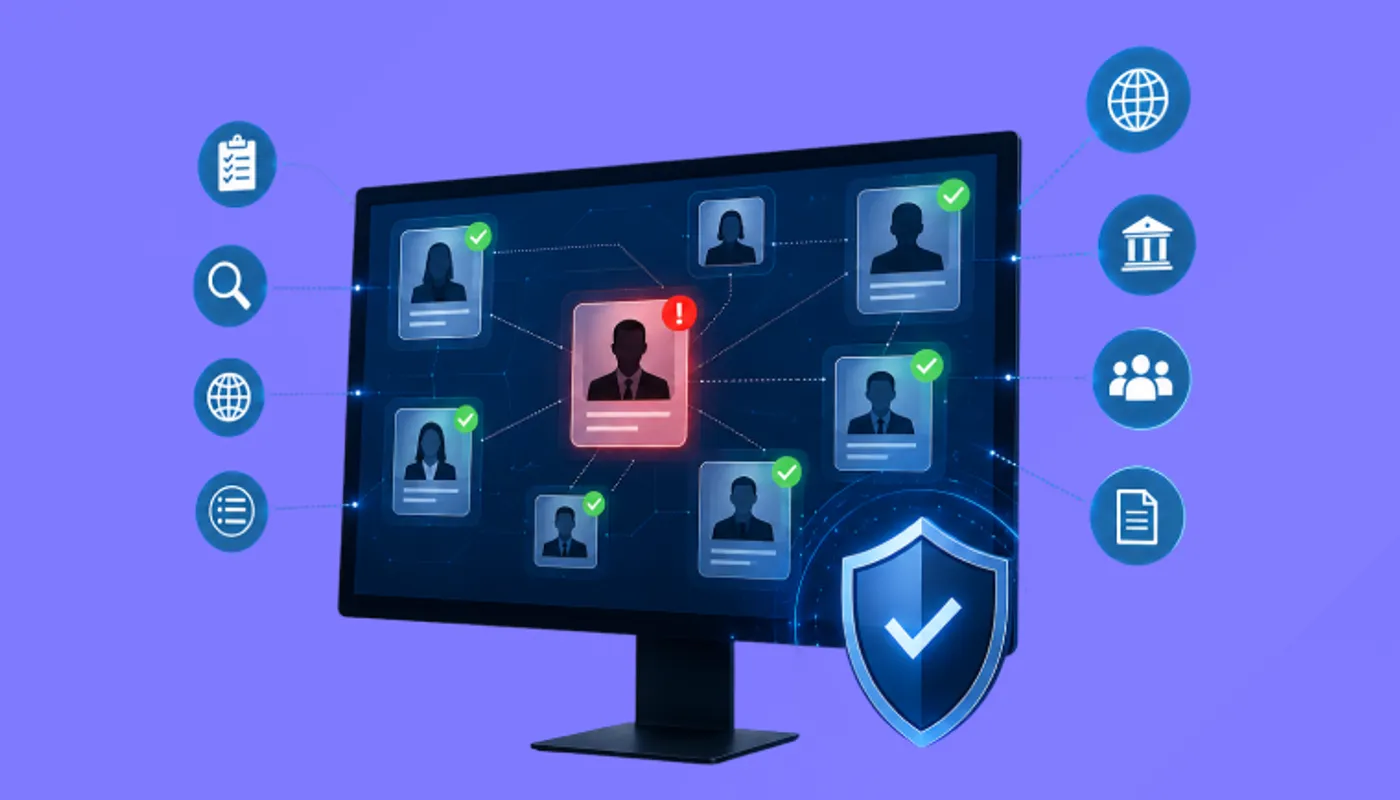
Public sanctions, PEP and regulatory watchlists only show known external risks. An internal watchlist helps compliance teams capture risks discovered through fraud cases, rejected customers, investigations, adverse media and suspicious activity that may never appear on official lists.
These private risk signals matter because firms often uncover threats through their own operations first. The FCA reviewed sanctions controls at more than 150 supervised firms since February 2022 and found that firms detecting trade-sanctions exposure often relied on proactive investigations and comprehensive internal watchlists.
Effective custom watchlist screening and private list screening turn this intelligence into action during onboarding and ongoing monitoring. Wolfsberg notes that private or grey lists should use strong data quality, clear inclusion criteria and regular reviews so outdated intelligence does not weaken screening decisions.
In this guide, you’ll learn how to create, manage and review internal watchlists, run custom and private list screening, handle matches, reduce false positives and connect internal risk intelligence with KYC, KYB and ongoing monitoring.
Binderr Internal Watchlist Screening Software
Public sanctions and PEP databases do not capture every organization-specific risk. Binderr helps compliance teams bring screening, customer verification and risk monitoring into one workspace so they can investigate risk with greater context.
- Screen individuals and businesses globally
- Check sanctions, PEPs and watchlists
- Detect adverse media risk
- Apply smart matching algorithms
- Monitor customers for risk changes
- Maintain complete screening records
What Is an Internal Watchlist?
An internal watchlist is a private list of individuals, businesses or other risk indicators flagged for closer review based on an organization’s own investigations and risk policies. Unlike sanctions, PEP or law-enforcement lists, it reflects risks identified internally, such as rejected customers or suspected fraudsters. Custom watchlist screening and private list screening help teams check these records alongside external compliance data.
Start Your Free Compliance Workspace
Why Compliance Teams Use Custom Watchlists
Public databases cannot capture every risk an organization encounters. An internal watchlist helps compliance teams record organization-specific intelligence and use it alongside external screening sources.
Capture Risks Not Found on Public Lists - Organizations may identify suspicious customers, businesses or counterparties before they appear on official databases. Custom watchlist screening helps capture these early risk signals and flag them during onboarding or ongoing monitoring.
Prevent Repeat Onboarding - A rejected customer may return using a different business name, subsidiary, branch or modified identity details. An internal watchlist helps teams recognize previous risk decisions and stop high-risk parties from slipping through another onboarding route.
Share Intelligence Across Compliance Workflows - Internal risk intelligence becomes more useful when KYC, KYB, AML, fraud and sanctions teams can access the same information. Private list screening creates a shared risk layer that supports more consistent investigations and decisions across compliance workflows.
Strengthen Sanctions-Evasion Detection - Sanctions evasion often involves indirect relationships, intermediaries, vessels or connected entities that may not appear on standard lists. Custom watchlist screening lets teams track these organization-specific indicators and escalate suspicious connections earlier.
Support Risk-Based Customer Decisions - Not every watchlist match requires the same response. An internal watchlist can help teams classify risks and decide whether to approve, monitor, escalate, conduct enhanced due diligence or reject a customer based on internal policies and risk appetite.
Run Smarter AML Checks
How to Create and Manage an Internal Watchlist
A well-managed internal watchlist turns organization-specific risk intelligence into a practical screening control.
Follow these steps to improve custom watchlist screening, strengthen private list screening, and keep internal risk data accurate and actionable.
Step 1: Define the Purpose of the List
Start by deciding exactly what the internal watchlist is meant to detect. It may focus on fraud risk, AML concerns, sanctions exposure, rejected customers, restricted merchants, internal investigations or sanctions-evasion indicators.
Keep each list tied to a clear purpose. A single catch-all list can make private list screening harder to manage because different risks may require different review standards and actions.
Step 2: Establish Clear Inclusion Criteria
Create documented rules for when a person, business or identifier can be added. Triggers may include confirmed fraud, strong adverse intelligence, a previous compliance rejection, suspicious activity findings or known links to prohibited counterparties.
Entries should be based on evidence rather than unsupported suspicion. Clear criteria make custom watchlist screening more consistent and help investigators understand why a record was added.
Step 3: Collect Sufficient Identifying Information
Store enough data to distinguish the listed party from innocent people or businesses with similar names. Useful fields can include full names, aliases, dates of birth, company numbers, addresses, countries and other unique identifiers.
Better data quality improves internal watchlist matching and reduces false positives. Secondary identifiers are especially useful when names are common, misspelled or transliterated differently.
Step 4: Assign Risk Categories
Classify each entry according to the action it should trigger. Common categories include block, escalate, enhanced due diligence, manual review, monitor and informational alert.
This prevents every private list screening match from being treated the same way. Risk categories give investigators clearer next steps and support more proportionate decision-making.
Step 5: Record the Reason and Evidence
Every entry should explain why the person or entity was listed. Record the source, case reference, supporting evidence, decision maker and date the record was added.
This creates accountability and makes custom watchlist screening easier to defend during reviews or audits. Investigators can quickly understand the context behind a match instead of working from a name alone.
Step 6: Set Review and Expiry Dates
Internal intelligence can lose relevance over time, so each record should have a scheduled review date or expiry rule. Some entries may require revalidation, while permanent records should be reserved for cases with a clear ongoing justification.
Regular reviews keep an internal watchlist accurate and prevent stale intelligence from influencing current decisions. This also supports Wolfsberg's recommendation that internal-list data should be periodically reviewed.
Step 7: Define Removal Procedures
Set clear rules for correcting, updating or removing records from the list. Changes should require appropriate authorization, especially when a record has influenced previous compliance decisions.
Maintain an audit trail showing who made the change, what was changed, why it happened and when it occurred. Strong controls help protect the integrity of private list screening and reduce unauthorized edits.
Step 8: Connect the List to Screening Workflows
Integrate custom watchlist screening into customer onboarding, business onboarding, KYC, KYB, UBO checks, relevant transaction screening and ongoing monitoring. This ensures internal intelligence is used where risk decisions actually happen.
The strongest setup also re-screens existing customers when the internal watchlist changes. That turns a static private list into an active compliance control that can identify new risks throughout the customer lifecycle.
Simplify Custom Watchlist Screening with Binderr
Binderr helps teams move from initial screening to investigation and risk-based decision-making without fragmented compliance workflows. Screening results can feed into broader KYC, KYB, AML and due diligence processes.
- Verify individual customer identities
- Verify businesses and company data
- Screen directors and UBOs
- Assess customer risk dynamically
- Trigger enhanced due diligence
- Keep audit-ready investigation records
How Custom Watchlist Screening Works
Custom watchlist screening checks customer or business data against an organization’s internal watchlist to identify possible risk matches. A strong process combines accurate data, flexible matching and human review before any final action is taken.
Step 1: Collect Customer or Business Data
Start with reliable identifying information such as full name, aliases, date of birth, nationality, address, company registration number and other relevant identifiers. The more complete the data, the easier it is to distinguish genuine matches from lookalikes.
Good input data also improves custom watchlist screening accuracy. Missing or inconsistent identifiers can increase false positives and make later investigations more difficult.
Step 2: Screen Against Internal and Private Lists
Compare the collected information against the organization’s internal watchlist and any other custom risk databases. These may include rejected customers, suspected fraudsters, high-risk counterparties or restricted entities.
This is where private list screening adds value beyond public sanctions or PEP databases. It allows firms to apply their own intelligence and risk history during onboarding and ongoing monitoring.
Step 3: Apply Exact and Fuzzy Matching
Exact matching works well for unique identifiers such as passport numbers, company numbers, tax IDs or account references. It helps identify high-confidence matches when the same data appears in both records.
Fuzzy matching looks for similar names, spelling variations, aliases, abbreviations and transliterations. Used carefully, it makes custom watchlist screening more effective without relying only on perfect text matches.
Step 4: Generate Potential Match Alerts
When the screening engine finds a possible match, it should create an alert for review rather than automatically treating the customer as a confirmed risk. This keeps screening decisions proportionate and evidence-based.
The alert should show the matched internal watchlist record, matching fields, confidence indicators and available supporting information. This gives analysts enough context to investigate quickly.
Step 5: Review the Match
Compliance teams should compare secondary identifiers such as date of birth, address, nationality, company number, aliases and ownership information. They should also review the original reason the person or entity was added to the list.
This review determines whether the alert is a true match or a false positive. Effective private list screening depends on this human assessment, especially where names are common or available data is incomplete.
Step 6: Apply the Appropriate Risk Action
Once the match is assessed, teams can clear the alert, request more information, conduct enhanced due diligence, escalate the case, increase monitoring or reject onboarding where justified.
The response should reflect the risk category attached to the internal watchlist entry and the organization’s internal policies. Recording the final decision also creates a useful audit trail for future custom watchlist screening.
Run Your First AML Screen
What Is Private List Screening?
Private list screening checks customers, companies and counterparties against organization-specific risk lists that are not part of public regulatory databases. These records may be called an internal watchlist, private list, grey list or custom watchlist and can include fraud cases, rejected customers, restricted counterparties, high-risk merchants, suspicious entities and sanctions-evasion intelligence. Used with custom watchlist screening, private lists help compliance teams act on risks discovered through their own investigations, policies and customer history.
Start AML Screening for Free
When Should Internal Watchlist Screening Take Place?
Internal watchlist checks should continue throughout the customer lifecycle, not stop after onboarding. Effective custom watchlist screening combines event-driven checks with ongoing monitoring so new risks are identified as customer data and internal intelligence change.
During Customer Onboarding - Screen new individuals before establishing the relationship to identify prior fraud concerns, rejected applications, internal investigations or other organization-specific risks. Private list screening at this stage can prevent known high-risk customers from re-entering through a new application.
During Business Onboarding - Business onboarding should screen more than the legal entity itself. Check directors, shareholders, UBOs and authorized representatives against the internal watchlist because risk may sit with a connected person even when the company name produces no match.
When Customer Information Changes - Trigger custom watchlist screening when material customer details change, such as ownership, directors, addresses, names or identification documents. Re-screening helps reveal connections that may not have existed or been visible during the original onboarding review.
When the Internal Watchlist Changes - Adding a new person, entity or identifier to an internal watchlist should prompt checks against relevant existing customers. This allows newly discovered fraud, sanctions-evasion or counterparty intelligence to be applied across the current customer base rather than only to future applicants.
During Ongoing Monitoring - Use continuous or periodic private list screening to compare active customers against updated internal risk information. This helps compliance teams detect emerging risks, investigate new matches and adjust customer risk decisions throughout the relationship.
Run AML Screening and Ongoing Monitoring with Binderr
Risk can change after a customer passes initial checks. Binderr combines AML screening with ongoing monitoring and real-time alerts so compliance teams can identify new sanctions, PEP, watchlist or adverse media exposure throughout the relationship.
- Screen sanctions and global watchlists
- Monitor PEP status changes
- Detect new adverse media
- Receive real-time risk alerts
- Apply dynamic risk scoring
- Review complex entity exposure
Common Internal Watchlist Management Mistakes to Avoid
Poorly managed internal watchlist data can create false positives, missed risks and weak audit trails.
Avoid these common mistakes to improve custom watchlist screening, strengthen private list screening, and keep internal risk decisions consistent.
Adding Names Without Enough Identifiers
Problem: Adding only a name to an internal watchlist can create large numbers of false matches, especially when the name is common or has multiple spelling variations.
Solution: Include secondary identifiers such as date of birth, address, nationality, company number, aliases or other unique data to improve custom watchlist screening accuracy.
Missing Listing Reasons
Problem: If the reason for listing is missing, investigators may not understand why a person or business was originally flagged during private list screening.
Solution: Record the listing reason, evidence source, case reference, date added and responsible decision maker so every match has clear context.
Allowing Uncontrolled List Changes
Problem: Unrestricted additions, edits or removals can weaken internal watchlist governance and create gaps in accountability, consistency and auditability.
Solution: Use role-based permissions, approval workflows and complete audit trails so only authorized users can make changes to private or custom lists.
Poor Matching Configuration
Problem: Loose matching rules can flood teams with false positives, while overly strict thresholds may cause custom watchlist screening to miss relevant names, aliases or spelling variations.
Solution: Combine exact and fuzzy matching, test thresholds regularly and use multiple identifiers to balance screening sensitivity with alert quality.
Treating Internal Lists as Regulatory Sanctions Lists
Problem: A match on an internal watchlist does not automatically carry the same legal consequences as a match on an official sanctions list.
Solution: Treat private list screening matches according to documented internal policies, risk categories and supporting evidence, then escalate or apply enhanced due diligence where appropriate.
Get Complete Compliance Solution with Binderr
Binderr brings KYC, KYB, AML screening, ownership analysis, risk assessment, CDD, EDD and ongoing monitoring into one compliance platform. This gives teams a connected view of individual, business and ownership risk instead of relying on separate tools and disconnected screening processes.
- Verify customers with KYC
- Verify companies with KYB
- Identify and screen UBOs
- Map complex ownership structures
- Automate CDD and EDD
- Maintain complete audit trails
Bottom Line
An internal watchlist turns organization-specific intelligence into a practical compliance control. Effective management requires more than storing names. Teams need clear listing criteria, reliable identifiers, controlled access, regular reviews, calibrated matching rules and documented decisions to keep screening accurate and defensible.
Combining custom watchlist screening and private list screening with KYC, KYB, sanctions, PEP checks and ongoing monitoring gives compliance teams a broader view of customer risk. This layered approach helps uncover risks that public databases alone may miss and supports faster, more consistent decisions throughout the customer lifecycle.
Binderr Services helps compliance teams centralize KYC, KYB, AML screening, risk monitoring and audit-ready workflows in one platform.