
Company registration confirms that a business exists, but it does not prove that it is authorised to operate in regulated sectors. Business license verification, alongside company registration verification and broader corporate verification, ensures that a company holds the correct licences, permits, and regulatory approvals required for its activities.
Weak regulatory checks expose businesses to serious risks, including onboarding unauthorised operators, fraudulent entities, and clone firms that imitate legitimate companies. The FCA reports that clone firms often replicate genuine company details to mislead partners and customers. This highlights the importance of verifying licence data directly through official regulatory registers rather than trusting submitted documents alone, reinforcing the need for strong corporate verification practices.
This guide explains how to verify a business license through structured KYB processes, regulatory database searches, and risk screening. It covers licence validation steps, industry-specific requirements, how automation and ongoing monitoring strengthen regulatory compliance, company registration verification, and overall business verification.
Try Binderr Business Verification Software
Binderr Compliance Platform helps streamline business verification and regulatory checks with:
- KYB verification with global registry access across 200+ countries
- Automated company registration verification and entity validation
- AML screening across sanctions, PEPs, watchlists, and adverse media
- UBO identification and ownership structure mapping
- Dynamic risk scoring for CDD and EDD workflows
- Ongoing monitoring with real-time alerts for licence or risk changes
- Centralised audit trails and compliance reporting
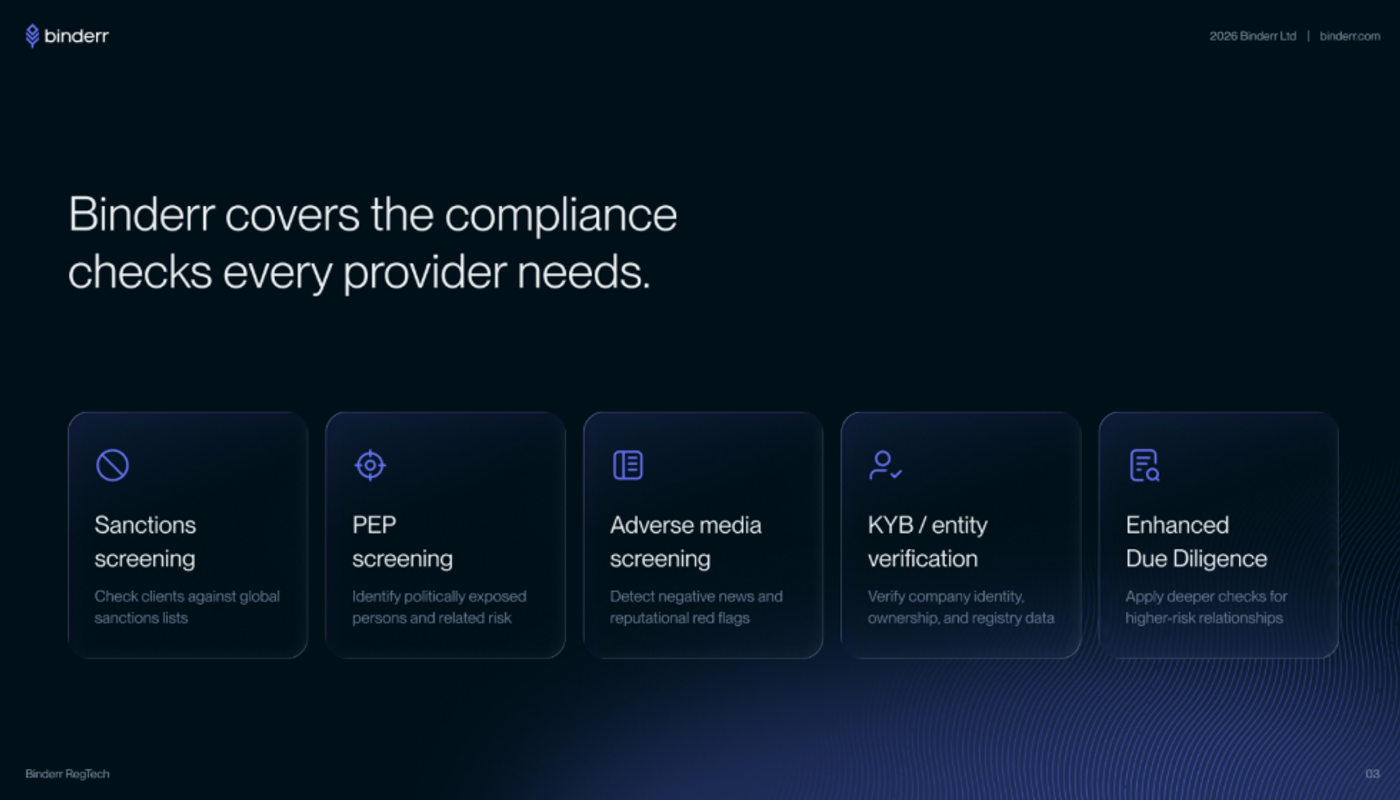
Confirming a business licence addresses only one part of regulatory risk. Compliance teams must also verify the underlying entity, identify its owners, screen connected parties, and determine whether enhanced due diligence is required. Binderr brings these wider compliance checks into one connected screening workflow.
What Is Business License Verification?
Business license verification is the process of confirming that a company holds the required licences or regulatory approvals to legally operate. It involves checking official registers to verify the licence’s validity, status, and scope, helping organisations reduce fraud and meet compliance requirements as part of broader corporate verification.
Start Business Verification for Free
Business Licence, Permit, Registration, and Authorisation
Understanding the differences between various types of regulatory approvals is essential for accurate business verification and risk assessment. Although these terms are often used interchangeably, they represent distinct forms of permission within regulatory frameworks:
- Business licence: Permission to carry out specific business activities.
- Permit: Approval for a particular activity, location, or process.
- Regulatory registration: Listing in an official regulator’s register.
- Authorisation: Formal approval to provide regulated services.
- Professional certification: Proof of meeting professional standards.
- Company registration: Legal incorporation of a business entity.
Recognising these distinctions helps compliance teams perform more accurate regulatory checks, avoid false assumptions about a company’s legal standing, and strengthen overall KYB due diligence, corporate verification, and risk-based decision-making.
Why Business Licence Verification Matters in KYB
Ensuring a business is properly licensed is a critical step in building trust, reducing risk, and maintaining regulatory compliance during onboarding.
Accurate business licence verification strengthens KYB processes by confirming legal authorisation, preventing fraud, and supporting effective regulatory checks, company registration verification, and risk assessment.
Confirms That the Business Can Legally Operate - Business license verification confirms that a company holds the necessary regulatory approval to operate within its industry and jurisdiction. By checking licence status against official registers, organisations can ensure the business is authorised to provide its services and is not operating outside legal requirements.
Prevents the Onboarding of Unauthorised Businesses - Regulatory checks help prevent onboarding companies that appear legitimate but lack proper licensing or authorisation. Even with valid incorporation details confirmed through company registration verification, a business without the required licence may be operating unlawfully, increasing compliance and reputational risk.
Detects Fake and Altered Licence Documents - Licence validation helps identify fraudulent or manipulated documents, such as fake licence numbers, altered expiry dates, or copied regulator details. Verifying information directly with the issuing authority reduces the risk of relying on inaccurate or misleading documentation.
Identifies Companies Operating Beyond Their Permissions - A business licence may only permit specific activities, products, or geographic operations. Licence verification ensures the company is not exceeding its authorised scope, such as offering services or targeting customers outside its approved permissions.
Strengthens Risk-Based KYB Decisions - Incorporating licence verification into KYB checks supports a risk-based approach by providing insight into a company’s regulatory standing. Combined with AML screening, ownership structure, and geographic risk, licence status helps determine the overall risk profile and informs onboarding decisions within a comprehensive corporate verification framework.
FATF identifies the risk-based approach as a central part of effective AML and counter-terrorist financing controls. Its Recommendations were most recently updated in June 2026.
Creates a Defensible Compliance Record - Maintaining documented evidence of business licence verification supports audit readiness and regulatory compliance. Recording sources, licence status, and verification steps creates a clear audit trail that explains why a business was approved, rejected, or escalated during KYB onboarding and corporate verification.
Verify Business Licenses with Confidence: A Step-by-Step Guide for Accurate Compliance Checks
Ensure every business you onboard meets regulatory requirements with a structured business license verification process, KYB checks, company registration verification, and compliance validation
Step 1: Identify the Company’s Legal Entity
The first step in business license verification is to accurately identify the legal entity involved. This ensures that all KYB verification, regulatory checks, company registration verification, and licence validation processes are applied to the correct organisation. Misidentification can lead to compliance gaps, incorrect risk assessments, and onboarding of unauthorised businesses.
To establish a reliable entity profile, collect essential details such as the full legal name, registration number, incorporation jurisdiction, and registered address. These core identifiers help align company data across official registers, regulatory databases, and AML screening systems.
Accurate entity identification forms the foundation of business licence verification and corporate verification. It ensures consistency across compliance workflows and supports effective regulatory due diligence before proceeding with licence checks.
Step 2: Understand the Business Activity
Once the legal entity is confirmed, the next step is to understand the company’s actual business activity. Business licence requirements depend heavily on the nature of services, products, and jurisdictions involved. Without this context, regulatory compliance checks may be incomplete or inaccurate.
Focus on key operational aspects such as the services offered, geographic presence, and whether the company engages in regulated activities. Identifying whether the business handles customer funds or operates in a high-risk sector is also critical for KYB licence verification.
Understanding the operating model allows compliance teams to determine which licences or regulatory authorisations are required. This ensures that business licence verification aligns with real-world activities rather than relying solely on declared information.
Business licence requirements cannot be assessed without structured information about the company’s activities, jurisdictions, products, and customer base. Binderr’s dynamic onboarding forms can adapt to the entity type and answers provided, helping compliance teams collect the relevant company information once and feed it directly into the risk assessment process.
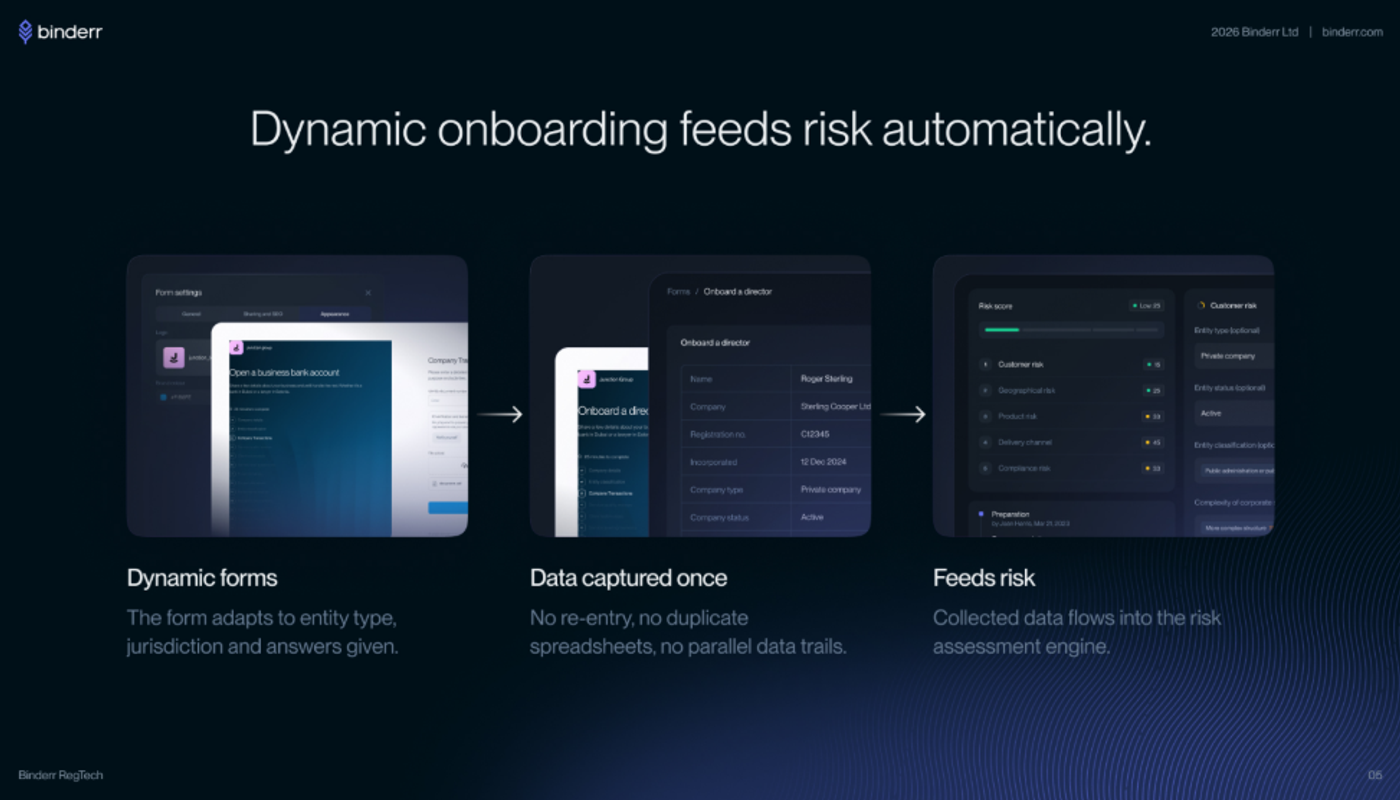
(Binderr turns structured business onboarding data into risk-assessment inputs.)
Verify Companies with Confidence
Step 3: Identify the Correct Licensing Authority
After defining the business activity, identify the appropriate licensing authority responsible for issuing and maintaining the company’s licence. Different industries and jurisdictions have specific regulators, making this step essential for accurate regulatory checks.
Focus on locating the official authority that governs the company’s industry and jurisdiction. This may include national regulators, regional bodies, or sector-specific licensing agencies depending on the business model.
Always rely on official regulator databases when performing business licence verification. Avoid depending solely on documents provided by the company, as these may be outdated or manipulated, increasing compliance risk and weakening corporate verification.
Step 4: Search the Official Regulatory Register
With the correct authority identified, conduct a search within the official regulatory register. Using multiple identifiers improves accuracy and reduces the risk of mismatches, especially in international business verification.
Search using key identifiers such as the legal name, licence number, or company registration number. Cross-referencing these details helps confirm that the correct entity is being reviewed during KYB, company registration verification, and regulatory compliance checks.
This step strengthens the reliability of business licence verification by ensuring that the licence exists, is recorded by the regulator, and corresponds to the correct company.
Step 5: Match the Licence to the Legal Entity
The final step is to confirm that the licence belongs to the same legal entity being onboarded. This matching process is critical for detecting clone firms, identity misuse, and fraudulent licence claims during KYB verification and corporate verification.
Compare key details such as the legal name, registration number, and address between the regulatory register and the company profile. Even small inconsistencies can indicate potential compliance risks or unauthorised activity.
Accurate matching ensures that the business licence is valid, correctly assigned, and aligned with the verified entity. This step is essential for maintaining strong regulatory compliance and reducing onboarding risk.
Step 6: Confirm Licence Status
Confirming licence status is a core part of business license verification and regulatory checks. A company may appear on an official register, but only its current status confirms whether it is legally authorised to operate. During KYB licence verification, compliance teams must verify the exact standing of the licence rather than assuming validity based on listing alone.
Common statuses include active, authorised, pending, restricted, suspended, expired, or revoked. Each status directly impacts regulatory compliance. For example, a “pending” licence does not grant permission to operate, while “suspended” or “restricted” licences may limit business activities. Always confirm that the licence is active and valid before proceeding with onboarding.
Step 7: Review the Scope of Permission
After confirming licence validity, business licence verification must assess whether the company operates within its authorised scope. Regulatory compliance checks should ensure that the business activities align with what the licence permits, as operating beyond scope is a common KYB risk.
Key areas to verify include permitted services, customer types, and geographic coverage. For example, a financial services licence may allow payments but not lending, or may restrict operations to a specific jurisdiction. Ensuring alignment between the business model and licence scope strengthens KYB compliance and reduces regulatory risk.
Step 8: Review Regulatory and Enforcement History
Regulatory due diligence should include reviewing the company’s enforcement history as part of business license verification. Even with an active licence, past regulatory actions can indicate compliance weaknesses or elevated risk.
Focus on key indicators such as fines, licence suspensions, regulatory warnings, or disciplinary actions. These signals help identify patterns of non-compliance and support more accurate KYB risk assessment. Incorporating enforcement data improves decision-making during onboarding and ongoing monitoring.
Step 9: Screen the Business and Related Parties
Business licence verification should be integrated with AML screening and KYB checks to assess the full risk profile. Screening ensures that the company and its associated individuals are not linked to sanctions, financial crime, or reputational risks.
Screen the legal entity, directors, and UBOs using sanctions screening, PEP checks, and adverse media. This step complements regulatory checks by identifying hidden risks beyond licence validation. Combining licence verification with AML screening strengthens overall compliance, company registration verification, and corporate verification.
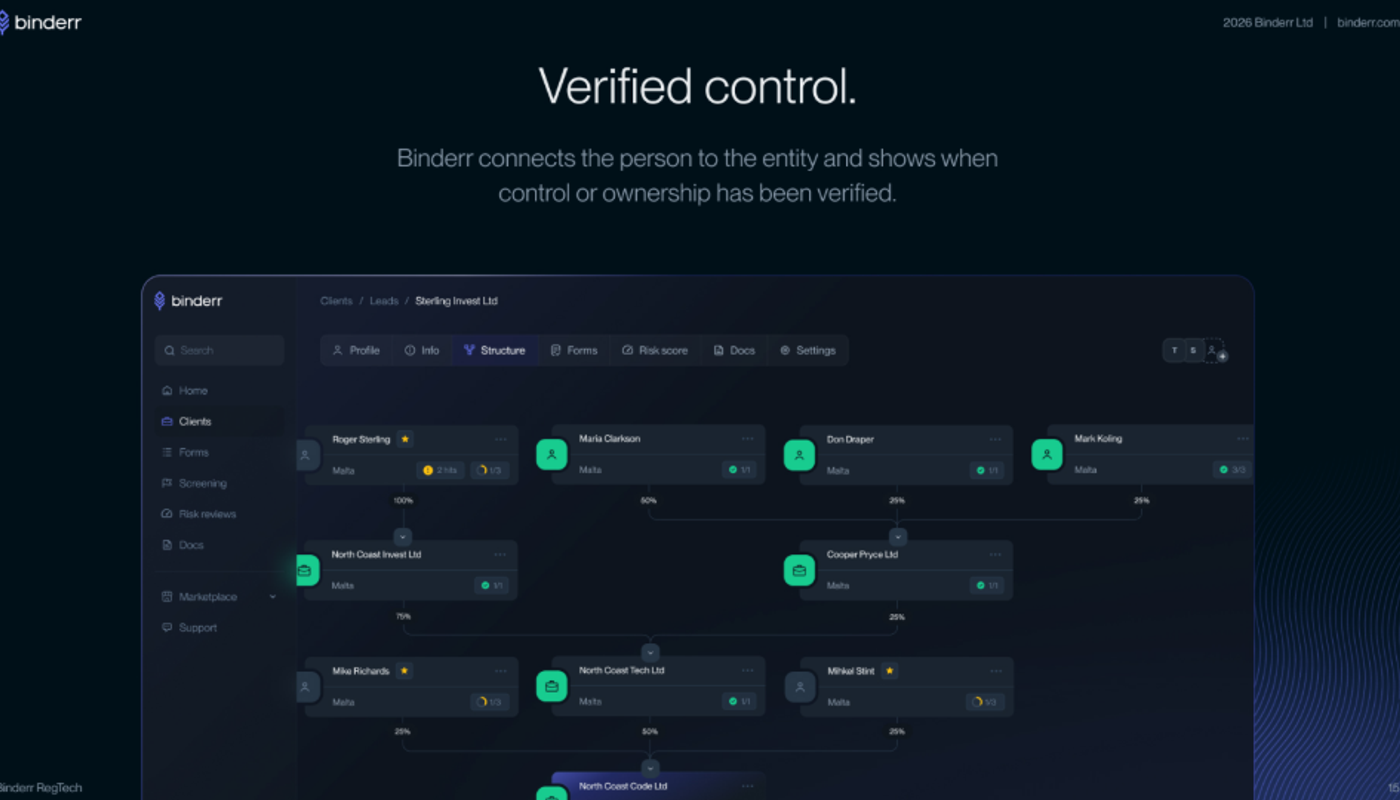
Screening the licensed entity alone may leave significant ownership risks undiscovered. Binderr maps individuals and companies within the ownership structure, helping analysts connect directors, shareholders, and beneficial owners to the entity being reviewed. This provides stronger context for sanctions, PEP, adverse media, and risk screening.
Verify Businesses Without the Manual Work
Step 10: Document and Escalate the Result
Accurate documentation is essential for regulatory compliance and audit readiness. Every business license verification should produce a clear record of the checks performed and the outcome.
Record key details such as the source checked, licence status, scope, and risk assessment. If any discrepancies or missing information arise, escalate for further due diligence rather than approving automatically. Maintaining a structured audit trail supports KYB compliance, company registration verification, and ensures defensible onboarding decisions.
Simplify Business License Verification with Binderr
Binderr automates the entire verification workflow:
- Collect company data through custom onboarding forms
- Automatically retrieve registry and corporate data
- Perform AML screening on businesses, directors, and UBOs
- Assign dynamic risk scores instantly
- Trigger EDD workflows for high-risk entities
- Maintain full audit trails for compliance
How to Verify International Business Licences
International business license verification requires careful navigation of global regulatory checks and cross-border compliance requirements.
Effective business licence verification, regulatory checks, company registration verification, and licence validation processes help organisations manage international KYB risks, confirm regulatory status, and ensure ongoing compliance across jurisdictions.
Use Multiple Independent Data Points
Effective international licence verification relies on cross-checking multiple independent data points to confirm the legitimacy of a business. Matching company registry information with regulatory licence data, tax or commercial registrations, and LEI (Legal Entity Identifier) records helps ensure consistency across jurisdictions. Additional verification should include reviewing the operating address, website and email domain, ownership structure, and director information to detect discrepancies or potential fraud risks.
The GLEIF LEI database provides open, standardised legal entity reference data that can support cross-border entity matching and improve transparency. However, it should be used as a supplementary verification tool rather than definitive proof of regulatory authorisation. Combining LEI data with official regulatory registers and KYB verification processes strengthens overall compliance, corporate verification, and reduces the likelihood of onboarding high-risk or unauthorised entities.
Translate and Normalise Company Information
Accurate international licence verification requires translating and normalising company information to ensure consistency across different jurisdictions. Variations in legal suffixes, local characters, transliteration, and abbreviations can lead to mismatches when searching regulatory databases. Historical company names, differing address formats, and inconsistent date or licence number formats further complicate verification efforts.
Normalising this data allows compliance teams to perform more accurate searches and comparisons across multiple sources. Standardising company names, addresses, and identifiers improves entity matching, reduces false positives, and enhances the reliability of KYB, company registration verification, and regulatory checks. This step is essential for identifying legitimate businesses and avoiding errors caused by language or formatting differences.
Verify the Territorial Scope
A critical part of international business licence verification is confirming the territorial scope of a licence. A company may hold a valid domestic licence but still lack authorisation to operate or solicit customers in other jurisdictions. Regulatory permissions often include geographic limitations, meaning businesses must obtain additional licences or approvals to expand internationally.
Compliance teams should carefully review the scope of permission, including any cross-border passporting rights, restrictions, or conditions attached to the licence. Verifying territorial coverage ensures that the business is legally permitted to operate in the target market and helps prevent regulatory breaches, fines, or reputational damage associated with unauthorised cross-border activity.
How Often Should Licences Be Rechecked?
Business licence verification is not a one-time task. Licences can expire, be suspended, or change in scope, making ongoing monitoring essential for maintaining compliance.
A risk-based approach to rechecking licences is recommended:
- Low-risk businesses: Conduct an annual review to confirm that licences remain valid and unchanged.
- Medium-risk businesses: Recheck licences every six to twelve months, depending on the level of regulatory exposure and operational complexity.
- High-risk businesses: Perform reviews every three to six months, particularly for companies operating in heavily regulated industries or high-risk jurisdictions.
- Critical changes: Trigger immediate, event-driven reviews when there are significant updates such as licence suspension, ownership changes, regulatory enforcement actions, or adverse media alerts.
Review frequency should depend on laws, internal policies, risk level, geography, and data reliability. Continuous monitoring can help detect real-time regulatory changes and manage risk proactively within a corporate verification framework.
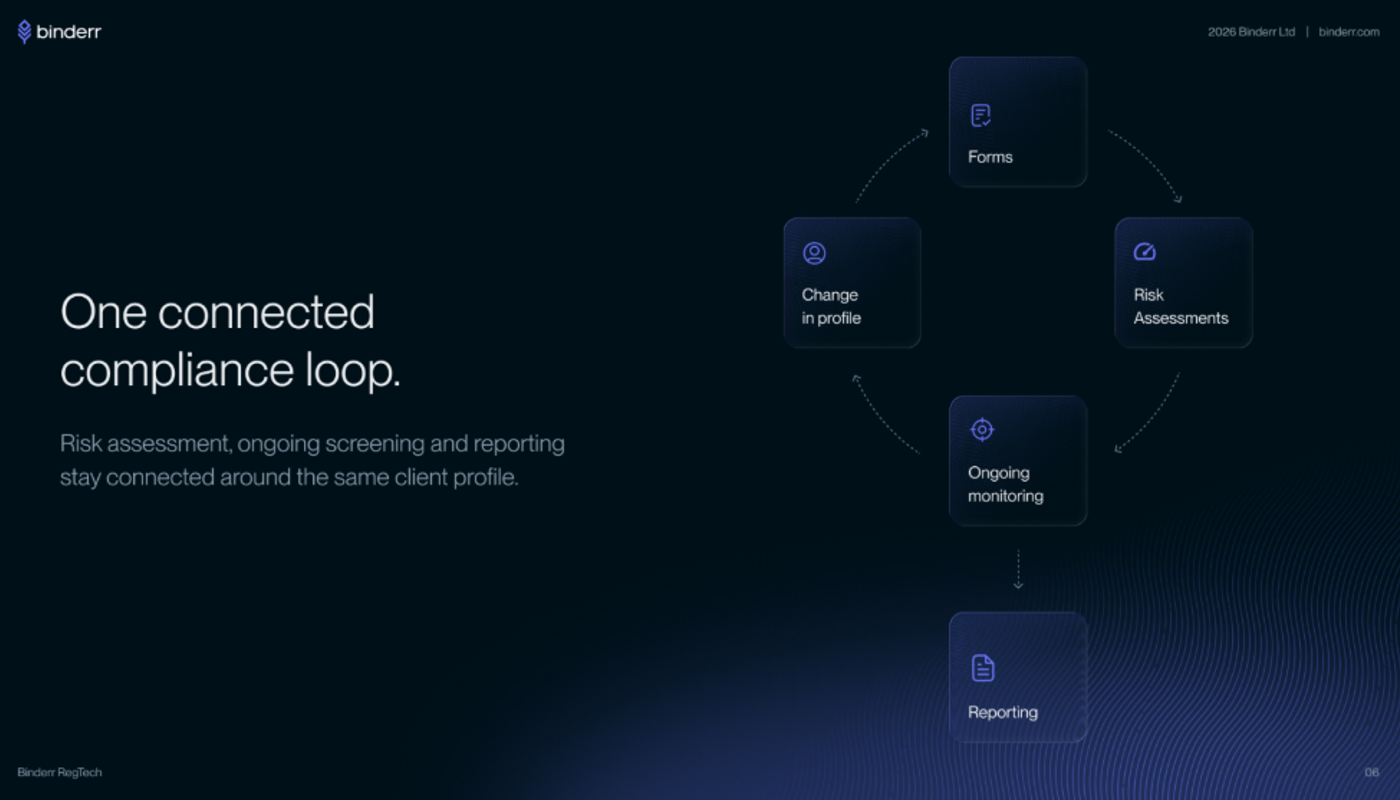
Licence status can change after onboarding. A company may renew, surrender, lose, or have conditions added to its authorisation. Binderr connects company information, risk assessments, ongoing screening, profile changes, and reporting around the same client record, helping compliance teams reassess risk when relevant information changes.
Get Advanced KYB & Ownership Verification Features with Binderr
Binderr enhances international licence verification with:
- Ownership structure mapping to visualise complex hierarchies
- UBO identification and verification across jurisdictions
- Detection of hidden relationships and affiliations
- Integrated AML screening for all related entities
- AI-powered data matching to reduce false positives
Common Business Licence Verification Mistakes
Avoid costly compliance gaps by understanding where business licence verification often goes wrong in KYB, company registration verification, and regulatory checks.
From overlooking licence status to failing proper regulatory register searches, these common mistakes can expose organisations to significant risk.
Accepting a licence document without checking the regulator - Relying solely on a business licence document without verifying it against the official regulatory register can lead to serious compliance risks. Fraudulent or altered documents may appear legitimate, so it is essential to perform a proper business license verification using the issuing authority’s database to confirm authenticity, status, and ownership.
Ignoring licence scope and restrictions - A valid licence does not automatically grant permission for all activities. Businesses may be authorised only for specific services, customer types, or jurisdictions. Failing to review licence scope and restrictions can result in onboarding companies that operate outside their permitted activities, increasing regulatory and operational risk.
Overlooking trading names and subsidiaries - Companies often operate under multiple trading names or through subsidiaries, which may not all be covered by the same licence. Ignoring these variations can lead to incomplete company licence verification and missed discrepancies between the licensed entity and the business actually providing services.
Treating a pending application as an active licence - A pending or in-progress licence application does not grant legal authorisation to operate. Treating it as an active licence during KYB checks can expose organisations to unauthorised businesses that have not yet received regulatory approval, making proper licence status validation critical.
Using outdated screenshots - Screenshots of regulatory registers can quickly become outdated and may not reflect current licence status, suspensions, or revocations. Effective regulatory checks require accessing live data from official sources to ensure that the information used in business licence verification is accurate and up to date.
Assuming a foreign licence permits local activity - A licence issued in one jurisdiction does not automatically allow a business to operate in another. Cross-border regulatory compliance often requires additional approvals or local authorisation. Assuming otherwise can result in onboarding businesses that are not legally permitted to operate in the target market.
End-to-End Compliance with Binderr
Binderr Compliance Platform brings everything together:
- KYC for identity verification with AI-powered checks
- KYB for global business verification and registry access
- AML screening across sanctions, PEPs, and adverse media
- Dynamic risk assessment for CDD and EDD
- UBO identification and ownership mapping
- Ongoing monitoring with real-time alerts
- Centralised compliance workflows and reporting
Bottom Line
Business license verification is more than collecting a certificate or reviewing a document at face value. Effective checks require confirming the issuing authority and ensuring the licence holder matches the legal entity. Teams must also review the licence status, scope, restrictions, and geographic coverage.
Integrating licence verification into a broader KYB framework strengthens the process. This includes UBO verification, AML screening, sanctions checks, risk scoring, and ongoing monitoring. A holistic approach helps detect discrepancies faster and supports risk-based decisions.
It also ensures that licence changes, expirations, or enforcement actions are identified in time. Strengthen business onboarding with Binderr Compliance by bringing KYB verification, ownership checks, AML screening, risk assessment, and ongoing monitoring into one centralised workflow.