AML teams face growing pressure from rising alert volumes across transaction monitoring, sanctions screening, PEP checks, adverse media, and internal referrals. Each alert requires quick review, clear context, and proper documentation. Without a unified AML case management system or aml system, investigations can become fragmented, increasing the risk of missed deadlines, inconsistent decisions, and weak audit trails.
An AML case management system turns alerts into structured investigations by centralising data, enabling faster prioritisation, consistent workflows, and better oversight. Dashboards such as an AML compliance dashboard or broader compliance dashboard provide real-time visibility into workloads, risks, and performance, while global estimates suggest money laundering may account for up to 5 percent of GDP.
This guide explains how AML case management systems support alert triage, investigations, reporting, and dashboards, along with key features and selection considerations. Organisations must align processes with applicable AML laws and regulatory requirements.
Binderr AML Case Management Software
Binderr Compliance Platform stands out as a complete AML case management and compliance solution designed to streamline investigations and reduce risk.
Key capabilities include:
- Unified AML case management with structured investigation workflows
- Integrated KYC (identity verification) and KYB (business verification)
- AML screening across sanctions, PEPs, watchlists, and adverse media
- Real-time ongoing monitoring with instant alerts
- Automated alert prioritisation and case assignment
What Is an AML Case Management System?
An AML case management system is a centralised platform that helps organisations manage financial crime investigations from start to finish. It allows compliance teams to create, review, document, escalate, and resolve suspicious activity in a structured and auditable way within a broader aml system.
It acts as the operational core of a financial crime programme by bringing together data from multiple sources into one place. This gives investigators a clear view of customer activity, risk indicators, and past interactions, helping them make faster and more consistent decisions while feeding insights into an AML compliance dashboard or compliance dashboard.
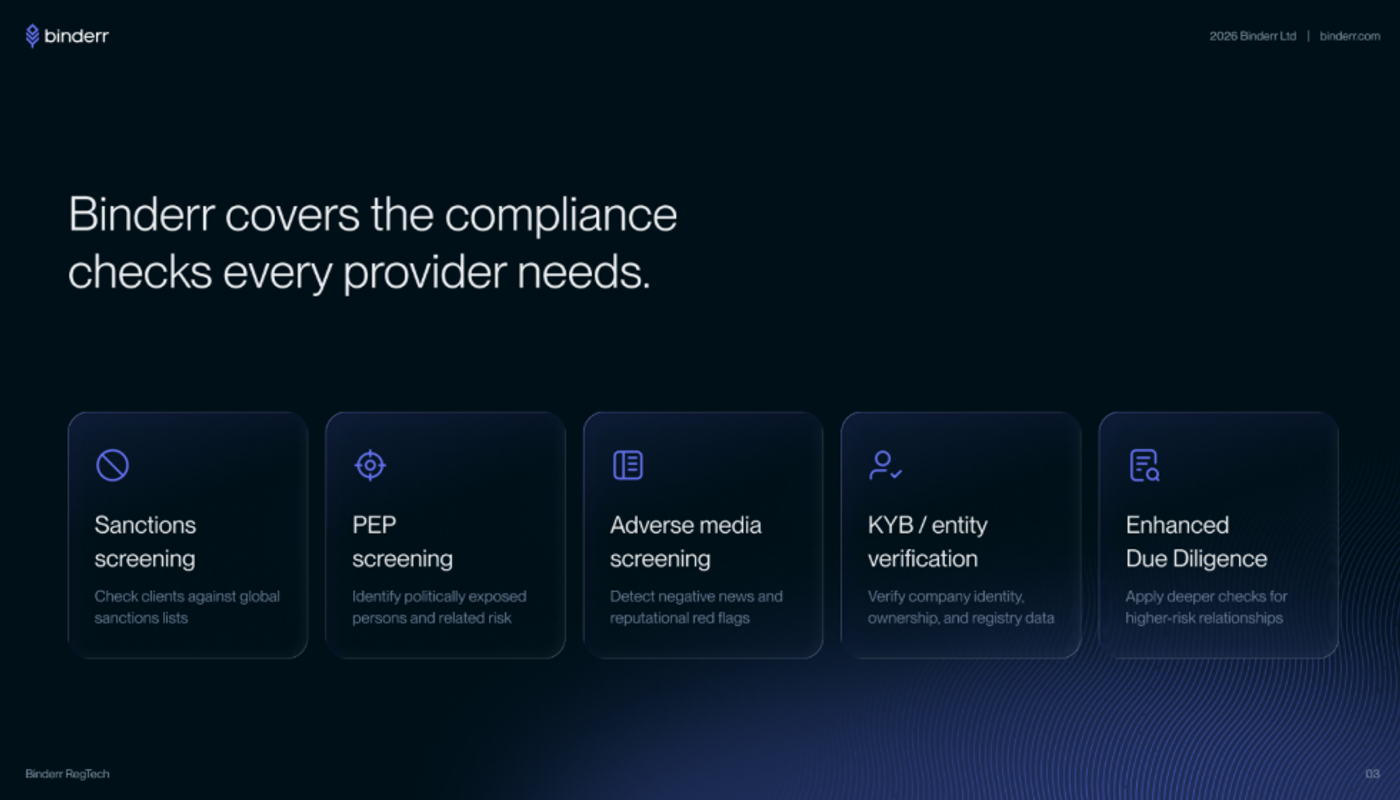
Binderr Compliance brings sanctions, PEP, adverse media, KYB, and enhanced due diligence checks into one screening environment, helping analysts build a clearer risk profile before deciding whether an alert should be closed, escalated, or investigated further.
Cut compliance time. Screen and detect risk for FREE.
Why AML Case Management Matters
In a world of rising financial crime risks, effective AML case management is the backbone of a resilient compliance programme.
From alert prioritisation to investigation workflows and AML compliance dashboards, it ensures every suspicious activity is tracked, analysed, and resolved with clarity and control.
Centralised investigation records - An AML case management system keeps all investigation data in one place. This includes customer profiles, alerts, transactions, screening results, notes, documents, and decisions. Centralising information reduces fragmentation and helps investigators quickly understand each case within the aml system.
Consistent investigation processes - AML case management systems use templates, set workflows, and clear escalation paths. This helps analysts follow the same steps when reviewing alerts and closing cases. Consistency improves quality and supports regulatory compliance.
Faster alert handling - AML tools can speed up alert handling through automation, prioritisation, and duplicate detection. These features reduce manual work and help teams focus on higher-risk cases. However, results still depend on data quality and system setup within the aml system.
Stronger accountability - Case management systems assign ownership, track actions, and enforce deadlines. Features like approval controls and overdue alerts ensure cases are handled properly. This improves oversight and responsibility.
Audit-ready documentation - AML software keeps a clear record of each investigation. It shows what triggered the alert, what was reviewed, who acted, and why decisions were made. This helps firms meet audit and regulatory expectations.
Better management oversight - AML compliance dashboards and compliance dashboard tools provide compliance leaders with real-time visibility into alert volumes, investigation backlogs, case ageing, reporting activity, and emerging financial crime risks. These dashboards help identify delays, resource constraints, and control weaknesses, enabling more informed decision-making and stronger oversight of AML compliance operations.
Try FREE AI-powered AML screening with Binderr
How the AML Case Management Process Works
From alert to action, this is where financial crime signals become structured investigations powered by AML case management systems and workflows within an aml system.
Explore how AML alert management, investigation workflows, and AML compliance dashboards work together to drive efficient, risk-based decision-making.
Step 1: Alert generation
AML alert generation is the starting point of the AML case management workflow, where potential financial crime risks are identified through automated systems and manual inputs within the aml system. Alerts may be triggered by transaction monitoring rules, behavioural models, sanctions or PEP matches, adverse media findings, and changes in customer risk profiles.
Alerts can also arise from identity or document anomalies, changes in ownership structures, exposure to high-risk jurisdictions, and suspicious account behaviour. Manual referrals from employees or intelligence from law enforcement and regulators may also generate alerts, highlighting the importance of multiple data sources in AML monitoring.
Step 2: Alert enrichment
After an alert is generated, AML case management systems enrich it with relevant data to support investigation. This gives analysts a clear view of the customer or entity without needing to gather information manually.
Enrichment typically includes customer profiles, risk ratings, KYC or KYB results, UBO details, transaction history, previous alerts, and related accounts. It may also include sanctions and PEP screening results, adverse media, source of funds, expected activity, and geographic exposure to help assess risk.
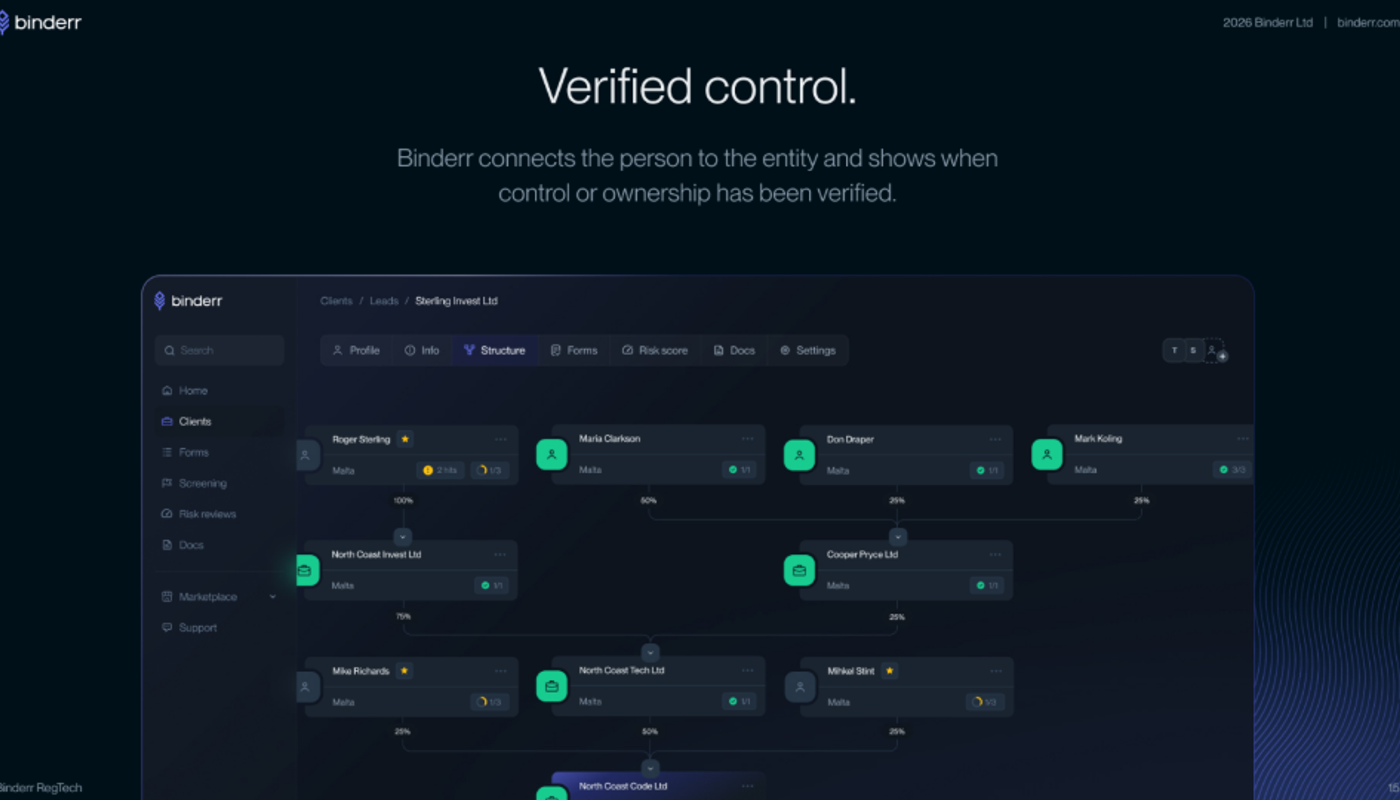
Corporate investigations often require more than a company name and registration number. Analysts may need to identify shareholders, directors, beneficial owners, intermediate entities, ownership percentages, and screening results attached to each party. Binderr’s ownership view helps connect people to entities and makes verified control easier to review during KYB, UBO, and AML investigations.
Step 3: Risk-based alert prioritisation
Risk-based alert prioritisation ensures that AML alerts are handled according to their potential financial crime risk rather than on a first-come, first-served basis. Not all alerts carry the same level of urgency, and effective AML case management software uses configurable scoring models to rank alerts based on predefined risk factors within the aml system.
Prioritisation criteria may include trigger severity, customer risk classification, sanctions or PEP exposure, transaction size and frequency, and involvement of high-risk jurisdictions. Other factors such as previous suspicious activity, network connections, product or channel risk, and regulatory deadlines may also apply. While automated scoring improves efficiency and helps reduce alert backlogs, it should support, not replace, analyst judgement to ensure decisions align with AML compliance policies and regulatory expectations.
Step 4: Initial alert triage
Initial alert triage is the first level of review in the AML investigation workflow, where analysts assess whether an alert warrants further investigation or can be closed. The goal of triage is to quickly filter out low-risk or irrelevant alerts while ensuring that potentially suspicious activity is escalated appropriately.
During triage, analysts confirm the alert has enough information, identify obvious false positives or duplicates, and assess whether the activity has a reasonable explanation based on the customer profile. They also check for linked alerts or existing cases to avoid duplication. Based on this, the alert may be closed or converted into a formal AML case. Common closure reasons include legitimate activity, confirmed false matches, duplicate alerts, insufficient relevance, or previously investigated activity.
Step 5: Investigation and evidence collection
In this stage of the AML investigation workflow, analysts use AML case management systems to build a comprehensive view of the customer, their transactions, associated entities, and potential financial crime risk indicators. The goal is to determine whether the alert reflects legitimate activity or raises suspicion under anti-money laundering regulations. Investigators rely on integrated data from transaction monitoring, KYC and KYB records, sanctions screening, and adverse media tools to form a complete risk profile within the aml system.
Investigation actions may include:
- Reviewing transaction patterns
- Comparing actual and expected customer behaviour
- Examining connected accounts and counterparties
- Reviewing KYC, KYB and UBO information
- Assessing source of funds and source of wealth
- Reviewing previous investigations
- Documenting reasonable explanations and unresolved concerns
Step 6: Escalation and second-line review
AML case management software supports structured escalation workflows when cases involve higher risk, uncertainty, or potential reporting obligations. Escalation ensures that complex or sensitive investigations receive appropriate oversight from senior compliance personnel or specialised teams. This step is critical for maintaining consistency, regulatory compliance, and defensible decision-making within financial crime investigations.
Potential escalation routes include:
- Senior investigator
- AML compliance officer
- MLRO or nominated officer
- Sanctions team
- Fraud team
- Legal counsel
- Senior management
- Specialist financial crime committee
Maker-checker controls are essential in AML compliance case management, ensuring that high-risk decisions are independently reviewed and approved. This separation of duties strengthens governance, reduces bias, and supports audit readiness.
Step 7: SAR or STR decision
A key function of AML investigation software is supporting the decision-making process for suspicious activity reporting. Detecting unusual activity does not automatically mean a report must be filed. Investigators must assess whether the activity meets the legal threshold for suspicion under applicable AML regulations. This involves distinguishing between unusual but explainable behaviour and activity that may indicate money laundering, terrorist financing, or other financial crime.
The process typically includes:
- Detecting unusual activity
- Establishing suspicion under the applicable legal test
- Making an internal report
- Deciding whether to file a SAR, STR, or equivalent report
- Submitting the report to the relevant FIU
Reporting terminology, thresholds, and deadlines vary by jurisdiction. For example, FinCEN clarified in October 2025 that U.S. financial institutions are not required to file recurring SARs every 90 or 120 days for continuing activity, although they may submit continuing-activity reports where appropriate under regulatory timelines.
Step 8: Case closure and post-investigation actions
Closing an AML case within a case management system does not necessarily end the compliance process. Instead, it marks the conclusion of the investigation phase and triggers any necessary follow-up actions based on the findings. Effective AML compliance case management ensures that outcomes are documented, risk assessments are updated, and appropriate controls are applied, often reflected in an AML compliance dashboard.
Keep investigation outcomes connected to ongoing compliance
A completed investigation may require a customer risk-rating change, enhanced monitoring, additional document collection, or future reporting. Binderr Compliance connects customer forms, risk assessments, ongoing screening, reporting, and profile changes around the same customer or entity record. This helps ensure that important case outcomes continue to influence future compliance decisions.
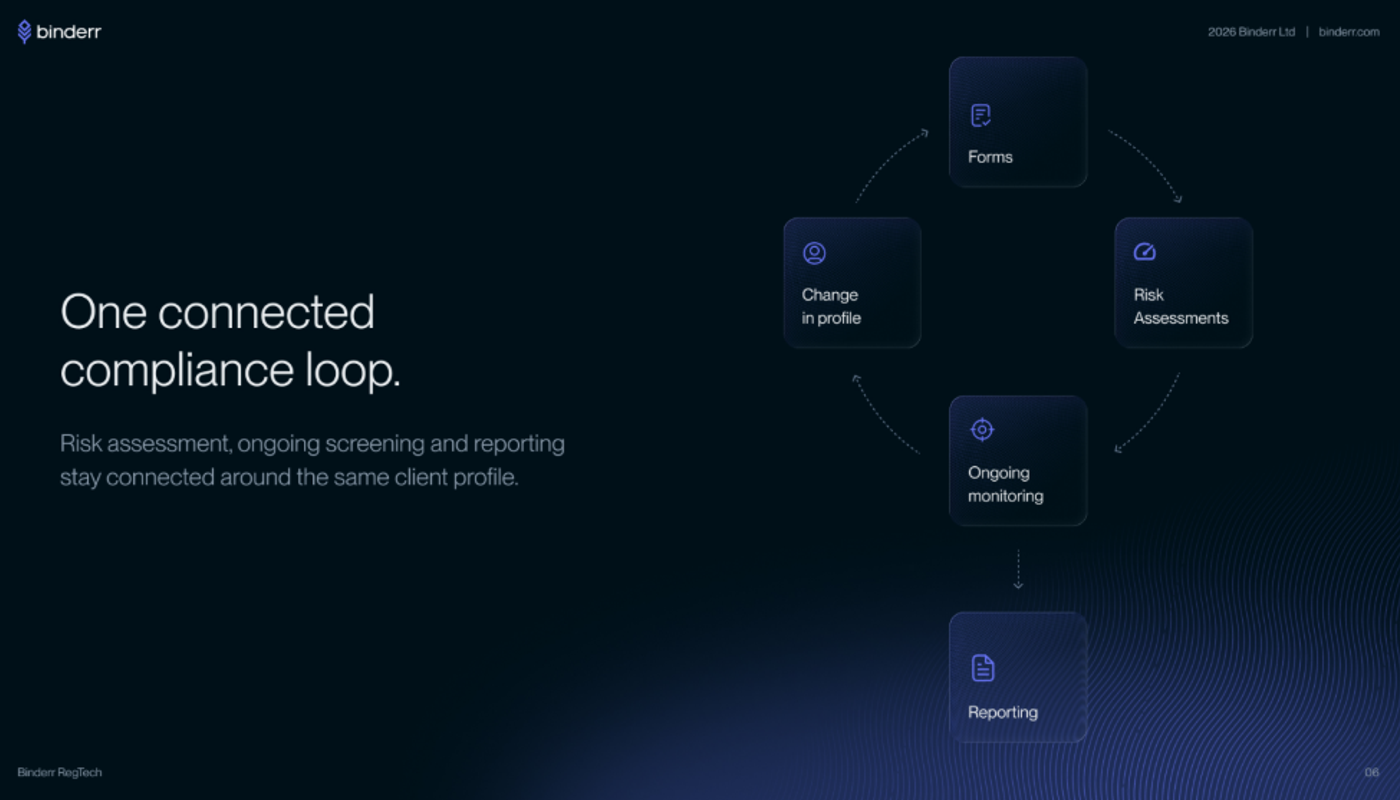
(Binderr connected AML compliance loop for risk assessment monitoring and reporting.)
See How Binderr Streamlines AML Case Management
Binderr simplifies the entire AML investigation workflow by combining multiple compliance tools into one platform:
- Automatically generate and enrich alerts with KYC, KYB, and AML data
- Assign cases based on risk level and analyst workload
- Trigger EDD workflows for high-risk customers
- Collect additional documents dynamically
- Maintain full audit trails for every investigation
- Monitor customers continuously for risk changes
What Is an AML Compliance Dashboard?
An AML compliance dashboard is a centralised reporting interface that turns AML case data into clear insights. It pulls information from transaction monitoring, KYC and KYB systems, sanctions and PEP screening, adverse media, and ongoing monitoring within the aml system to show financial crime risk and operational performance in real time.
Rather than just displaying charts, a good compliance dashboard supports decision-making. It highlights trends, flags bottlenecks, and helps teams focus on high-risk activity. This improves response times and overall oversight.
Operational dashboards
Operational dashboards are used by analysts and investigators handling daily alerts and cases. They provide a quick view of workloads, deadlines, and priorities within the AML case management environment.
Key components include:
- Alerts awaiting review, including newly generated alerts that have not yet been triaged or assigned to an investigator
- Open investigations, showing all active cases currently under review along with their assigned analysts and progress status
- Overdue cases, highlighting investigations that have exceeded defined service-level agreements or internal deadlines
- High-risk alerts, prioritised based on severity, customer risk profile, transaction value, or potential regulatory impact
These dashboards often allow filtering and drill-downs, helping analysts quickly access key data and stay on track.
Management dashboards
Management dashboards are used by compliance managers and MLROs to monitor performance and risk using an AML compliance dashboard or broader compliance dashboard.
Typical metrics include:
- Total alert volumes: Track the number of alerts generated over a given period to understand workload trends, identify spikes in activity, and assess whether monitoring rules are producing manageable and meaningful outputs.
- Case backlog: Measure the number of open cases awaiting investigation or resolution to evaluate operational capacity, identify bottlenecks, and ensure timely handling of potential risks.
- Average investigation time: Monitor how long it takes to complete investigations from alert creation to case closure, helping assess efficiency and identify areas where processes may need improvement.
- Case-age distribution: Analyse how long cases remain open by grouping them into age brackets (e.g., 0–7 days, 8–30 days, 30+ days) to highlight overdue cases and ensure compliance with internal SLAs and regulatory expectations.
- Escalation rates: Track the percentage of cases escalated to senior reviewers or compliance officers to understand risk levels, decision consistency, and whether analysts are appropriately identifying higher-risk situations.
- SAR or STR volumes: Measure the number of suspicious activity or transaction reports filed to monitor reporting trends, assess regulatory exposure, and ensure reporting obligations are being met.
- High-risk activity trends: Identify patterns in high-risk alerts or cases, such as geographic exposure, customer segments, or transaction types, to support proactive risk management and policy adjustments.
- QA findings: Review results from quality assurance checks to identify common errors, inconsistencies, or training gaps, helping improve investigation quality and maintain regulatory compliance.
They help identify issues like backlogs, inefficiencies, or resource gaps. Regulators increasingly expect firms to track metrics such as pending alerts and investigation speed.
Board and executive dashboards
Board-level dashboards give senior leaders a high-level view of AML risk and performance through a compliance dashboard.
Key areas include:
- Major financial crime risks, including emerging threats, high-risk customer segments, and exposure to suspicious activity patterns
- Significant backlogs, highlighting delays in alert reviews or case investigations that could impact compliance effectiveness
- Missed deadlines, particularly for regulatory reporting, internal escalation timelines, or investigation service-level agreements
- High-risk cases, such as those involving sanctions exposure, politically exposed persons, or complex transaction patterns requiring urgent attention
- Control weaknesses, including gaps in monitoring systems, inconsistent investigation practices, or deficiencies identified through audits or quality assurance reviews
These dashboards should be clear and concise, helping leaders make informed decisions without too much detail.
Get Advanced AML Features with Binderr
Binderr enhances AML case management with powerful features designed for modern compliance teams:
- AI-powered AML screening with reduced false positives
- Real-time adverse media monitoring
- UBO identification and ownership mapping
- Dynamic risk scoring for individuals and businesses
- Integrated KYC and KYB verification
- Continuous monitoring with instant alerts
Important AML Case Management Metrics
Understanding key AML case management metrics is essential for evaluating the effectiveness of your compliance programme and identifying operational risks within an aml system.
Tracking the right AML metrics enables better decision-making, improves investigation workflows, and strengthens overall financial crime risk management, often visualised through an AML compliance dashboard.
Total alerts generated - This metric tracks the overall volume of AML alerts produced by transaction monitoring systems, sanctions screening, and other detection tools. Monitoring total alerts generated helps compliance teams understand workload trends, assess system sensitivity, and identify whether alert thresholds or rules may need recalibration.
Alerts awaiting review - Alerts awaiting review represent the number of unprocessed alerts that have not yet been triaged by analysts. A high volume may indicate resource constraints, inefficient workflows, or overly sensitive monitoring rules, all of which can increase operational risk and delay suspicious activity detection.
Alert-to-case conversion rate - The alert-to-case conversion rate measures how many alerts are escalated into formal AML investigations. This metric helps evaluate the effectiveness of alert triage processes and whether alerts are appropriately filtered before becoming full cases.
False-positive or non-escalation rate - This metric shows the percentage of alerts that are closed without further investigation or escalation. A high false-positive rate may suggest that transaction monitoring rules or screening parameters are too broad, leading to unnecessary workload for compliance teams.
Open-case backlog - The open-case backlog reflects the number of active AML cases that have not yet been resolved. Tracking backlog levels helps identify bottlenecks in investigation workflows and ensures that high-risk cases are not delayed beyond acceptable timeframes.
Average case resolution time - Average case resolution time measures how long it takes to complete an AML investigation from case creation to closure. This metric provides insight into operational efficiency and helps organisations assess whether investigations are being completed within internal service-level agreements.
Percentage of overdue cases - This metric tracks the proportion of cases that exceed defined investigation deadlines. A rising percentage of overdue cases may indicate staffing shortages, inefficient processes, or increasing alert volumes that outpace investigation capacity.
Escalation rate - The escalation rate measures how often cases are referred to senior investigators, compliance officers, or MLROs for further review. This helps assess the complexity of cases and whether frontline analysts are appropriately identifying higher-risk situations.
SAR or STR filing rate - The SAR or STR filing rate indicates the proportion of cases that result in suspicious activity reports or suspicious transaction reports. This metric helps organisations understand reporting trends and evaluate whether their AML case management process is effectively identifying reportable activity.
How to Implement an AML Case Management System That Scales with Risk
Build a structured, compliant, and efficient AML workflow by aligning technology, data, and governance across your organisation using a robust aml system and compliance dashboard.
Step 1: Map the current investigation process
Start by auditing your current AML investigation workflow. Identify all alert sources, such as transaction monitoring, sanctions screening, PEP databases, adverse media, and internal referrals. Outline each stage from alert generation to case closure, including triage, escalation, and resolution. Define roles like AML analysts, compliance officers, MLROs, and QA reviewers, along with their responsibilities. Note reporting obligations such as SAR/STR timelines and highlight key pain points like backlogs or manual processes. This creates a clear baseline for improvement.
Step 2: Define regulatory and policy requirements
Understand the regulatory framework governing your AML program. Identify obligations from authorities like FATF, FinCEN, FCA, or AMLA, including reporting thresholds, escalation rules, and confidentiality requirements. Align internal policies with these standards, covering CDD, EDD, sanctions compliance, and record retention. Ensure your case management system supports these requirements with proper controls, audit trails, and reporting workflows.
Step 3: Design the target workflow
Build a clear and standardised AML investigation workflow. Define stages such as triage, case creation, investigation, escalation, SAR/STR decisions, QA, and closure. Use automation where possible, including alert prioritisation and case assignment. Include required fields, decision points, and escalation paths to maintain consistency and compliance. A structured workflow improves efficiency and reduces risk.
Step 4: Prepare and clean the data
Ensure data quality before implementation. Fix missing identifiers, duplicate records, and inconsistent customer or transaction data. Standardise formats across KYC, KYB, and monitoring systems. Validate ownership details, risk scores, and screening results. Clean data supports more accurate alerts, faster investigations, and better reporting within the aml system.
Incomplete data should remain visible throughout the investigation process. Binderr displays completed, outdated, and outstanding verification checks so analysts can identify missing risk assessments, expired evidence, or screening records requiring review before a case is resolved.
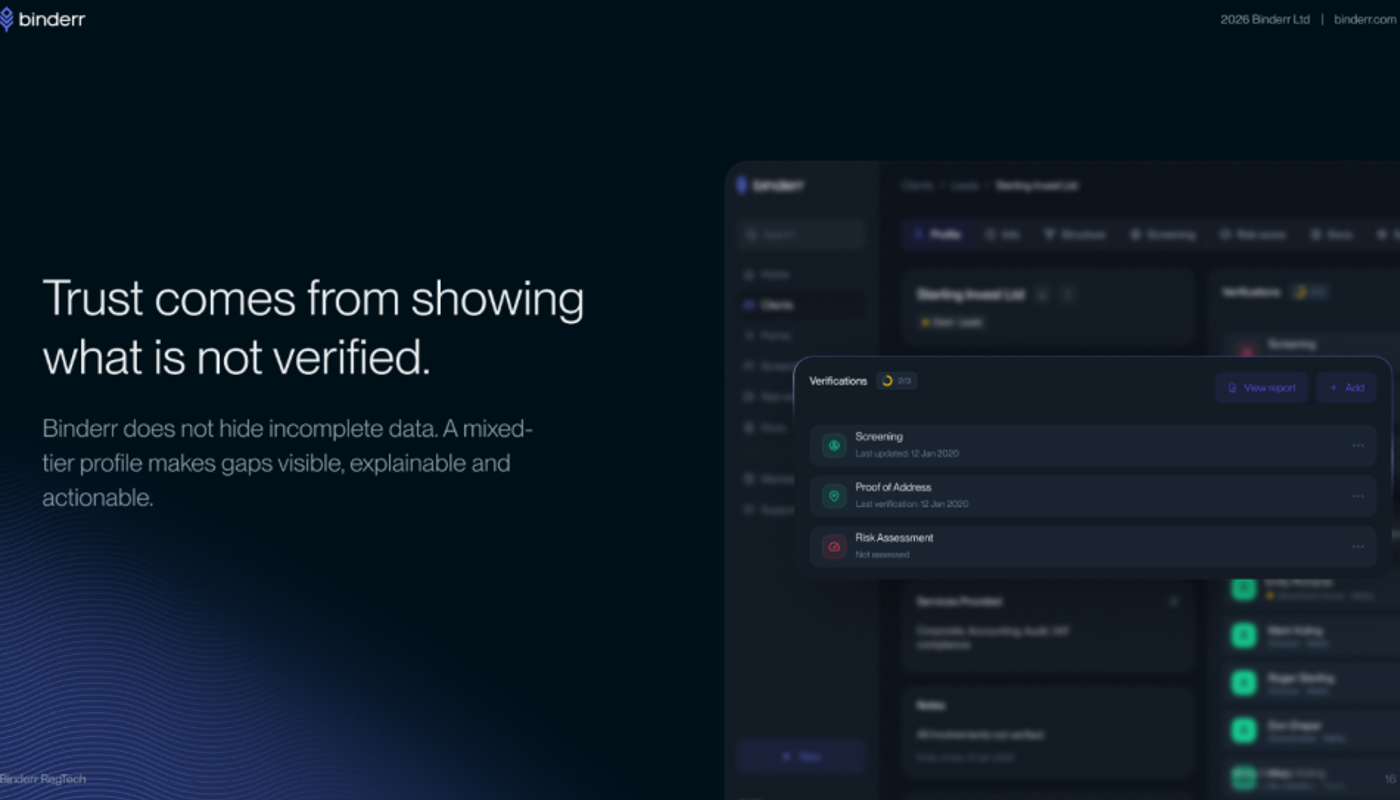
(Binderr verification status and compliance data gaps for AML case management.)
Step 5: Configure user roles and permissions
Set up role-based access controls to protect sensitive data. Define roles such as investigators, compliance officers, MLROs, and auditors, assigning permissions based on least privilege. Enforce segregation of duties so no single user controls an entire case. Restrict access to sensitive cases like SAR/STR filings to maintain confidentiality.
Step 6: Integrate relevant systems
Connect your case management system with key compliance tools. Integrate KYC/KYB platforms, screening systems, transaction monitoring, and risk scoring engines. Link CRM, core banking, and reporting systems to create a unified view. Strong integration reduces manual work and improves investigation accuracy while feeding insights into an AML compliance dashboard.
Screening and case management tools create greater operational value when they connect with the systems teams already use. Binderr can integrate with CRM, document, reporting, and workflow tools through Zapier and APIs, helping customer data and compliance actions move between systems without repeated manual entry.
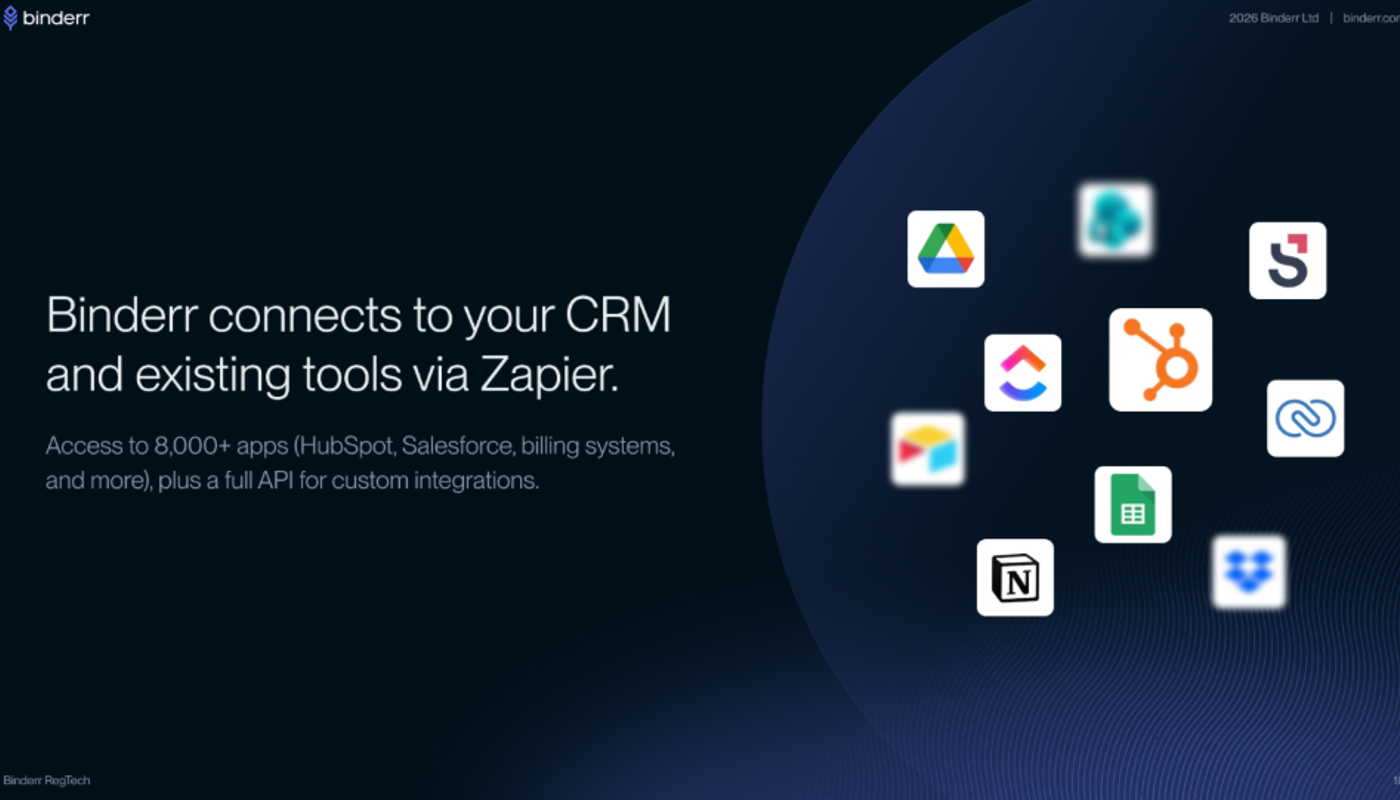
(Binderr connects compliance workflows with CRM and operational platforms through Zapier and API integrations.)
Step 7: Test with realistic cases
Test the system using real-world scenarios before launch. Simulate normal alerts, high-risk cases, and suspicious activity. Check escalation workflows, approvals, overdue tasks, and reporting functions. Identify and fix gaps in logic or usability. Thorough testing ensures the system performs effectively.
Step 8: Monitor and improve after launch
After launch, track performance and key metrics like alert volumes, backlogs, and investigation times. Collect feedback from users to identify issues. Run regular QA reviews to maintain consistency and compliance. Use dashboard insights to refine workflows and adapt to new risks. Continuous improvement keeps the AML program effective.
Complete AML Compliance Solution with Binderr
Binderr provides a full end-to-end compliance solution that goes beyond case management:
- KYC (Identity Verification) with AI-powered document checks and biometrics
- KYB (Business Verification) with global registry access
- AML Screening across sanctions, PEPs, watchlists, and adverse media
- Ongoing monitoring with real-time alerts
- Dynamic risk assessment and scoring
- UBO identification and ownership mapping
Bottom Line
An AML case management system connects alert detection, investigation, escalation, reporting, and oversight into a single workflow, helping teams manage financial crime risks more effectively. However, technology must be supported by strong data, clear policies, skilled investigators, and ongoing governance.
Binderr Compliance helps organisations connect KYC, KYB, AML screening, risk scoring, ongoing monitoring, and investigation records within one compliance environment.