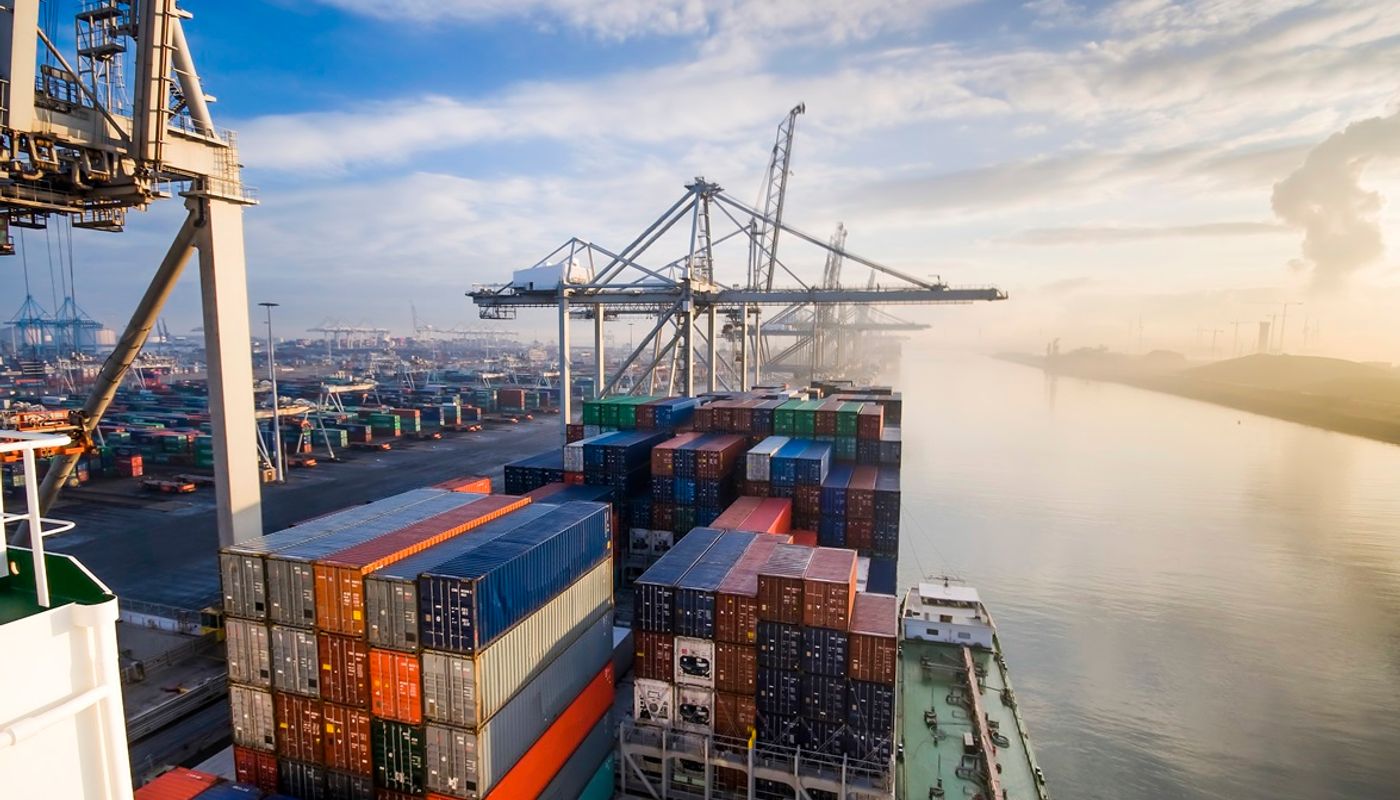
A bank account for import export business is where your trade money moves. Buyers pay you from abroad, suppliers in China, Türkiye or the EU get paid in their own currency, and customs duty, freight and VAT go out on time. The right account holds several currencies, so you are not converting every supplier invoice at the bank's rate.
The hard part is the bank. Banks treat trading companies as higher risk, because of trade-based money laundering, sanctions on goods and routes, and payments to countries the UK and the EU now watch for sanctions evasion. High street banks want a UK-resident applicant, charge £15 to £30 for each international payment and add up to 2.6% on currency conversion. Long reviews and refusals are common.
This is where we come in. We prepare the trade file, from supplier contracts and invoices to shipping records and expected volumes, and open the account with our regulated partners. They work with cross-border businesses and open multi-currency accounts in days.
Our top-rated, licensed banking providers for cross-border trade open multi-currency business accounts in days, with dedicated IBANs, SEPA and SWIFT payments and no branch visit.

MoneyGate
Business Banking
Monthly fee
€30
Onboarding fee
€500
Time to onboard
2-3 days
Features
Dedicated IBAN, SEPA, FX and more

Trumia
Business account
Monthly fees
€50
Onboarding fees
€500
Time to onboard
1 week
Accepts
Gambling, Betting, Casino, Crypto, and more
Why a Bank Account for Import Export Business Is Hard to Open
A bank account for import export business is hard to open because the bank is asked to trust two things it cannot see: the goods and the people at the other end. Money moves across borders in large amounts, against invoices the bank did not write, for goods shipped by someone else. Regulators tell banks to treat trade as a high-risk area, and banks can say no without explaining why.
Trade Is a Favourite Route for Money Laundering
The FATF and the Egmont Group call trade-based money laundering "one of the most complex and widely used methods of money laundering", where "criminals exploit trade transactions to move money, rather than goods." Banks use indicators like these to review trade. Trade that does not fit the business, such as "a car dealer is exporting clothing", is one. Prices out of line with market value, contradictions between the exporter's name and the name of the payee, and payment for imports by "an entity other than the consignee" with no clear economic reason are others. Expect a trading file to be read against them.
Sanctions Follow the Goods and the Route
Since 20 March 2024, EU exporters of listed goods to most countries outside the EU must contractually prohibit re-export to Russia. UK guidance for exporters names Armenia, China including Hong Kong and Macau, India, Israel, Kazakhstan, Kyrgyzstan, Malaysia, Serbia, Thailand, Türkiye, the UAE, Uzbekistan and Vietnam as high-risk for diversion. The EU's 20th sanctions package, in April 2026, put export restrictions on entities in China, Türkiye and the UAE, and the 21st, in July 2026, added 51 more entities, some of them in China, India, Türkiye and the UAE. In the UK, the Office of Trade Sanctions Implementation can fine many trade sanctions breaches up to £1 million or 50% of the value of the breach, whichever is greater, on a strict liability basis. HMRC deals with goods crossing the UK border.
Open a Bank Account for an Import Export Business
Opening the account is very achievable when your goods, routes and partners are explained before the bank asks. This is what we do for you.
- Partners for cross-border trade: Licensed providers that work with international businesses.
- No branch visit: Everything is done online, with no need to travel.
- Accounts in days: Not months of trade questions at a high street bank.
- Several currencies: EUR, GBP, USD and more, with dedicated IBANs.
- Supplier payments in bulk: SEPA and SWIFT, with approval roles for your team.
- Clear pricing, no surprises: One quote before we start.
Some Goods Are Excluded Outright
Payment accounts publish the trades they will not serve, and traders hit those lists often. Tide will not serve businesses that make or distribute dual-use goods, or that import, export or sell used vehicles and heavy equipment. Revolut Business excludes goods on the UK strategic export control lists, secondhand vehicles and heavy equipment, and sectors such as petroleum. Monzo Business excludes precious metals and stones, used vehicles and defence. Statrys in Hong Kong prohibits the import or export of listed dual-use goods. Under EU law, dual-use items listed in Annex I of Regulation 2021/821 need an export authorisation before they leave the EU.
Why Trading Company Accounts Get Refused
Refusals are common. In the FCA's review of UK payment accounts, firms in the central range declined between 0.2% and 11.4% of business account applications. UK guidance flags payments "from entities located in third countries which are not otherwise involved in the transaction" and customers who share an address with several firms dealing in similar goods. US guidance warns about traders with "little-to-no web presence". Correspondent banks have pulled back too: the BIS found correspondent relationships fell by about 25% between 2011 and 2020, so a bank that cannot route a payment to your supplier's country may simply decline. Banks rarely explain a refusal of a trading company bank account, so the file has to be right the first time.
Read more: Why banks reject business account applications and business bank account requirements.
Banks That Open Accounts for Import Export Businesses
Most banks will open a bank account for import export business when the owners fit their rules and the goods are not on their lists. Which one is the best bank account for import export business depends on where the owners live, what you trade and whether you need trade finance. The full trade services, such as letters of credit and currency forwards, need a bigger relationship. The table shows who each bank takes and what it costs.
Bank | Who it takes | Who it turns away | Monthly fee or minimum |
|---|---|---|---|
HSBC UK | UK tax-resident businesses; import letters of credit need a trade facility first | Businesses that are not UK tax resident | No monthly fee on its small business account |
Barclays | UK businesses with at least one UK-resident applicant | Applications with no UK resident | £8.50 a month after 12 months free |
Lloyds | UK residents trading from a UK address; currency forwards for larger businesses | Applicants without UK residence or a UK mobile number | £10 a month after 12 months free |
NatWest | Businesses with a UK-resident applicant; export collections need a relationship manager | Applicants who are bankrupt or have a County Court Judgement | No minimum monthly charge, 35p per automated payment |
Tide | UK companies, with directors in the UK or overseas and a UK mobile number | Dual-use goods, used vehicle and heavy equipment trade | No monthly fee |
Revolut Business | Companies with a physical presence in the UK or the EEA | Strategic export control goods, used vehicles and petroleum | From €10 a month in Ireland |
Statrys (Hong Kong) | Hong Kong companies trading in 11 currencies including CNY | Dual-use goods, sanctioned parties and counterfeit goods | Zero monthly fees |
The table shows the gap. The banks that offer trade finance want UK residence and a full relationship, and the digital names exclude whole classes of goods. A trader with owners abroad, or goods close to a control list, falls between the two.
High Fees on Every International Payment
Traders pay and get paid abroad every week, and each payment costs money at a high street bank. An international payment costs £15 to £17 online at Barclays, HSBC UK, Lloyds and NatWest, and £20 to £30 in a branch. Add an agent fee of £12 at NatWest, or £12 to £20 at Lloyds, when you pay the overseas bank's charges. Receiving a payment from abroad costs £6 to £7 for amounts over £100 at the same four banks.
Currency Margins on Every Supplier Invoice
The bigger cost is the rate. Lloyds charges 2.60% on conversions up to £25,000, falling to 0.90% only at £1 million. Barclays says its conversion charge for business customers is no more than 2%. A trader who sells in euros and buys in dollars pays that margin twice a cycle if every payment is converted through pounds.
Trade Finance Needs a Full Relationship
Letters of credit and documentary collections stay with banks, and on the bank's terms. HSBC UK says that before an import letter of credit can be issued, "we'll need to set up an HSBC trade facility for you." NatWest offers export collections only to customers with a dedicated relationship manager and says security may be required. Lloyds' currency forwards are subject to credit approval. Most trade does not use them: the Wolfsberg Group, the ICC and BAFT say "the majority of world trade is carried out under 'Open Account' terms", so most traders need a fast payment account more than a trade facility.
Payments to China Need the Right Details
Paying a Chinese supplier is routine, but the details matter. Wise sends CNY to a business in China by bank transfer only, and says the recipient's bank may ask to see "a business contract and invoice supporting this transfer". Airwallex says anyone can send SWIFT payments into mainland China, but the beneficiary must meet its own regulatory requirements. Convera's rules say trade-related payments to China go to corporations only, regardless of currency, so a supplier who asks to be paid into a personal account is a red flag.
Read more: Business bank account for non-residents and best countries for business banking.
MoneyGate
Business Banking
Monthly fee
€30
Onboarding fee
€500
Time to onboard
2-3 days
Features
Dedicated IBAN, SEPA, FX and more
A Faster Way to Open a Bank Account for an Import Export Business
There is a better alternative to the bank queue. Our partners, MoneyGate and Trumia, are electronic money institutions licensed in the EU. MoneyGate is authorised by the Central Bank of Cyprus and built for high-volume international businesses, including companies engaged in international trade. Trumia is licensed by the Malta Financial Services Authority and names enterprise supply chains and cross-border B2B payments among the sectors it serves.
MoneyGate gives each company a dedicated IBAN in its own name, with accounts in EUR, GBP and USD, payments over SEPA, SEPA Instant and SWIFT, bulk payments by CSV upload and user roles to view, start and approve payments. Trumia says it holds and converts 17+ currencies and pays out in 40+, with multi-bank virtual IBANs, batch payments by CSV or XML and maker-checker approvals, so you can require a second person to approve a payment batch. Payments between Trumia account holders settle instantly, 24 hours a day. Both connect by API to accounting and ERP systems.
We prepare the file before either partner sees it: the company documents, the owners' identity, supplier and buyer contracts, sample invoices and shipping records, and your expected volumes by currency and country. As EMIs, both must safeguard client money by law, usually by keeping it separate from their own funds, and Trumia holds it in segregated accounts at European banks. Be clear about what the account does: it receives, holds, converts and pays money. EMIs cannot lend out the money they safeguard and do not issue letters of credit, so trade finance stays with a bank, and the account is not covered by a deposit guarantee scheme.
Feature | High street banks | Our partners |
|---|---|---|
Time to open | 24 hours for some UK residents, 4 weeks to 3 months for overseas-owned businesses | 2 to 3 business days at one partner, about a week at the other |
Who they accept | At least one UK-resident applicant, at most banks | Reviewed case by case; one partner takes companies from the EU or another reputable jurisdiction |
Minimum balance | None at most banks | None on published plans |
Monthly cost | £0 to £10 | €25 to €50 on published plans |
Currencies | GBP, with separate currency accounts at extra cost | EUR, GBP and USD at one partner, 17+ at the other |
International payments | £15 to £30 each, plus agent fees | €25 plus 0.10% to 0.15% at one partner |
Currency conversion | Up to 2% to 2.6% on smaller amounts | 0.8% to 1% over the interbank rate at one partner |
Trade finance | Letters of credit and collections with a trade facility | Not offered, keep a bank for trade finance |
For a trader paying suppliers and collecting from buyers in several currencies, the best bank account for import export business opens fast and converts for less than a high street bank. Our partners open in days, and one converts at 0.8% to 1%. A bank remains the place for letters of credit, and the two work side by side.
Which Trading Companies Our Partners Accept
We put forward importers, exporters, distributors and wholesale businesses that can show real suppliers, real buyers and goods that match the business. We check the fit before anyone applies. Trumia's terms prohibit payments for drugs, weapons and other unlawful goods, and money from prohibited or unacceptable countries can be rejected. Neither partner will take a business that cannot show who owns it or where its money comes from. Many payment accounts refuse goods on a dual-use or military list, trade with sanctioned parties is refused everywhere, and routes through high-risk countries need a clear explanation in the file.
Opening a Trading Company Bank Account Online
Opening a trading company bank account with our partners runs online in four steps. We build the file with you, the directors and owners verify their identity online and sign, the partner's compliance team reviews the trade and asks any questions through us, and the account goes live with its IBANs. No one has to visit a branch, and you can give your finance team roles to prepare and approve payments.
Trumia
Business account
Monthly fees
€50
Onboarding fees
€500
Time to onboard
1 week
Accepts
Gambling, Betting, Casino, Crypto, and more
Documents for an Import Export Business Bank Account
The documents for an import export business bank account cover the company, its owners and the trade itself. Reviewers want to see who you buy from, who you sell to, what moves and how it travels. We gather it with you and write the parts reviewers care about most.
Company and Owner Documents
Provide the certificate of incorporation, the articles, the register of directors and shareholders and, where another company sits in the chain, an ownership chart up to the individuals. Every director and every owner of more than 25% sends a passport and proof of address. Keep the structure simple: the FATF flags trading structures that look "unusually complex and illogical" and companies registered at mass registration addresses.
Supplier and Buyer Contracts
Hong Kong bank guidance tells banks to learn a trader's "major products, jurisdictions and markets", its delivery mode, its "major suppliers and buyers" and its expected payment terms. Send the main supply agreements, sales contracts, purchase orders and a few recent invoices. One Hong Kong bank lists contracts, invoices, purchase orders, bills of lading, airway bills and import and export declarations as accepted proof of business.
Customs Records and the EORI Number
An EORI number is needed to move goods into or out of the UK, and in the EU it is mandatory for every customs operation. In the UK you usually get it straight away, or within 5 working days if HMRC checks the application. HMRC's online checker shows the name and address behind a GB EORI number where the business has agreed to share them, so anyone can test the one you give. Add recent customs declarations and, if you use them, your duty deferment account and postponed VAT accounting statements.
Goods, Codes and Licences
Describe the goods precisely, with their customs codes. Sanctions lists such as the UK and EU Common High Priority Items list are written in six-digit HS codes, so a vague description like "electronics" invites questions. If any goods need an export licence, include it. In the UK, the Export Control Joint Unit issues licences for military and dual-use items through its online system, SPIRE.
Volumes, Currencies and Countries
Banks ask how much money will move and where. UK Finance's account opening guide says banks ask which countries your customers and suppliers are in and roughly what share of turnover each one is. Give real numbers: monthly payments in and out, the currencies, the main supplier and buyer countries and the shipping routes.
Read more: Documents needed to open a business bank account and how to open a UK business bank account as a foreigner.
Prepare Your Trade File for the Account
A trading company's account opens fastest when the goods, the partners and the money flows fit on a few pages. We prepare it with you.
- Company pack: Incorporation, articles, directors and an ownership chart.
- Trade evidence: Supplier and buyer contracts, invoices and shipping records.
- Customs set-up: EORI number, declarations and any export licences.
- Goods described: Products and HS codes written the way reviewers read them.
- Volumes and routes: Currencies, countries and monthly amounts set out.
Import Export Business Bank Account Costs
The cost of an import export business bank account sits in the payments, not the monthly fee. Traders send and receive large sums across borders and convert currency on most of them, so the rate and the payment charges decide the bill. The table sets typical ranges at UK banks against our partners' published plans. Payment and conversion fees are from one partner's plans.
Charge | Typical range at a bank | With our partners |
|---|---|---|
Account opening | Free at UK high street banks, for eligible applicants | €500 to €1,000 one-off on published plans |
Monthly fee | £0 to £10, often free for the first 12 months | €25 to €50 on published plans |
Minimum balance | None at most high street banks | None on published plans |
Extra users and approvers | Varies by bank | Free on published plans |
Currency accounts | Separate currency accounts, often with extra fees | Several currencies in one account, extra IBANs free on published plans |
Euro payments (SEPA) | Free to 35p to send, usually free to receive from the EEA | 0.20% each way, or €1 plus 0.10% on the other plan |
International payment out | £15 to £40, plus agent fees of £4 to £20 | €25 plus 0.10% to 0.15% |
International payment in | Free to £7 per payment | €25 plus 0.10% to 0.15% |
Payment made in a branch or by phone | £20 to £30, or £40 by post at HSBC UK | Online, app or API at the standard rate |
Conversion up to £25,000 | Up to 2% to 2.6% | 0.8% to 1% over the interbank rate at one partner |
Conversion on larger amounts | Falls slowly, to 0.90% at £1 million at Lloyds | 0.8% to 1% at one partner, with custom pricing for high volumes |
Letters of credit and collections | Relationship based, with a trade facility | Not offered |
For most traders, currency is the biggest cost of a bank account for import export business. Take an importer that pays $500,000 a year to suppliers in invoices of about $20,000 each, converting from pounds. At a 2% margin, about $10,000 a year goes on the rate alone. At 0.8% over the interbank rate it is about $4,000, a saving of around $6,000. One partner's fees of €25 plus 0.10% to 0.15% on each of those 25 payments add about $1,200 to $1,500, still well below the conversion saving.
The fixed fee per payment is a different story. Before currency costs, a bank's £15 online fee is lower than €25 plus 0.10% on every payment, and a bank remains the only place for letters of credit. A trader who buys and sells only in pounds or euros, and qualifies at a high street bank, may pay less there, and it is fair to say so. All figures are planning ranges drawn from published tariffs, and we confirm your final price in writing before you apply.
MoneyGate
Business Banking
Monthly fee
€30
Onboarding fee
€500
Time to onboard
2-3 days
Features
Dedicated IBAN, SEPA, FX and more
How Long It Takes to Open a Bank Account for an Import Export Business
A bank account for import export business takes from a day to three months at a bank, and a trade facility takes longer again. HSBC UK says 65% of its small business accounts opened within 24 hours in March to May 2026, but UK government guidance gives 4 weeks to 3 months for overseas-owned businesses, and Statrys says Hong Kong banks usually take 1 to 4 weeks where directors live abroad. With our partners, accounts usually open in 2 to 3 business days at one and about a week at the other.
Stage | Bank | Our partners |
|---|---|---|
Preparing the file | 1 to 3 weeks to gather contracts, invoices and customs records | A few days, built with us |
Review and follow-up questions | Weeks for overseas owners, longer where goods or routes need checks | Preliminary approval in about 1 day |
Account open and ready | 4 weeks to 3 months for overseas-owned businesses, then a trade facility if needed | 2 to 3 business days at one partner, about a week at the other |
What Slows It Down
The usual delays on a trading company bank account are goods described too loosely, a supplier or buyer in a high-risk country with no explanation, a payment route through a third party, missing contracts and a company with no EORI number. Every missing item restarts part of the review.
Set Up Customs in Parallel
Apply for the EORI number while the account is reviewed. A GB number usually comes straight away, and an XI number for Northern Ireland within 5 days. Postponed VAT accounting needs no approval once you are VAT registered, and lets you declare and recover import VAT on the same return. A duty deferment account lets you pay duty once a month by Direct Debit, and HMRC can waive the guarantee for up to £10,000 a month for businesses that meet its conditions.
How to Speed It Up
Write a one-page trade summary: what you buy, from whom, where it ships and who buys it. Collect every owner's documents in one round and attach the main contracts and recent invoices. Apply once, to a provider that takes your kind of trading company, rather than to several banks at the same time.
Trumia
Business account
Monthly fees
€50
Onboarding fees
€500
Time to onboard
1 week
Accepts
Gambling, Betting, Casino, Crypto, and more
What Happens After the Account Is Open
Set up your suppliers carefully. Pay the company named on the invoice, in the currency on the invoice, and never a third party the contract does not name. For payments to China, send to the supplier's corporate account and use the right purpose, such as payment for goods. Use approval roles so that adding a new supplier and releasing a payment need two people.
Keep screening. Sanctions lists change several times a year: the EU adopted packages in October 2025, April 2026 and July 2026, and the UK added end-use controls on 13 May 2026 for exports at high risk of diversion to sanctioned territories. Check new buyers and new routes before you ship, not after the money arrives.
Plan for new trade costs too. EU importers of cement, iron and steel, aluminium, fertilisers, hydrogen and electricity have needed to be authorised CBAM declarants since 1 January 2026, unless they import under 50 tonnes a year of goods other than hydrogen and electricity. Certificate sales start on 1 February 2027, and the UK's own CBAM starts on 1 January 2027. In the US, duty-free de minimis treatment has been suspended for all countries since 29 August 2025.
Keep the file current. Tell the provider when you add a product line, a new supplier country, a new owner or a big jump in volume. Keep the account in use as well, because one of our partners charges a dormancy fee of €99 plus 0.5% of the balance after six months without activity.
Why the Company Comes Before the Account
A provider can only review a company that exists and is set up for how you trade. Where the trading company is registered decides which banks will look at you, which customs numbers you need and how closely your payments are checked. The table shows common choices.
Company | Suits | Banking point | Trade point |
|---|---|---|---|
UK limited company | Importing into the UK and selling locally | High street banks want a UK-resident applicant | GB EORI, postponed VAT accounting once VAT registered |
EU company | Trading across the single market | Euro accounts reachable by SEPA across the EU | EU EORI, and CBAM declarant status for covered goods |
Hong Kong company | Sourcing from mainland China | Banks often take 1 to 4 weeks where directors live abroad | Named in UK sanctions evasion guidance, so expect closer payment checks |
UAE free zone company | Re-export and Gulf trade | Wise restricts UAE-based oil, gas and shipping companies | Named in UK guidance and recent EU sanctions packages |
Many traders register the company and open the account in one go. Our guides to setting up a Hong Kong company with a bank account and opening a free zone company bank account in the UAE walk through two common routes. Set up the company first, then open a bank account for an import export business with a complete file.
Common Import Export Business Bank Account Mistakes
Most problems with a bank account for import export business come from how the trade is presented, not from the trade itself. These are the mistakes we see most.
Paying or Being Paid Through a Third Party
A buyer who pays from another company's account, or a supplier who asks for money to go elsewhere, matches one of the FATF's main warning signs. Pay and collect in the names on the contract.
Describing the Goods in One Word
"Electronics" or "general goods" is not enough. Give the products, the HS codes and the end users, so the reviewer can check them against control lists.
Leaving High-Risk Routes Unexplained
Trade through China, Hong Kong, the UAE or Türkiye is normal, but UK guidance names those countries and EU packages have listed entities there. Explain who the partners are and where the goods end up.
Running Several Trading Companies Through One Account
Each company needs its own account in its own name. Mixing them makes every payment look like it belongs to someone else.
Expecting Trade Finance From a Payment Account
EMIs do not issue letters of credit. If your buyers or suppliers insist on them, keep a bank for that and use the partner account for everyday payments and currency.
Get Help With Your Trading Company Account
Banking a trading company is very manageable when the goods and routes are planned with the provider in mind. Talk to us before you apply.
- Fit checked first: We confirm your goods and routes suit our partners.
- Every currency planned: Supplier payments, buyer receipts and duties.
- Refused before: We review the file and fix the gaps.
- Honest advice: We tell you when a bank should sit alongside for trade finance.
- One point of contact: From the first call to the first supplier payment.
Bottom Line
A bank account for import export business is harder to open than most traders expect. Banks treat trade as a money laundering and sanctions risk, high street banks want a UK-resident applicant, digital banks exclude whole classes of goods, and every international payment and conversion costs money on top.
For traders paying and collecting in several currencies, the faster route is a regulated partner built for cross-border business. With clear contracts, customs records, well described goods and expected volumes, the account opens in days, with IBANs, bulk payments and approval controls, and no branch visit.
How do I open a bank account for an import export business?
What is the best bank account for import export business?
Why do banks refuse trading companies?
What documents does an import export business bank account need?
Can a non-resident open a trading company bank account?
How long does it take to open a bank account for import export business?
Can I pay Chinese suppliers from a multi-currency account?
Do I need an EORI number before opening the account?
Can your partners issue letters of credit?
How much does a bank account for import export business cost?
Which goods make banking harder?
Does trading with China, Türkiye or the UAE cause problems?
Is money in an EMI account protected?
Sources
- FATF: Trade-based money laundering risk indicators
- FATF: Trade-based money laundering trends and developments
- GOV.UK: Countering Russian sanctions evasion, guidance for exporters
- EUR-Lex: Regulation (EU) 2023/2878, the no Russia clause
- EUR-Lex: Regulation (EU) 2021/821 on dual-use items
- Council of the EU: 21st package of sanctions
- BIS: Correspondent banking data, December 2021
- FCA: UK payment accounts, access and closures
- HSBC UK: Import letters of credit
- Lloyds Bank: FX margins
- Wise: How to send CNY to businesses in China
- GOV.UK: Apply for an EORI number
- GOV.UK: Account for import VAT on your VAT Return
- EUR-Lex: Directive 2009/110/EC on electronic money institutions
- Moneygate: Services
- Trumia: Business terms and conditions