Is a passport and proof of address enough to complete KYC? Many businesses still struggle with KYC data collection, either gathering too little kyc data to support a defensible compliance decision or collecting excessive data without a clear purpose. The right approach depends on the customer type, product, jurisdiction, delivery channel and overall financial crime risk, not a one size fits all checklist.
Effective KYC data collection must identify the customer, verify identity, understand the relationship purpose, assess AML risks, and maintain records for monitoring and review. Poor due diligence is estimated to cause over 60% of onboarding delays in regulated financial services, highlighting the need for structured kyc customer information and well-managed kyc documentation.
This guide explains practical KYC data collection, including customer information, identity and address documents, verification methods, risk-based requirements, business ownership details, and data protection. It also outlines a simple verification workflow. KYC rules vary by jurisdiction, so the focus is on common international principles rather than a single checklist.
Binderr KYC Data Collection Software
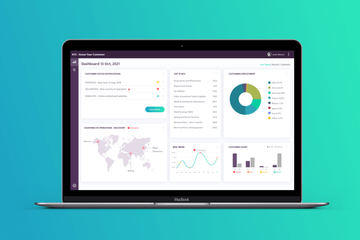
Binderr is KYC software that helps regulated businesses collect, verify and assess customer information in one workflow. Instead of static forms and manual checks, teams can automate onboarding and screening with Binderr.
Key Binderr KYC Features:
- Custom forms: Collect required customer data.
- Dynamic requests: Adjust fields by risk and customer type.
- Document verification: Check validity, authenticity and expiry.
- Biometric matching: Compare selfie with ID photo.
- AML screening: Check sanctions, PEPs and adverse media.
- Risk scoring: Calculate risk from KYC and screening data.
What Is KYC Data Collection?
KYC data collection is the process of gathering kyc data, including customer information and documents, to identify and verify customers and understand how they will use a product or service. It supports AML compliance and risk-based CDD, including decisions on standard checks or EDD. It differs from identity verification and AML screening. FCA guidance requires sufficient data to understand the purpose and nature of the relationship.
Start Secure KYC Data Checks
What Customer Information Is Required for KYC?
Understanding what to collect is the foundation of effective KYC data collection and compliant onboarding.
This section breaks down the essential KYC customer information requirements and what information is required for KYC under customer due diligence standards, including key kyc customer information and supporting kyc documentation.
Basic Personal Information
Basic personal information is the foundation of KYC data collection and is used to establish a customer’s identity during onboarding.
These core customer information requirements typically support identity verification, AML screening and ongoing compliance checks, ensuring businesses can accurately identify and assess risk from the outset using reliable kyc data.
Cover the commonly collected identity fields:
- Full legal name identifies the customer for legal and regulatory purposes.
- Previous or alternative names help detect identity changes or inconsistencies.
- Date of birth confirms the customer’s age and identity uniqueness.
- Residential address establishes where the customer lives for verification and risk assessment.
- Nationality or citizenship indicates legal status and potential jurisdictional risk.
- Country of residence determines applicable regulatory and tax considerations.
- Contact information enables communication and account security verification.
- Government identification number uniquely links the customer to official records.
- Identification document type specifies the form of ID used for verification.
- Document issue and expiry dates confirm document validity and currency.
Employment and Economic Information
KYC data collection often includes employment and economic information to help financial institutions understand a customer’s financial background, income sources and overall risk profile.
This information supports customer due diligence (CDD) by providing context for expected account activity and helping identify potential money laundering or fraud risks within kyc customer information and supporting kyc data records.
Depending on the product and risk assessment, businesses may collect:
- Occupation: The customer’s job title or role used in KYC data collection to understand their professional background.
- Employer or business name: The name of the company or organisation the customer works for, recorded for KYC customer information requirements.
- Employment status: Indicates whether the customer is employed, self-employed, unemployed or retired for KYC risk assessment.
- Industry or sector: The sector or industry the customer works in, helping assess financial crime risk in KYC data collection.
- Estimated income: An approximate income figure used in KYC checks to support affordability and risk profiling.
- Nature of business activities: A short description of what the customer’s business does for customer due diligence information.
- Tax residence or tax identification information: Details of tax residency and tax identification number used for regulatory and compliance reporting.
Verify Identity Documents and Customer Information with Binderr
Collecting an identity document is only the first step. Businesses must also confirm it is genuine, matches the customer profile, and belongs to the person presenting it.
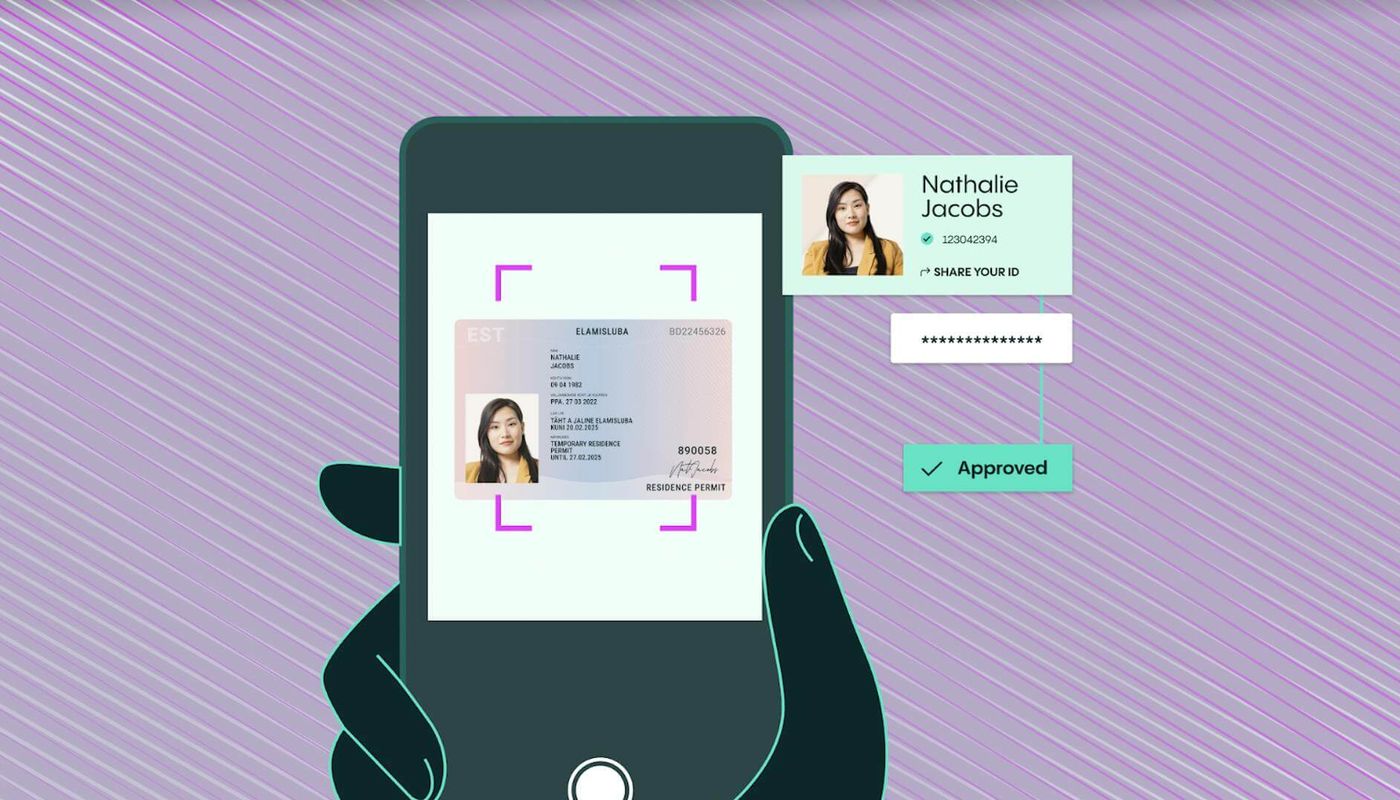
Binderr combines AI document checks with biometric verification to help teams verify customers and reduce identity fraud.
- Verify passports, national IDs, driving licences and other global documents.
- Support 11,000+ document types across 230+ countries.
- Use OCR to extract and match identity data automatically.
- Detect expired, altered or fraudulent documents with AI checks.
- Match document photos with live selfies and apply liveness detection.
- Spot deepfakes and synthetic identities while storing full verification records.
KYC Documents Required to Verify Identity
Understanding the right KYC documents is essential for accurate identity verification and meeting regulatory compliance standards.
From passports and national ID cards to driving licences, these proof of identity documents form the foundation of effective KYC document requirements and secure customer onboarding through validated kyc documentation and supporting kyc data.
Examples may include:
- Passport: A primary KYC identity document commonly used for identity verification in customer onboarding.
- National identity card: A government-issued ID used in KYC data collection to verify a customer’s identity and nationality.
- Driving licence: Often accepted as a KYC document for identity verification where it meets regulatory requirements.
- Residence permit: Used in KYC verification to confirm lawful residency status and identity details.
- Government-issued immigration document: Supports KYC identity checks by confirming immigration status and personal information.
- Other recognised photo identification: Any approved photo ID used in KYC document requirements when it meets verification standards.
HMRC guidance describes passports and other government-issued documents as common verification evidence. It also recognises electronic and non-documentary sources, depending on the circumstances.
Make Identity Verification Simple
Proof of Address Requirements for KYC
Proof of address for KYC is a key step in customer address verification, helping confirm where a customer truly resides.
It typically involves validating KYC address verification documents such as utility bills, bank statements, or official government correspondence to ensure accuracy and compliance within broader kyc data and kyc documentation processes.
Examples include:
- Utility bill: Common proof of address for KYC customer verification, showing name and residential address.
- Bank or credit-card statement: Used as proof of address in KYC data collection, confirming account holder details and location.
- Government correspondence: Official mail often accepted for KYC proof of address and identity verification support.
- Tax document: Government-issued record that can serve as reliable proof of address in customer due diligence.
- Council or municipal letter: Local authority document used in KYC verification to confirm residential address.
- Tenancy agreement: Rental contract that supports KYC proof of address and confirms current residence.
- Mortgage statement: Financial document used in KYC checks to verify residential address and housing status.
- Insurance document: Policy document that may be used as supporting proof of address in KYC processes.
- Official benefits or pension correspondence: Government-issued communication that can be used for KYC address verification and customer onboarding.
KYC Information Requirements for Business Customers
Understanding KYC information requirements for business customers is a key part of effective KYB (Know Your Business) compliance. When onboarding companies, financial institutions and regulated firms must collect and verify essential business customer data, including company details, beneficial ownership information, and supporting KYC documents.
These requirements help ensure accurate customer due diligence (CDD), support AML compliance, and provide a clear view of the business relationship and associated financial crime risks through structured kyc customer information, kyc data, and kyc documentation.
For companies and other legal entities, businesses may need to collect:
- Legal company name: The official registered name of the business used for KYB and KYC data collection.
- Registration number: The unique company registration number issued by the relevant corporate registry for verification.
- Incorporation date: The date the company was legally formed and recorded in the official register.
- Legal form: The entity type such as limited company, partnership or trust used in KYB checks.
- Registered address: The official address recorded with the company registry for compliance and correspondence.
- Business activities: A description of the company’s core operations used for risk assessment in KYC.
- Directors or managers: Individuals responsible for governance and control of the company.
- Ultimate beneficial owners: Natural persons who ultimately own or control the business for AML compliance.
- Purpose of the relationship: The reason the customer is opening the account or using the service.
- Expected account or transaction activity: The anticipated usage patterns, volumes and transaction types for monitoring.
In the United States, FinCEN’s February 2026 relief removed the need for covered institutions to identify and verify beneficial owners every time an existing legal-entity customer opens another account. Initial, risk-triggered and reliability-based beneficial-owner checks remain relevant.
Streamline the KYC Data Collection Process Using Binderr
Binderr unifies KYC data collection, document checks, screening and approvals into one workflow, helping businesses complete KYC faster with clear compliance records.
- Create custom onboarding forms for different customer and risk types.
- Collect identity information and supporting documents digitally.
- Verify identity documents using AI-powered checks.
- Perform biometric face matching and liveness detection.
- Screen customers against sanctions, PEPs, watchlists and adverse media.
- Assign dynamic risk scores using customer and screening data.
A Step-by-Step KYC Data Collection Process
Streamline KYC data collection from first touch to verified customer with a structured onboarding workflow.
This step-by-step process covers customer onboarding, identity verification, AML screening, and risk-based due diligence to ensure compliant and efficient onboarding while properly managing kyc data and kyc customer information throughout the journey.
Step 1: Determine the Applicable Requirements
Start by identifying the core KYC data collection requirements based on the customer type, product or service, jurisdictions involved, and relevant regulatory obligations. This ensures the onboarding process aligns with applicable AML and compliance frameworks and that all required kyc documentation is correctly defined from the outset.
You should also assess key risk factors and define which data fields are mandatory versus conditional. A risk-based approach helps ensure only necessary customer information is collected while still meeting full KYC and regulatory requirements, keeping kyc data accurate, relevant, and proportionate.
Step 2: Present a Clear Customer Information Form
Use dynamic onboarding forms that adapt based on whether the user is an individual, sole trader, acting for another person, company representative, beneficial owner, or higher-risk customer. This improves the accuracy of KYC data collection and ensures structured capture of kyc customer information.
Avoid displaying every possible field to all users, as this can lead to poor user experience and incomplete submissions. Tailored forms ensure efficient customer information capture while supporting compliance, identity verification, and proper handling of kyc data and kyc documentation requirements.
Step 3: Collect Identity and Relationship Information
Collect the customer’s declared identity details as part of standard KYC requirements, including core personal or business information needed for verification. This forms the foundation of the identity verification process and establishes the initial kyc data set.
You should also ask why the customer is opening the account or using the service, including the intended purpose and expected activity. This helps establish the relationship context for AML and ongoing monitoring and strengthens the quality of kyc customer information collected.
Step 4: Collect Appropriate Verification Evidence
Request suitable identity documents or initiate reliable electronic identity verification methods depending on the customer type and risk level. This may include document checks, database verification, or biometric validation supported by relevant kyc documentation.
Use conditional requests so customers only provide the evidence relevant to their situation. This ensures efficient KYC data collection while maintaining compliance, reducing unnecessary document burden, and improving the accuracy of kyc data.
Step 5: Validate Information and Resolve Inconsistencies
Check all submitted customer information for missing fields, incorrect formats, expired documents, name variations, and address mismatches. These checks are essential for accurate KYC verification and reliable kyc data collection.
Also identify conflicting dates of birth, duplicate identities, and unsupported document types. Any inconsistencies should be investigated and resolved to ensure reliable kyc data, complete kyc customer information, and compliance with regulatory standards supported by valid kyc documentation.
Step 6: Verify the Customer’s Identity
Identity verification in KYC data collection should use documentary, electronic, or hybrid methods to confirm that the customer is who they claim to be. This may include validating government-issued ID documents, checking data against trusted databases, and ensuring consistency across submitted kyc customer information.
For remote onboarding, businesses often rely on document authenticity checks, biometric face matching, and liveness detection to reduce fraud risk. These methods strengthen KYC verification requirements by ensuring the identity evidence is genuine and that the associated kyc data and kyc documentation are trustworthy.
Verify Identities with Confidence
Step 7: Complete AML Screening
As part of KYC data collection requirements, AML screening must be performed on all relevant individuals and entities. This includes checks against sanctions lists, politically exposed persons (PEPs), global watchlists, adverse media sources, and internal fraud or compliance blocklists linked to kyc data.
It is important to clarify that identity verification and AML screening are separate processes. While identity checks confirm who the customer is, AML screening assesses whether they present financial crime risk under KYC compliance and AML regulations, using available kyc customer information.
Step 8: Assess Risk and Apply CDD or EDD
Risk assessment in KYC data requirements involves combining customer information, identity verification results, AML screening outcomes, geographic exposure, product risk, and expected transaction behaviour. This creates a complete customer risk profile based on structured kyc data.
Where risks cannot be sufficiently explained or mitigated, businesses must request additional evidence and apply Customer Due Diligence (CDD) or Enhanced Due Diligence (EDD). This ensures KYC customer information requirements are proportionate to the level of financial crime risk and supported by appropriate kyc documentation.
Step 9: Record the Decision and Monitor for Change
A strong KYC data collection process requires maintaining a full audit trail, including all customer information collected, identity documents used, verification outcomes, AML screening results, risk scores, and final approval or rejection decisions. This ensures regulatory transparency and supports ongoing compliance through accurate kyc data records.
Continuous monitoring is also essential. Under HMRC guidance, firms must review customer records, replace expired kyc documentation, verify beneficial ownership in business customers, and investigate any activity that deviates from the expected profile as part of ongoing KYC verification requirements and updated kyc customer information.
Manage End-to-End Compliance with Binderr
KYC data collection is only one part of a complete compliance process. Businesses must also verify companies, identify beneficial owners, screen customers for financial crime exposure, assess risk, investigate higher-risk relationships and continue monitoring after onboarding.
Binderr provides a unified compliance platform that connects these activities in one system.
- KYC & identity verification: Verify individuals using documents, biometrics, liveness and deepfake detection.
- KYB & business verification: Access company data from 200+ countries and 30,000+ sources.
- UBO identification: Identify the true owners or controllers of a company.
- AML screening: Screen against sanctions, PEPs, watchlists and adverse media.
- Ongoing monitoring: Get alerts when customer risk changes.
- EDD workflows: Request extra info and documents for higher-risk cases.
Bottom Line
KYC data collection is an ongoing process that enables customer identification, verification, risk assessment, and monitoring through structured kyc data, kyc customer information, and supporting kyc documentation. A strong framework helps organisations understand their customers, validate information, and detect financial crime risks early while meeting AML compliance standards.
At the same time, KYC document requirements should be risk-based, ensuring businesses collect only the necessary customer data for compliance. This improves both regulatory adherence and customer experience. An automated KYC platform streamlines onboarding by unifying forms, identity checks, AML screening, risk scoring, and record-keeping in one workflow. Binderr Services helps businesses automate and simplify KYC compliance from end to end.