Compliance teams often work with fragmented KYC data spread across identity tools, AML screening systems, spreadsheets and shared drives. This makes it difficult to see a complete customer risk picture, track decisions or prove compliance during audits.
A kyc dashboard solves this by centralising verification results, screening outcomes, risk scores and case activity into one compliance reporting view. Instead of switching between systems, teams can monitor customer due diligence, identify high-risk cases and generate audit-ready reports from a single source of truth.
The FCA found that 10% of firms did not retain documented customer due diligence evidence, highlighting gaps in audit readiness. This is where a compliance dashboard kyc approach becomes essential, ensuring all evidence, decisions and workflows are properly recorded and accessible for review.
In this guide, we’ll explore what a KYC dashboard is, what information it should include, how compliance reporting tools work in practice, and how modern platforms like Binderr help firms centralise KYC, KYB, AML screening, risk assessment and reporting kyc in one place.
Centralise KYC Oversight with Binderr
Binderr combines the tools compliance teams need to manage customer onboarding and ongoing risk from one platform.
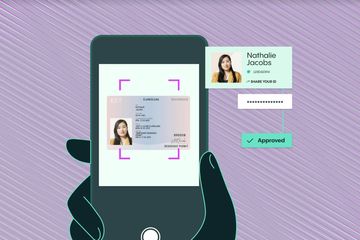
- AI-powered identity document verification
- Biometric face matching and liveness detection
- KYC coverage across 230+ countries
- Global KYB and company registry checks
- Sanctions, PEP, watchlist and adverse media screening
- Dynamic customer risk scoring
What Is a KYC Dashboard?
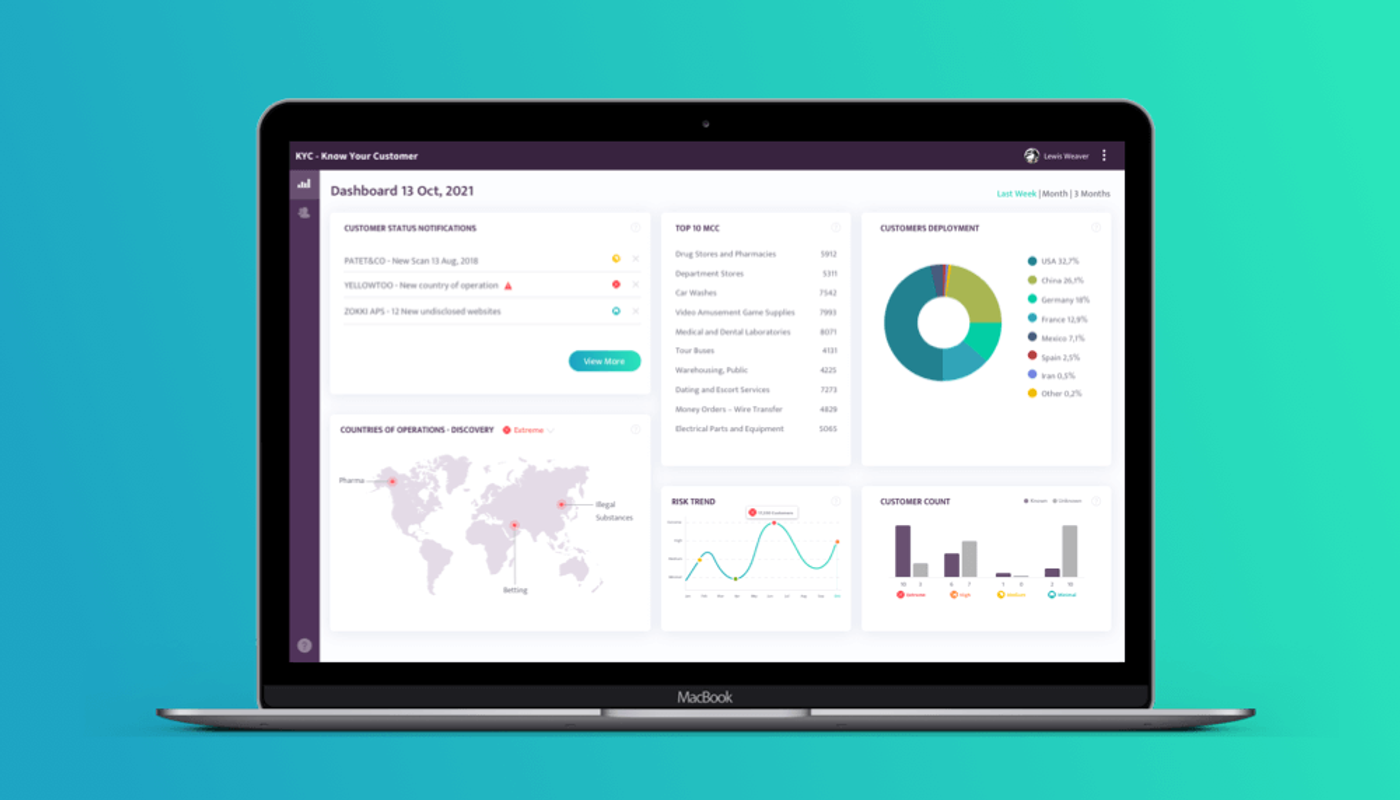
A kyc dashboard is a central compliance workspace that combines KYC verification, KYB checks, AML screening, risk scoring, and ongoing due diligence in one view. It helps teams track onboarding, manage alerts, assign tasks, and generate audit-ready reports in real time.
Unlike a one-off KYC check, it provides continuous oversight across the customer lifecycle for both operational and compliance teams, forming the backbone of modern reporting kyc processes.
Run Compliance From One Platform
What Information Should a KYC Dashboard Display?
A KYC dashboard brings all customer verification, screening and risk data into one unified view for faster, more confident compliance decisions.
It helps teams monitor identity checks, AML alerts, risk scores and ongoing due diligence in real time.
Customer Verification Status
The customer verification status section in a kyc dashboard shows where each onboarding case is in real time. It covers stages from verification not started and invitation sent to documents requested, received, and verification in progress.
It also shows outcomes like verification passed, manual review required, verification failed, expired documents, or reverification needed, helping teams prioritise actions. A strong compliance dashboard kyc should allow filtering by stage, outcome, date, jurisdiction, product type, or assigned reviewer to help manage onboarding and reduce KYC bottlenecks.
Complete KYC Checks Easily
Identity and Document Check Results
This section of a KYC compliance dashboard consolidates identity verification data, including customer name, date of birth, ID document details, issuing country, expiry date, and document type. It also shows verification outputs such as authenticity checks, data extraction, face matching, liveness detection, and address verification results, along with rejection or referral reasons.
A “pass” in document verification does not complete KYC on its own, as results must also be assessed with AML screening, customer purpose, and overall risk factors within the wider compliance process and reporting kyc framework.
Business and Beneficial Ownership Data
A KYB dashboard for business and beneficial ownership data provides a clear view of corporate identity, including registered business name, company number, incorporation jurisdiction, registered status, directors, shareholders, and ultimate beneficial owners (UBOs). It also shows ownership percentages, structure, registry documents, and connected entities, along with verification status for key individuals.
This helps identify complex ownership structures that may obscure ownership or source of funds, supporting FCA expectations for understanding connected parties and ensuring accurate AML screening and kyc dashboard risk assessment.
AML Screening Results
The AML screening results area of a compliance dashboard captures financial crime screening activity, including sanctions matches, PEP hits, watchlist results, and adverse media findings, along with match confidence, data sources, screening lists, and timestamps for initial and rescreening events.
It also tracks review status, false positives, escalation flags, and ongoing monitoring alerts, ensuring continuous oversight. A well-designed AML compliance dashboard helps teams distinguish genuine risks from false positives while maintaining a full audit trail for regulatory reporting kyc and investigation.
Run Your First AML Screen
Customer Risk Scores
A customer risk scoring dashboard shows how each customer’s risk level is calculated, including the overall risk score, category (low, medium, high), and inherent and residual risk. It breaks down key drivers such as country, product or service, customer type, delivery channel, screening results, ownership structure, and source of funds or wealth.
It also compares previous and current risk ratings and explains why a score has changed, helping compliance teams justify decisions and apply the correct CDD or EDD measures within a structured compliance dashboard kyc environment.
Case Reviews and Decisions
The case management section of a KYC dashboard centralises compliance review activity, including the assigned reviewer, case owner, open tasks, missing information, internal comments, escalations, and approval levels. It distinguishes between CDD and EDD status and records the final decision, rationale, supporting evidence, and decision date.
It also tracks quality assurance outcomes and next review dates, ensuring accountability and audit readiness. This structure helps compliance teams maintain consistent decisions and provides a clear audit trail for regulatory and internal reviews, strengthening overall reporting kyc capability.
Ongoing Monitoring and Review Alerts
The ongoing monitoring dashboard tracks real-time compliance changes such as sanctions or PEP updates, adverse media, ownership and registry changes, document expiry, risk score shifts, unusual activity, and review deadlines, while flagging overdue reviews.
Under the EU AML Regulation (AMLR), effective from 10 July 2027, firms must continuously monitor relationships and update customer data based on risk level, reinforcing the importance of a robust kyc dashboard and continuous compliance dashboard kyc oversight.
Simplify the KYC Dashboard Workflow with Binderr
Binderr streamlines each stage of the compliance process:
- Collect customer or business data via custom forms.
- Verify identities using document and biometric checks.
- Retrieve registry data and identify UBOs.
- Screen for sanctions, PEPs and adverse media.
- Calculate risk score, apply CDD, trigger EDD if needed.
- Assign cases, collect documents, record approvals, monitor risk changes and generate audit-ready reports.
What Are KYC Compliance Reporting Tools?
KYC compliance reporting tools turn live compliance data into structured, audit-ready reports for oversight and regulatory needs. While a kyc dashboard shows real-time onboarding, screening, risk scores and case status, reporting tools capture selected data for specific purposes like customer files, monthly summaries or audit packs.
These reports should be generated directly from the customer record to ensure accuracy. Good reporting software also preserves timestamps, decisions and evidence, creating a clear audit trail. In short, dashboards show what needs attention now, while reporting tools provide a reliable record of decisions, risk outcomes and control effectiveness over time.
Move Beyond Manual Compliance Work
Essential KYC and Compliance Reports
Turn raw KYC and AML data into clear, audit-ready reports that support confident compliance decisions.
From CDD files to EDD investigations, these reports give teams the evidence needed for oversight, audits and regulatory reviews.
Customer Due Diligence Report
A Customer Due Diligence (CDD) report consolidates full KYC compliance data into a single customer risk profile, including identity verification results, screening outcomes, expected account activity, and assessed risk factors. It clearly documents the customer risk score, approval decision, reviewer details, supporting evidence, and next review date, ensuring a complete audit-ready view of onboarding decisions and regulatory compliance obligations.
Within a kyc dashboard, this report is typically generated automatically once onboarding is complete, ensuring that all reporting kyc outputs reflect the most up-to-date customer information.
Enhanced Due Diligence Report
An Enhanced Due Diligence (EDD) report provides deeper financial crime insight for high-risk customers, detailing why EDD was triggered and the additional verification steps taken. It includes ownership structure analysis, source of funds and wealth checks, PEP and sanctions screening, adverse media findings, and senior management approval, alongside the final decision rationale and ongoing monitoring controls applied to mitigate elevated AML risk.
AML Screening Report
An AML screening report captures the full sanctions, PEP, watchlist, and adverse media screening process for an individual or business entity. It outlines search parameters, data sources used, potential matches, and match confidence levels, along with reviewer analysis, false-positive justification, escalation decisions, screening timestamps, and ongoing monitoring status to ensure continuous compliance with AML regulations and risk-based screening requirements.
When integrated into a kyc dashboard, these screening results feed directly into both real-time monitoring and structured reporting kyc outputs used for audits and regulatory submissions.
Customer Risk Assessment Report
A Customer Risk Assessment report evaluates inherent and residual risk by analysing key risk factors such as geography, customer type, ownership complexity, and product exposure. It documents weighting methodology, mitigating controls, current and previous risk categories, reasons for any risk changes, and required CDD or EDD measures, ensuring a transparent and consistent risk-based approach to customer onboarding and lifecycle management.
Ongoing Monitoring Report
An Ongoing Monitoring report tracks real-time and periodic changes in customer risk profiles, including new alerts, updated customer information, screening hits, and risk rating adjustments.
It highlights completed and overdue reviews, escalation cases, and customers moving between risk tiers, ensuring firms maintain continuous AML compliance and meet regulatory expectations for up-to-date customer due diligence. A well-structured kyc dashboard ensures that monitoring alerts automatically feed into structured reporting kyc outputs, reducing manual effort and improving accuracy.
Case and Decision Report
A Case and Decision report provides a full audit of compliance investigations, including case status, ownership, review history, internal notes, evidence collected, escalations, and approval workflows. It records final decisions, supporting rationale, and precise timestamps, ensuring transparency in KYC and AML decision-making and enabling firms to demonstrate consistent, well-documented compliance outcomes.
Audit Trail Report
An Audit Trail report records every user action within the compliance workflow, including data changes, document uploads, approvals, comments, risk score updates, and report exports. Version history is critical because firms must demonstrate how customer records and decisions evolved over time.
The FCA’s 2026 CDD review highlighted that weak version control prevents firms from evidencing a clear, defensible audit trail during regulatory inspections. A robust kyc dashboard ensures that all reporting kyc outputs are fully traceable back to original system actions, strengthening audit readiness and regulatory defensibility.
Management Information Report
A Management Information (MI) report summarises firm-wide compliance performance, including total customers onboarded, risk distribution, high-risk relationships, CDD and EDD volumes, and case outcomes.
It also tracks screening alerts, false positives, overdue reviews, and average resolution times, while highlighting compliance backlogs, QA findings, and shifts in overall financial crime risk exposure, aligning with FCA expectations for effective senior management oversight and risk governance.
Turn Compliance Data into Actionable Reports Using Binderr
Binderr helps compliance teams convert customer data and review activity into structured compliance records.
- Customer identity and business profiles
- KYC and KYB verification results
- AML screening reports
- Customer risk assessment records and CDD/EDD case histories
- UBO and ownership structure information with supporting document records
- Reviewer notes, approval decisions, monitoring alerts, risk changes, audit trails, custom forms and e-signature records
How to Choose the Right KYC Dashboard and Compliance Reporting Tool
Selecting the right kyc dashboard software is critical for ensuring your compliance operations are efficient, audit-ready, and scalable.
Not all compliance reporting tools offer the same depth of functionality, so it’s important to evaluate platforms based on your regulatory obligations, risk exposure, and operational complexity.
End-to-End Coverage of the Compliance Lifecycle - A strong compliance dashboard kyc should cover the full customer lifecycle from onboarding and identity verification to AML screening, risk scoring, ongoing monitoring, and reporting. Tools that only handle one part of the process often create data silos and increase manual work.
Real-Time Risk Visibility - The best kyc dashboard solutions provide real-time updates on customer risk, screening alerts, and case status. This ensures compliance teams can respond quickly to sanctions hits, PEP matches, or changes in ownership structure without delays.
Built-In Audit Trail and Reporting Capabilities - Audit readiness is a core requirement for any regulated firm. A reliable kyc reporting software should automatically log every action, decision, and data change while also generating structured reporting kyc outputs such as CDD, EDD, and audit trail reports.
Flexibility and Workflow Customisation - Every organisation has different risk appetites and regulatory obligations. A good compliance reporting software should allow custom workflows, risk rules, approval hierarchies, and escalation paths so teams can adapt the system to their internal policies.
Integration with AML and Data Providers - Modern compliance teams rely on multiple data sources for sanctions screening, PEP checks, adverse media monitoring, and corporate registry data. The ideal AML compliance dashboard should integrate seamlessly with these providers to ensure accurate and up-to-date risk intelligence.
Scalability and Multi-Jurisdiction Support - As businesses grow, they often expand into new regions with different regulatory requirements. A scalable kyc dashboard platform should support multi-jurisdiction compliance rules, language support, and region-specific reporting requirements.
Set Up Your Compliance Workspace
Top 5 KYC Dashboards with Reporting Tools
Choosing the right kyc dashboard is essential for gaining real-time visibility into customer verification, AML screening, risk scoring and reporting kyc processes. The best platforms combine workflow automation with audit-ready reporting to help teams stay compliant and make faster, more informed decisions.
A strong compliance dashboard kyc solution should not only display customer status but also connect identity verification, risk assessment and compliance reporting into a single operational view.
Platform | KYC | KYB and UBO | AML Screening | Risk Scoring | Compliance Reports | Audit Trails |
Binderr | ✅ | ✅ | ✅ | ✅ | ✅ | ✅ |
ComplyAdvantage | ❌ | ❌ | ✅ | ✅ | ✅ | ✅ |
Onfido (Entrust) | ✅ | ❌ | ✅ | ❌ | ✅ | ✅ |
Sumsub | ✅ | ✅ | ✅ | ❌ | ✅ | ❌ |
Jumio | ✅ | ❌ | ✅ | ❌ | ✅ | ✅ |
Most kyc dashboard software tools focus on a single part of the compliance process, such as identity verification, AML screening or onboarding automation.
Binderr is positioned differently as a unified compliance platform that connects verification, risk assessment, case management and reporting kyc into one system, giving compliance teams full visibility from onboarding through to audit.
Common Problems with KYC Dashboards and Reporting Systems
Even advanced KYC dashboards and compliance reporting tools can create operational challenges if not designed around real compliance workflows.
Common issues include fragmented KYC data, weak AML compliance dashboard integration, poor KYC reporting tools, and limited audit trail visibility.
Too Much Data Without Clear Priorities - A KYC dashboard can become overwhelming when all data is treated equally, making it harder to focus on what matters. Without prioritisation, high-risk alerts, overdue reviews and AML exceptions can get buried. Effective compliance dashboards should use risk scoring and filtering to surface urgent cases first, helping teams act quickly and stay compliant.
Unexplained Risk Scores - When risk scores lack context, compliance teams struggle to trust or act on them. A strong KYC dashboard should break scoring into clear factors such as jurisdiction risk, sanctions or PEP results, ownership complexity and adverse media. This transparency improves decision-making, audit readiness and overall KYC risk management. In a modern kyc dashboard, explainable scoring is essential for ensuring that reporting kyc outputs can be justified during audits and regulatory reviews.
Disconnected KYC and AML Tools - Using separate systems for identity verification, KYB checks, AML screening and customer risk assessment often leads to fragmented data and inconsistent customer profiles. A unified KYC platform or compliance dashboard brings everything together, enabling real-time data sharing, consistent risk scoring and a complete 360-degree customer view for better AML compliance and monitoring.
Incomplete Audit Trails - Without a complete audit trail, compliance teams cannot show how decisions were made or how customer risk changed over time. A strong KYC reporting tool should automatically log all actions, including uploads, screening results, risk changes, approvals, comments and case updates. This ensures full traceability for audits, investigations and compliance reporting.
Excessive False Positives - High false positives in sanctions, PEP and adverse media screening can slow compliance teams and overwhelm reviews. Poorly tuned AML tools waste time on irrelevant alerts instead of real risks. Modern KYC and AML software should use intelligent matching and risk-based filtering to improve accuracy and speed up investigations.
Within a compliance dashboard kyc, reducing false positives improves the quality of both operational workflows and downstream reporting kyc, ensuring teams focus only on meaningful risk signals.
Manage End-to-End Customer Compliance with Binderr
A KYC dashboard is most effective when it connects customer verification with the wider due diligence process.
Binderr provides a unified platform for:
- KYC: Verify individuals using ID, biometrics, and liveness checks.
- KYB: Validate companies via global registry data.
- UBO identification: Identify and verify ultimate owners.
- AML screening: Check sanctions, PEPs, watchlists, and adverse media.
- Dynamic risk assessment: Score customers using key risk signals.
- Compliance lifecycle management: Unify CDD, EDD, monitoring, and reporting.
Bottom Line
A kyc dashboard is far more than a simple reporting interface; it acts as the operational backbone of modern compliance, unifying KYC and KYB verification, AML screening, customer risk assessment, ongoing monitoring, and audit-ready evidence into one streamlined workflow.
The most effective compliance dashboard kyc software enables teams to instantly understand the current customer status, identify emerging financial crime risks, determine the required CDD or EDD actions, and clearly demonstrate how every decision was made through a complete audit trail.
By centralising compliance reporting tools, Binderr Services eliminates fragmented systems and manual data transfers, allowing organisations to manage onboarding, screening, risk scoring, and reporting kyc within a single, connected compliance platform.