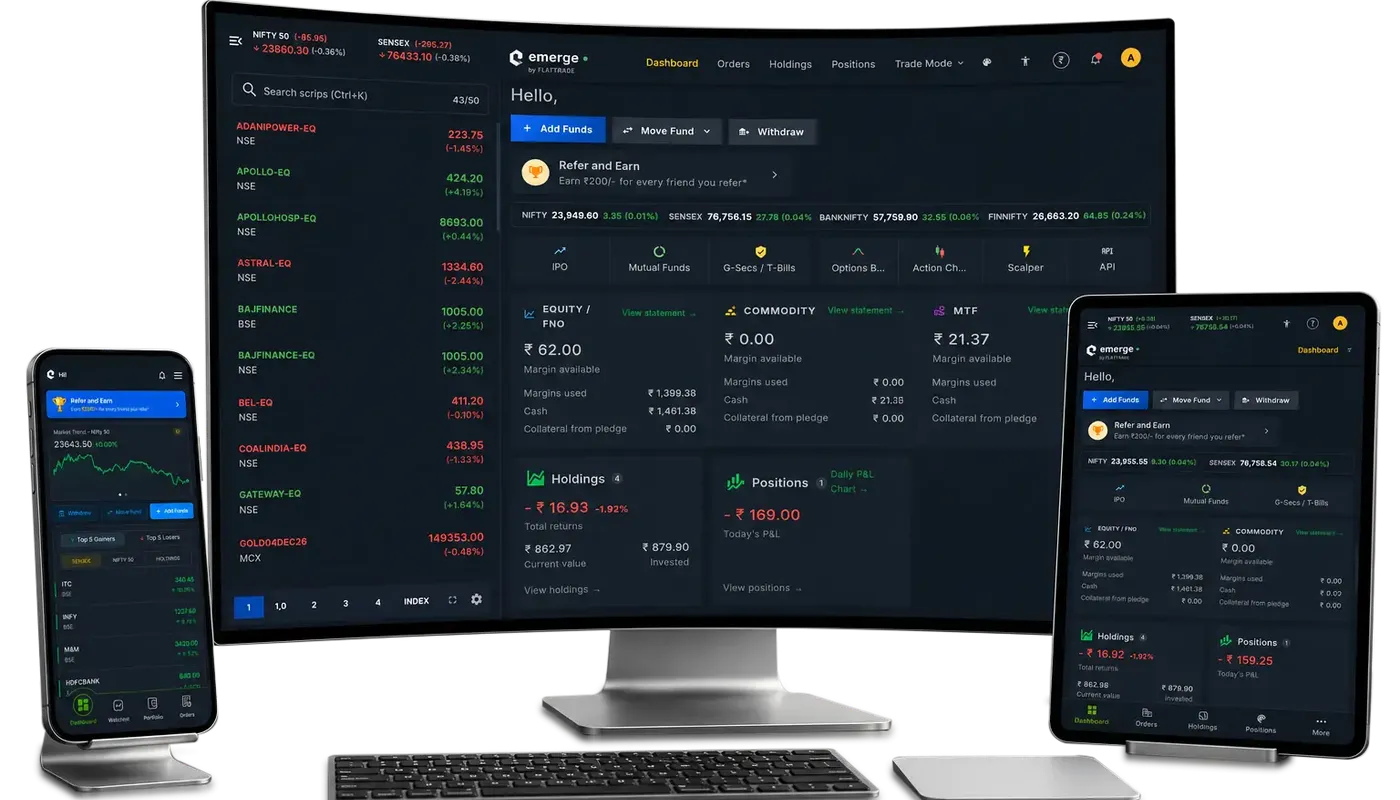
Investment firms, brokers, and trading platforms onboard individual and corporate investors across borders. Every account carries risks, including identity fraud, shell companies, and hidden ownership. Strong KYC for brokers helps verify investors, detect risks, and secure onboarding.
According to the City of London Police, UK victims lost £879.8 million to investment fraud in 2025. This highlights the importance of robust investment firm KYC, corporate due diligence, and ongoing risk monitoring.
KYC verifies individual investors, while KYB checks corporate clients and beneficial owners. Together, automated verification and AML screening strengthen trading platform verification, simplify onboarding, and support compliance.
In this guide, we'll explore KYC and KYB requirements, verification steps, compliance challenges, and automation best practices for investment firms and brokers.
Binderr KYC & KYB Software for Investment Firms
Onboard individual and corporate investors faster with Binderr's unified KYC and KYB software. Verify identities, uncover ownership risks, and streamline compliance checks in one workspace.
- AI-Powered KYC Verification: Verify investor identities with advanced document checks.
- Biometric Identity Protection: Detect impersonation with facial matching and liveness checks.
- Automated Business Verification: Validate corporate investors through global business registries.
- UBO Identification: Uncover beneficial owners and complex investment structures.
- Integrated AML Screening: Check investors against sanctions, PEPs, and watchlists.
- Dynamic Risk Assessment: Evaluate investor risk with automated scoring.
What Are KYC and KYB in Investment Firms and Trading Platforms?
KYC (Know Your Customer) and KYB (Know Your Business) help investment firms, brokers, and trading platforms verify investors, assess financial crime risks, and meet AML requirements. KYC focuses on individuals, while KYB verifies corporate clients and their ownership structures.
KYC for Individual Investors and Trading Accounts
KYC for brokers involves verifying investor identities, checking documents, and using biometric verification where needed. Firms also conduct sanctions and PEP screening, assess account activity, and apply ongoing monitoring. Strong investment firm KYC helps prevent fraud and support compliant onboarding.
KYB for Corporate Investors and Institutional Clients
KYB verifies company registration, legal status, directors, shareholders, and ultimate beneficial owners (UBOs). It also checks authorized representatives, ownership structures, and financial crime risks. Effective trading platform verification helps detect hidden ownership and supports secure corporate onboarding.
Manage Compliance in One Place
Why Do Investment Firms, Brokers and Trading Platforms Need KYC & KYB?
KYC and KYB help investment firms verify investors, prevent financial crime, and meet regulatory obligations. These checks also strengthen account security, improve onboarding efficiency, and support ongoing risk management.
Prevent Money Laundering and Financial Crime - Investment accounts can be misused to move illicit funds or conceal suspicious transactions. Strong KYC for brokers helps verify investor identities, assess customer risk, and identify unusual trading or funding activity. Combined with KYB and ongoing monitoring, these checks help firms detect potential money laundering and financial crime.
Detect Fraudulent Investors and Fake Accounts - Fraudsters may use stolen identities, forged documents, synthetic profiles, or impersonation to open trading accounts. Effective trading platform verification combines document authentication, biometric checks, and identity screening to flag suspicious applications before accounts are approved, reducing fraud exposure and unauthorized access.
Identify Hidden Corporate Ownership - Corporate investors may operate through shell companies, layered structures, or undisclosed controllers. KYB checks help investment firms trace ownership chains, verify shareholders, and identify ultimate beneficial owners (UBOs). This transparency helps uncover hidden connections, assess corporate risks, and prevent misuse of investment accounts.
Meet AML and Regulatory Requirements - Investment firms must follow applicable AML regulations covering customer due diligence (CDD), enhanced due diligence (EDD), sanctions screening, and ongoing monitoring. A structured investment firm KYC process helps maintain accurate customer records, document risk assessments, and demonstrate compliance during regulatory inspections.
Improve Investor Onboarding and Customer Trust - Lengthy verification and repeated document requests can frustrate investors and delay account activation. Automated KYC and KYB workflows simplify data collection, accelerate identity and business checks, and reduce manual reviews. This creates a smoother onboarding experience while maintaining security, compliance, and investor confidence.
KYC & KYB Regulations for Investment Firms and Brokers in 2026
Investment firms, brokers, and trading platforms must follow applicable AML regulations to verify customers, identify beneficial owners, and prevent financial crime.
Requirements differ across jurisdictions, but most emphasize risk-based due diligence, screening, recordkeeping, and ongoing monitoring.
FATF Customer Due Diligence Standards
The Financial Action Task Force (FATF) establishes global AML standards that guide investment firm KYC practices. Recommendation 10 covers customer identification, beneficial ownership verification, and ongoing due diligence.
Recommendation 12 addresses enhanced measures for politically exposed persons (PEPs), while Recommendation 24 promotes transparency in company ownership. Together, these standards help investment firms assess investor risks, identify hidden controllers, and strengthen financial crime prevention.
US KYC and AML Requirements for Broker-Dealers
Under the Bank Secrecy Act (BSA), covered US broker-dealers must maintain written Customer Identification Programs (CIPs), verify customer identities, retain records, and implement AML controls.
KYC for brokers also includes beneficial ownership checks for covered legal-entity customers, subject to FinCEN's February 2026 relief from repetitive verification at every account opening. Separately, FinCEN delayed its investment adviser AML rule from January 1, 2026, to January 1, 2028. Investment advisers and broker-dealers therefore have distinct regulatory obligations.
UK FCA Expectations for Investment and Trading Firms
Under the Money Laundering Regulations 2017, covered UK investment firms must apply risk-based customer due diligence (CDD), verify beneficial ownership, conduct ongoing monitoring, and perform enhanced due diligence (EDD) for higher-risk relationships.
In April 2026, the Financial Conduct Authority (FCA) highlighted weaknesses in CDD procedures, governance, compliance monitoring, and audit controls. Effective trading platform verification should therefore support documented risk assessments, appropriate customer reviews, and clear compliance oversight.
EU AML Requirements for Investment Firms
EU investment firms currently follow applicable national AML laws implementing the EU's existing framework, including customer verification, beneficial ownership checks, and risk-based monitoring.
Regulation (EU) 2024/1624, generally applicable from July 10, 2027, will introduce more harmonized AML requirements across member states. Investment firms should prepare by reviewing their KYC and KYB procedures, strengthening corporate ownership verification, and improving monitoring and recordkeeping systems.
Build a Better Compliance Process
How KYC & KYB Work for Investment Firms: Step-by-Step Process
A structured KYC and KYB process helps investment firms verify investors, assess financial crime risks, and meet AML requirements.
From collecting customer information to ongoing monitoring, each step strengthens compliance and supports secure trading account onboarding.
Step 1: Collect Investor and Account Information
The process begins with gathering essential investor details. For individuals, firms collect names, addresses, dates of birth, identification information, and investment objectives. Corporate clients provide company registration details, business activities, ownership information, and authorized representatives. Effective KYC for brokers also involves understanding the account's purpose, expected trading activity, and funding patterns to establish an initial customer profile.
Step 2: Verify Individual Investor Identities
Next, firms confirm that investors are who they claim to be. This involves checking government-issued IDs, validating document authenticity, and using electronic identity verification. Biometric facial matching and liveness detection can provide additional protection against impersonation and fraudulent documents. Automated trading platform verification helps identify suspicious applications while reducing manual onboarding delays.
Step 3: Verify Corporate and Institutional Investors
For corporate accounts, firms verify the company's legal existence through official business registries and reliable data sources. Checks include registration numbers, business addresses, operating status, and authorized representatives. This KYB process helps confirm that the business is legitimate and that individuals opening investment accounts have the authority to act on its behalf.
Step 4: Identify Shareholders and Ultimate Beneficial Owners
Corporate ownership can involve multiple companies, jurisdictions, and hidden controlling interests. Firms examine shareholder records, trace ownership chains, and identify ultimate beneficial owners (UBOs) or individuals exercising control. Strong investment firm KYC and KYB procedures help uncover complex ownership arrangements and determine when additional verification is necessary.
Step 5: Run Sanctions, PEP, and Adverse Media Screening
Investment firms screen investors, corporate entities, and relevant beneficial owners against applicable sanctions lists, politically exposed person (PEP) databases, and adverse media sources. Potential matches require investigation to distinguish genuine risks from false positives. Integrated AML screening helps identify financial crime exposure before onboarding and supports informed compliance decisions.
Step 6: Assess Investor Risk and Source of Funds
Not every investor presents the same level of risk. Firms assess factors such as geographic exposure, investment products, expected transactions, ownership complexity, and funding sources. Higher-risk relationships may require additional source-of-funds or source-of-wealth evidence. A risk-based KYC for brokers approach helps determine appropriate due diligence measures and monitoring levels.
Step 7: Apply EDD and Make the Onboarding Decision
When screening or risk assessments reveal elevated concerns, firms apply enhanced due diligence (EDD). This may involve collecting additional documents, verifying the origin of funds, investigating ownership structures, and obtaining senior management approval where required. Compliance teams document their findings before approving, restricting, or rejecting accounts based on applicable requirements and risk policies.
Step 8: Conduct Ongoing Monitoring and Periodic Reviews
Verification continues after an investor starts trading. Firms monitor relevant account activity, sanctions updates, ownership changes, and emerging risk indicators. Risk-based periodic reviews help keep customer records accurate, while alerts trigger investigations into suspicious changes. Continuous trading platform verification and monitoring help firms detect evolving risks and maintain compliance throughout the customer relationship.
Streamline the KYC & KYB Verification Process Using Binderr
Replace fragmented checks with Binderr's automated investor verification workflows. Complete identity checks, business verification, AML screening, and risk assessments without switching between multiple tools.
- Automated Data Collection: Gather investor details through customizable digital forms.
- Instant Identity Checks: Verify personal documents with AI-powered technology.
- Global Company Verification: Retrieve corporate registration and ownership information.
- Connected AML Screening: Screen investors, businesses, directors, and UBOs.
- Risk-Based EDD Workflows: Trigger additional checks for high-risk investors.
- Centralized Approval Records: Document verification results and compliance decisions.
Best Practices for KYC & KYB Compliance in Investment Firms
Strong KYC and KYB practices help investment firms reduce financial crime risks, simplify investor onboarding, and maintain regulatory compliance. Here are five best practices to follow:
Adopt Risk-Based Due Diligence - Apply verification checks based on investor risk, geographic exposure, investment products, and ownership complexity. A risk-based KYC for brokers approach helps firms prioritize high-risk customers while keeping low-risk onboarding efficient.
Verify Corporate Ownership Thoroughly - Identify ultimate beneficial owners (UBOs), verify shareholders, and examine complex ownership structures. Investigate layered companies, hidden controllers, and unusual ownership arrangements to prevent misuse of corporate investment accounts.
Integrate AML Screening into Onboarding - Screen investors and corporate clients against applicable sanctions lists, PEP databases, and relevant adverse media sources. Integrating AML checks into investment firm KYC helps identify potential financial crime risks before account approval.
Automate Repetitive Verification Tasks - Use automated identity checks, document verification, business registry searches, and risk scoring to reduce manual workloads. Automated trading platform verification can accelerate onboarding while directing suspicious applications to compliance teams for review.
Maintain Defensible Compliance Records - Keep organized records of identity checks, beneficial ownership findings, screening results, risk assessments, and onboarding decisions. Document investigations, approvals, and ongoing reviews to demonstrate compliance during regulatory inspections and audits.
Look Beyond Company Names with Binderr's KYB & AML Screening
Corporate investors can hide complex ownership chains and financial crime exposure. Binderr combines business verification, UBO identification, and AML screening to help brokers uncover risks before approving trading accounts.
- Global Registry Access: Verify businesses across 200+ countries.
- Corporate Ownership Mapping: Visualize layered shareholder and control structures.
- UBO Verification: Identify the individuals behind corporate investment accounts.
- Director & Shareholder Screening: Check connected individuals for potential risks.
- Advanced AML Screening: Identify sanctions, PEP, and adverse media exposure.
- Smart Risk Detection: Reduce false positives with intelligent screening algorithms.
How Automation Improves KYC & KYB for Investment Firms
Automation helps investment firms, brokers, and trading platforms reduce manual verification, accelerate investor onboarding, and strengthen financial crime controls.
By connecting KYC, KYB, AML screening, and ongoing monitoring, firms can manage compliance more efficiently without compromising risk oversight.
Automated Identity and Document Verification
Manual identity checks can slow investor onboarding and increase the risk of errors. Automated KYC for brokers uses document scanning, OCR, authenticity checks, biometric facial matching, and liveness detection to verify identities faster. These technologies help detect forged documents, identity theft, and impersonation while reducing repetitive manual reviews.
Automated KYB and Beneficial Ownership Mapping
Verifying corporate investors becomes challenging when companies operate across jurisdictions or have complex ownership structures. Automated KYB solutions retrieve business registry information, verify company details, and map shareholder relationships to identify ultimate beneficial owners (UBOs). This helps firms uncover hidden controllers, understand corporate connections, and accelerate institutional account verification.
Integrated AML Screening and Risk Assessment
Disconnected screening tools can create compliance gaps and delay onboarding decisions. Automated investment firm KYC workflows combine sanctions screening, PEP checks, adverse media analysis, and configurable risk scoring. Potential matches generate alerts for investigation, helping compliance teams prioritize high-risk investors and make informed onboarding decisions.
Continuous Monitoring and Compliance Alerts
Investor risks can change after account approval due to new sanctions, political exposure, or ownership changes. Automated monitoring tools rescreen customers, detect relevant risk updates, and generate alerts for compliance review. This allows firms to investigate emerging risks, update customer profiles, and maintain ongoing due diligence.
Centralized Compliance Records and Audit Trails
Managing verification documents, screening results, and approvals across separate systems can complicate regulatory audits. Automated trading platform verification brings identity records, KYB findings, risk assessments, and investigation histories into one compliance workspace. Centralized audit trails improve accountability, simplify reporting, and help firms demonstrate compliance during regulatory inspections.
Centralise Your Compliance Operations
Common KYC & KYB Challenges for Investment Firms and Trading Platforms
Investment firms, brokers, and trading platforms face several challenges when verifying investors and managing financial crime risks.
From complex ownership structures to identity fraud, these obstacles can delay onboarding, increase compliance costs, and create regulatory exposure.
High Volumes of Digital Investor Onboarding - Trading platforms often process large numbers of investor applications, creating verification bottlenecks. Incomplete documents, repetitive checks, and manual reviews can delay account activation. Scaling KYC for brokers becomes challenging without automated workflows that handle high volumes while maintaining verification accuracy.
Cross-Border Investor and Regulatory Complexity - Investment firms serving international clients must navigate different AML regulations, identification standards, and geographic risks. Verifying foreign identity documents, checking overseas business registries, and applying jurisdiction-specific due diligence can complicate investment firm KYC and increase operational workloads.
Complex Corporate and Fund Ownership Structures - Corporate investors, investment funds, and trusts may involve multiple ownership layers, nominee arrangements, and entities across jurisdictions. Identifying ultimate beneficial owners (UBOs) becomes difficult when ownership records are incomplete or control is indirect. These complexities can delay KYB verification and conceal potential financial crime risks.
Identity Fraud and Document Manipulation - Fraudsters increasingly use forged identification documents, stolen identities, impersonation, and AI-generated deepfakes to bypass onboarding checks. Weak trading platform verification processes may fail to detect sophisticated fraud attempts, exposing firms to unauthorized accounts, financial losses, and compliance violations.
False Positives in AML Screening - Common names, incomplete customer details, and inconsistent watchlist data can trigger unnecessary sanctions or PEP alerts. Compliance teams must investigate these false positives, consuming time and resources. Excessive screening noise can delay legitimate investor onboarding and distract analysts from genuine financial crime threats.
Binderr: Your Complete KYC, KYB & AML Compliance Solution
Managing investor verification shouldn't require multiple disconnected systems. Binderr unifies KYC, KYB, AML screening, CDD, EDD, and ongoing monitoring to help investment firms simplify compliance from initial onboarding to continuous risk management.
- Complete Investor KYC: Verify identities with AI-powered document and biometric checks.
- Automated Corporate KYB: Validate businesses, directors, shareholders, and UBOs.
- Integrated AML Screening: Check sanctions, PEPs, watchlists, and adverse media.
- Intelligent Risk Scoring: Assess customer risks using dynamic risk profiles.
- Continuous Compliance Monitoring: Detect emerging risks through automated alerts.
- Centralized Compliance Workspace: Manage CDD, EDD, documentation, and audit trails.
Bottom Line
Strong KYC and KYB processes help investment firms, brokers, and trading platforms prevent financial crime and maintain compliance. KYC for brokers verifies individual investors, while KYB identifies corporate clients and beneficial owners. Risk-based investment firm KYC and ongoing monitoring help detect suspicious activity and emerging risks.
Automated identity checks, AML screening, and continuous monitoring simplify trading platform verification and reduce manual workloads. Binderr Services unifies these capabilities in one compliance platform, helping investment firms streamline onboarding, strengthen risk management, and maintain regulatory compliance.