The UAE hosts a diverse mix of mainland companies, free zone entities, multinational branches, holding structures, and trusts. This complexity makes KYB UAE compliance a critical requirement for accurate corporate verification and risk control. Businesses must confirm that corporate customers are legitimate, properly licensed, and transparent about their ownership before establishing a relationship.
Know Your Business processes go beyond basic checks. Effective business verification UAE procedures require organisations to confirm legal existence, validate trade licences, assess commercial activities, and identify ultimate beneficial owners. Strong KYB regulations help prevent financial crime and ensure that companies operate with clear ownership, lawful activities, and accountable management.
The importance of KYB compliance continues to grow as regulatory expectations tighten across the Emirates. According to the UAE Ministry of Economy, more than one million companies are registered across the country, increasing the need for reliable corporate customer verification. Recent updates through the 2025 AML law and 2026 digital KYC platform regulations also reinforce the need for structured, technology-driven KYB Dubai compliance and wider UAE business verification processes.
Binderr KYB Software for UAE Business Verification
Key capabilities include:
- Global company verification across 200+ countries
- Access to company details, directors, and shareholders
- Trade licence and corporate data validation
- Automated UBO identification and verification
- AML screening with ongoing monitoring
What Is KYB Compliance in the UAE?
KYB compliance in the UAE is the corporate equivalent of KYC, ensuring that a business is legally registered, holds a valid trade licence, operates legitimately, and has identifiable owners. A structured KYB UAE process involves verifying company details, reviewing directors and senior management, identifying beneficial owners, conducting sanctions and risk checks, and monitoring the business throughout the relationship. A trade licence alone is not sufficient, as organisations must also understand the customer’s purpose, commercial activities, expected transactions, and complete ownership and control structure.
Effective KYB UAE compliance requires several connected checks. Binderr combines entity verification, sanctions screening, PEP checks, adverse media analysis, and enhanced due diligence within one platform.
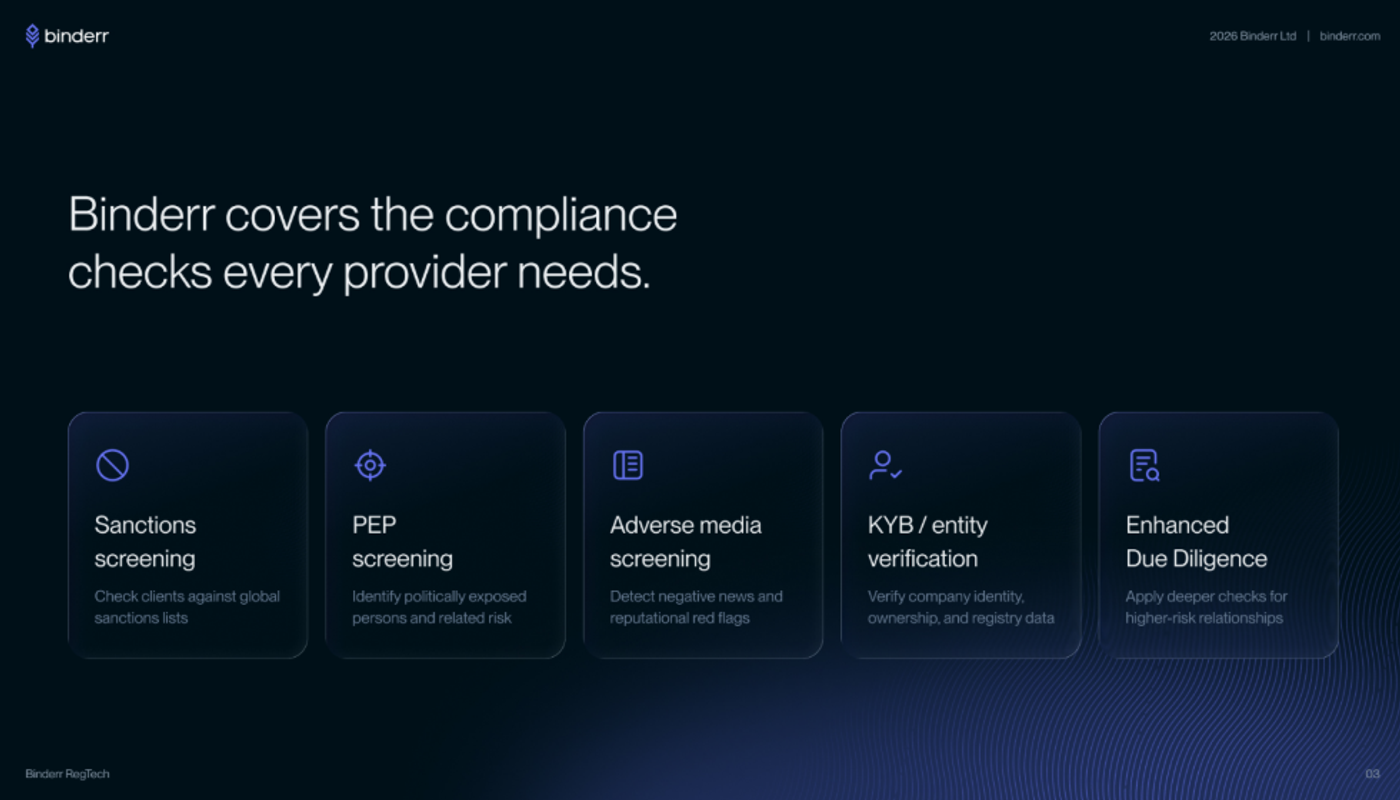
(Binderr connects KYB verification with sanctions, PEP, adverse media, and enhanced due diligence checks.)
Begin Your KYB Compliance Journey Today
UAE Laws and Regulations Governing Business Verification
The precise UAE KYB requirements depend on the organisation’s activities, sector, customers, and supervisory authority. Together, the country’s federal AML laws, executive regulations, beneficial ownership requirements, and digital KYC framework form the foundation for business verification UAE processes, legal entity checks, UBO identification, and financial crime risk assessment.
Federal Decree-Law No. 10 of 2025
Federal Decree-Law No. 10 of 2025 is at the core of the UAE AML compliance framework. It addresses money laundering, terrorism financing, and proliferation financing while defining responsibilities for financial institutions, designated non-financial businesses and professions, and virtual asset service providers. The law outlines requirements for customer due diligence, beneficial ownership identification, supervisory oversight, Financial Intelligence Unit reporting, and administrative or criminal enforcement.
In practice, organisations cannot rely only on trade licences or incorporation documents when conducting KYB UAE checks. They must understand the company’s ownership structure, commercial purpose, expected activities, and connected parties. Organisations must also assess risks linked to sanctions, terrorism financing, proliferation financing, and other financial crimes before onboarding corporate customers.
Cabinet Resolution No. 134 of 2025
Cabinet Resolution No. 134 of 2025 provides detailed guidance on implementing Federal Decree-Law No. 10 of 2025. It explains how regulated organisations should apply AML obligations during business verification UAE procedures and corporate onboarding. The Resolution is therefore essential when designing KYB, CDD, EDD, AML screening, risk assessment, record-keeping, and monitoring processes.
Under this framework, businesses must assess customer risk, verify corporate information, and identify the natural persons who ultimately own or control legal entities. They must also apply enhanced due diligence to higher-risk relationships, maintain accurate records, monitor customers continuously, and report suspicious transactions promptly. These requirements make KYB Dubai compliance and wider UAE corporate verification ongoing responsibilities rather than one-time onboarding checks.
UAE Digital KYC Platform Regulations
Federal Decree-Law No. 30 of 2024 introduced the UAE’s digital KYC platform, supported by Cabinet Resolution No. 55 of 2026. These regulations establish a framework for the secure collection, management, and sharing of verified KYC information between authorised entities. The platform is intended to improve the efficiency, reliability, and consistency of KYC and business verification UAE processes.
The platform may provide access to important legal-person data, including:
- Company name and legal form
- Head-office and branch addresses
- Trade-register records
- Trade licences
- Constitutional documents
- Senior management information
- Beneficial ownership details
- Capital and funding sources
- Tax registration number
Although digital access can reduce duplicate requests and manual administration, organisations must still assess the accuracy and relevance of the information. Access to KYC reports remains subject to applicable platform procedures, customer consent, confidentiality requirements, and controls issued by the Central Bank. The availability of digital data does not remove the need for human judgement within a KYB UAE risk assessment.
Beneficial Ownership Transparency Rules
UAE beneficial ownership regulations require companies to maintain adequate, accurate, and current information about the natural persons who ultimately own or control them. Registrars must obtain relevant beneficial ownership details during company registration and ensure that competent authorities can access reliable ownership records. Businesses must also cooperate with regulated organisations carrying out customer due diligence and KYB Dubai compliance checks.
Companies are expected to keep shareholder, nominee arrangement, control, and beneficial ownership records up to date. Relevant changes must typically be recorded within 15 working days and verified on an ongoing basis. Any change in shareholders, voting rights, directors, ownership layers, or control arrangements may trigger renewed business verification UAE checks, updated AML screening, and a reassessment of the corporate customer’s risk rating.
How to Build a UAE KYB Compliance Process
A structured KYB UAE compliance process helps organisations verify corporate customers consistently, identify beneficial owners, assess financial crime risk, and maintain clear evidence of every decision. The workflow should follow a risk-based approach and adapt to the customer’s legal form, business activities, ownership structure, jurisdiction, services, and regulatory profile.
Step 1: Collect Company and Relationship Information
Begin by collecting the company’s registered name, legal form, registration number, trade licence, business address, contact details, tax information, and intended commercial activities. The organisation should also document the purpose of the relationship, requested products or services, expected transaction volumes, funding arrangements, and countries connected to the business.
This information creates the foundation for business verification UAE procedures and customer due diligence. Incomplete, inconsistent, or unclear answers should be resolved before onboarding progresses, particularly where the customer operates in a high-risk industry, serves customers in multiple jurisdictions, or uses a complex corporate structure.
Step 2: Verify Registration and Licence Status
Check the company’s registration details against the relevant mainland, free zone, DIFC, ADGM, or emirate-level registry. Confirm that the company is active, its registration number is correct, and its legal name, registered address, incorporation date, and legal form match the information provided.
The trade licence should also be checked for validity, expiry date, issuing authority, and permitted business activities. An expired, suspended, or mismatched licence may indicate increased onboarding risk and require further investigation. Reliable licence validation is particularly important for KYB Dubai compliance, where businesses may be registered under different mainland and free zone authorities.
Step 3: Validate Constitutional Documents
Review the company’s certificate of incorporation, memorandum of association, articles of association, partnership agreement, shareholder register, and other relevant corporate documents. These records help confirm the entity’s legal structure, authorised activities, share capital, governance arrangements, ownership rights, and decision-making powers.
Documents should be checked for authenticity, consistency, and alignment with registry information. Any mismatch between constitutional documents, trade licence details, official records, or customer declarations may indicate outdated information, undisclosed changes, or potential KYB UAE risk.
Step 4: Verify Directors and Authorised Representatives
Identify the directors, senior managers, authorised signatories, and individuals acting on behalf of the company. Verify their identities using reliable documentation and confirm their roles through board resolutions, powers of attorney, authorised signatory lists, or official corporate records.
The organisation must also establish that each representative has the legal authority to open, manage, or make decisions about the relationship. Business verification UAE checks should not proceed solely because an individual claims to represent the company without appropriate evidence of identity and authority.
Verify Directors and Shareholders for FREE
Step 5: Map the Ownership and Control Structure
Create a clear ownership chart showing direct shareholders, intermediate holding companies, parent entities, voting rights, nominee arrangements, and other forms of legal or practical control. Continue tracing each corporate layer until the natural persons exercising ultimate ownership or effective control have been identified.
Ownership mapping is especially important for companies with cross-border structures, trusts, foundations, nominee shareholders, or several holding entities. Complex or unexplained ownership chains may increase the customer’s KYB UAE risk rating and require additional corporate records, source documentation, or enhanced due diligence.
Step 6: Identify and Verify UBOs
Identify the ultimate beneficial owners using the applicable ownership, control, and senior management tests. Collect each UBO’s name, date of birth, nationality, residential address, ownership percentage, and identity documents, then verify the information through reliable and independent sources.
UBO verification should establish more than the identity of major shareholders. The organisation must also consider individuals who exercise control through voting rights, agreements, nominee relationships, or other means, even where their direct ownership falls below the relevant threshold.
Complex corporate structures can hide the natural persons who ultimately own or control a business. Binderr visually maps companies, shareholders, ownership percentages, and connected individuals so reviewers can investigate multi-layered structures more efficiently.
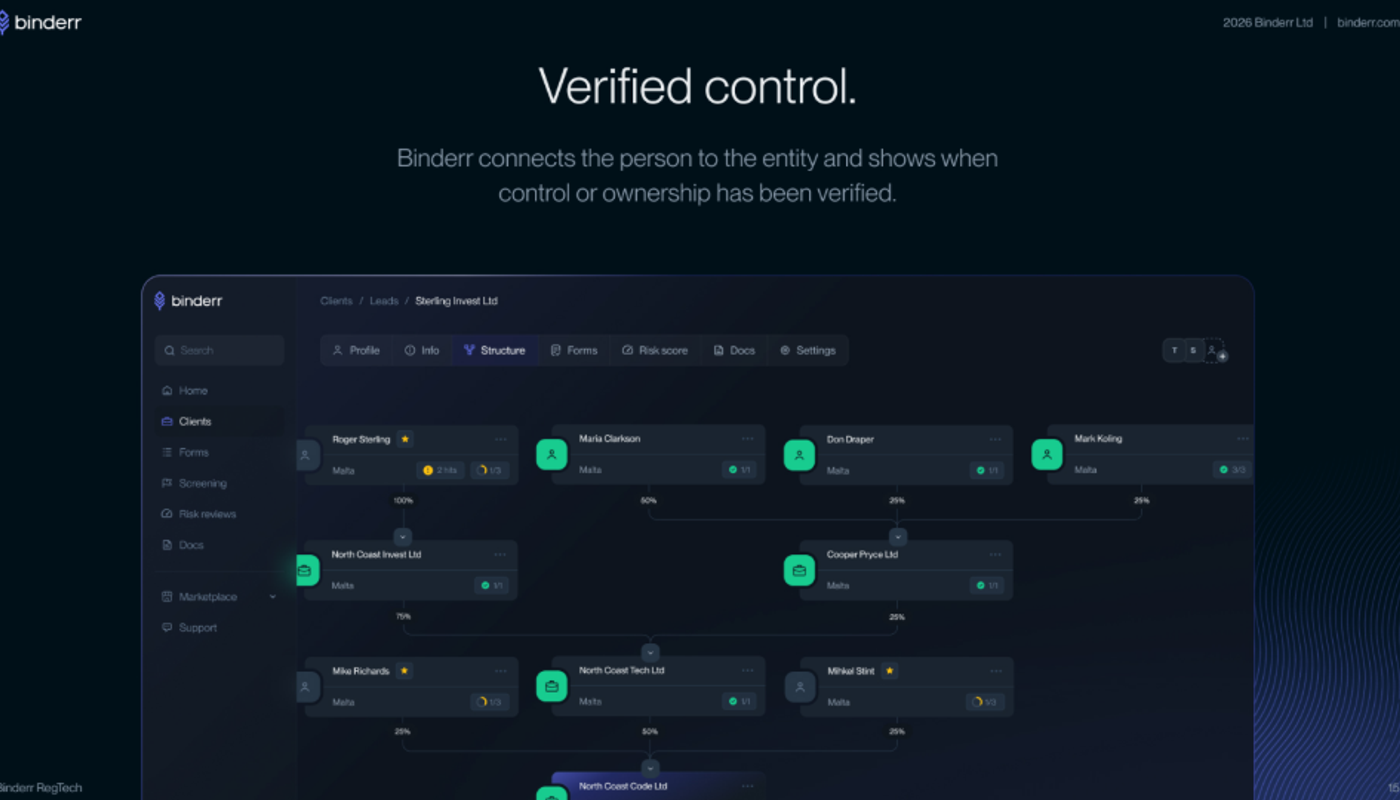
(Binderr maps ownership chains and shows when company ownership or control has been verified.)
Step 7: Screen the Company and Related Persons
Conduct AML screening on the company, UBOs, directors, authorised representatives, senior managers, and relevant parent or related entities. Checks should cover sanctions lists, politically exposed persons, regulatory watchlists, adverse media, enforcement records, and other financial crime risk indicators.
Potential matches should be reviewed using additional identifiers such as nationality, date of birth, company registration number, location, and ownership connections. Effective match resolution reduces false positives while ensuring that genuine sanctions, PEP, and adverse media risks are investigated and escalated within the KYB UAE workflow.
Step 8: Assess Customer and Relationship Risk
Assign a risk rating based on the customer’s industry, jurisdiction, ownership structure, products, services, expected transactions, delivery channels, and AML screening results. The assessment should consider both the company’s inherent risk and the controls available to reduce or manage that exposure.
A documented KYB UAE risk assessment helps determine whether the customer should receive standard customer due diligence, enhanced due diligence, or closer ongoing monitoring. Risk scores should be supported by clear reasoning and relevant evidence rather than generated solely from one indicator or automated result.
Binderr allows information collected during corporate onboarding to flow directly into a dynamic risk assessment. This reduces duplicate data entry and helps compliance teams calculate risk using the customer’s company, ownership, jurisdiction, and activity information.
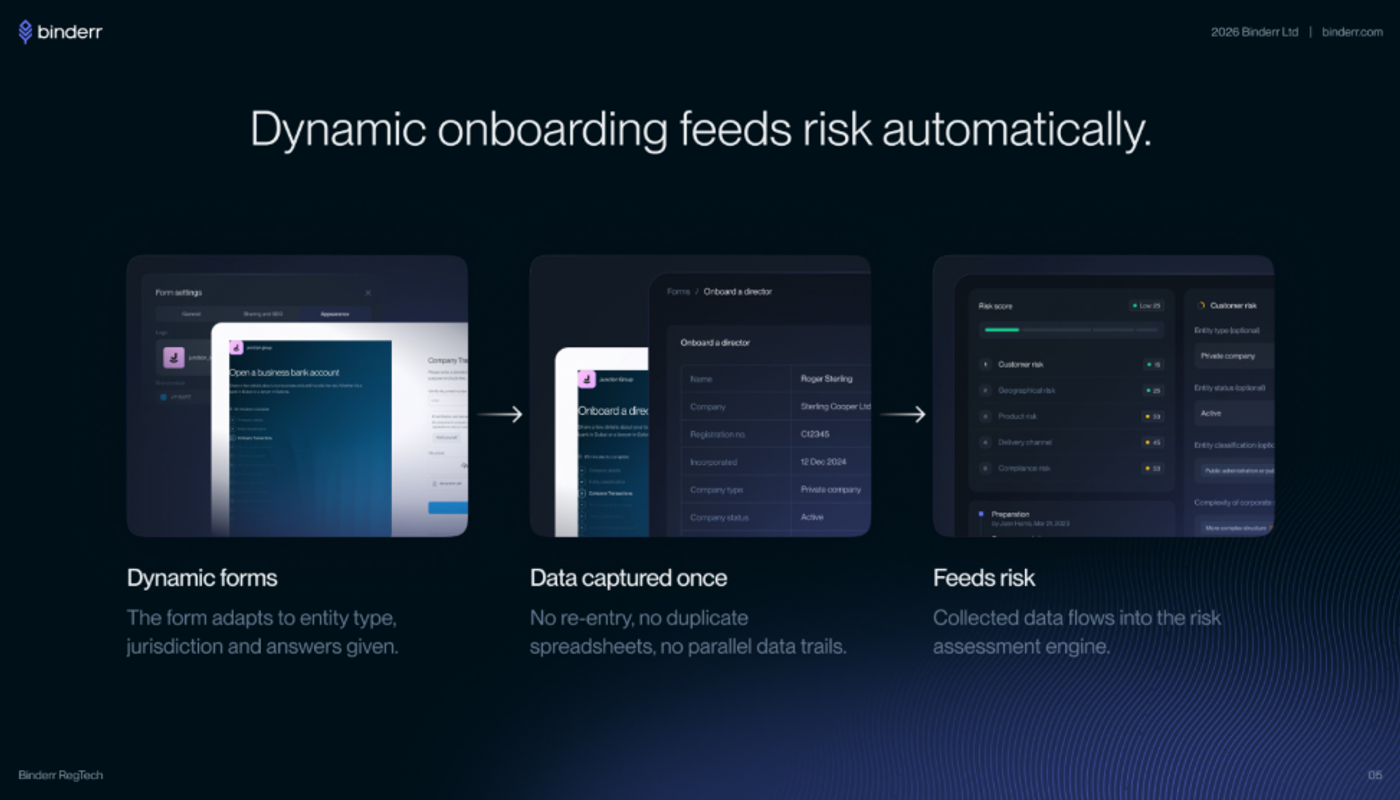
(Dynamic onboarding data feeds directly into Binderr’s business risk assessment.)
Step 9: Apply EDD Where Necessary
Apply enhanced due diligence when the customer presents increased money laundering, terrorism financing, proliferation financing, sanctions, geographic, PEP, ownership, or transaction risk. Additional measures may include deeper source-of-funds checks, source-of-wealth verification, senior management approval, and further investigation into the company’s activities and commercial relationships.
EDD should respond to the specific risks identified rather than follow a generic checklist. For example, a complex ownership structure may require additional shareholder records, while unusual funding arrangements may require bank statements, contracts, audited accounts, or supporting financial evidence. These measures strengthen business verification UAE controls for higher-risk corporate customers.
Step 10: Approve, Reject, or Escalate the Application
Once company verification, AML screening, and risk assessment are complete, decide whether to approve, reject, or escalate the corporate customer. Low-risk applications may proceed through standard approval, while high-risk or unusual cases should be reviewed by senior compliance personnel or the money laundering reporting officer.
The final decision should reflect the organisation’s risk appetite, UAE AML obligations, and the quality of the evidence obtained. Applications should not be approved where ownership cannot be established, documents appear unreliable, sanctions concerns remain unresolved, or the customer’s business purpose cannot be reasonably understood. Clear approval controls are central to defensible KYB Dubai compliance.
Step 11: Retain a Complete Audit Trail
Maintain a complete record of company documents, registry results, UBO checks, AML screening outcomes, risk scores, approvals, escalations, and reviewer comments. The audit trail should show what information was reviewed, which sources were checked, when each control was completed, and why the final compliance decision was made.
Strong KYB record-keeping supports internal reviews, regulatory inspections, suspicious transaction investigations, and future customer reassessments. Records should be stored securely, remain accessible to authorised personnel, and be retained for the period required under applicable UAE regulations.
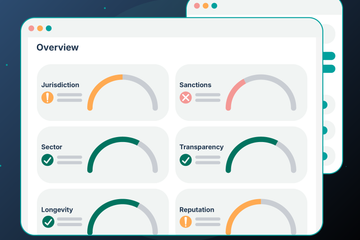
A reliable KYB platform should make incomplete checks visible. Binderr distinguishes between verified, pending, and unassessed information so reviewers can identify gaps before approving a corporate customer.
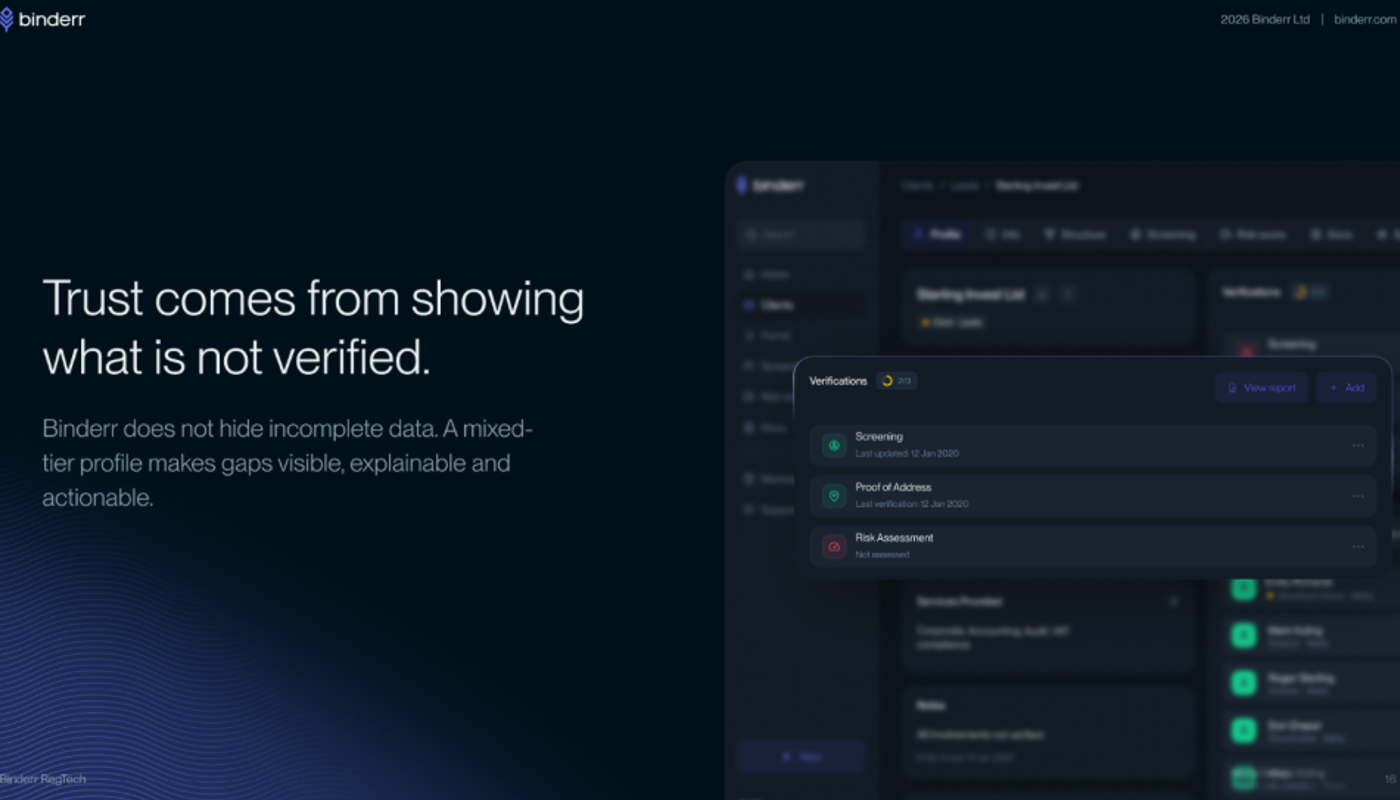
(Binderr makes completed checks and unresolved compliance gaps visible and actionable.)
Step 12: Conduct Ongoing Monitoring
Monitor the customer after onboarding for changes in trade licence status, directors, shareholders, beneficial owners, commercial activities, sanctions exposure, PEP status, adverse media, and transaction behaviour. Reviews may be conducted periodically or triggered by material changes, screening alerts, and new financial crime risk indicators.
Ongoing monitoring ensures that business verification UAE information remains accurate throughout the relationship. Where significant changes occur, the organisation should update the customer profile, repeat relevant verification and screening checks, reassess the risk rating, and apply EDD where necessary. This continuous approach helps maintain effective KYB UAE controls long after initial onboarding.
Binderr keeps onboarding, risk assessment, ongoing screening, reporting, and customer profile updates connected. When new information changes the customer’s risk, the same compliance record can be reviewed and updated without rebuilding the process from the beginning.
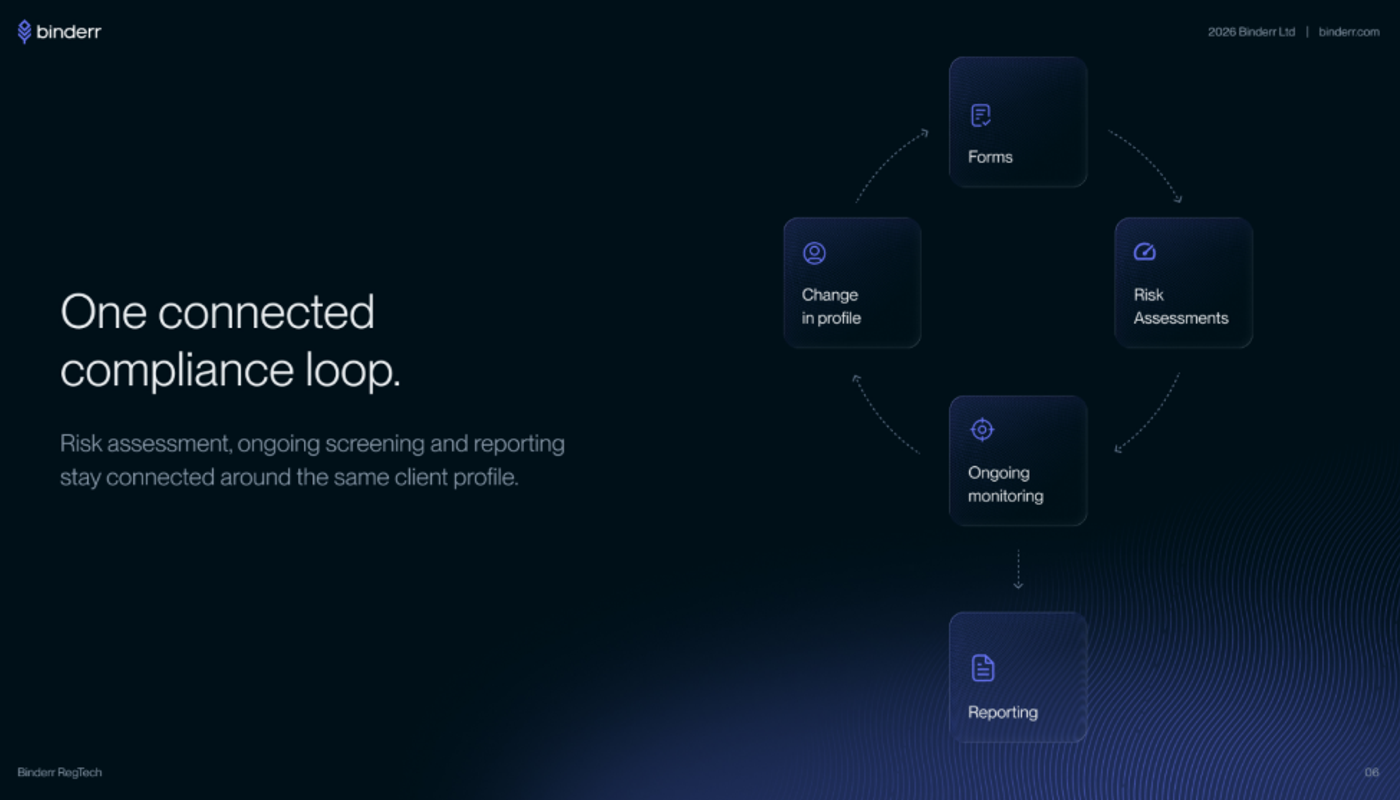
(One connected Binderr compliance loop for onboarding, risk assessment, monitoring, and reporting.)
Simplify the UAE KYB Compliance Process with Binderr
Binderr simplifies the process by helping compliance teams:
- Collect company data through custom digital forms
- Retrieve official corporate information globally
- Verify directors, shareholders, and UBOs
- Screen entities against sanctions and watchlists
- Monitor customers continuously for risk changes
How Automated KYB Software Supports UAE Compliance
Automated KYB software helps regulated organisations streamline UAE business verification, reduce manual checks, and apply consistent compliance controls across corporate onboarding.
Multi-Registry Company Verification
UAE companies may be registered through mainland authorities, emirate-level registries, local free zones, DIFC, ADGM, or other licensing bodies. Automated KYB software can bring information from multiple company registries into one workflow, reducing the need for compliance teams to search each source separately.
This enables organisations to verify the legal company name, registration number, status, incorporation date, registered address, directors, and permitted activities more efficiently. Centralised verification can also help identify inconsistencies between customer declarations and official records, strengthening KYB Dubai compliance across fragmented registration environments.
Trade Licence Validation
Automated trade licence validation helps confirm whether a UAE company holds an active and appropriate licence. The system can check the licence number, issuing authority, permitted business activities, issue date, expiry date, and current status against available official records.
An expired, suspended, or mismatched licence may indicate increased onboarding risk. Automated alerts can also notify compliance teams when a licence approaches expiry or when the permitted activities no longer match the customer’s stated business profile, supporting more reliable business verification UAE controls.
Automated Document Collection
KYB software can request and organise documents based on the customer’s legal form, industry, jurisdiction, and risk level. These may include incorporation certificates, trade licences, constitutional documents, shareholder registers, board resolutions, tax records, and UBO identification documents.
Automated document collection reduces repeated emails and incomplete submissions by showing customers exactly what information is required. It can also trigger additional requests when discrepancies, complex ownership structures, or high-risk indicators are identified during the KYB UAE customer due diligence process.
UBO and Ownership Mapping
Automated ownership mapping helps compliance teams trace direct and indirect shareholders through multiple corporate layers. It can display ownership percentages, parent companies, intermediate entities, nominee relationships, voting rights, and individuals exercising control over the business.
This supports UBO verification by helping organisations identify the natural persons who ultimately own or control a company. Visual ownership charts also make complex cross-border structures easier to review and may reveal information gaps requiring additional evidence or enhanced due diligence.
Entity and Person Screening
Automated AML screening can check corporate customers and connected persons against sanctions lists, PEP databases, regulatory watchlists, and adverse media sources. Relevant parties may include directors, shareholders, UBOs, authorised signatories, senior managers, parent companies, and related entities.
Screening connected parties helps organisations build a more complete corporate risk profile. It also reduces the possibility that financial crime exposure is overlooked because the company itself does not appear on a watchlist while one of its owners or controllers does. This broader approach strengthens business verification UAE and KYB Dubai compliance procedures.
Binderr keeps the analyst in control of screening decisions. Reviewers can see why a sanctions, PEP, or adverse media result appeared, apply configurable risk policies, and focus their time on stronger matches instead of unnecessary false-positive noise.
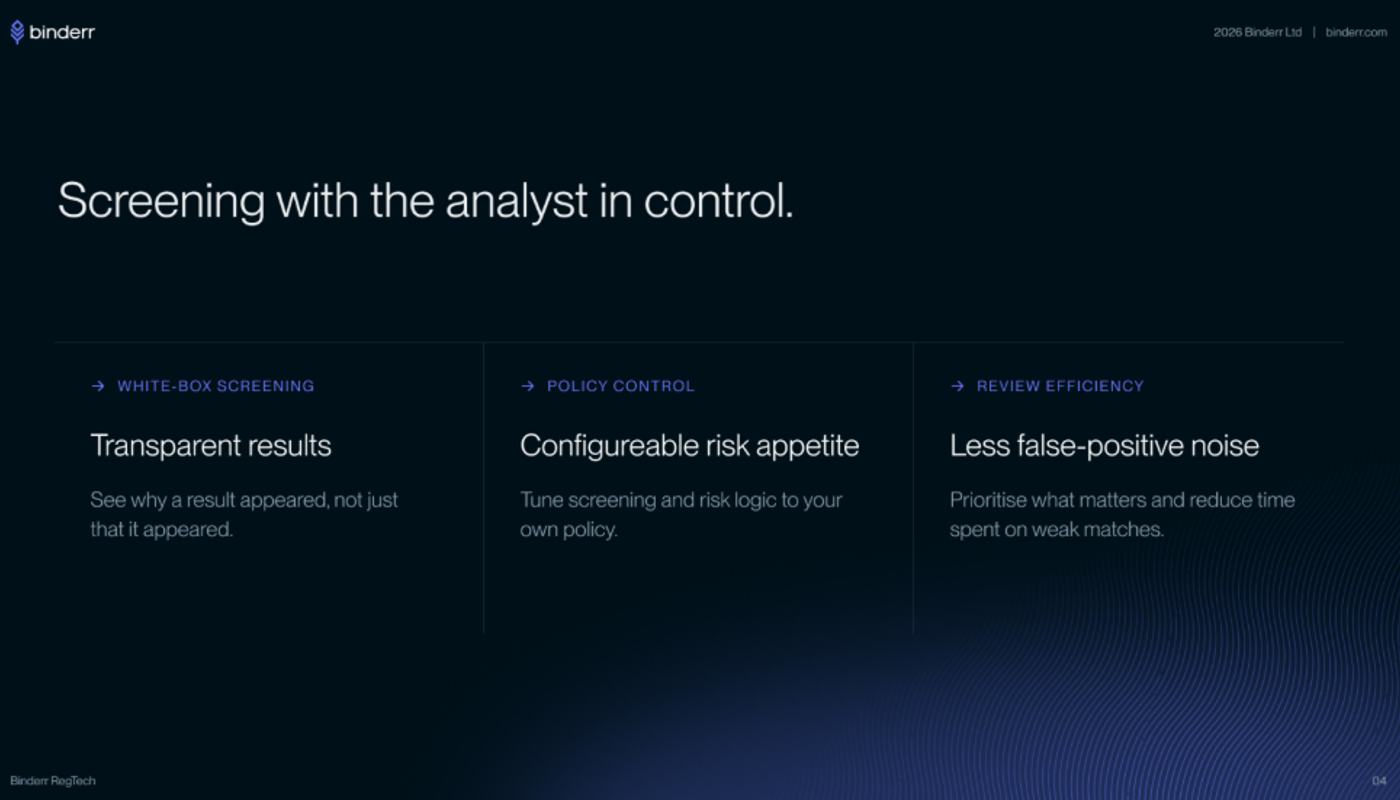
(Binderr provides explainable screening results, configurable policy controls, and more efficient match review.)
Start AML Screening for Free
Arabic and English Name Matching
Names recorded in Arabic may appear differently when transliterated into English, creating challenges for UAE company verification and AML screening. Automated KYB software can use exact, fuzzy, phonetic, and multilingual matching to identify possible variations, reordered names, abbreviations, and alternative spellings.
More advanced name matching can improve the detection of genuine sanctions, PEP, or adverse media matches without producing excessive alerts. Compliance teams should still review supporting identifiers such as nationality, date of birth, company number, address, and ownership connection before confirming a match.
Dynamic Risk Scoring
Dynamic risk scoring combines information from business verification, ownership checks, AML screening, customer activity, jurisdiction exposure, and expected transactions. Each risk factor can be assigned a value or weighting based on the organisation’s risk appetite and UAE AML obligations.
Unlike a static onboarding score, a dynamic KYB UAE risk assessment can change when new information becomes available. A new UBO, sanctions alert, licence amendment, adverse media result, or unusual transaction pattern may automatically trigger a revised customer risk rating and an additional compliance review.
Configurable CDD and EDD Workflows
Automated KYB platforms can apply different customer due diligence workflows according to the company’s risk level, industry, ownership structure, and regulatory category. Standard-risk customers may follow a simplified document route, while higher-risk relationships can be directed into enhanced due diligence.
Configurable EDD workflows may request source-of-funds evidence, source-of-wealth information, additional ownership documents, senior management approval, or more detailed business explanations. This helps compliance teams apply proportionate business verification UAE controls instead of using the same onboarding process for every corporate customer.
Alert Investigation
KYB software can centralise sanctions alerts, adverse media findings, ownership discrepancies, expired documents, licence changes, and other compliance concerns. Investigators can review supporting evidence, add notes, assign cases, request additional information, and record the final outcome within the same platform.
Structured alert investigation helps reduce false positives and ensures that genuine risks are handled consistently. Clear escalation rules can also direct complex or high-risk cases to senior compliance officers or the MLRO, creating a stronger and more defensible KYB Dubai compliance process.
Try Advanced KYB Features with Binderr
Binderr combines key controls in one solution:
- Identification of shareholders and UBOs
- Visual mapping of ownership structures
- Detection of complex ownership chains
- AML screening across all connected parties
- Dynamic risk updates based on new data
Common UAE KYB Compliance Challenges
KYB UAE compliance can be difficult because of fragmented data sources, language differences, multiple registration authorities, and changing ownership structures. Organisations must balance accurate corporate verification with efficient onboarding while ensuring that business information, UBO records, and AML screening results remain current.
Verifying Companies Across Multiple UAE Registries - UAE companies may be incorporated through mainland authorities, emirate-level departments, local free zones, DIFC, ADGM, or other specialised registries. Each source may present company registration, trade licence, director, and shareholder data differently, making multi-registry business verification UAE checks time-consuming and increasing the risk of missing outdated or inconsistent information.
Arabic and English Name Variations - Arabic company and personal names can appear in several English transliterations, abbreviations, spellings, or word orders. These variations complicate KYB Dubai compliance, company verification, and sanctions, PEP, or adverse media screening because weak name-matching systems may overlook genuine risks or incorrectly flag unrelated individuals and businesses.
Complex International Ownership Structures - Corporate customers may be owned through offshore holding companies, trusts, foundations, nominee shareholders, or several layers of foreign entities. Tracing these structures to identify the natural persons exercising ultimate ownership or control can require registry evidence from multiple jurisdictions, detailed ownership mapping, and enhanced due diligence.
Outdated or Conflicting Information - Customer declarations, trade licences, constitutional documents, and registry records may not always contain the same company details. Compliance teams should compare submitted information with reliable and independent sources, investigate discrepancies, and confirm that directors, shareholders, activities, and beneficial ownership information are accurate before completing the KYB UAE onboarding process.
Excessive False Positives - Poor AML screening and basic name matching can produce large numbers of false sanctions, PEP, and adverse media alerts. Reviewing irrelevant matches slows corporate onboarding, increases operational costs, and may distract compliance teams from genuine financial crime risks that require investigation or escalation.
Adverse media screening often creates a heavier manual review burden than sanctions or PEP checks. Binderr’s AI-assisted screening helps identify relevant customer mentions, prioritise useful sources, and explain why an article may require analyst review.
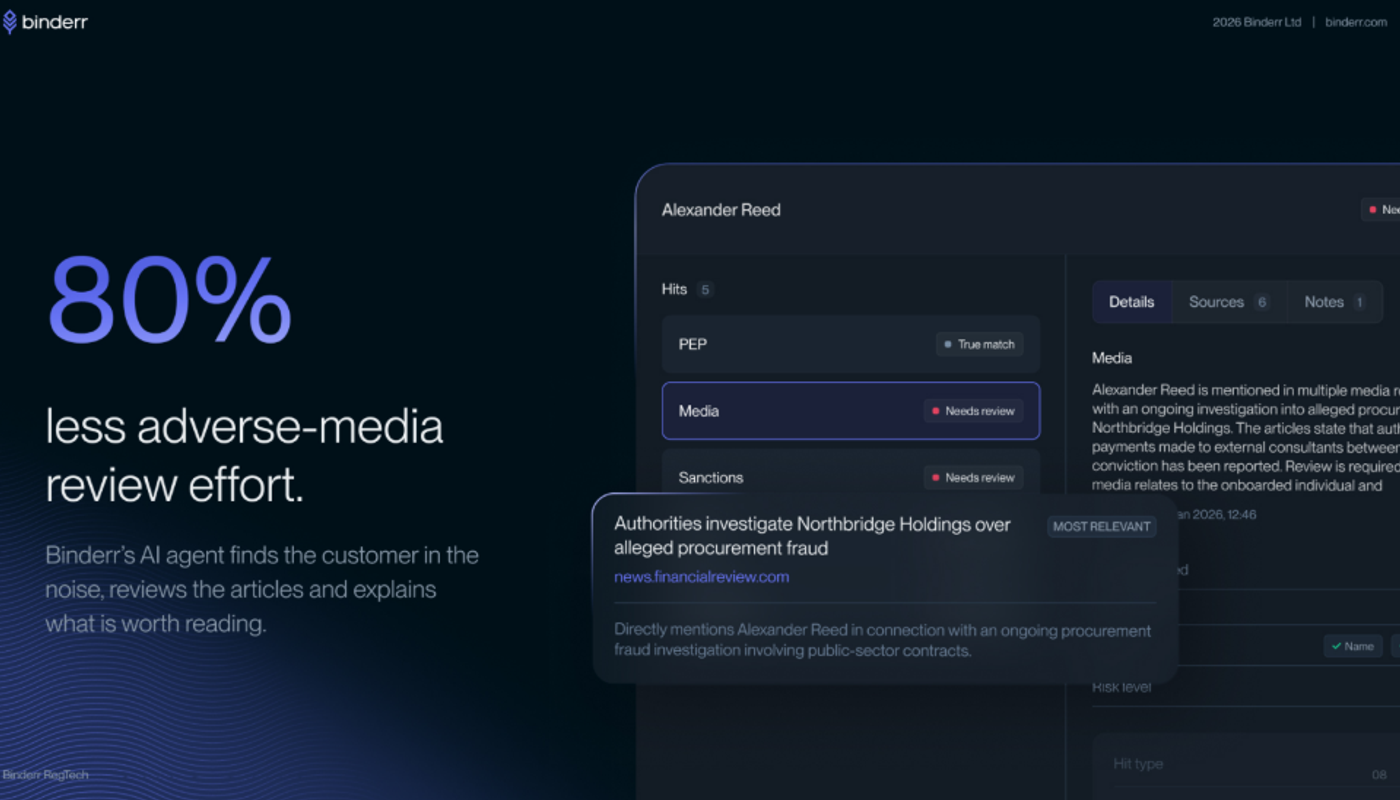
(Binderr helps analysts separate relevant adverse media from background noise and weak matches.)
Maintaining Current UBO Information - A company’s ownership and control structure can change after onboarding through share transfers, new investors, nominee arrangements, or changes in voting rights. Effective ongoing monitoring should detect material changes and trigger updated UBO verification, AML screening, and dynamic risk assessment rather than relying only on scheduled manual reviews. This is essential for maintaining accurate business verification UAE records throughout the customer relationship.
Complete Binderr Compliance Solution
Binderr Compliance offers:
- KYC with AI-powered identity verification
- KYB with global company data access
- UBO identification and ownership mapping
- AML screening and ongoing monitoring
- Risk scoring with CDD and EDD workflows
Bottom Line
KYB UAE compliance requires more than collecting a trade licence or certificate of incorporation. Organisations must verify the company’s legal status and activities, map its ownership and control structure, identify ultimate beneficial owners, conduct AML screening, assess customer risk, document compliance decisions, and keep information current through ongoing monitoring. A structured approach to business verification UAE helps regulated firms understand who they are doing business with and respond appropriately to financial crime risks.
Binderr Compliance brings company verification, UBO mapping, sanctions and PEP screening, dynamic risk assessment, CDD and EDD workflows, and continuous monitoring into one streamlined KYB process. This helps teams strengthen KYB Dubai compliance, onboard corporate customers more efficiently, and maintain clear audit trails and risk-based controls.