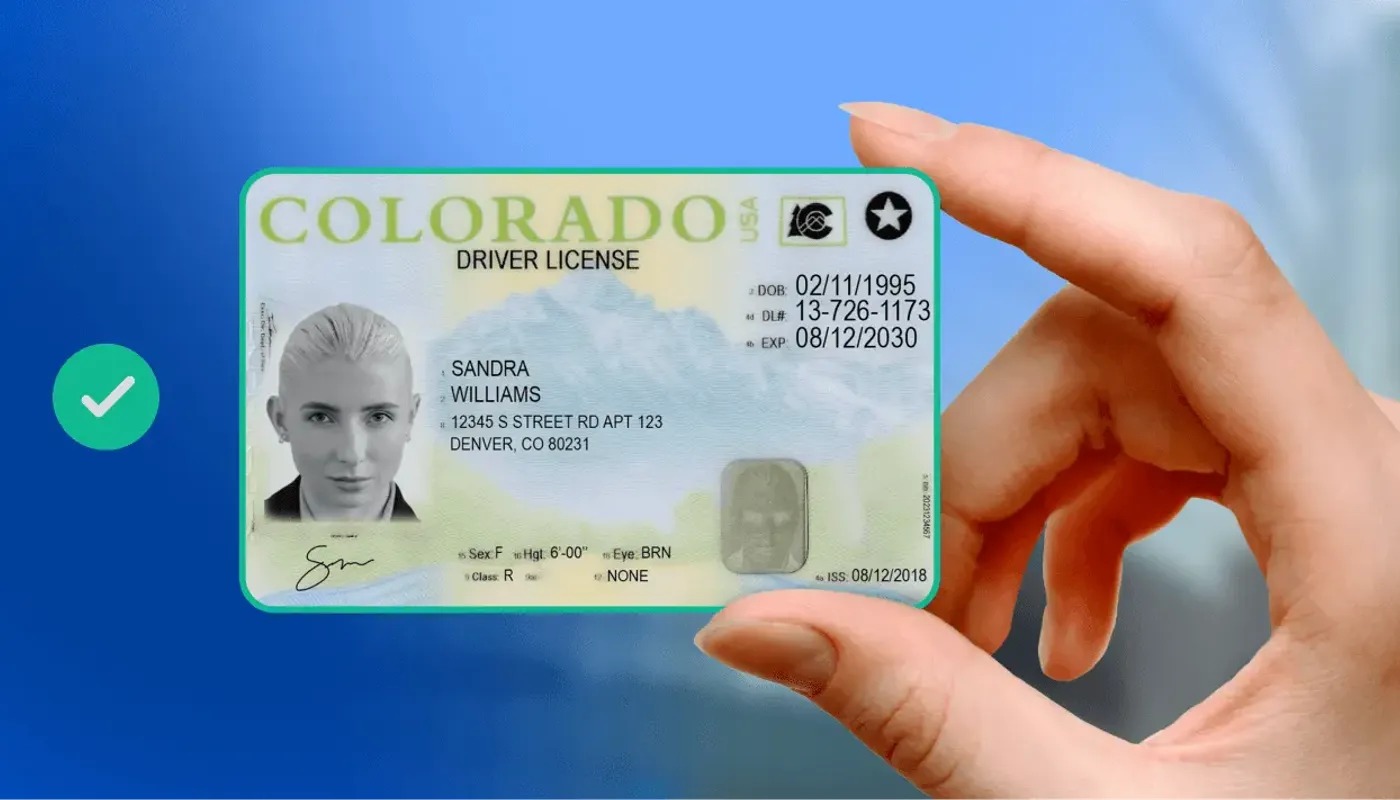
Digital onboarding allows customers to open accounts and access regulated services without visiting a branch or office. It also gives fraudsters more opportunities to use stolen personal data, forged identity documents and manipulated images. The US Federal Trade Commission received more than 1.1 million identity theft reports in 2024, highlighting the need for stronger customer ID verification, identity proofing and automated document verification controls.
A passport, national identity card or driving licence can provide valuable identity evidence, but collecting a photograph of the document is not enough. Effective identity document verification must confirm that the document is genuine, valid and unaltered by analysing its layout, security features, machine-readable data and expiry details. Biometric face matching and liveness detection can then help determine whether the person completing the onboarding process is the rightful document holder.
In this guide, we explain how identity document verification works, what types of documents can be verified, how fraud is detected, and how businesses can implement reliable customer ID verification processes to strengthen KYC compliance and reduce risk.
Verify Identity Documents Faster With Binderr
- Verify passports, national identity cards and driving licences
- Global identity verification coverage across 230+ countries
- Extract names, dates of birth, document numbers and expiry dates using OCR
- Match customer selfies with document photographs
- Use liveness detection to prevent photo, video and mask-based spoofing
- Detect deepfakes, manipulated documents and identity fraud signals
What Is ID Document Verification?
ID document verification is the process of examining a passport, national identity card, driving licence or other government-issued document to confirm that it is genuine, valid and belongs to the person presenting it. The identity document verification process checks the document type, issuing authority, expiry date, security features, format and extracted identity data for signs of tampering, forgery or inconsistency.
Customer ID verification can be completed in person or remotely through a mobile app, browser-based KYC journey or identity verification API, often using OCR, document authentication, biometric face matching and liveness detection.
Verify Identities with Confidence for FREE
Why Is Identity Document Verification Important?
KYC and Customer Due Diligence - ID document verification helps businesses confirm a customer’s identity using reliable evidence such as a passport, identity card or driving licence. Accurate customer ID verification creates a stronger foundation for KYC, customer due diligence, risk assessment and regulatory record keeping.
Fraud Prevention - Document authenticity checks can detect altered information, forged documents, photo substitution and other signs of identity fraud. Combining passport and ID card verification with biometric face matching and liveness detection makes it harder for fraudsters to use stolen identities or manipulated documents.
Account Takeover Prevention - Identity verification can help confirm that the person accessing, updating or recovering an account is the genuine customer. A strong customer ID verification process reduces the risk of criminals using compromised credentials, stolen identity documents or manipulated images to take control of an account.
Age and Eligibility Checks - Businesses can extract and validate details such as date of birth, nationality, residency and document type. Passport or ID card verification can therefore help determine whether a customer meets age restrictions, geographic requirements or product eligibility rules.
Remote Customer Onboarding - Online identity document verification allows customers to prove their identity through a mobile application or browser-based onboarding journey. Automated OCR, document authentication and biometric checks can reduce delays while maintaining appropriate KYC and fraud prevention controls.
Customer Risk Assessment - Customer ID verification provides validated identity data that can feed into a wider customer risk assessment. Businesses can combine verification results with jurisdiction, product, sanctions, PEP and adverse media checks to determine whether standard CDD or enhanced due diligence is required.
Stay Updated on Risk Changes with Binderr
How Does ID Document Verification Work?
ID document verification follows a structured process that combines image capture, data extraction, document authentication and biometric identity verification. Each stage of customer ID verification helps determine whether the submitted document is genuine, valid and connected to the person completing the KYC onboarding process.
Step 1: Document Capture
The process begins when the customer photographs or scans a passport, identity card or driving licence using a smartphone, webcam or scanner. Clear document capture is essential because poor image quality can prevent the identity document verification system from reading identity data or examining security features accurately.
Automated quality controls detect blur, glare, low resolution, cropped edges and missing document sides before the image is submitted. Online document verification systems may also flag screenshots, photocopies or digitally uploaded images where live document capture is required.
Step 2: Document Classification
Once the document is captured, the verification system identifies the document type, issuing country, document version and whether the image shows the front or back. It then matches the submission with the expected layout, data fields and security features for that specific document.
Accurate document classification allows customer ID verification software to apply country-specific and document-specific rules. A passport, national identity card and driving licence cannot be assessed using identical checks because their formats, machine-readable elements and security designs differ.
Step 3: OCR and Data Extraction
Optical character recognition, or OCR, reads the visible text printed on the identity document. It can extract the customer’s name, date of birth, document number, nationality, address, issuing authority, issue date and expiry date.
The extracted information can automatically populate KYC onboarding forms and customer profiles. This reduces manual data entry, improves processing speed and lowers the risk of transcription errors or inconsistencies between the document and the information entered by the customer.
Step 4: MRZ, Barcode or Chip Reading
Many identity documents contain machine-readable information that provides an additional source of data. Passports and some identity cards use a machine-readable zone, while driving licences and national ID cards may contain barcodes, QR codes or other encoded information.
Electronic passports and compatible identity cards may also include NFC chips. The identity document verification system compares visible information with MRZ, barcode or chip data to identify altered fields, incorrect document numbers, invalid check digits or other inconsistencies.
Step 5: Document Authenticity Checks
Document authenticity checks examine whether the submitted ID follows the expected design for its country, issuer and document version. Automated document verification may analyse templates, fonts, spacing, image placement, background patterns, holograms and other optical security elements.
The system also looks for photo substitution, missing features, altered expiry dates, inconsistent fields, digital manipulation and copy or screenshot submissions. ICAO notes that no single security feature can prevent every document attack, which is why reliable passport and ID card verification uses several integrated layers of document authentication.
Step 6: Data Validation
Data validation determines whether the extracted identity information is accurate, correctly formatted and logically consistent. The system checks dates, document numbers, check digits, expiry status and consistency between the front and back of the document.
Visible information may also be compared with MRZ, barcode, NFC chip or authoritative data where access is available. NIST describes identity evidence validation as confirming that the evidence is authentic, accurate and valid before it is used for customer ID verification.
Step 7: Biometric Face Matching
The customer is asked to take a selfie or complete a short facial capture during the identity verification process. Facial recognition technology compares the live image with the portrait printed on or stored within the identity document.
Biometric face matching helps confirm that the person presenting the passport, identity card or driving licence is its legitimate holder. A strong match adds confidence to the customer ID verification result, while a weak or uncertain match may trigger another capture attempt or manual review.
Step 8: Liveness and Presentation Attack Detection
Liveness detection checks whether a real person is physically present during the onboarding session. Passive liveness analyses a normal selfie or video without requiring specific movements, while active liveness may ask the customer to turn their head, blink or follow on-screen instructions.
Presentation attack detection can identify printed photographs, screen replays, masks, video injection and deepfake manipulation. Camera behaviour, device signals and facial movement patterns may also be analysed to prevent fraudsters from bypassing biometric identity document verification.
Step 9: Decision and Manual Review
After completing the automated checks, the system produces a verification result. The application may be approved, rejected, returned for resubmission or referred to a compliance specialist for manual document review.
A low-confidence customer ID verification result should not always lead to immediate rejection. Glare, damaged documents, unusual layouts, accessibility requirements or poor camera conditions may affect the outcome, so trained reviewers should assess exceptions using defined KYC and risk-based procedures.
Step 10: Audit Trail and Record Keeping
A complete audit trail records the document type, submission time, verification checks, confidence scores and final outcome. It should also document failure reasons, resubmission attempts, manual reviewer decisions and any customer risk assessment results.
Reliable record keeping gives compliance teams evidence of how each identity document verification decision was reached. These records support internal quality control, regulatory reviews, customer due diligence and investigations into suspected document fraud.
Streamline the ID Document Verification Process with Binderr
- Capture passports, identity cards and driving licences digitally
- Analyse documents for tampering, inconsistencies and fraud indicators
- Compare the customer’s selfie with the document photograph
- Confirm physical presence through liveness detection
- Detect deepfake and presentation attack attempts
- Record verification results in a complete audit trail
What Checks Detect a Fake Identity Document?
Fake ID detection relies on several verification layers working together. Automated identity document verification software examines the document’s design, security features, encoded data and digital integrity to identify signs of forgery, tampering or misuse.
Document Template Analysis - Document template analysis compares the submitted passport, identity card or driving licence with the expected design for its issuing country, document type and version. Incorrect fonts, misplaced photographs, unusual spacing or missing fields may indicate a counterfeit or digitally altered identity document.
Security Feature Verification - Security feature verification checks whether the document contains the visual, optical or digital elements expected from a genuine ID. Depending on the capture method, this may include holograms, microprinting, background patterns, watermarks, UV features, optical variable elements and electronic chip data.
Data Consistency Checks - Data consistency checks compare visible information with the MRZ, barcode, QR code, NFC chip, front and back images and customer-entered details. Conflicting names, dates, document numbers or expiry information can reveal tampering, data substitution or an incorrectly manufactured document during customer ID verification.
Image Forensics - Image forensics analyses the submitted document for evidence of photo replacement, digital editing, altered text, artificial backgrounds, image layers and recompression. Differences in lighting, sharpness, colour or pixel structure may show that parts of the document were added or manipulated.
Start Secure Identity Checks with Binderr
Validity and Expiry Checks - Validity checks confirm whether the identity document is current, expired, cancelled, revoked or outside the organisation’s document acceptance policy. Where reliable data is available, the document may also be checked against lost, stolen or invalid document records.
Duplicate and Replay Detection - Duplicate and replay detection identifies documents, selfies, devices or images previously used across multiple customer ID verification attempts. Repeated submissions involving different customer details can indicate identity fraud, coordinated account creation or attempts to reuse stolen documents.
Detect More Than Basic Document Fraud with Binderr
- Detect fake, altered and tampered identity documents
- Compare document information with customer-submitted details
- Identify inconsistencies in names, dates and document numbers
- Match the applicant’s live face with the ID photograph
- Prevent printed photo and screen replay attacks
- Detect synthetic, manipulated and deepfake media
Common Types of Identity Document Fraud
Identity document fraud can involve completely fake documents, genuine IDs that have been altered or real documents used by the wrong person. Understanding these methods helps businesses apply stronger document authentication, ID card verification, biometric verification and fraud detection controls during KYC onboarding.
Counterfeit Documents - Counterfeit documents are entirely fabricated passports, identity cards or driving licences designed to imitate genuine government-issued evidence. Fraudsters may copy layouts, logos, security patterns and machine-readable zones, but template analysis and security feature verification can reveal inconsistencies.
Altered Genuine Documents - Altered genuine documents begin as valid identity evidence but are modified to change details such as the holder’s name, photograph, date of birth, expiry date or document number. Image forensics, data consistency checks and MRZ verification can help detect these changes.
Photo Substitution - Photo substitution occurs when the original holder’s portrait is removed or digitally replaced with another person’s image. Document authenticity checks can identify differences in image placement, lighting, pixel structure and security features surrounding the photograph.
Stolen or Borrowed Documents - A stolen or borrowed document may be completely genuine but presented by someone other than its legitimate owner. Biometric face matching and liveness detection help determine whether the customer completing identity document verification matches the portrait stored on the passport, identity card or driving licence.
Fraudulently Obtained Genuine Documents - Fraudulently obtained genuine documents are authentic IDs issued using false supporting evidence or misleading personal information. Because the document itself may pass standard authentication checks, businesses may need additional identity proofing, database verification and customer risk assessment.
Synthetic Identities - Synthetic identities combine genuine personal information, such as a real address or identification number, with fabricated names, dates of birth or contact details. These identities may appear credible across individual customer ID verification checks, so detecting them often requires cross-source data validation, duplicate analysis and behavioural risk signals.
Digital Injection and Deepfake Attacks - Digital injection and deepfake attacks use manipulated selfies, recorded videos or AI-generated faces to bypass remote identity document verification. Presentation attack detection, device intelligence, liveness checks and deepfake detection help identify content that was inserted or altered rather than captured from a real customer.
ICAO identifies document threats including counterfeiting, photo substitution, altered machine-readable data, impostor use and tampering with contactless chips. Effective fraud prevention therefore requires multiple verification layers rather than reliance on a single security feature.
ID Document Verification and KYC Compliance
ID document verification is a core part of KYC compliance because it helps businesses confirm who the customer is before assessing the wider relationship. The process typically begins with collecting customer information, validating a passport, completing ID card verification or checking a driving licence, and confirming ownership through biometric face matching or liveness detection. Businesses can then complete sanctions, PEP and adverse media screening, calculate the customer risk level, apply CDD or EDD, maintain verification records and continue monitoring the relationship where required.
A Risk-Based Approach
A risk-based approach adjusts the strength of customer ID verification controls according to the customer type, product, delivery channel, jurisdiction, expected transactions, document quality and identified fraud indicators. A low-risk customer may complete standard document and biometric checks, while higher-risk applicants may require additional identity evidence, enhanced due diligence and manual review. This approach helps firms apply proportionate KYC controls without creating unnecessary friction for every customer.
Data Protection and Privacy
Identity document verification involves sensitive personal and biometric data, so businesses must collect and process it lawfully, explain how it will be used and protect it throughout the verification journey. Strong privacy controls should include secure transmission, restricted access, data minimisation, defined retention periods, secure deletion and careful oversight of customer ID verification vendors. Requirements vary by country and industry, so organisations should align their processes with the privacy laws and regulatory obligations that apply to each market.
Benefits of Using an Automated ID Document Verification
Automated identity document verification helps businesses improve onboarding speed, reduce fraud and apply more reliable KYC controls at scale. By combining OCR, document authentication, biometric verification and risk-based workflows, organisations can complete customer ID verification more efficiently without relying on manual checks alone.
Faster Customer Onboarding - Automated document verification can capture, extract and validate identity data within seconds, helping customers complete onboarding with fewer delays. Passports, national identity cards and driving licences can be checked through a mobile or browser-based journey, creating a faster and smoother customer experience.
Reduced Manual Work - OCR document verification automatically extracts names, dates of birth, document numbers, addresses and expiry dates from submitted IDs. This reduces repetitive data entry, limits transcription errors and allows compliance teams to focus on exceptions, higher-risk customers and manual review cases.
Improved Fraud Detection - Automated customer ID verification combines document template analysis, image forensics, biometric face matching, liveness detection and device intelligence. These layered controls can help identify forged documents, photo substitution, deepfake attacks and stolen identity evidence before an account is approved.
Greater Global Scalability - A global identity document verification platform can process different document types, languages, formats and issuing jurisdictions through one connected workflow. This allows banks, fintechs and other regulated businesses to expand into new markets without creating a separate manual process for passport or ID card verification in every country.
More Consistent Decisions - Automated document verification applies defined validation rules, acceptance criteria and risk thresholds across every application. This supports more consistent customer ID verification decisions and reduces the variation that can occur when different reviewers assess documents using subjective judgement.
Stronger Auditability - Digital verification systems record the documents submitted, checks performed, confidence scores, failure reasons and final decisions. A complete audit trail helps businesses demonstrate how customer identities were verified and supports regulatory reviews, internal audits and compliance investigations.
Automate Document Verification Process Easily
How Much Does ID Document Verification Software Cost?
ID document verification software may cost anywhere from a fixed monthly subscription to a usage-based fee charged for every completed verification. The final price can include passport and ID card verification, document scans, biometric face matching, liveness detection, NFC passport verification, AML screening, manual reviews, API access and platform minimums. The lowest advertised rate may not produce the lowest total cost, especially when customer ID verification volumes increase or essential KYC checks are priced separately.
Binderr offers clearer monthly entry points than many identity verification providers. Its Starter plan costs €99 per month, while the Pro plan costs €349 per month, with usage adjusted according to business needs. Companies can also create a free account, receive free credits and test the identity document verification platform without entering card details or completing a mandatory sales call.
ID Document Verification Pricing Comparison
Provider | Public pricing | Pricing structure | Free access or trial |
Binderr | Starter: €99/month Pro: €349/month | Monthly plans based on usage and requirements | Free account and free credits, with no credit card required |
Onfido / Entrust | Pricing not publicly available | Custom enterprise quote based on checks, volume and implementation requirements | Not clearly stated publicly |
Jumio | Pricing not publicly available | Custom pricing based on selected customer ID verification products and business requirements | Product demo available |
Sumsub | Basic: $1.35 per verification, with a $149 monthly minimum Compliance: $1.85 per verification, with a $299 monthly minimum | Per-verification pricing combined with a minimum monthly commitment; Enterprise pricing is customised | 14-day free trial with 50 checks |
Ondato | Approximately €1.40 to €0.50 per verification, depending on volume | Usage-based pricing, with AML screening, monitoring, address checks and other services priced separately | Not clearly stated publicly |
Binderr stands out for businesses that prefer predictable monthly pricing and want to test passport, driving licence and ID card verification without waiting for a custom quotation. In comparison, Onfido and Jumio require prospective customers to request pricing, while Sumsub and Ondato publish usage-based rates that may vary as verification volumes and additional checks increase.
Go Beyond ID Document Verification With Binderr
- KYC: Verify identities with document, biometric and liveness checks
- KYB: Validate businesses using global registry and ownership data
- AML screening: Check sanctions, PEPs, watchlists and adverse media
- Risk assessment: Automatically score customers and businesses
- CDD and EDD: Trigger risk-based due diligence workflows
- Ongoing monitoring: Receive alerts and maintain complete audit trails
Bottom Line
Modern ID document verification goes far beyond extracting text with OCR. A reliable identity document verification process checks document authenticity, validates visible and machine-readable data, detects tampering and confirms that the passport, identity card or driving licence belongs to the person presenting it. Businesses should combine passport and ID card verification with biometric face matching, liveness detection, AML screening, customer risk assessment and manual review controls to build a stronger, more complete KYC programme.
For a seamless and reliable customer ID verification and compliance solution, consider Binderr Services to streamline your verification and KYC processes.