On 17 February 2026, at the joint UNOCT–MENAFATF Practical Webinar on Countering the Misuse of Virtual Assets and Virtual Asset Service Providers (VASPs) for Terrorism Financing, Faisal Islam, President of Core Regtech at Binderr, addressed central banks, FIU’s, regulators and practitioners, challenging a common assumption in financial crime compliance.
While much of the global conversation focuses on blockchain tracing and crypto transaction monitoring, Faisal highlighted a more fundamental obstacle to effective enforcement: corporate opacity.
Speaking under the theme “Beyond the Blockchain: Why Corporate Opacity Is the Real Barrier to TF Enforcement” Faisal explained how investigators can often follow crypto flows but lose the trail once funds enter layered corporate structures.
You Can Follow the Crypto, But Lose the Trail at the Corporate Veil
Transaction transparency does not equal ownership transparency
Blockchain analytics may reveal wallet movements. However, when funds pass through banks, legal persons, or cross‑border entities, enforcement efforts frequently stall at the point of beneficial ownership.
He further outlined how multi‑jurisdictional corporate layering, sometimes spanning three to five countries, creates friction in tracing the real natural persons behind legal entities.
Here are some key data points shared during the session:
- 73% of FATF‑identified TF/ML laundering schemes involve legal persons.
- 3–5 jurisdictions are typically involved in a single corporate layering chain.
- 6–24 months is the average timeframe for multi‑jurisdictional MLA requests to return actionable results.
- 40%+ of jurisdictions assessed by FATF‑style regional bodies show low or moderate effectiveness on Immediate Outcome 5 (legal persons and arrangements).
For MENA FATF countries, this represents a direct operational challenge in cross‑border cooperation and timely enforcement.

The Registry Reality Gap
Faisal also addressed what Binderr calls the “Registry Reality Gap.”
Not all jurisdictions provide investigators or compliance teams with the same starting point when analysing corporate ownership. Registries across regions vary significantly in structure, digitisation, accessibility, and data freshness.
Across jurisdictions, registries typically fall into four categories:
- Digitised and interoperable
- Digitised but outdated or incomplete
- Not digitised (paper‑based, manual retrieval required)
- No public beneficial ownership data available
This fragmentation creates blind spots in UBO identification, slows investigations, and complicates supervisory oversight, particularly in cases involving layered offshore entities.
Corporate Due Diligence Technology for Corporate Unravelling
In response to these systemic challenges, Faisal outlined how Binderr has built its core regtech infrastructure specifically around the problem of corporate opacity, not just onboarding compliance, but investigative‑grade corporate intelligence.
Rather than treating KYB as a checklist exercise, Binderr’s architecture is designed to operationalise beneficial ownership transparency across fragmented registry environments, inconsistent disclosure standards, and cross‑border entity chains.
The framework supports both private‑sector compliance teams (banks, VASPs, fintechs, payment institutions) and public‑sector supervisory bodies (regulators, FIUs, enforcement authorities) that require structured, interoperable corporate data to act quickly and confidently.
Binderr’s approach rests on three integrated pillars:
1. UBO Identification
Binderr enables identification of the real natural persons who ultimately own or control a legal entity, even where ownership is obscured through nominee directors, holding companies, or layered offshore structures.
This goes beyond surface‑level registry extraction. It involves analysing shareholding thresholds, control rights, indirect ownership percentages, and jurisdiction‑specific disclosure rules to determine effective control, not just formal ownership.
Read more: UBO Verification
2. Cross‑Jurisdictional Registry Aggregation
One of the core friction points highlighted during the session was the inconsistency of registry data across jurisdictions. Binderr addresses this by aggregating corporate registry information from multiple countries into a unified, structured, and searchable environment.
By normalising disparate formats and data standards, compliance teams and investigators can review corporate records across borders without restarting the investigative process in each jurisdiction. This significantly reduces dependency on slow, reactive MLA processes for preliminary intelligence.
3. Ownership Chain Mapping
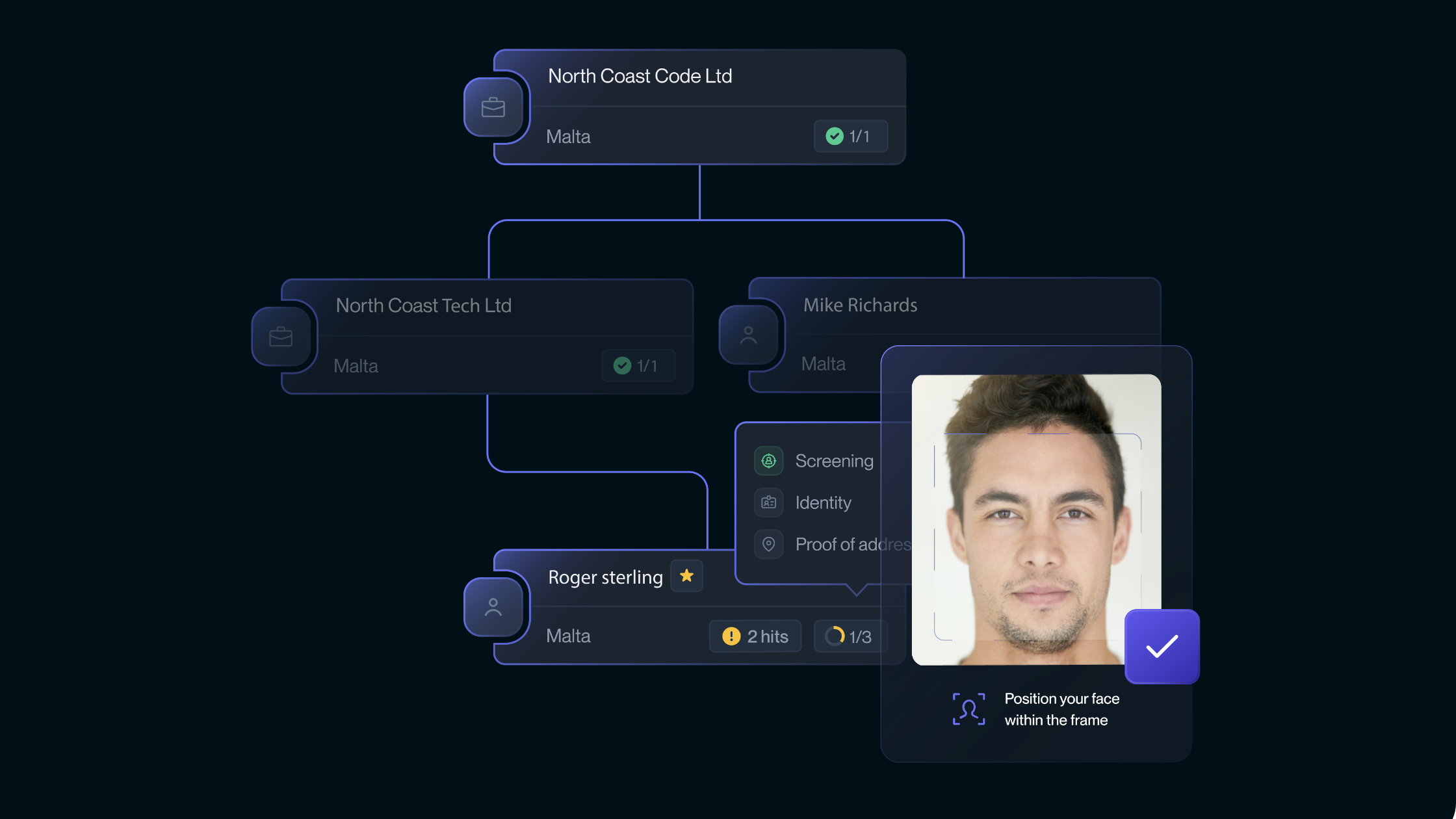
Binderr visualises the complete ownership chain from the front‑facing entity down to the ultimate beneficial owner, across jurisdictions and entity layers.
This structured mapping allows practitioners to:
- Identify breaks or anomalies in ownership continuity
- Detect circular ownership patterns
- Highlight high‑risk jurisdictions within a structure
- Surface undisclosed control relationships
The result is a clear, defensible ownership narrative that can be used for onboarding decisions, supervisory assessments, or enforcement support.
Collectively, this approach shifts corporate due diligence from reactive document collection to proactive corporate intelligence, enabling earlier red‑flag detection, faster onboarding risk assessment, and more effective cross‑border cooperation.
Making Cooperation Work: What Practitioners Need
The session concluded with practical recommendations aligned with the needs of regulators, FIUs, supervisory authorities, and VASPs across MENA FATF countries:
- Standardised corporate data exchange in machine‑readable formats.
- Pre‑investigation corporate intelligence to map ownership before formal MLA requests.
- Structured public‑private information sharing on corporate red flags.
By combining regulatory alignment with interoperable corporate data infrastructure, enforcement agencies can reduce delays and improve beneficial ownership transparency outcomes.
Strengthening Public‑Private Collaboration in MENA FATF Jurisdictions
Binderr’s participation in the UNOCT–MENAFATF webinar reflects its commitment to supporting jurisdictions across the MENA FATF region with modern compliance infrastructure.
As a business technology platform serving both private and public sector entities, Binderr provides:
- KYB software for business verification
- UBO verification and ownership structure mapping
- AI‑powered AML screening
- Registry and data aggregation services
- Customer risk assessment tools
By bridging registry fragmentation and automating corporate verification workflows, Binderr helps regulated entities improve onboarding integrity while equipping supervisors with stronger oversight capabilities.
Learn More
To explore how Binderr empowers corporate transparency and cross‑border compliance:
For further insights from Binderr’s contribution to the UNOCT–MENAFATF Practical Webinar, contact the Binderr team.
Book a Strategy Session
If you are a regulator, FIU, bank, VASP, or compliance leader operating across MENA FATF jurisdictions and want to strengthen your corporate transparency framework, speak directly with our regtech specialists.
Book a session with our team here.
Binderr is a global compliance technology platform providing digital onboarding, KYB, UBO verification, AML screening, and cross‑jurisdictional registry aggregation solutions for regulated industries and supervisory bodies worldwide.