-1-1400x800.webp?w=3840&q=75)
German companies must balance fast digital onboarding with strict compliance requirements, including identity verification, beneficial owner checks, risk assessment, and audit records. Modern KYC software Germany solutions combine identity verification, AML screening, and KYB into one streamlined process, forming the backbone of scalable KYC solutions Germany for regulated businesses.
Financial crime oversight is intensifying across the country. Germany’s FIU received 265,708 suspicious transaction reports in 2024 and issued 87,731 analysis reports to investigative and security authorities. This scale highlights why KYC software, AML screening tools, and ongoing monitoring systems are now critical for German businesses operating under strict regulatory expectations. As a result, demand for the best KYC Germany platforms continues to grow across fintech, banking, insurance, and digital services.
This guide compares the best KYC software for German companies in 2026, evaluating providers based on compliance suitability, verification methods, feature depth, implementation ease, and pricing transparency.
Binderr KYC Software for German Companies
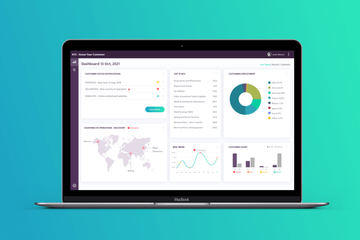
Binderr is a unified compliance platform for German companies that goes beyond basic identity checks, combining KYC, KYB, AML screening, risk scoring and ongoing monitoring in one workspace.
With Binderr, compliance teams can:
- Verify identity documents from more than 230 countries
- Compare customer selfies with identity documents using biometric checks
- Use liveness detection to prevent spoofing attempts
- Screen individuals and businesses against sanctions, PEPs and watchlists
- Assign dynamic risk scores using KYC, KYB and AML data
- Monitor customers continuously for changes in risk
Quick Comparison of the Best KYC Providers for German Companies
Compare the best KYC software Germany options, including KYC providers, AML screening tools, identity verification platforms, and BaFin-compliant onboarding solutions for German companies.
This comparison helps you evaluate leading KYC solutions Germany based on identity verification, KYB, AML compliance, and automated customer due diligence capabilities.
Provider | ID verification | Biometrics and liveness | AML screening | KYB and UBO checks | Dynamic risk scoring | Automated CDD and EDD | Custom onboarding forms |
Binderr | ✅ | ✅ | ✅ | ✅ | ✅ | ✅ | ✅ |
Sumsub | ✅ | ✅ | ✅ | ✅ | ✅ | ✅ | ✅ |
Entrust | ✅ | ✅ | ✅ | ❌ | ❌ | ❌ | ❌ |
Jumio | ✅ | ✅ | ✅ | ❌ | ✅ | ❌ | ❌ |
Nect | ✅ | ✅ | ✅ | ✅ | ✅ | ❌ | ❌ |
Start Using Binderr for Free
Essential Features to Look for in German KYC Software
Choosing the right kyc software germany requires evaluating identity verification, AML screening, KYB capabilities, and GDPR-compliant data handling. The most effective platforms combine automated onboarding, risk-based workflows, and ongoing monitoring to support full regulatory compliance.
When comparing kyc solutions germany, it is important to focus on end-to-end coverage rather than isolated features, especially if you are looking for the best kyc germany option for your organisation.
Identity Verification: Document Capture, Validation and Authenticity Checks
Modern KYC software should support seamless identity verification across German Personalausweis, passports, residence permits, EU identity cards and even driving licences where applicable, using NFC chip reading for high-assurance data extraction.
Advanced OCR and data extraction ensure fast onboarding, while document expiry checks, stolen or lost document screening and template-based security feature analysis help detect tampering and forgeries. These capabilities are essential for scalable identity verification software in Germany, ensuring compliance with AML and GDPR requirements while reducing manual review effort.
Biometric Verification: Face Matching, Liveness Detection and Fraud Prevention
Biometric KYC systems rely on selfie-to-document face matching combined with passive and active liveness detection to confirm that a real, live person is present during onboarding. Strong platforms also include presentation attack detection, injection attack prevention, replay detection and increasingly deepfake detection to counter AI-generated fraud.
Manual escalation workflows ensure edge cases are reviewed by compliance teams. With Germany’s BSI warning about deepfake risks in biometric systems, robust fraud prevention is critical for secure digital identity verification.
AML Screening: Sanctions, PEP and Adverse Media Monitoring
Effective AML screening software should continuously check customers against global sanctions lists, PEP databases, watchlists, adverse media sources and enforcement actions, while also screening entities and related individuals such as relatives and close associates.
Key capabilities include fuzzy name matching, nationality and date-of-birth correlation, false-positive resolution tools and transparent evidence links for auditability. This ensures German companies can meet AML obligations under the GwG while maintaining accurate, risk-based customer due diligence.
Access AML Screening Tools FREE
Dynamic Risk Assessment: Unified Customer Risk Scoring
A modern KYC platform should generate a unified risk score by combining multiple risk dimensions such as customer type, jurisdiction, product and delivery-channel risk, ownership complexity, PEP exposure, sanctions risk, adverse media signals, expected transaction behaviour, source of funds and industry classification.
This holistic approach enables German companies to apply a consistent, data-driven risk-based approach to customer onboarding and ongoing monitoring, improving both compliance accuracy and operational efficiency.
CDD and EDD Workflows: Risk-Based Due Diligence Automation
Customer due diligence software should translate risk scores into automated workflows that trigger additional onboarding questions, request supporting documentation and escalate high-risk cases for senior approval.
Enhanced due diligence processes may include increased review frequency, transaction or account restrictions, and structured rationale capture for every decision. This ensures that German companies can demonstrate clear, auditable compliance with AML requirements while maintaining efficient, scalable onboarding operations.
KYB and UBO Verification: Business Identity and Ownership Transparency
For business onboarding, KYB software must verify company identities using German and international registry access, validate registration numbers and confirm company status while mapping directors, shareholders and ultimate beneficial owners.
Advanced systems calculate ownership structures, screen connected individuals for AML risk and support ongoing corporate monitoring. Integration with Germany’s Transparenzregister and automated UBO identification workflows is essential for maintaining transparency and meeting regulatory expectations under the GwG.
APIs, SDKs and No-Code Integrations: Developer and Workflow Flexibility
Leading KYC platforms should offer flexible integration options including REST APIs, web and mobile SDKs for iOS and Android, hosted verification links and real-time webhooks. No-code workflow builders enable compliance teams to design onboarding journeys without engineering support, while sandbox environments and detailed API documentation accelerate implementation.
White-labelling options and German-language interfaces further support localisation, making it easier for companies to embed identity verification seamlessly into their existing digital products.
Case Management and Auditability: Compliance Oversight and Evidence Trails
Strong KYC systems centralise all customer data into unified profiles with structured review queues, role-based permissions and four-eyes approval workflows to ensure proper oversight. Features like reason codes, internal notes, document expiry reminders and full decision histories create a transparent audit trail for regulators.
Exportable evidence packs and compliance dashboards further support reporting obligations, helping German companies demonstrate accountability, traceability and regulatory readiness across all KYC and AML processes.
Automate Identity Verification and AML Screening with Binderr
- Verify identity documents using automated AI-based validation
- Match customer selfies with official ID photos through biometric checks
- Detect document tampering, forgery and digital manipulation attempts
- Screen individuals and businesses against sanctions, PEP and watchlists
- Identify adverse media and potential financial crime exposure early
- Combine identity and AML signals to assess overall customer risk in real time
Best KYC Software in Germany
Finding the best KYC Germany solution requires comparing providers that support identity verification, AML screening, and GDPR-compliant onboarding for regulated businesses.
This section gives a quick overview of leading KYC providers in Germany, including Binderr, Sumsub, and other top KYC solutions Germany companies rely on in 2026.
Binderr: Best for Unified KYC, KYB and AML Compliance
Binderr is designed as an all-in-one compliance workspace that brings together the full customer lifecycle, from onboarding to ongoing monitoring, into a single, connected system. Instead of relying on separate tools for identity verification, AML screening, business verification and risk management, Binderr centralises everything so compliance teams can work faster, reduce manual effort and maintain a clear audit trail across every decision.
This unified approach is especially valuable for German companies operating under strict regulatory expectations, where fragmented systems often lead to inconsistent data, duplicated checks and operational inefficiencies. By linking onboarding data directly with risk scoring, screening results and monitoring alerts, Binderr helps organisations maintain continuous compliance rather than treating it as a one-time checkpoint.
Key features:
- AI-assisted identity document verification: Automatically validates identity documents using AI-driven checks, helping detect tampering, inconsistencies and fraudulent submissions while improving onboarding speed.
- Biometric face matching and liveness detection: Confirms that the person submitting the document is physically present and matches the identity document, reducing impersonation and deepfake-related risks.
- KYC and KYB onboarding workflows: Supports both individual and business onboarding, including structured data collection, company verification and beneficial ownership mapping for corporate customers.
- Comprehensive AML screening and monitoring: Screens customers against sanctions lists, PEP databases, watchlists and adverse media, with continuous monitoring to detect changes in risk status over time.
- Dynamic risk scoring and automated due diligence: Assigns real-time risk levels based on customer data, behaviour and external signals, automatically triggering CDD or EDD workflows when higher risk is detected.
- Audit-ready compliance infrastructure: Provides full audit trails, case management tools, approval workflows and reporting capabilities, ensuring every decision is traceable and ready for regulatory review.
Best for: German companies that want a single platform to manage KYC, KYB, AML screening and ongoing monitoring without relying on multiple disconnected compliance tools.
Binderr’s key advantage lies in how these features work together. Instead of operating in isolation, onboarding, screening and monitoring are connected within a single system, allowing compliance teams to move seamlessly from customer intake to ongoing risk management without switching tools or manually transferring data.
Sumsub: Best for Global Verification and Compliance Operations
Sumsub is a widely used identity verification and compliance platform designed for companies that operate across multiple jurisdictions and need a flexible, end-to-end onboarding and monitoring system. It is particularly popular among fintechs, crypto platforms, gaming companies and global marketplaces that must balance fast user onboarding with strict regulatory requirements.
Rather than focusing on a single verification step, Sumsub combines identity verification, AML screening, KYB checks and transaction monitoring into a single configurable workflow that can be adapted to different risk levels and regulatory environments, making it a strong option within the broader landscape of KYC solutions Germany companies evaluate.
Key features:
- Document and biometric verification: Verifies government-issued IDs using OCR, facial recognition and liveness detection to confirm that the user is physically present and matches their identity document.
- Configurable verification levels: Allows businesses to design different onboarding flows based on risk, geography or customer type, from basic checks to enhanced due diligence.
- AML screening: Automatically screens users against global sanctions lists, PEP databases, watchlists and adverse media sources to identify potential compliance risks.
- Ongoing AML monitoring: Continuously rechecks customers after onboarding to detect changes in risk status, such as new sanctions listings or adverse media updates.
- Business verification (KYB): Supports company onboarding by verifying legal entities, identifying beneficial owners and mapping corporate structures for transparency.
- Transaction monitoring: Analyses user activity patterns to detect suspicious behaviour, flag anomalies and support regulatory reporting obligations.
Sumsub allows businesses to combine identity checks, biometrics, database verification and AML screening in configurable workflows. Its AML tools cover sanctions, PEPs, watchlists and adverse media, with ongoing monitoring available.
Best for: International fintech, crypto, gaming and online platforms that need scalable, configurable KYC, KYB, AML screening and transaction monitoring in one unified system.
Entrust: Best for Enterprise Identity Orchestration
Entrust Identity Verification, formerly known as Onfido, is designed for organisations that need a highly structured and configurable approach to identity verification at scale. It is particularly suited to enterprises operating across multiple jurisdictions where compliance requirements, user journeys and risk profiles vary significantly.
Rather than offering a one-size-fits-all verification flow, Entrust focuses on orchestration, allowing businesses to design, control and automate identity processes end to end while maintaining strong auditability and security standards.
Key features:
- Document verification: Supports global identity documents with automated checks for authenticity, tampering and data extraction, helping reduce manual review effort.
- Facial similarity and biometric checks: Uses facial recognition and liveness detection to confirm that the person presenting the document is its legitimate owner.
- Workflow configuration: Enables businesses to build custom verification journeys based on geography, risk level or customer type, ensuring flexible compliance alignment.
- Web and mobile SDKs: Provides ready-to-use SDKs that allow seamless integration into web and mobile applications without compromising user experience.
- REST API and EU environment: Offers robust API access with dedicated EU infrastructure options to support data residency and regulatory requirements.
- Enterprise security ecosystem: Integrates with broader Entrust security and identity solutions, supporting identity proofing for regulated European trust-service and KYC/AML use cases.
Best for: Large financial institutions and global enterprises that require configurable identity workflows, strong compliance controls and mature developer tooling for integrating identity verification into complex systems.
Onfido’s identity verification capabilities are now fully integrated into Entrust, combining established verification technology with enterprise-grade security infrastructure. The platform is designed to deliver auditable, scalable identity assurance that can be embedded into complex compliance and onboarding ecosystems.
Jumio: Best for Biometric Identity Verification and AML Screening
Jumio is a well-established global identity verification provider that helps businesses confirm the authenticity of users and assess financial crime risk in a single, integrated workflow. It is widely used by enterprises that need to onboard customers quickly while maintaining strong compliance standards across multiple jurisdictions.
By combining advanced biometric technology with AML screening capabilities, Jumio enables organisations to reduce fraud, meet regulatory expectations, and streamline customer due diligence at scale, making it a strong contender among KYC software Germany providers used by international firms.
Key features:
- Automated ID document verification: Jumio verifies passports, ID cards, and other government-issued documents using AI-powered analysis to detect tampering, forgery, and inconsistencies in real time.
- Facial biometrics and selfie matching: The platform compares a live selfie with the document photo to confirm identity, helping prevent impersonation and synthetic identity fraud.
- Liveness detection technology: Advanced liveness checks ensure the user is physically present during verification, protecting against spoofing attempts such as photos, videos, or deepfakes.
- AI-driven fraud detection: Machine learning models analyse behavioural and document signals to identify suspicious patterns and reduce fraudulent onboarding attempts.
- AML screening and compliance checks: Jumio screens users against global sanctions lists, PEP databases, and adverse media sources to support anti-money laundering obligations.
- API and enterprise integration: Jumio offers flexible APIs and SDKs that allow businesses to embed identity verification and compliance checks directly into their onboarding flows.
Best for: Enterprises that need a unified solution for identity verification, biometric authentication, and AML screening with strong global coverage and enterprise-grade security.
Jumio combines identity verification with AML screening and monitoring. Its screening product covers global and regional sanctions, PEP data and adverse media, while its identity verification products use AI, machine learning and biometrics.
Nect: Best for Automated Identity Verification in Germany
Nect is a Germany-based identity verification provider designed to make digital onboarding as fast and frictionless as possible. Instead of relying on manual review processes or live video agents, Nect uses a fully automated verification flow that combines document analysis, biometric matching and AI-driven fraud detection. This makes it particularly attractive for companies that prioritise speed, user experience and high conversion rates during customer onboarding within the KYC solutions Germany ecosystem.
At its core, Nect focuses on removing friction from identity verification while maintaining strong security standards aligned with German market expectations. Its approach is especially relevant for industries where users expect instant onboarding, such as fintech apps, online platforms and digital services.
Key features:
- Automated document verification: Nect uses AI to scan and validate identity documents in real time, checking for authenticity, tampering and consistency of data without human intervention.
- Biometric comparison: The system matches the user’s selfie with the document photo using facial recognition technology to confirm identity with high accuracy.
- Selfie-video verification: Instead of static images alone, Nect can analyse short video sequences to improve liveness detection and reduce spoofing risks.
- Digital manipulation detection: Advanced algorithms identify edited, screen-captured or artificially altered documents to prevent fraud attempts.
- Reusable identity via Nect Wallet: Once verified, users can reuse their digital identity across multiple services, significantly reducing repeat onboarding friction.
- Age verification capabilities: Nect also supports age verification use cases, making it suitable for platforms with age-restricted products or services.
Best for: Nect is best for German companies that want fast, fully automated identity verification with a strong user experience and minimal onboarding friction.
Nect is primarily an identity specialist. Companies needing integrated AML screening, ongoing customer monitoring, KYB, UBO mapping and risk-based due diligence may require additional systems.
KYC Software Pricing in Germany
KYC software pricing in Germany varies significantly depending on whether a provider offers simple identity verification or a full compliance stack that includes AML screening, KYB, ongoing monitoring and risk management. While some tools appear inexpensive at first glance, the total cost often increases once you factor in per-check fees, biometric verification, monitoring, and manual review charges.
Binderr stands out in this landscape by offering transparent, predictable pricing that starts at €99/month (Starter plan) and €349/month (Pro plan), along with a free account and included credits to get started. Unlike many competitors that rely heavily on custom enterprise quotes, Binderr combines KYC, KYB, AML screening and ongoing monitoring in a single platform, helping companies avoid fragmented pricing across multiple tools.
This makes it particularly attractive for growing German companies that want cost clarity without sacrificing compliance depth or scalability.
Provider | Published starting price | Pricing structure | Free access |
Binderr | Starter €99; Pro €349 monthly | Transparent subscription with usage-based scaling | Free account + included credits |
Sumsub | Public plan page plus enterprise pricing | Per applicant with commitments | Trial availability |
Entrust | Not publicly listed | Custom volume pricing | Demo |
Jumio | Not publicly listed | Custom quote | Demo |
Nect | Not publicly listed | Custom quote | Demo |
Simplify the KYC and Customer Due Diligence Process Using Binderr
Completing an identity check is only one part of customer due diligence. Compliance teams must combine KYC, KYB and AML data to assess risk and decide on standard or enhanced due diligence.
Binderr streamlines this process by connecting each stage in one workflow:
- Collect customer information: Use forms to gather personal, business and risk data.
- Verify the individual: Check ID, extract data and match the face.
- Verify the business: Pull registry data, status, directors and shareholders.
- Run AML screening: Screen against sanctions, PEPs, watchlists and adverse media.
- Calculate the risk score: Combine all data into a dynamic risk rating.
- Monitor the relationship: Continuously rescreen and alert on risk changes.
How to Choose the Right KYC Provider in Germany
Choosing the right KYC provider in Germany requires evaluating KYC software Germany, AML compliance tools, and identity verification solutions that align with BaFin requirements, GwG obligations, and GDPR standards.
Businesses should compare KYC providers in Germany based on AML screening capabilities, KYB and UBO verification, risk-based compliance workflows, and seamless API integration for scalable customer onboarding.
Define your regulatory obligations
Start by clearly identifying whether your business falls under the German GwG as an obliged entity, which determines your full AML and KYC responsibilities. Map the relevant supervisory authority such as BaFin or FIU, and define which customer types, transactions, and risk thresholds trigger verification requirements.
Ensure you understand when BaFin guidance applies, what records must be stored for auditability, and how long retention periods last under German AML law. For cross-border operations, also assess EU AML rules and jurisdictional differences to ensure your kyc software germany setup supports multi-country compliance workflows and regulatory reporting obligations.
Map the complete compliance process
Break down your end-to-end compliance journey to determine whether you need basic identity verification or a full AML compliance stack. This includes KYC onboarding, AML screening, KYB and UBO checks, and whether enhanced due diligence (EDD) is required for high-risk customers.
Consider if ongoing monitoring and transaction monitoring are necessary to detect behavioural changes over time, and whether your team needs case management tools for investigations, alerts, and regulatory reporting. A complete compliance process ensures risk-based onboarding and continuous AML control.
Confirm accepted verification methods
Never assume that a simple selfie or automated document check is sufficient for German compliance requirements, as regulated sectors may require VideoIdent, eID, or other approved verification methods. Ask providers which identity verification methods are supported in Germany, how they align with sector-specific regulations, and what audit evidence is generated for compliance reviews.
Clarify how edge cases, failed verifications, and uncertain matches are handled, and whether human review is included in the workflow to ensure regulatory-grade identity assurance and fraud prevention.
Test German and international documents
A strong KYC system must reliably process a wide range of identity documents, so testing should include German ID cards, passports, residence permits, EU identity cards, and non-EU passports. It is also important to include older document versions, newly issued formats, and edge cases such as damaged, expired, or low-quality scans.
This ensures the identity verification software can handle real-world onboarding scenarios, reduce false rejections, and maintain high accuracy across diverse customer populations in Germany and international markets.
Test fraud and liveness controls
Fraud testing is essential to evaluate how well the KYC system detects identity manipulation and advanced attack methods. Simulate real-world threats such as printed photos, screen replays, masks, altered documents, duplicate identities, virtual cameras, and deepfake or injection-based attacks.
Also test environmental challenges like poor lighting, low-end devices, and unstable internet connections. This helps assess the strength of liveness detection, biometric verification, and anti-fraud models in preventing synthetic identities and ensuring secure onboarding.
Review GDPR, security and outsourcing risk
When selecting a KYC provider, ensure full compliance with GDPR, data minimisation principles, and secure handling of biometric and identity data. For regulated financial institutions, ICT third-party risk management is critical, especially under BaFin’s DORA framework, which requires due diligence, contractual safeguards, and ongoing vendor monitoring.
Evaluate data residency, encryption standards, subprocessors, and audit certifications to ensure the provider meets strict EU security and outsourcing requirements for financial-grade compliance infrastructure.
Run a production-like pilot
A real-world pilot is essential to validate performance before full deployment, focusing on key operational and compliance metrics. Measure onboarding completion rates, first-time pass rates, false rejection and false-positive rates, and average verification time.
Also track manual review workload, fraud detection effectiveness, customer drop-off points, API reliability, and overall compliance team efficiency. A production-like pilot ensures the KYC solution performs reliably under real traffic conditions and meets both user experience and regulatory expectations.
Manage End-to-End Compliance with Binderr
Compliance doesn’t end after identity checks. German companies must keep customer data updated, react to risk changes, and document all decisions throughout the relationship.
Binderr supports the complete compliance lifecycle:
- KYC: Verify individual identities using document, biometric and liveness checks
- KYB: Verify businesses using official registry and corporate data
- Ownership analysis: Identify UBOs and map complex corporate structures
- AML screening: Check individuals and entities against sanctions, PEPs, watchlists and adverse media
- Risk assessment: Calculate dynamic customer and business risk scores
- Ongoing monitoring: Receive alerts when customer risk or screening status changes
Bottom Line
The best KYC software for German companies is the one that fits your GwG and EU AML obligations while supporting reliable identity verification, AML screening, KYB checks, ongoing monitoring, and GDPR-compliant data handling. The right platform should reduce manual work and strengthen auditability through a single, well-integrated workflow.
Binderr is a strong option for unified KYC, KYB and AML management, while Sumsub suits high-volume global onboarding. Entrust works well for enterprise identity orchestration, Jumio focuses on biometrics and AML screening, and Nect is tailored to streamlined German identity verification and eID use cases. These platforms are often shortlisted by organisations searching for the best kyc germany solutions that balance compliance depth with operational efficiency.