%20Services-1-1400x800.png?w=3840&q=75)
Lithuania has become one of the most advanced fintech and financial hubs in the EU, but this growth comes with strict AML compliance Lithuania expectations. Businesses operating here must navigate a fast evolving regulatory landscape where lithuania aml compliance is central to market access, licensing, and long term operational trust.
Lithuania’s Financial Crime Investigation Service received more than 102,000 suspicious transaction reports in 2025, nearly 25% more than in 2024. This sharp rise highlights how AML compliance Lithuania requirements are tightening across banks, crypto platforms, and payment institutions. It also signals increased scrutiny on customer onboarding, transaction monitoring, and reporting obligations across all regulated sectors, reinforcing the importance of strong lithuania aml controls.
In this guide, we will break down Lithuania’s AML framework in detail, including the key laws and regulators, step-by-step compliance requirements, risk assessment expectations, KYC and KYB obligations, beneficial ownership rules, reporting duties, and what is changing in 2026 and beyond so your business can stay compliant and audit ready.
Binderr AML Compliance Software for Lithuania
Managing AML compliance in Lithuania goes beyond a one-time check. Businesses must verify individuals and companies, identify beneficial owners, assess risk, and continuously monitor customers.
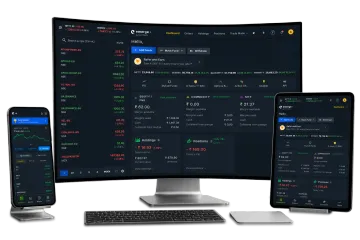
Binderr brings these compliance checks into one platform to streamline AML workflows in Lithuania.
- KYC and Identity Verification: Verify individuals using AI document checks, biometrics, liveness, OCR and fraud detection
- KYB and Business Verification: Retrieve corporate data from global registries and verify companies, directors and shareholders
- AML Screening: Screen individuals and businesses against sanctions, PEPs, watchlists and adverse media
- UBO Identification: Identify ultimate beneficial owners behind corporate entities
- Dynamic Risk Assessment: Automatically score customer and business risk using KYC, KYB and AML data
- CDD and EDD Workflows: Combine verification, screening, risk scoring and due diligence into one process
What Is AML Compliance in Lithuania?
AML compliance Lithuania refers to the set of policies, procedures and controls businesses use to prevent money laundering, terrorist financing, sanctions evasion and other financial crime. It follows a risk-based approach, meaning customers are assessed individually.
In practice, it combines KYC (identity checks), KYB (company verification), AML screening (sanctions, PEPs and adverse media), risk assessment, CDD, EDD for higher-risk cases, and ongoing monitoring after onboarding. The FCIS (FNTT) requires businesses to continuously assess ML/TF risks and apply appropriate controls, making lithuania aml compliance an ongoing process rather than a one-time check.
Begin Your AML Compliance Journey with Binderr
Key AML Laws and Regulations in Lithuania in 2026
Lithuania’s AML framework in 2026 is shaped by national law and evolving EU directives governing financial crime prevention, forming the foundation of lithuania aml obligations for regulated entities.
Businesses must align with the Law on Prevention of Money Laundering and Terrorist Financing alongside EU AML directives and supervisory guidance.
Law on the Prevention of Money Laundering and Terrorist Financing
Lithuania’s AML/CFT framework is based on the Law on the Prevention of Money Laundering and Terrorist Financing, which sets mandatory requirements for regulated entities. It covers key obligations including KYC, UBO verification, CDD, EDD, transaction monitoring, STR reporting, internal controls, record keeping, and staff training.
Article 29 requires firms to maintain AML policies covering risk assessment, sanctions screening, reporting to the FCIS, and regular customer data updates, with clearly assigned AML responsibilities, all forming the core of AML compliance Lithuania requirements.
EU AML Framework
Alongside national legislation, Lithuania operates within the broader EU AML framework, which sets common standards across member states, including EU directives, FATF principles, and sanctions regimes. The new EU AML package is being introduced to unify supervision across Europe.
However, Regulation (EU) 2024/1624 (AMLR) generally applies from 10 July 2027, making 2026 a preparation year as businesses align their systems ahead of implementation and strengthen their lithuania aml readiness.
EU AML Directive 2024/1640
The EU AML Directive 2024/1640 strengthens AML supervision and coordination across EU regulators and financial intelligence units. It improves beneficial ownership transparency via central registers, with key provisions due by 10 July 2026, while the broader EU AML framework applies from July 2027.
For Lithuania, this means updated AML laws, stronger powers for the FCIS and Bank of Lithuania, and better cross-border cooperation, further reinforcing AML compliance Lithuania standards.
Lithuania's International Sanctions Framework
Lithuania enforces strict EU, UN, and national sanctions rules, supervised by the FCIS. Businesses must screen customers, owners, and transactions against sanctions lists and restricted jurisdictions as part of their lithuania aml obligations.
Sanctions compliance is separate from AML screening: AML detects suspicious activity, while sanctions enforce legal prohibitions. Both must be applied together for full AML compliance Lithuania effectiveness.
Who Regulates AML Compliance in Lithuania?
AML compliance in Lithuania is supervised by a combination of national and EU-level authorities responsible for preventing financial crime and ensuring regulatory adherence across the lithuania aml ecosystem.
Key regulators include the Financial Crime Investigation Service (FCIS), the Bank of Lithuania, and emerging EU bodies overseeing AML compliance Lithuania, AML regulators Lithuania, FCIS Lithuania, and Bank of Lithuania supervision.
Financial Crime Investigation Service (FCIS/FNTT)
The Financial Crime Investigation Service (FCIS/FNTT) is Lithuania’s main Financial Intelligence Unit (FIU) and AML authority. Its Money Laundering Prevention Board receives and analyses suspicious transaction reports (STRs), develops risk indicators, and shares intelligence with local and international partners, playing a central role in lithuania aml enforcement and AML compliance Lithuania oversight.
Bank of Lithuania
The Bank of Lithuania is the main supervisor of financial institutions, including banks, payment firms, insurers, investment firms, and crypto-asset providers. It oversees over 800 entities using a risk-based approach to enforce AML/CFT compliance.
In 2026, AML remains a key priority, with inspections focusing on customer due diligence, transaction monitoring, and governance across Lithuania’s financial sector, strengthening overall AML compliance Lithuania expectations.
What Is AMLA's Role in 2026?
The Anti-Money Laundering Authority (AMLA) is the EU body being set up to centralise AML supervision. In 2026, it is still in a preparatory phase, building its framework and identifying high-risk institutions. The first selections for supervision are planned for 2027, with direct oversight starting in 2028, marking the shift from preparation to enforcement and shaping the future of lithuania aml regulation.
Build a Better Compliance Process
How to Build an AML-Compliant Customer Onboarding Process in Lithuania
Building an AML compliance Lithuania onboarding process requires integrating KYC, KYB, AML screening, and risk assessment into a single risk-based workflow aligned with FCIS and Bank of Lithuania expectations under lithuania aml regulations.
This section explains how businesses can structure customer onboarding in Lithuania using AML compliance requirements, beneficial ownership checks, CDD/EDD procedures, and ongoing monitoring to meet 2026 regulatory standards.
Step 1: Collect Customer Information
Collecting customer information is the first step in AML compliance in Lithuania and forms the foundation of effective KYC and KYB processes. This includes gathering personal details for individuals or corporate data for businesses such as full name, registration details, address, and intended purpose of the relationship.
This information is essential for initiating customer due diligence (CDD) Lithuania requirements and helps establish a baseline for AML risk assessment Lithuania. Accurate data collection ensures compliance with lithuania aml regulations and supports downstream screening and verification processes.
Step 2: Verify Customer Identity
Customer identity verification is a core requirement of AML compliance Lithuania 2026, ensuring that individuals are who they claim to be. This involves validating official identity documents, biometric checks, and other supporting evidence to confirm authenticity and reduce fraud risk.
Strong KYC compliance Lithuania processes help prevent identity fraud, money laundering, and sanctions evasion. Using reliable verification methods also supports AML screening Lithuania and ensures alignment with lithuania aml requirements for regulated entities.
Step 3: Verify the Business Entity
Business verification is a key part of KYB compliance Lithuania, requiring organisations to confirm corporate registration details, legal status, and operational legitimacy. This typically includes checking company registration numbers, addresses, directors, and business activities.
This step ensures compliance with lithuania aml laws and helps identify shell companies or high-risk entities. It also strengthens AML risk assessment Lithuania by validating that the business is legitimate and operating within expected regulatory frameworks.
Step 4: Identify and Verify Beneficial Owners
Identifying beneficial owners is essential for AML compliance in Lithuania, as it reveals the natural persons who ultimately own or control a company. This involves analysing ownership structures, shareholding percentages, and control mechanisms.
Under Lithuania AML requirements, businesses must verify UBOs using reliable sources such as the JANGIS register and supporting documentation. This step is critical for customer due diligence Lithuania (CDD) and helps detect hidden ownership risks, ensuring full transparency in AML screening Lithuania processes.
Step 5: Conduct AML Screening
AML screening in Lithuania involves checking customers and related parties against sanctions lists, PEP databases, global watchlists, and relevant adverse media sources. This step is essential for AML compliance Lithuania as it helps identify exposure to financial crime risks such as sanctions evasion, corruption, or politically exposed persons.
Effective AML screening Lithuania processes should be performed at onboarding and continuously throughout the customer lifecycle. Businesses must ensure sanctions screening Lithuania and PEP screening Lithuania are automated and regularly updated to reflect changes in global and EU lists under lithuania aml expectations.
Run Smarter AML Checks for FREE
Step 6: Perform AML Risk Assessment
An AML risk assessment in Lithuania combines customer information, jurisdictional risk, product or service risk, ownership structure, and AML screening results to determine the overall risk level. This is a core requirement under Lithuania AML regulations and supports a risk-based approach to compliance.
The Lithuania AML risk assessment process helps businesses classify customers as low, medium, or high risk, ensuring appropriate controls are applied. Factors such as high-risk jurisdictions, complex ownership, or adverse media findings increase the overall AML compliance Lithuania risk score.
Step 7: Apply Customer Due Diligence (CDD) or Enhanced Due Diligence (EDD)
Customer Due Diligence (CDD) in Lithuania involves verifying customer identity, understanding the purpose of the relationship, and confirming beneficial ownership. For higher-risk customers, Enhanced Due Diligence (EDD) Lithuania requires deeper checks such as source of funds, source of wealth, and additional verification steps.
Under AML compliance Lithuania requirements, EDD is mandatory for high-risk customers, including PEPs or those linked to high-risk jurisdictions. This ensures lithuania aml regulations are met by applying proportionate controls based on the customer’s risk profile.
Step 8: Approve the Relationship and Begin Ongoing Monitoring
Once CDD or EDD is completed, the business can approve the customer relationship if no AML concerns are identified. This approval must be documented as part of Lithuania AML compliance requirements, ensuring a clear audit trail for regulators such as the FCIS.
Ongoing AML monitoring in Lithuania is essential after onboarding to detect changes in customer behaviour, sanctions status, or risk profile. Continuous monitoring supports AML compliance Lithuania obligations by ensuring early detection of suspicious activity and maintaining up-to-date customer risk assessments under lithuania aml standards.
Streamline AML Onboarding in Lithuania with Binderr
A compliant onboarding workflow includes collecting customer data, verifying identity, identifying beneficial owners, screening for AML risks, and determining whether CDD or EDD is required.
Binderr helps compliance teams bring these steps into one connected AML workflow.
- Collect customer and business information through configurable onboarding forms
- Verify individuals with document verification, biometric face matching and liveness detection
- Verify businesses using registry data across 200+ countries and 30,000+ data sources
- Identify and verify UBOs behind corporate customers
- Screen customers, companies, directors and UBOs against sanctions, PEPs and watchlists
- Continue monitoring customers after onboarding for emerging risk
Can Customers Be Verified Remotely in Lithuania?
Yes, remote customer verification in Lithuania is fully permitted under AML compliance Lithuania requirements, provided it follows regulated AML/KYC safeguards and approved identification methods. This is a key part of modern lithuania aml frameworks, especially for digital-first financial services and fintech onboarding.
According to Bank of Lithuania AML guidance, non-face-to-face onboarding is allowed when businesses use secure and reliable verification technologies that ensure the customer’s identity is properly validated in line with AML compliance Lithuania standards.
Accepted Remote Identification Methods in Lithuania include:
- Qualified electronic signatures (QES) for legally binding identity confirmation
- EU-compliant electronic identification (eIDAS eID schemes) recognised under lithuania aml rules
- Approved electronic identity verification systems recognised under Lithuanian AML regulations
- Video-based or live image verification (video KYC) with real-time identity checks and document validation
These methods ensure that AML compliance Lithuania obligations are met even in fully digital onboarding journeys, while maintaining strong fraud prevention and identity assurance controls.
In higher-risk cases, additional checks may be required under lithuania aml requirements, such as enhanced due diligence (EDD), extra documentation, or source of funds verification to reduce fraud and identity misuse risks.
Verify Customers in Minutes
Lithuania's Highest AML Risk Areas in 2026
Lithuania’s AML risk landscape in 2026 is shaped by the latest national risk assessment, which highlights sectors with elevated exposure to money laundering and financial crime. These findings are central to AML compliance Lithuania frameworks and help businesses apply a truly risk-based approach under lithuania aml regulations.
Understanding these high-risk areas is essential for applying effective AML compliance in Lithuania, especially for fintech, crypto, and financial service providers operating in a rapidly evolving regulatory environment.
Very High Money Laundering Risk
Virtual asset providers in Lithuania are considered very high-risk due to the pseudonymous nature of crypto transactions and exposure to illicit finance typologies. Electronic money and payment institutions are also high-risk because they process large volumes of cross-border transactions, making them vulnerable to money laundering.
These sectors require strong AML compliance Lithuania controls, including continuous screening, transaction monitoring, and enhanced due diligence (EDD) in line with lithuania aml expectations. Without robust controls, firms in these categories face significantly higher regulatory scrutiny.
High-Risk Areas Identified in the Assessment
Real estate is high risk due to large-value transactions that can be used to launder illicit funds, while money remittance services are vulnerable because of fast cross-border transfers. Accountants, auditors, and tax consultants are also high risk due to their access to financial and corporate structures that can be misused for concealment or tax-related laundering.
Lithuania’s national risk assessment of 30 sectors confirms these professions require strong AML compliance Lithuania controls, including beneficial ownership checks, AML screening, and ongoing monitoring. These requirements are a core part of lithuania aml enforcement expectations for DNFBPs and financial institutions alike.
Detect AML Risk Before and After Onboarding Using Binderr
Passing identity verification does not automatically mean a customer is low risk. A legitimate identity or company may still be linked to sanctions, PEPs, adverse media, or other financial crime risks.
Binderr combines AML screening, KYC, KYB, and ongoing monitoring to give compliance teams a complete view of customer risk.
With Binderr, businesses can:
- Screen individuals and businesses against global sanctions databases
- Detect politically exposed persons (PEPs) and related risk exposure
- Check global and regulatory watchlists
- Analyse adverse media across international sources
- Apply AI-powered matching to help reduce unnecessary false-positive alerts
- Monitor customers continuously after onboarding
AML Enforcement and Penalties in Lithuania
Lithuania enforces AML compliance Lithuania obligations through the Financial Crime Investigation Service (FCIS) and the Bank of Lithuania under a strict risk-based supervision model covering banks, fintechs, crypto-asset providers, and DNFBPs. Non-compliance with lithuania aml regulations can result in fines, licence restrictions, remediation requirements, and reputational damage, especially for failures in KYC, CDD, AML screening, transaction monitoring, and suspicious transaction reporting (STR).
Recent enforcement trends show increased scrutiny of payment institutions, electronic money institutions, and virtual asset service providers, reflecting Lithuania’s classification of these sectors as high-risk for money laundering. Supervisors actively review beneficial ownership transparency, sanctions compliance, and ongoing monitoring systems, with penalties applied for weak internal controls or delayed reporting to FCIS.
As Lithuania aligns with the evolving EU AML framework and AMLA supervision model, enforcement of AML compliance Lithuania standards is expected to become even more data-driven and cross-border focused. This makes robust lithuania aml systems essential for all regulated businesses operating in the country.
Common AML Compliance Mistakes to Avoid
Understanding the most frequent aml compliance lithuania mistakes helps businesses operating under lithuania aml regulations strengthen their KYC, KYB, and risk-based AML frameworks while avoiding regulatory penalties.
These AML compliance errors often stem from weak customer due diligence, incomplete beneficial ownership checks, and ineffective ongoing monitoring processes.
Relying Solely on Customer-Provided Information - Relying only on customer-submitted data creates AML risk, as it may be incomplete or misleading. Effective aml compliance lithuania practices require verification using independent sources such as government registries, JANGIS, sanctions lists, and adverse media tools. Cross-checking KYC and KYB data improves CDD, strengthens risk assessment, and helps detect fraud and hidden ownership under lithuania aml requirements.
Applying the Same Due Diligence to Every Customer - Applying the same due diligence to all customers weakens a risk-based AML approach. Lithuanian regulations require CDD and EDD to be adjusted based on risk factors like jurisdiction, ownership structure, transaction behaviour, and PEP status. A risk-based approach improves efficiency and ensures aml compliance lithuania obligations are met effectively, focusing resources on higher-risk customers.
Treating €15,000 as an STR Threshold - A common AML mistake is assuming STRs only apply above €15,000. In Lithuania, any transaction can trigger an STR if it is suspicious, regardless of value. The €15,000 threshold applies only to specific reporting categories like cash or crypto transactions, not suspicion-based reporting under lithuania aml rules.
Ignoring Post-Onboarding Risk - AML compliance continues after onboarding, as customer due diligence (CDD) applies throughout the relationship. In Lithuania, businesses must continuously monitor customers for changes in risk, including ownership, sanctions exposure, transaction behaviour, and adverse media. Ongoing monitoring is a core part of aml compliance lithuania, ensuring firms detect when low-risk clients become higher risk and escalate to enhanced due diligence (EDD) when needed.
Treating Sanctions Screening as a One-Time Check - Sanctions screening is an ongoing AML requirement because sanctions lists change frequently. In Lithuania, businesses must continuously screen customers, beneficial owners, and counterparties against EU, UN, and other sanctions lists. Without ongoing monitoring, firms risk breaching lithuania aml obligations by dealing with sanctioned entities, facing penalties, and suffering reputational damage. Continuous screening strengthens overall aml compliance lithuania frameworks and ensures real-time risk detection.
Manage End-to-End AML Compliance with Binderr
AML compliance in Lithuania involves several connected steps, not a single check. Businesses must verify identity, validate companies, identify ownership, screen for financial crime risk, assess risk levels, apply CDD or EDD, and continue monitoring after onboarding. Binderr brings these capabilities together within one compliance platform.
With Binderr, you can:
- Verify individuals using AI-powered KYC checks, including document verification, biometric matching and liveness detection
- Validate companies through KYB checks using global registry data, including directors, shareholders and status
- Identify and verify ultimate beneficial owners (UBOs) and map ownership structures across jurisdictions
- Screen customers and related parties against sanctions, PEP lists, watchlists and adverse media
- Automate risk scoring using combined KYC, KYB and AML data
- Support CDD and EDD workflows with structured onboarding, monitoring and audit-ready records
Bottom Line
Lithuania’s AML framework in 2026 requires a risk-based approach covering KYC, beneficial ownership checks, CDD/EDD, ongoing monitoring, and timely reporting to the FCIS. With rising STR volumes and increased scrutiny of fintech, payments, and crypto sectors, aml compliance lithuania expectations remain high across all regulated industries.
EU AML reforms, including the AML Regulation applying from July 2027 and the emerging AMLA framework, are also driving greater harmonisation across lithuania aml standards. As a result, 2026 is a key year for businesses to strengthen AML controls, improve data quality, and prepare for upcoming EU requirements, supported by technology and strong governance.
To streamline these obligations, Binderr provides an all-in-one platform for KYC, KYB, AML screening, and ongoing compliance monitoring.