
Cyprus has strengthened its KYC and AML compliance requirements as financial institutions, fintech companies, investment firms, and crypto businesses face increasing regulatory scrutiny across Europe. Businesses operating in Cyprus must implement strong customer due diligence, identity verification, sanctions screening, and ongoing monitoring procedures to reduce financial crime risks and maintain regulatory compliance.
According to the European Commission, money laundering activity accounts for an estimated 1% to 2% of global GDP annually, increasing the importance of effective KYC compliance frameworks for regulated businesses. Cyprus companies must adopt risk based KYC procedures, secure customer onboarding systems, and continuous AML monitoring to meet both local and EU regulatory obligations.
A strong KYC compliance process helps businesses in Cyprus improve customer trust, reduce onboarding risks, and strengthen AML compliance operations. This guide covers the Cyprus KYC process, regulatory framework, customer due diligence requirements, AML screening obligations, compliance challenges, and best practices for businesses in 2026.
Binderr KYC Compliance Software
- Biometric face matching, liveness detection, and deepfake detection
- AML screening across sanctions lists, PEPs, watchlists, and adverse media
- UBO identification and ownership structure mapping tools
- Real-time AML monitoring and automated risk scoring for CDD and EDD
- OCR document extraction and automated compliance workflows
- Compliance reporting, audit trails, and custom onboarding forms
What is KYC Compliance?
KYC compliance, or Know Your Customer compliance, is the process businesses use to verify customer identities, assess customer risk, and prevent money laundering, fraud, and financial crime. KYC compliance is a key part of AML regulations for banks, fintech companies, crypto businesses, investment firms, and other regulated entities in Cyprus.
A Cyprus KYC compliance process typically includes customer identity verification, customer due diligence (CDD), sanctions screening, PEP screening, transaction monitoring, and ongoing risk assessment. Businesses use KYC and AML compliance systems to improve fraud prevention, strengthen regulatory compliance, and support secure digital onboarding.
Try Free Binderr KYC Tools
Why is KYC Compliance Important in Cyprus?
KYC compliance plays an important role in helping Cyprus businesses prevent money laundering, financial fraud, identity theft, and regulatory violations. Strong customer due diligence, AML screening, sanctions checks, and transaction monitoring procedures help regulated businesses reduce compliance risks and improve secure customer onboarding.
Below are some key reasons why KYC and AML compliance are essential for banks, fintech companies, investment firms, crypto businesses, and other regulated entities operating in Cyprus.
Prevents Financial Crime and Fraud - Strong KYC compliance procedures help businesses detect suspicious activity, prevent identity theft, reduce fraud risks, and stop money laundering before it impacts operations. AML screening and customer verification checks improve overall financial crime prevention.
Strengthens AML Regulatory Compliance - Effective KYC and AML compliance frameworks help Cyprus businesses meet regulatory obligations, maintain accurate compliance records, and follow customer due diligence requirements under local and EU AML regulations.
Reduces Customer Onboarding Risks - Customer identity verification, sanctions screening, and risk assessment procedures help businesses identify high-risk customers early and reduce onboarding compliance risks.
Improves Business Trust and Credibility - Strong KYC compliance systems improve customer confidence, support secure business relationships, and strengthen credibility with regulators, financial institutions, and partners.
Supports Secure Digital Customer Verification - Digital KYC solutions, biometric verification, OCR document checks, and automated identity verification tools help businesses streamline secure remote onboarding processes.
Protects Businesses From Regulatory Penalties - Maintaining strong KYC and AML compliance controls helps businesses avoid regulatory fines, compliance breaches, reputational damage, and financial penalties.
KYC Compliance Process in Cyprus
A strong KYC compliance process helps Cyprus businesses verify customer identities, reduce financial crime risks, and meet AML regulatory requirements. Regulated businesses must follow structured customer onboarding, identity verification, sanctions screening, and ongoing monitoring procedures to maintain compliance.
Below are the key steps involved in the Cyprus KYC compliance process for banks, fintech companies, investment firms, crypto businesses, and other regulated entities.
Step 1: Collect Essential Customer Information
The first step in the Cyprus KYC compliance process involves collecting basic customer information during onboarding. Businesses must gather details such as full name, nationality, residential address, date of birth, contact information, and business activity to establish customer identity.
Accurate customer data collection helps businesses improve customer due diligence, reduce onboarding risks, and strengthen AML compliance procedures. Many regulated businesses in Cyprus also collect additional information based on customer risk level and industry type.
Strong customer onboarding procedures also help businesses improve compliance reporting, support secure account verification, and reduce the risk of fraudulent or incomplete customer applications.
Step 2: Verify Customer Identity Documents
Businesses must verify customer identity documents using passports, national ID cards, residence permits, utility bills, or proof of address documents. Identity verification is an important part of KYC and AML compliance as it helps prevent identity fraud and financial crime.
Many Cyprus businesses now use digital KYC solutions, biometric verification, OCR document checks, and liveness detection technology to streamline secure remote onboarding and improve customer verification accuracy.
Advanced identity verification systems also help businesses reduce manual compliance work, improve onboarding speed, and strengthen fraud prevention measures.
Automated KYC onboarding tools help businesses streamline customer verification, identity checks, and AML screening through secure digital workflows. Businesses can onboard customers faster while improving compliance accuracy and fraud prevention.
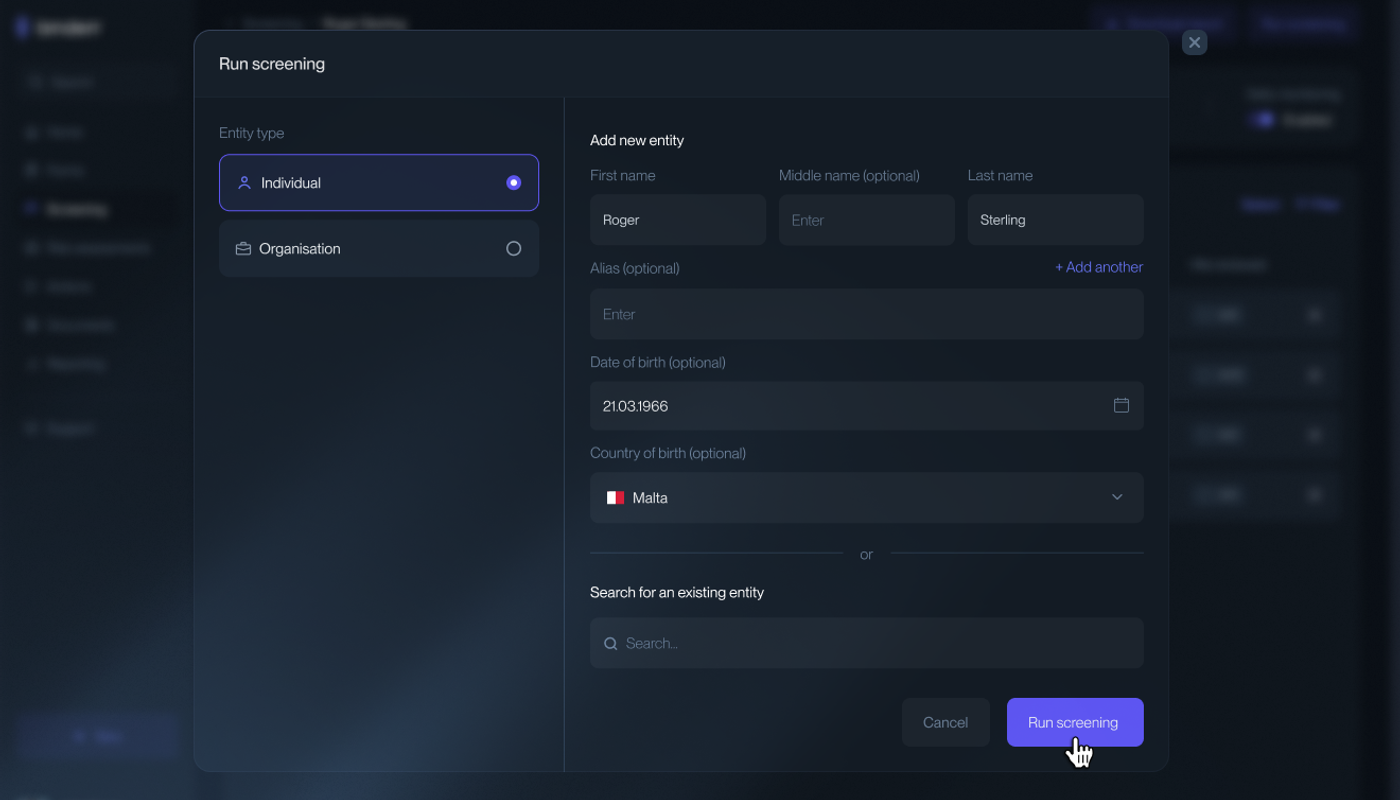
Automate customer onboarding, identity verification, sanctions screening, and compliance workflows with Binderr free compliance tools.
Step 3: Perform Customer Due Diligence Checks
Customer Due Diligence (CDD) checks help businesses assess customer risk profiles, understand business relationships, and evaluate expected transaction activity. Cyprus AML regulations require businesses to conduct customer due diligence before establishing financial or business relationships.
CDD procedures may include reviewing customer business activities, ownership structures, source of funds information, and transaction behaviour. Strong customer due diligence processes help businesses reduce compliance risks and improve AML monitoring.
Effective customer due diligence frameworks also help regulated businesses identify suspicious activity early and maintain stronger financial crime compliance controls.
Step 4: Conduct AML and Sanctions Screening
AML screening and sanctions checks help businesses identify customers linked to financial crime risks, sanctions lists, politically exposed persons (PEPs), or adverse media reports. Regulated businesses in Cyprus must conduct ongoing AML monitoring to maintain compliance with local and EU AML regulations.
Automated AML screening tools and real-time sanctions monitoring systems help businesses reduce false positives, improve risk detection, and strengthen overall KYC compliance operations.
Continuous AML monitoring also helps businesses stay compliant with evolving sanctions regulations and improve ongoing customer risk management procedures.
Modern AML screening platforms help compliance teams review sanctions hits, PEP matches, adverse media alerts, and customer risk exposure in real time. Platforms like Binderr Compliance centralise AML review workflows, helping businesses reduce false positives and strengthen ongoing monitoring.
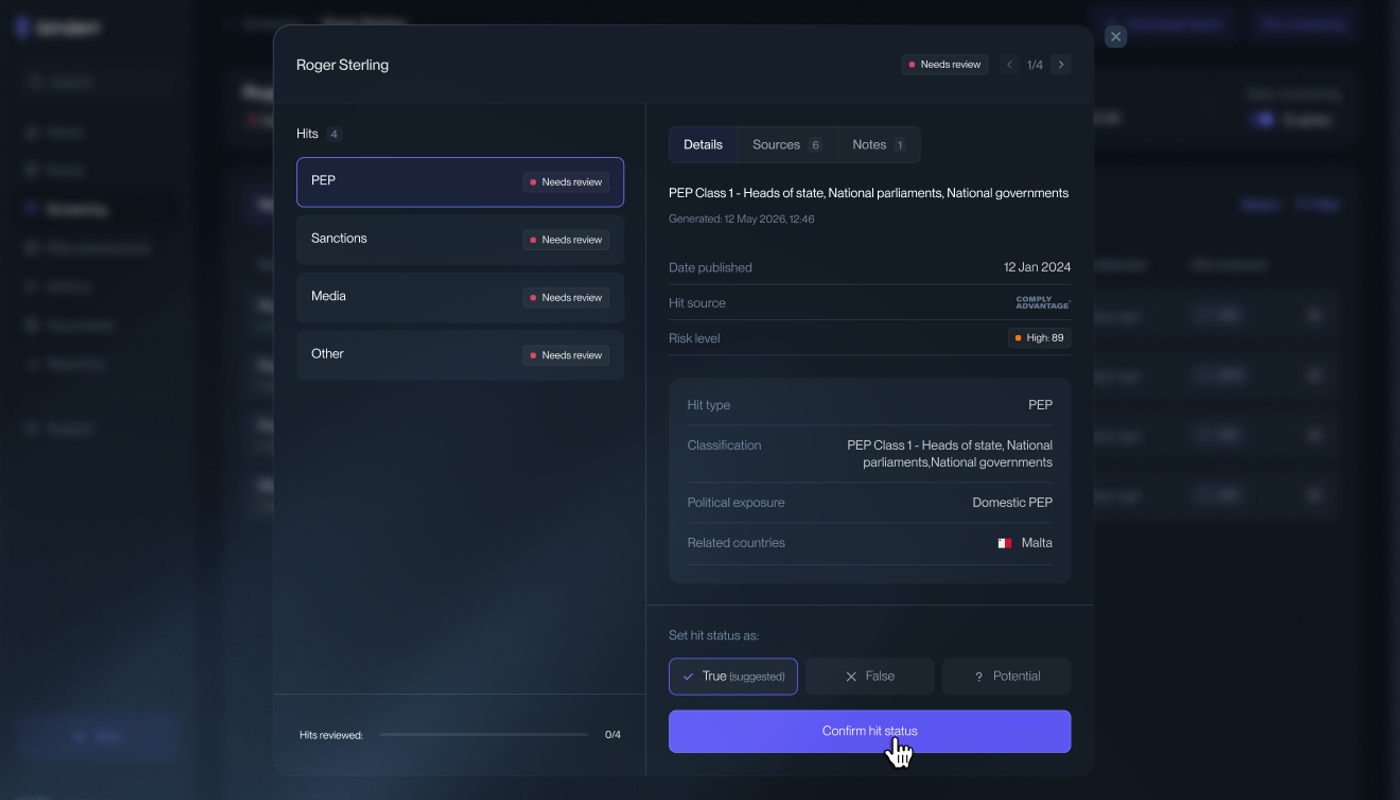
Use Binderr free AML screening tools to detect sanctions risks, PEP exposure, adverse media alerts, and suspicious customer activity faster.
Try Free AML and KYC Screening Tools with Binderr
Step 5: Assess and Categorise Customer Risk
Businesses in Cyprus must assess customer risk levels based on factors such as geography, business activity, transaction behaviour, ownership structure, and AML exposure. Risk assessment helps businesses identify low-risk, medium-risk, and high-risk customers during the onboarding process.
A high-risk-based KYC compliance framework allows businesses to apply appropriate customer due diligence measures and strengthen AML risk management procedures. Risk categorisation also helps improve ongoing monitoring and compliance reporting.
Customer risk assessment procedures also support better compliance decision-making and help businesses allocate enhanced monitoring measures to higher-risk clients.
Step 6: Apply Enhanced Due Diligence for High-Risk Clients
Enhanced Due Diligence (EDD) measures are required for high risk customers, politically exposed persons (PEPs), offshore entities, and customers from high risk jurisdictions. Cyprus AML regulations require businesses to apply additional verification procedures for customers with increased financial crime exposure.
EDD checks may include source of funds verification, source of wealth checks, additional identity verification, transaction analysis, and senior management approval. Strong EDD procedures help businesses reduce AML compliance risks and improve fraud prevention.
Enhanced due diligence measures also help businesses manage complex ownership structures, offshore entities, and customers with increased regulatory exposure.
Step 7: Monitor Customer Activity Continuously
Ongoing monitoring is an important part of KYC and AML compliance in Cyprus. Businesses must continuously monitor customer transactions, account activity, sanctions status, and changes in customer risk profiles to detect suspicious activity.
Automated transaction monitoring systems and AML screening tools help businesses identify unusual behaviour, improve risk detection, and maintain continuous compliance with AML regulations.
Continuous customer monitoring also helps businesses detect suspicious transactions early and strengthen overall financial crime prevention controls.
Step 8: Maintain Compliance Records and KYC Reviews
Businesses must securely maintain customer identification documents, compliance records, transaction histories, and risk assessment reports as part of Cyprus KYC compliance requirements. Accurate record keeping helps businesses support regulatory audits and compliance investigations.
Periodic KYC reviews and customer information updates help businesses maintain accurate compliance data, improve ongoing customer due diligence, and strengthen AML compliance procedures.
Well-maintained compliance records also help businesses support regulatory audits, improve reporting accuracy, and reduce compliance management risks.
Simplify the KYC Compliance Process with Binderr
Binderr helps compliance teams reduce manual reviews, improve onboarding speed, strengthen fraud prevention, and maintain ongoing AML compliance across multiple jurisdictions.
- Automate customer onboarding and KYC verification workflows
- Run KYC, KYB, and AML checks from one platform
- Trigger enhanced due diligence for high-risk customers automatically
- Perform biometric verification and OCR document checks
- Screen customers against sanctions lists, PEP databases, and adverse media
- Monitor customers continuously with real-time AML alerts
- Maintain secure compliance records and audit trails
Regulatory Framework for KYC in Cyprus
Cyprus follows a strict KYC and AML regulatory framework designed to prevent money laundering, financial fraud, terrorist financing, and other financial crimes. Regulated businesses must implement customer due diligence, identity verification, sanctions screening, and ongoing monitoring procedures to comply with Cyprus and EU AML regulations.
Below are the key regulations, compliance requirements, and supervisory authorities shaping KYC compliance in Cyprus.
Cyprus AML and KYC Compliance Laws
Cyprus has established strong AML and KYC compliance laws to prevent money laundering, terrorist financing, fraud, and financial crime across regulated industries. Businesses operating in Cyprus must follow customer due diligence, identity verification, sanctions screening, transaction monitoring, and record-keeping obligations under local AML regulations.
The Prevention and Suppression of Money Laundering and Terrorist Financing Law forms the foundation of Cyprus AML compliance requirements. The law applies to banks, fintech companies, payment institutions, investment firms, crypto businesses, insurance providers, and other regulated entities.
Strong AML and KYC compliance laws help businesses improve fraud prevention, strengthen customer risk management, and maintain secure customer onboarding procedures. Businesses that fail to meet regulatory obligations may face compliance penalties, financial fines, and reputational risks.
CySEC KYC Compliance Supervision
The Cyprus Securities and Exchange Commission (CySEC) plays an important role in supervising KYC and AML compliance for regulated financial institutions in Cyprus. CySEC monitors investment firms, forex brokers, crypto asset service providers, and fintech companies to ensure compliance with customer due diligence and AML regulations.
CySEC regularly issues AML compliance directives, conducts regulatory inspections, and enforces compliance standards across the financial sector. Businesses regulated by CySEC must maintain strong KYC procedures, customer verification controls, sanctions screening systems, and ongoing monitoring frameworks.
Strong CySEC supervision helps improve financial transparency, reduce money laundering risks, and strengthen regulatory compliance standards across Cyprus's financial markets.
EU AML Directives in Cyprus
As a member of the European Union, Cyprus follows EU Anti Money Laundering Directives designed to strengthen KYC compliance, beneficial ownership transparency, customer due diligence, and financial crime prevention across Europe.
EU AML directives require Cyprus businesses to apply risk-based KYC procedures, enhanced due diligence measures, sanctions screening, and ongoing transaction monitoring for higher-risk customers and industries.
The implementation of EU AML regulations has increased compliance expectations for fintech companies, banks, crypto businesses, and investment firms operating in Cyprus. Businesses must continuously update their AML compliance systems and customer onboarding procedures to align with evolving EU regulatory requirements.
Customer Due Diligence Requirements
Customer Due Diligence (CDD) requirements in Cyprus require businesses to identify and verify customers before establishing a business relationship. Businesses must collect customer identity documents, proof of address, business information, and other supporting data to assess customer risk levels and comply with AML regulations.
CDD procedures also require businesses to understand the purpose of the business relationship, expected transaction activity, and source of funds information. Strong customer due diligence frameworks help businesses improve financial crime prevention, strengthen customer risk assessment, and support secure customer onboarding.
Risk-based customer due diligence measures allow businesses to apply different levels of verification depending on customer risk exposure. Higher-risk customers may require additional checks, enhanced monitoring, and more detailed compliance reviews.
Enhanced Due Diligence Rules
Enhanced Due Diligence (EDD) rules apply to high-risk customers, politically exposed persons (PEPs), offshore companies, and customers from high-risk jurisdictions. Cyprus AML regulations require businesses to apply additional customer verification and risk assessment procedures when higher financial crime risks are identified.
EDD procedures may include source of funds verification, source of wealth checks, transaction analysis, adverse media screening, and senior management approval. Enhanced due diligence measures help businesses strengthen AML compliance controls and reduce exposure to fraud, money laundering, and regulatory risks.
Strong EDD frameworks are especially important for fintech companies, crypto businesses, investment firms, and financial institutions handling higher-risk customer profiles or cross-border transactions.
AML Screening and Record Keeping
AML screening procedures help businesses identify customers linked to sanctions lists, politically exposed persons databases, watchlists, or adverse media reports. Cyprus businesses must conduct ongoing AML monitoring and sanctions screening to comply with local and EU AML regulations.
Automated AML screening systems and transaction monitoring tools help businesses improve risk detection, reduce false positives, and strengthen ongoing compliance operations. Continuous monitoring also helps businesses identify suspicious transactions and changing customer risk profiles.
Businesses must also securely maintain customer identification records, compliance reports, transaction histories, and AML monitoring data for regulatory review and audit purposes. Strong record-keeping procedures help businesses improve compliance reporting and support regulatory investigations when required.
Need Free Sanction Screening and AML Checks? Check Out Binderr
Best Practices for Cyprus KYC Compliance
Below are some important KYC compliance best practices for banks, fintech companies, crypto businesses, investment firms, and other regulated entities operating in Cyprus.
Implement a Risk-Based KYC Framework
A risk-based KYC framework helps businesses apply appropriate customer due diligence measures based on customer risk exposure, transaction activity, geography, and business type. This approach allows regulated businesses in Cyprus to focus stronger AML compliance controls on higher risk customers while improving overall compliance efficiency.
Effective risk assessment procedures also help businesses strengthen fraud prevention, improve customer onboarding decisions, and maintain better ongoing risk management practices.
Automate Customer Verification Workflows
Automated KYC compliance systems help businesses streamline customer onboarding, identity verification, document checks, and AML screening procedures. Digital onboarding solutions reduce manual compliance work, improve verification speed, and enhance customer experience.
Many Cyprus businesses now use biometric verification, OCR document scanning, liveness detection, and AI-powered compliance tools to improve customer verification accuracy and reduce onboarding delays.
Conduct Regular KYC and AML Reviews
Regular KYC reviews help businesses maintain accurate customer information, reassess customer risk levels, and identify changes in transaction behaviour or ownership structures. Ongoing AML compliance reviews are important for maintaining strong customer due diligence procedures.
Periodic compliance reviews also help businesses remain aligned with evolving AML regulations, reduce compliance gaps, and strengthen overall financial crime prevention controls.
Strengthen Ongoing Transaction Monitoring
Continuous transaction monitoring helps businesses identify suspicious activity, unusual transaction patterns, and potential money laundering risks in real time. Ongoing monitoring is an important part of Cyprus AML compliance requirements.
Automated transaction monitoring systems and AML screening tools help businesses improve risk detection, strengthen compliance reporting, and reduce exposure to financial crime risks.
Maintain Accurate Compliance Records
Businesses must maintain secure and accurate customer identification records, compliance reports, transaction histories, and risk assessment data as part of Cyprus KYC compliance obligations. Well-maintained records help businesses support regulatory audits and compliance investigations.
Strong record-keeping procedures also improve reporting accuracy, strengthen compliance management, and support ongoing customer due diligence reviews.
Use Advanced AML and Screening Tools
Advanced AML screening tools help businesses perform sanctions screening, PEP checks, adverse media monitoring, and ongoing customer risk assessment more efficiently. Automated compliance systems improve risk detection and reduce manual screening errors.
AI-powered AML compliance tools also help businesses reduce false positives, strengthen transaction monitoring, and improve overall KYC compliance operations across high-risk industries and regulated sectors.
Binderr Advanced AML Screening and Risk Monitoring
With Binderr, you can;
- Real-time sanctions screening and ongoing AML monitoring
- AI-powered adverse media analysis across global sources
- Smart matching technology to reduce false positives
- Dynamic risk scoring for customer due diligence workflows
- Screening support for individuals, businesses, trusts, and complex entities
- Automated alerts for customer risk profile changes
KYC Compliance Challenges in Cyprus
Below are some common KYC compliance challenges faced by banks, fintech companies, crypto businesses, investment firms, and other regulated entities operating in Cyprus.
Managing Complex AML Regulatory Requirements
Businesses in Cyprus often face challenges managing evolving AML regulations, customer due diligence requirements, sanctions screening obligations, and ongoing compliance updates across multiple jurisdictions. Regulatory complexity can increase compliance costs and create operational pressure for regulated businesses.
Implementing automated AML compliance systems, risk-based KYC procedures, and regular compliance reviews helps businesses stay aligned with Cyprus and EU AML regulations while improving overall compliance management.
Reducing False Positives in Screening
High volumes of false positives during AML screening and sanctions checks can slow customer onboarding, increase manual compliance work, and affect operational efficiency. Businesses handling large customer databases often struggle with excessive screening alerts.
AI powered AML screening tools, smart matching technology, and automated risk scoring systems help businesses reduce false positives, improve risk detection accuracy, and strengthen ongoing AML monitoring procedures.
Advanced AML screening dashboards help compliance teams review sanctions matches, PEP alerts, adverse media risks, and customer risk scores from one centralised platform. Automated monitoring tools improve compliance efficiency while reducing manual review workloads.
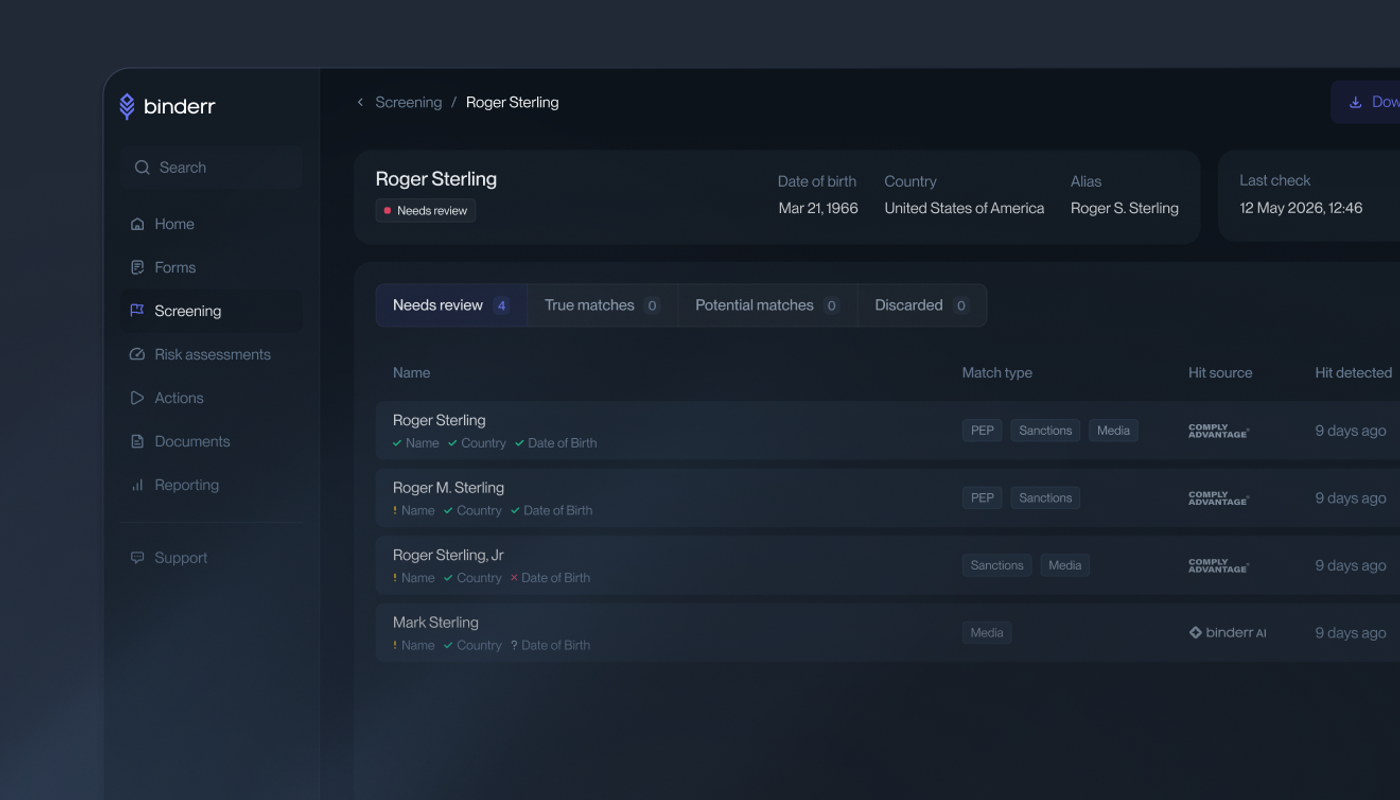
Explore Binderr screening tools and access free AML screening, customer risk monitoring, sanctions checks, and compliance management tools with Binderr Hub.
Handling High-Risk Customer Onboarding
Onboarding high-risk customers, politically exposed persons (PEPs), offshore entities, and complex corporate structures can create additional KYC and AML compliance challenges. Businesses may need to perform deeper customer due diligence and enhanced risk assessments.
Strong Enhanced Due Diligence (EDD) frameworks, source of funds verification, adverse media screening, and ongoing transaction monitoring help businesses manage higher-risk customer relationships more effectively.
Run Free Risk Checks with Binderr Now
Verifying International Customer Documents
Businesses operating internationally may face difficulties verifying foreign identity documents, proof of address records, and business registration documents from multiple jurisdictions. Inconsistent document formats can increase identity verification risks and onboarding delays.
Digital KYC solutions, OCR document verification, biometric identity checks, and automated document authentication tools help businesses improve international customer verification and reduce fraud risks.
Maintaining Accurate and Updated KYC Records
Keeping customer information, compliance records, and transaction histories accurate and updated can be difficult for businesses managing large customer volumes and ongoing AML compliance obligations.
Automated compliance management systems, periodic KYC reviews, and continuous customer monitoring help businesses maintain accurate compliance data and strengthen regulatory reporting processes.
Balancing Compliance and Customer Experience
Strict KYC compliance procedures, document verification requirements, and AML screening checks can sometimes create onboarding delays and impact customer experience. Businesses must balance strong compliance controls with efficient onboarding processes.
Streamlined digital onboarding systems, automated identity verification tools, and faster customer due diligence workflows help businesses improve customer experience while maintaining strong AML and KYC compliance standards.
Binderr: Complete KYC and AML Compliance Solution
- KYC verification with biometric checks and AI powered fraud detection
- KYB verification with registry access and company ownership mapping
- AML screening across sanctions lists, PEP databases, and adverse media
- Dynamic risk assessment and automated customer risk scoring
- Enhanced due diligence workflows for higher-risk customers
- Ongoing AML monitoring with real-time compliance alerts
- Secure audit trails, compliance reporting, and workflow automation
Bottom Line
In a regulated financial environment, strong KYC compliance procedures are essential for businesses operating in Cyprus. Effective customer due diligence, AML screening, identity verification, sanctions monitoring, and transaction monitoring systems help businesses reduce financial crime risks and maintain regulatory compliance.
As Cyprus continues strengthening its AML and KYC regulatory framework, businesses must adopt secure digital onboarding processes, automated compliance systems, and risk-based customer verification procedures. Strong KYC compliance practices not only improve fraud prevention and customer risk management but also support long-term business credibility and operational security.