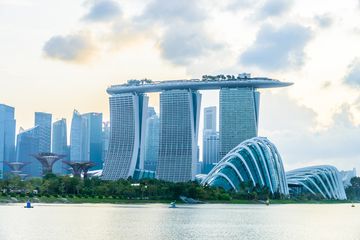
Benefits of Incorporating a Company in Singapore in 2026

At the intersection of global trade and regulatory clarity, Singapore stands out as one of the most efficient jurisdictions to incorporate a company in 2026. Entrepreneurs looking to start a business in Singapore gain low corporate tax rates, a stable legal system, fast company registration, and a globally trusted corporate structure.
Built for speed and scale, Singapore company incorporation allows businesses to register through the Accounting and Corporate Regulatory Authority within days. Founders benefit from 100 % foreign ownership, flexible company structures, and direct access to international banking and payment systems.
Where capital meets innovation, Singapore continues to attract global founders and investors at scale. The country hosts over 4,000 tech startups and secures billions in venture capital funding each year, reinforcing its position as a leading hub for company formation, innovation, and cross-border expansion.
Find Top Company Formation Services in Singapore
With the Binderr, you can:
- Find licensed company formation agents and CSPs in Singapore
- Compare providers based on cost, speed, and services
- Check regulatory expertise and support for your business model
- Explore banking-friendly providers for faster account opening
- Apply and track your Singapore company incorporation in one place
Why Singapore Remains a Top Business Hub in 2026
Singapore continues to lead as a global business hub, offering strong economic stability, advanced infrastructure, and seamless international connectivity.
For businesses planning Singapore company incorporation, the country provides a strategic base for global expansion, efficient logistics, and a highly supportive regulatory environment.
Global Connectivity and Logistics Strength - Singapore’s position as a global trade and logistics hub enables seamless cross-border movement of goods and services. Its world-class ports and air connectivity reduce operational friction for international businesses. This makes it highly efficient for import export operations, supply chain management, and global trade expansion.
Regional Headquarters Destination - Many multinational companies choose Singapore as their Asia-Pacific headquarters due to its central location, infrastructure, and ease of regional management. This allows businesses to coordinate operations, manage regional teams, and oversee multiple markets from a single strategic base.
Pro-Business Government Policies - Singapore offers transparent regulations, low bureaucracy, and consistent pro-business reforms that support entrepreneurship and foreign investment. Businesses benefit from predictable policies, efficient approvals, and a regulatory environment designed for long-term growth.
Access to Venture Capital and Private Equity - The country is a leading hub for venture capital and private equity funding, providing startups with strong access to growth capital and investors. This improves fundraising opportunities and supports faster scaling for high-growth and innovative businesses.
Efficient Dispute Resolution System - Singapore’s legal and arbitration systems are globally recognised for efficiency and fairness, reducing risks associated with commercial disputes. Businesses can rely on fast resolution processes, strong contract enforcement, and internationally respected arbitration frameworks.
Sector-Specific Business Clusters - Strong ecosystems in fintech, AI, biotech, and logistics provide industry-specific advantages and collaboration opportunities. These clusters enable access to specialised talent, partnerships, and innovation-driven growth within key industries.
Key Benefits of Incorporating a Company in Singapore
Singapore company incorporation offers a powerful mix of tax efficiency, regulatory clarity, and global business credibility.
From low corporate tax rates to flexible company structures, businesses benefit from a streamlined setup process and strong international market access.
Single-Tier Tax System
Singapore’s single-tier corporate tax system is one of the strongest benefits of Singapore company incorporation. Under this system, company profits are taxed once at the corporate level, and dividends distributed to shareholders are generally not taxed again, making Singapore attractive for foreign founders, holding companies, and international businesses.
- No double taxation on dividends: Once corporate tax is paid, shareholders can receive dividends without an additional layer of dividend tax in Singapore.
- Improves profit distribution: This structure allows companies to distribute earnings more efficiently to founders, investors, and shareholders.
- Supports holding company structures: Businesses using Singapore as a regional or global holding company can benefit from a cleaner tax framework.
- Useful for foreign investors: International shareholders can benefit from a transparent tax system that improves predictability and long-term planning.
- Strengthens Singapore’s tax efficiency: Combined with a competitive corporate tax rate, the single-tier system makes Singapore company formation attractive for global expansion.
This tax structure reduces unnecessary tax leakage and supports better capital planning. For growing companies, it creates a more efficient framework for reinvestment, shareholder returns, and cross-border business operations.
No Minimum Capital Requirement Barrier
Singapore makes company registration accessible by allowing incorporation with a very low paid-up capital requirement. A private limited company can generally be incorporated with as little as SGD 1, which lowers the entry barrier for startups, small businesses, and foreign entrepreneurs testing a new market.
- Low startup cost: Founders do not need large upfront capital to complete Singapore company incorporation.
- Accessible for early-stage businesses: Startups can register first and increase paid-up capital later as the business grows.
- Flexible capital planning: Companies can align capital injections with funding rounds, operational needs, or investor commitments.
- Ideal for foreign founders: Non-resident entrepreneurs can enter the Singapore market without locking in excessive funds at the incorporation stage.
- Supports lean business models: SaaS, consulting, e-commerce, and digital service companies can launch with minimal initial capital.
This flexibility makes Singapore company setup practical for businesses at different stages of growth. It allows founders to start small, validate the market, and scale capital as operations expand.
Perpetual Succession and Legal Identity
A Singapore private limited company has a separate legal identity from its shareholders and directors. This means the company can own assets, enter contracts, take on liabilities, and continue operating even if ownership or management changes over time.
- Separate legal entity: The company exists independently from its founders, shareholders, and directors.
- Business continuity: Operations can continue despite changes in shareholders, directors, or ownership structure.
- Asset ownership: A Singapore company can hold property, intellectual property, bank accounts, and business assets in its own name.
- Limited liability protection: Shareholder liability is generally limited to the amount invested or unpaid on shares.
- Investor-friendly structure: Perpetual succession gives investors confidence that the business can continue beyond the original founders.
This legal structure gives Singapore companies long-term stability and credibility. It is especially useful for startups, holding companies, and businesses planning fundraising, succession, or international expansion.
Wide Range of Business Activities Allowed
Singapore company incorporation gives businesses the flexibility to operate across a broad range of sectors, from trading and e-commerce to SaaS, consulting, fintech, and holding company activities. This makes Singapore attractive for entrepreneurs who want to build diversified business models or expand into new markets over time.
- Supports multiple industries: A Singapore company can be used for technology, professional services, import export, online business, investment holding, and regional operations.
- Flexible business scope: Companies can structure activities around current operations while leaving room for future expansion.
- Useful for diversified businesses: Founders can manage different revenue streams under one corporate structure, depending on licensing and compliance requirements.
- Suitable for international trade: Singapore’s strong logistics and global connectivity make it ideal for cross-border trading companies.
- Scalable for growth: Businesses can start with one core activity and add new services or markets as operations expand.
This flexibility allows Singapore companies to adapt as business priorities change. For founders planning long-term growth, it creates a practical structure for diversification, expansion, and international market entry.
Simple Shareholding and Ownership Transfers
A Singapore private limited company offers a clear and efficient shareholding structure, making it easier to manage ownership, bring in investors, or restructure the business. This is especially valuable for startups, joint ventures, holding companies, and businesses planning future fundraising.
- Investor onboarding is easier: New shareholders can be added through share issuance or transfer, subject to company documents and legal requirements.
- Supports fundraising rounds: Startups can adjust ownership as they raise seed, venture capital, or private investment funding.
- Enables ownership restructuring: Businesses can update shareholding arrangements as founders, investors, or strategic partners change.
- Useful for succession planning: Shares can be transferred as part of long-term ownership, inheritance, or exit planning.
- Clear shareholder records: Proper registers and filings help maintain transparency for banks, investors, and regulators.
A simple ownership structure improves investor confidence and operational flexibility. For companies planning to scale, Singapore provides a clean framework for capital raising, restructuring, and shareholder management.
Recognised Corporate Structure Globally
Singapore companies are widely recognised by international banks, payment providers, investors, regulators, and business partners. This global recognition helps strengthen business credibility and makes Singapore company formation highly attractive for cross-border operations.
- Improves banking credibility: A Singapore entity is generally viewed as a reputable corporate structure by banks and financial institutions.
- Builds partner trust: International clients and suppliers often prefer working with companies incorporated in well-regulated jurisdictions.
- Supports investor confidence: Transparent corporate laws and governance standards make Singapore companies easier for investors to assess.
- Useful for global contracts: A recognised legal structure can simplify contract signing, vendor onboarding, and international business relationships.
- Enhances brand reputation: Incorporating in Singapore can improve credibility for startups, fintech firms, trading companies, and professional service businesses.
This recognition gives businesses a stronger foundation when entering international markets. For foreign founders, it can improve trust, reduce onboarding friction, and support long-term global expansion.
Clear Corporate Governance Standards
Singapore’s corporate governance framework provides clear rules for directors, shareholders, company secretaries, filings, and statutory records. These standards help companies operate transparently while meeting legal and compliance obligations under Singapore company law.
- Defined director responsibilities: Directors have clear duties relating to company management, compliance, and proper decision-making.
- Structured shareholder rights: Shareholders benefit from transparent ownership records, voting rights, and formal decision processes.
- Mandatory company secretary role: A company secretary helps maintain statutory registers, filing deadlines, and governance records.
- Reliable compliance framework: Annual returns, tax filings, and corporate records help keep businesses accountable and audit-ready.
- Stronger internal controls: Clear governance supports better reporting, risk management, and investor readiness.
Strong governance makes Singapore companies easier to manage, audit, and scale. It also supports investor trust, regulatory compliance, and long-term business stability.
Ready to Incorporate a Company in Singapore?
With Binderr, you can:
- Find top company formation agents and CSPs in Singapore
- Compare incorporation cost, timelines, and packages
- Filter remote onboarding and fast-track setup options
- Discover banking and EMI solutions for your business
- Apply and track your company formation in one dashboard
Additional Advantages for Foreign Founders and Startups
Singapore company incorporation offers distinct advantages for foreign founders and startups seeking fast market entry, funding access, and global scalability.
From 100 % foreign ownership to startup incentives and flexible hiring, Singapore provides a supportive ecosystem for international entrepreneurs to launch and grow efficiently.
No Residency Requirement for Shareholders
One of the major advantages of Singapore company incorporation for foreign founders is that shareholders do not need to be residents of Singapore. Foreign investors can fully own shares in a Singapore private limited company, making it easier to build an international business without relocating immediately.
- 100 % foreign ownership: Non-resident shareholders can own the full shareholding of a Singapore company without needing a local shareholder.
- Flexible ownership structure: Shares can be held by individuals, corporate entities, or holding companies, depending on the business model.
- Remote investment access: Foreign investors can participate in Singapore company formation without needing permanent residence in Singapore.
- Useful for global founders: Entrepreneurs can use Singapore as a base for international trade, regional expansion, or investment holding.
- Investor-friendly setup: Clear shareholder rights and ownership records make the structure easier for banks, investors, and partners to assess.
Access to Regional Accelerator Programs
Singapore’s startup ecosystem gives early-stage businesses access to regional accelerator programs, incubators, mentorship networks, and investor communities. These programs help startups refine their business models, enter new markets, and connect with funding opportunities across Southeast Asia and beyond.
- Mentorship and advisory support: Accelerators connect founders with experienced entrepreneurs, sector experts, and business advisors.
- Market entry support: Startups can receive guidance on entering ASEAN markets, building partnerships, and adapting products for regional customers.
- Investor introductions: Many accelerator programs provide access to angel investors, venture capital firms, and corporate innovation teams.
- Sector-specific programs: Fintech, AI, healthtech, logistics, and sustainability startups can benefit from specialised networks and industry-focused support.
- Improved startup credibility: Being part of a recognised accelerator can strengthen investor confidence and improve business visibility.
Favourable Environment for Fundraising
Singapore companies are attractive to global investors because of the country’s strong governance standards, transparent legal system, and trusted business reputation. For startups and growth companies, incorporating in Singapore can make fundraising easier by providing a familiar and credible corporate structure.
- Investor confidence: Singapore’s regulatory reputation gives venture capital firms, angel investors, and institutional investors greater confidence in the company structure.
- Clear ownership records: Transparent shareholding and corporate governance make due diligence easier during fundraising rounds.
- Access to regional capital: Singapore is a major fundraising hub for Southeast Asia, connecting startups with local and international investors.
- Suitable for venture-backed startups: Private limited companies can support share issuances, investor onboarding, and future restructuring.
- Stronger exit potential: A Singapore company structure can support mergers, acquisitions, secondary sales, or public market ambitions.
Support for Emerging Technologies
Singapore actively supports emerging technology businesses through innovation grants, regulatory sandboxes, and sector-specific development programs. For fintech, AI, blockchain, digital assets, and deep tech startups, Singapore company incorporation provides access to a forward-looking ecosystem that balances innovation with regulatory clarity.
- Regulatory sandbox support: Fintech and digital innovation businesses can test new products in controlled environments before full market launch.
- Strong government backing: Singapore supports innovation through startup grants, research incentives, and enterprise development programs.
- Ideal for fintech and AI startups: The country offers access to financial institutions, technical talent, and innovation networks that support rapid product development.
- Blockchain and digital asset opportunities: Businesses operating in blockchain or Web3 can benefit from Singapore’s structured regulatory approach and global credibility.
- Better investor confidence: A regulated innovation environment makes emerging technology companies more attractive to investors and enterprise partners.
Flexible Office Setup Options
Singapore offers flexible office setup options that make company formation practical for startups, foreign founders, and early-stage businesses. Companies can begin with a registered address, virtual office, serviced office, or co-working space before moving into a larger physical office as operations grow.
- Lower initial setup costs: Virtual offices and co-working spaces help reduce fixed expenses during the early stages of Singapore company setup.
- Professional business presence: A local registered address gives the company credibility with banks, regulators, clients, and partners.
- Scalable office solutions: Businesses can move from flexible workspace to dedicated office space as hiring, operations, and revenue increase.
- Useful for foreign founders: Non-resident entrepreneurs can establish a Singapore business presence without committing to large premises immediately.
- Supports lean operations: Digital businesses, consultants, SaaS companies, and trading firms can operate efficiently with flexible workspace models.
Ease of Cross-Border Hiring
Singapore provides a structured framework for hiring local and international talent, making it easier for companies to build regional and global teams. For foreign founders and startups, this supports access to skilled professionals across technology, finance, operations, compliance, and sales.
- Access to global talent: Singapore companies can recruit skilled professionals from international markets through structured work pass routes.
- Strong local workforce: The country offers a highly educated, multilingual talent pool across business, technology, and financial services.
- Supports regional teams: Companies can use Singapore as a management base while hiring across ASEAN and other international markets.
- Useful for scaling startups: Growth-stage businesses can hire specialists as they expand product, compliance, customer support, and sales functions.
- Improves operational flexibility: Cross-border hiring helps companies build distributed teams while maintaining a Singapore corporate base.
Strong Exit and Expansion Opportunities
Singapore companies are well-positioned for long-term growth, regional expansion, acquisitions, and potential exit strategies. A Singapore private limited company offers a credible structure that investors, buyers, banks, and strategic partners can evaluate with confidence.
- Regional expansion base: Businesses can use Singapore as a headquarters for entering Southeast Asia, India, China, and wider Asia-Pacific markets.
- Attractive for acquisitions: Transparent governance and clear ownership records make Singapore companies easier to assess during mergers and acquisitions.
- IPO potential: Larger businesses may use Singapore’s capital markets or international exchanges as part of a public listing strategy.
- Investor-friendly structure: Strong compliance standards and legal clarity help support due diligence during funding or exit discussions.
- Long-term scalability: Singapore company incorporation supports business models that can grow from the startup stage to regional or global operations.
Who Should Incorporate in Singapore in 2026?
Singapore company incorporation is best suited for founders and businesses that need a credible international base, tax efficiency, and access to global markets. With 100 % foreign ownership, strong banking infrastructure, and a trusted regulatory framework, Singapore supports a wide range of business models from early-stage startups to established international groups.
- Foreign entrepreneurs and non-resident founders - Ideal for those who want to start a business in Singapore without relocating, while benefiting from a stable legal system and global credibility.
- Startups and high-growth companies - Venture-backed startups, especially in tech, benefit from Singapore’s access to funding, accelerators, and investor networks.
- Fintech and regulated businesses - Companies in payments, digital assets, and financial services can leverage Singapore’s structured regulatory environment and innovation ecosystem.
- SaaS and digital businesses - Online businesses, software companies, and platform-based models benefit from low setup costs, flexible structures, and global scalability.
- Trading and e-commerce companies - Businesses involved in import export, cross-border trade, and online sales benefit from Singapore’s logistics network and multi-currency banking access.
- Holding companies and investment structures - Singapore is widely used for regional holding companies due to its tax efficiency, double taxation agreements, and strong legal framework.
- Companies planning regional expansion - Businesses looking to enter ASEAN, Asia-Pacific, or global markets can use Singapore as a strategic headquarters for growth.
Choosing Singapore as your incorporation jurisdiction provides long-term flexibility, credibility, and access to international opportunities. It is especially valuable for businesses aiming to scale globally while maintaining efficient compliance and strong investor confidence.
Set Up a Company in Singapore with Binderr
- Fully licensed and verified CSPs in Singapore
- Compare providers based on cost and incorporation speed
- Explore transparent pricing with no hidden fees
- Access fast-track incorporation options
- Apply and track your company setup in one place
Bottom Line
At the core of global business expansion, Singapore company incorporation stands out as a strategic choice for entrepreneurs seeking tax efficiency, regulatory clarity, and international credibility. With low corporate tax rates, 100 % foreign ownership, and a strong legal framework, Singapore provides a reliable foundation for building scalable and compliant businesses.
Built for long-term growth and global reach, Singapore offers seamless access to international markets, strong banking infrastructure, and a trusted corporate environment. For startups, foreign founders, and established companies, it remains one of the most effective jurisdictions to start a business in Singapore and expand across the Asia-Pacific and beyond.